by Wade Meyerhoffer | Sep 26, 2014 | Global Cooperation, United Nations
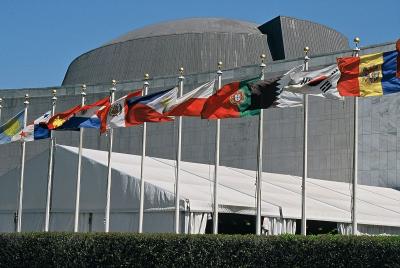
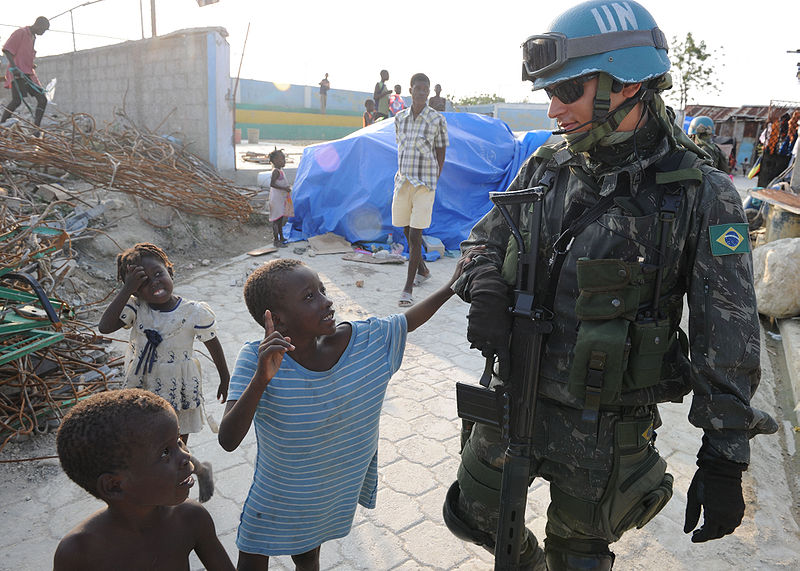
Last week I attended at my first panel on Capitol Hill, which pertained to the currently ongoing 69th United Nations General Assembly (UNGA) in New York City. The panel was hosted by The United Nations Association of the United States of America, and included guests from the State Department, the Better World Campaign, and Peacekeeping Operations Support Section of the UN. The discussion centered on what the likely topics were going to be at the UNGA, as well as on the role of UN peacekeeping forces around the world.
After the panelists were introduced, they quickly highlighted some of their expectations from this UNGA, and what major issues the US was going to lobby for. The audience was then shown a video of an interview featuring one of the panelists, Ken Payumo, who served with the UN peacekeepers in South Sudan. He described the conditions that political refugees lived in, his role in the operation, and a harrowing story of being threatened by pro-government forces who wanted inside the UN compound to look for political dissenters. Ultimately, he did not allow these forces inside the compound and was taken out of South Sudan for his own security. Though I’m sure it wasn’t intended, a lot of the subsequent audience questions focused more than his story than the issues of the UNGA.
The bigger issues that will inevitably be brought up (and hopefully addressed), according to the panelists were the outbreak of the Ebola virus and its threat to the medical security of West Africa, the threat of the Islamic State and mustering a coalition of states to combat it from all fronts, the extra-territorial claims made by Russia in Ukraine and the ongoing hostilities in Eastern Ukraine, the growing concern posed by climate change, and nuclear disarmament.
As one can see, there is no shortage of global issues to address. The UN is often criticized for its lack of substantive results in global issues, but if that perception is going to change, we need a more receptive and proactive body of delegates who are willing to compromise and get to work. Global issues, such as terrorism and climate change, will not just fall by the wayside. I hope this UNGA is a watershed moment in the evolution of the UN and how they operate to achieve their goals.
by Christopher Davis | Aug 18, 2014 | Global Justice, United Nations
If you have not yet heard of Brandon Stanton and his photo blog, Humans of New York, you need to check it out here (and here is the Facebook page).
Stanton started HONY in 2010. His goal was to photograph 10,000 New Yorkers and plot the city’s inhabitants on a map; the result is not only photos, but an incredible blog that highlights the human dynamic and diversity of New York.
Now the United Nations has taken notice; with their help, he is taking his project a step further. On August 7th, Stanton embarked on a journey to ten countries with a larger purpose in mind. According to the HONY Facebook page, he hopes to raise awareness for the United Nations Millennium Development Goals.
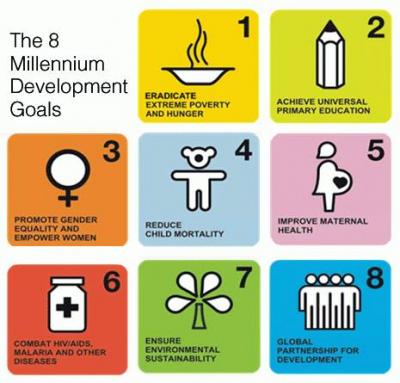
The MDGs are eight humanitarian goals the member countries of the UN set for the world in 2005. The goals range from reducing the spread of HIV/AIDS to alleviating extreme poverty to promoting environmental sustainability; in all, the eight goals are meant to meet the needs of the world’s poorest by 2015.
In the statement released on the HONY website and Facebook page, Stanton hopes his trip will “in some way help to inspire a global perspective, while bringing awareness to the challenges that we all need to tackle together.”
His trip, supported by the Secretary General’s MDG Advocacy Group, will provide a much-needed face and voice to the MDGs and the people impacted. Stanton is giving us human stories that have been ignored while the debates rage on about actions in places such as Syria, Iraq, and Gaza.
As we near the target year of 2015, it is a good time to explore those eight goals and evaluate our progress. Here we will take a look at the first two goals.
The first goal of the MDGs is a bold one: eradicate extreme poverty and hunger. The targets of goal one are halving the number of people whose income is less than $1 per day, reach full and productive employment, and halve the number of people who suffer from hunger.
Despite the immense challenge, we have made significant progress.
According to the UN Report, approximately 700 million fewer people lived in the extreme poverty conditions from 1990 to 2010. More impressively, extreme poverty rates have dropped in every developing region. Unfortunately, even with such astounding progress, 1.2 billion people still live in extreme poverty.
We have also seen progress in reducing the number of people suffering from hunger. The numbers remain high according to the UN, with one in eight people suffering from hunger globally. However, the percentage has dropped from 23 percent to 15 percent, though we have yet to hit the declared goal of a 50 percent reduction.
The second of the eight goals, achieving universal primary education, has stalled after significant progress. Globally, enrollment grew seven percent to 90 percent from 2000 to 2011 and the number of out-of-school children dropped from 102 million to 57 million.
Sadly, this progress has all but stopped in its tracks. Roughly 25 percent of children are likely to drop out before completing primary school. As aid to primary education continues to decrease, we risk not meeting the MDG’s objectives by 2015.
As we continue to highlight the eight MDGs and look ahead to 2015 and beyond, it is important that we keep the principles and foundations of these goals at the forefront. No country is immune to the effects of poverty. With support and guidance from the UN, we must continue to strive to realize the ideals established by the Charter of the UN, the Universal Declarations of Human Rights, and these Millennium Development Goals.
by Christopher Davis | Jul 10, 2014 | Peace & Disarmament, United Nations
$1.5 billion. That was the amount of the United States’ debt to the United Nations at the beginning of the 2009 fiscal year. Of that, over $1.3 billon was for peacekeeping operations. This put the US at the top of the UN collections list.
In 2010 the US satisfied a significant portion of its debt to the UN, paying more than $500 million owed for peacekeeping and other UN operations. This was a significant feat at the time; the newly Republican House had threatened to withhold funding for the UN, which they perceived as a waste.
Why does the US’s contribution to the UN, and more specifically peacekeeping, matter?
Peacekeeping has emerged as an integral part of the UN; it is also the most scrutinized arm of the International Governmental Organization (IGO). While some of the most polarizing examples of UN peacekeeping operations are failures, such as those in Rwanda and the former Yugoslavia, many other peacekeeping missions have been successful.
In addition to its peacekeeping efforts, the UN also helps war-ravaged countries rebuild and close the chapter of conflict. Peacekeeping and building efforts have been instrumental in reconstructing dozens of countries around the world.
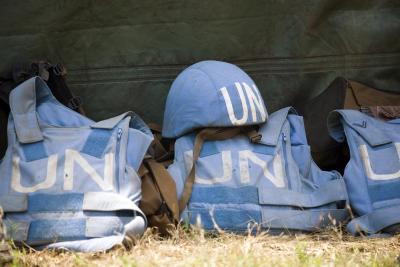
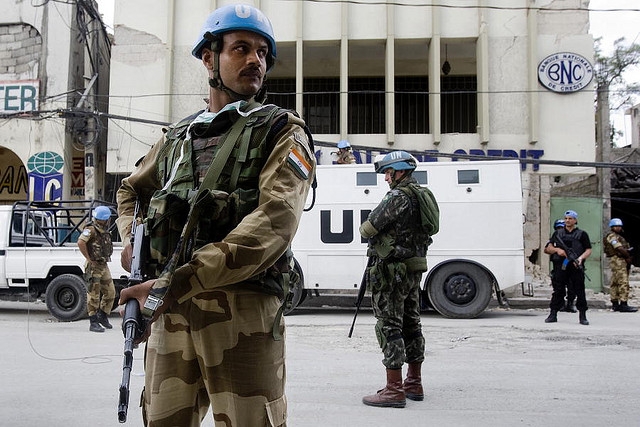
Today the UN oversees 16 peacekeeping operations around the world. As the UN continues to face new challenges in the field of peacekeeping, it is imperative that the organization continues to have the resources necessary to ensure security for the world’s citizens. The US plays a vital role in securing those resources.
Every year, Congress must pass legislation to fund the government’s operations, incuding debt and other financial obligations. Both houses of Congress recently introduced the State and Foreign Operations Bills (SFOPS) for the fiscal year 2015, which could have serious implications for peacekeeping efforts and continue the trend of the US underpaying its dues to the UN.
The House bill allocates just over $1.75 billion in base funding for the Contributions for International Peacekeeping Activities; this is identical to the amount allocated for the fiscal year 2014 and almost $1 billion below what the Obama Administration asked for.
The House bill does have the potential to reallocate funds to support the current peacekeeping mission to the Central African Republic, the Multidimensional Integrated Stabilization Mission in the CAR (MINUSCA). Unfortunately, this is the only positive provision in the bill. (The President’s request to Congress did not include funds for MINUSCA, as the peacekeeping mission had yet to be approved by the UN Security Council).
The House bill not only severely underfunds US contributions to peacekeeping operations, but also continues an arbitrary cap on the US commitment to the UN of 25 percent; the current assessed rate for the US is 28.36 percent. This is the percentage of the UN budget that the US is responsible for.
The Senate helps to compensate for the House’s deficiencies. In addition to amending the House bill to more fully fund CIPA and lift the 25-percent cap, the Senate introduced its own version of the bill.
The Senate bill provides just over $2.5 billion for the peacekeeping CIPA account, meeting the President’s request for fiscal year 2015, as well as lifting the peacekeeping cap and allowing the US to pay its full assessed rate.
As we move into the new fiscal year, it is critical that the US continue to meet its obligations to UN peacekeeping operations. Failing to do so could put the UN at risk of forced budget cuts, leaving a lack of resources to help the most vulnerable around the world. Failing to stand as a pillar for peace, security, and human rights–this would be a true waste.
by Brandon Hooks | Jun 23, 2014 | Global Cooperation, United Nations
At a recent event held at the Brookings Institute, Under-Secretary General of Peacekeeping Missions for the United Nations Hervé Ladsous led a discussion on the future of peacekeeping operations around the world. He highlighted the need for greater innovation and international cooperation in both current and future peacekeeping missions in order for increased success.
As of today there are sixteen ongoing missions through the Department of Peacekeeping Operations as well as a special political mission–the United Nations Assistance Mission in Afghanistan (UNAMA.) An estimated nine out of every ten peacekeepers are currently stationed in Africa, with missions such as those in the Central African Republic and South Sudan being the most volatile. These dispatched peacekeepers handle a myriad of problems within conflict areas and help to restore stability and peace to those displaced and injured by civil or international violence.
Mr. Ladsous commented on the success of peacekeeping missions in recent years, highlighting the fact that the number of conflicts around the world has decreased dramatically within recent decades. However, the severity of the conflicts we face today make them far more intractable and difficult to handle than in the past. The issue of weakened political frameworks stands as the greatest problem in many conflict areas and often times “cripples the missions.”
In looking towards the future of peacekeeping operations, Mr. Ladsous stressed the need for greater innovation in regards to the tools used by peacekeeping forces. The need for newer technologies is essential for the success of missions, for “we must handle the conflicts of today with the tools of today.” He also mentioned that the Department of Peacekeeping Operations is continually researching ways to ensure its practices promote environmental sustainability within the regions in which its missions are housed.
The need for more regional and international cooperation is also key to future peacekeeping missions around the world. Mr. Ladsous stressed how member states must be “of the same mind” in approaching peacekeeping efforts to ensure their goals are achieved in the long run. He invited all countries, both those that have invested resources into peacekeeping and those that have not, to take a larger role in peacekeeping missions in the future.
During the Q&A session following his speech, many of the audience members presented Mr. Ladsous with controversial questions in regards to current peacekeeping missions–most notable were those regarding the UN’s role in introducing a cholera outbreak in Haiti and the sexual misconduct of Sri Lankan peacekeepers. It was clear, however, that Mr. Ladsous was not inclined to answer the more contentious issues of peacekeeping operations, attempting instead to keep the peace in the discussion.
It is clear from the event that the current approach to peacekeeping operations must be reformed when looking at future endeavors. The need for greater global cooperation and a more solid Security Council are essential in ensuring all efforts put forth prove to be worthwhile. Changes in current policies are needed in order for peacekeeping missions to achieve their goal of establishing order and stability in countries around the world.
by Jennifer Welden | Jun 18, 2014 | Human Rights, United Nations
Uganda’s Foreign Minister Sam Kutesa has been elected President of the UN General Assembly. While this is primarily a ceremonial position, Kutesa’s election comes with much protest, with opponents citing his string of corruption charges as well as Uganda’s own questionable laws and actions.
The most horrendous of these laws, and the main cause of concern, is Uganda’s anti-homosexuality law, which sentences violators to life imprisonment for “attempting to commit homosexuality,” along with other acts. The law also punishes businesses and owners “found guilty of the promotion of homosexuality.” Since the passage of the law, there have been many reports of violence, arrests, and other acts of discrimination, giving rise to a “culture of extreme and violent homophobia.” Many countries and organizations have responded to this by cutting aid to Uganda, with the World Bank suspending a $90 million loan directed to improve health services.
Uganda was also found liable by the International Court of Justice in 2005 for war crimes in the Congo, for which it was ordered to pay $10 billion in reparations. This debt has yet to be paid.
Despite these atrocities, little has been done by high-ranking officials. The Obama administration has maintained that it plans to reevaluate its relationship with Kutesa, but no action has been taken. Secretary of State John Kerry has also done little on the issue; his meeting with Kutesa last week was limited and focused on a broad range of issues, though Spokesperson Jen Psaki noted in her press briefing that the State Department has been “clear about our views on Uganda’s anti-homosexuality act” and that if this anti-gay agenda were to progess it “would be greatly concerning.” She went on to say that the US had little power over Kutesa’s election.
There has also been no objection from officials within the UN, with UN Secretary General Ban Ki-moon supporting the election of Kutesa despite urging the repeal of the law.
Although he has a history of alleged corruption and defended his country’s anti-gay law, Kutesa maintains that he is not homophobic or corrupt. In his acceptance speech last week, Kutesa said that the UN should work to reduce poverty, fight climate change, and advance gender equality, arguing:
The scale and reach of most of the challenges we face, coupled with the limited capacity of many of those worst affected, requires that we address them collectively…The UN exists to find solutions through our combined efforts.
The election of Sam Kutesa presents an interesting question about international cooperation: should the UN ignore basic human rights violations in the face of welcomed collaboration? As many (myself included) would argue, the UN must not compromise the principles it was founded on, namely the UN Declaration of Human Rights. Moreover, how can a man or a country with this track record – particularly regarding LGBT rights – be trusted to collaborate on such issues as gender equality? Even if Kutesa’s claims of innocence are true, he is still guilty of inaction.
It’s true, Kutesa’s position is mostly symbolic, and comes with little influence. But in a world where symbolic power is arguably as important as physical power, are these the hands we should be placing it in?
by Christopher Davis | Apr 29, 2014 | Peace & Disarmament, United Nations
Genocide, mass atrocities, violent oppression; these acts, these words, invoke fear, disgust, anger and beg the question why? Human history is littered with examples of these heinous crimes against humanity and yet it took one of the darkest moments in world history to garner a response.
That event? The Holocaust.
An estimated eleven million people died as a direct result of the Holocaust. Of that eleven million, nearly six million Jews were systematically eliminated in what was called the Final Solution.
In the wake of the terror of World War II the world said it had enough. For the first time in history countries came together to lay framework of cooperation, peace, and most importantly, prevention. The United Nations was founded in the wake of the horrors of WWII, a means to protect the human family.
The UN has evolved since its foundation and so has the means by which the UN meets its goals. One of the primary tools of the UN is its peacekeeping function.
Peacekeeping in itself has evolved over time, from observer missions to peacekeeping to building and enforcing. All with two primary goals in mind; prevent a third world war and eliminate the threat of genocide.
While the former has been prevented to date, the latter is far from. Bosnia, Rwanda, Darfur and the Central African Republic, ravaged by ethnic cleansing and threats of genocide. In these cases the slow response of peacekeeping operations has undoubtedly led to unnecessary loss of life.
Even in emergency session the bureaucracy of the UN Security Council slows down the decision, but once a decision is made, should the innocent be subject to further delays? Would a quicker, more efficient deployment be enough? Would the ambitious timeline of 90 days for full deployment set by the Brahimi Report be enough?
Consider Rwanda, nearly one million people were brutally slaughtered in 100 days. Is there a better alternative to current operations?
Enter the United Nations Emergency Peace Service (UNEPS).
The UNEPS is a proposal specifically designed to help prevent armed conflict, stop genocide and mass atrocities, protect civilians, and ensure prompt peacekeeping operations. It is proposed to be:
- a permanent, integrated UN formation,
- a highly trained and well-equipped first-responder (a ‘UN 911‘) ready for immediate deployment upon authorization of the UN Security Council;
- multifunctional and multidimensional (civilians, police and military);
- composed of 16,000 dedicated personnel (recruited professionals, selected, trained and employed by the UN);
- co-located at a designated UN base under an operational headquarters and two mobile mission headquarters;
- capable of diverse assignments with specialized skills for security, humanitarian, health and environmental crises;
- at sufficient strength to operate in high-threat environments; and
- a service to complement existing UN and regional arrangements.
The UNEPS would in essence be a fully functional active duty peacekeeping formation ready for mobilization in as little as 72 hours once authorized; a global peacekeeping force with one duty, to protect those who cannot protect themselves.
This proposal is one that should not be viewed not a part of a machine meant to impede state sovereignty but as a tool for the innocent. In a dangerous and unforgiving world, the innocent should not live in fear. The innocent should be given the tools to fight back, to protect themselves against the weapons of genocide.
Never again should they fall victim to the bureaucracy, indecision, and the disinterest of the world.