by CGS Blog Archive | Aug 26, 2015 | United Nations, World Federation
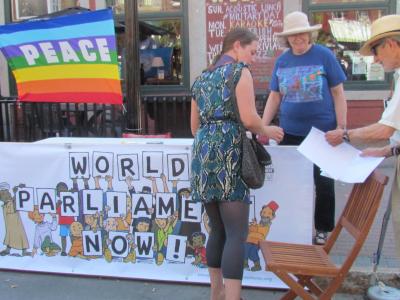
The United Nations suffers from a severe democratic deficit. Despite the opening words of its Charter, “We the peoples,” ordinary people–the citizens of planet Earth and the proper holders of sovereignty–are subsequently ignored in that document.
To this day, 70 years after the UN’s founding, people other than politicians and diplomats have been denied a voice in planetary governance. Realpolitik, old-fashioned power politics, remains the dominant paradigm. Is it any wonder, then, that decisions of the undemocratic United Nations are increasingly regarded as illegitimate?
Conventional wisdom in the diplomatic community, as well as in mass media and academia, is that the system cannot be fundamentally changed. This is mainly because of the political oligopoly built into the UN Charter, which grants veto power to the five permanent members of the Security Council. None of these unfairly privileged states, supposedly, will ever consent to changes that would infringe on this power. But once you say you can’t, you can’t. It becomes a self-fulfilling prophecy.
The so-called “experts” sooner or later will be proven incorrect. Roughly half the world’s people already live in countries that are more or less democratically ruled. The hallmark of all such countries is a parliamentary system. Even though the leaders of these countries find it necessary go along with the present undemocratic UN system at the global level, that doesn’t mean they can remain oblivious to the democratic demands of their own people. To attempt to do so runs the risk of their being voted out of power.
Admittedly, the number of politically engaged citizens now clamoring for global democracy is small. However, we live in a world increasingly interconnected by the Internet. It is now possible for powerful ideas to spread rapidly throughout the planet. Democracy is one such powerful idea. It is catchy. Even in autocratically ruled nations, it finds an underground following. And ultimately it will burst its authoritarian bonds.
In fact, while not yet popular in this country, the demand for global democracy is taking root among steadily increasing numbers of political activists. This is especially true in Europe, where the successful implementation of the 28-nation European Parliament has yielded a wide range of continental benefits. While there have also been issues to work out, that is to be expected in any parliamentary system.
Fortunately, the establishment of a UN Parliamentary Assembly (UNPA) would not require Charter amendment, as Article 22 of the present Charter states: “The General Assembly may establish such subsidiary organs as it deems necessary for the performance of its functions.” A UN Parliament could rightfully be considered such a “subsidiary organ.”
Initially, emulating the development of the European Parliament, its powers would be advisory only and its members would be appointed (mainly from the membership of existing national parliaments) rather than directly elected. But, with the accumulation of experience, the UNPA gradually could be granted increasing legislative authority in respect to a set of truly global problems that cannot be adequately addressed by nations acting on their own. Periodic popular elections could be instituted.
From its very inception, however, the UNPA could project the voices of world citizens, not just of governments acting in their own narrow self-interest. While those voices might, at the outset, lack legal authority,they could project the “soft power” of morality. And, in the fullness of time, they could become the irresistible drivers of reform throughout the UN system and, ultimately, of a comprehensive Charter review conference as envisaged in Article 109 of the original UN Charter.
The literature on a UNPA is growing rapidly. My own recent discussion of how it might evolve and how it might function at various stages in its evolution can be found in Transforming the United Nations System: Designs for a Workable World (Chapter 3, “A World Parliamentary Assembly.”)
by Rene Wadlow | Jun 26, 2015 | United Nations
June 26 is the anniversary date of the signing of the Charter of the United Nations in San Francisco in 1945. While UN Day is usually celebrated October 24 when the UN Charter came into force after ratification by States—especially the five permanent members of the proposed Security Council—it was June 26 that the Charter was presented to the world. As a friend noted, “I prefer to celebrate the birth and not the baptism.”
For today, we will look at two reports that outline challenges facing the emerging world society and the role that the UN should play.
Since the presentation of the Charter in 1945, there have been criticisms and proposals for reforms and revisions. In response to these criticisms, the UN Charter provided that a review conference on the Charter would be put on the agenda 10 years after the Charter’s coming into force—that is, in 1955.
With the end of the Korean War in 1953, there began an intense discussion of UN Charter revision. In practice, neither the US nor the Soviet Union wanted a discussion of the Charter, so the issue was swept under the rug in exchange for a USA-USSR agreement to allow a number of States who had been blocked by Cold War rivalries to gain UN membership. However, the issue of Charter revision was still a hot topic in 1955-1956.
My first efforts as an NGO representative at the UN were in 1955 when there was a 10th anniversary session in San Francisco. Many of the 1945 “founding fathers” returned, like the Soviet Foreign Minister V. Molotov, who was still in power. We NGOs had a rich documentation of possible reforms for the UN system, thought possible as the end of the Korean War had produced a short-lived “Cold War calm.” The Fall of 1956 with the revolts in Hungary and the English-French-Israeli attack on Egypt and the Suez canal put an end to the brief “era of good feelings,” and academic research shifted from UN reform to the nature of “limited war.”
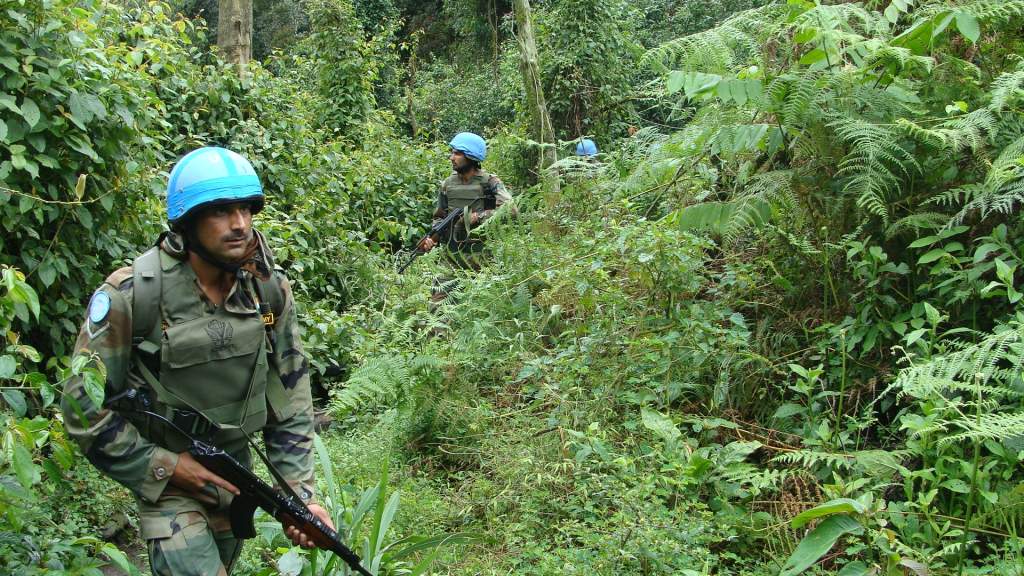
However, for the 70th anniversary this June, two useful reports have been issued: the Commission on Global Security, Justice and Governance’s Confronting the Crisis of Global Governance and the High-Level Independent Panel on Peace Operations’ recommendations, which stress that,
Primacy of politics means that lasting peace is achieved through political solutions and not through military and technical engagements alone. Political solutions must guide all UN peace operations.
Both reports are worth reading as a reflection of current thinking. What is particularly striking is the emphasis that both give to the crucial role of NGOs, now usually called by the broader but less clear term of “civil society.”
The reports highlight the trend toward greater openness to the participation of NGOs in world policy processes and in the implementation of programs. Both governments and the UN increasingly recognize the importance of having more diverse voices at the table and on the ground. The Commission on Global Security report is structured around what it sees as the three crucial challenges facing the emerging world society:
- State fragility
- Climate governance
- Stewardship of the world economy
As the report states,
Global governance is a mix of bilateral, informal multilateral, and treaty-based relations among states increasingly influenced by nonstate actors’ interests and activities.
The report recognizes that any reforms of UN structures is difficult—basically impossible—because the system works “well enough” to suit most governments, and most governments are not willing to risk major changes in the world society because of unknown consequences.
Change and improvements will come only through forceful and coordinated efforts from the non-state sector. In this sector, the report places NGOs in consultative status with the UN, identifying some 4,000 NGOs and 2,000 large business firms—most of which are active in more than one State—along with the 750 largest cities, which increasingly have trans-frontier impacts.
Both the Commission and the High-Level Independent Panel consulted NGOs, but the NGO views are not presented as such. For the moment, it is difficult to speak of a common NGO view, especially if we need to integrate the views of transnational corporations and city administrations. NGOs come in all shapes and sizes, and some seek UN accreditation for domestic reasons and do not really participate in UN activities. The reports set out the challenges well. The next step is to develop a broad understanding among NGOs of these challenges and of the steps they can undertake collectively—an appropriate birthday present.
by Rene Wadlow | May 15, 2015 | Peace & Disarmament, United Nations
The Review Conference on the Treaty on the Non-Proliferation of Nuclear Weapons (NPT) started at the United Nations in New York on 27 April and is scheduled to run until 22 May.
I had chaired the representatives of the non-governmental organizations (NGOs) in the 1975 and 1980 Reviews and participated in the 1985 and 1990 Reviews, after which the Review conferences moved from the UN in Geneva to New York. I will structure my analysis of the NPT into two separate pieces—“The Framework” and “Evolution and Challenges”— and will write a final summary at the end of the Review.
The Framework
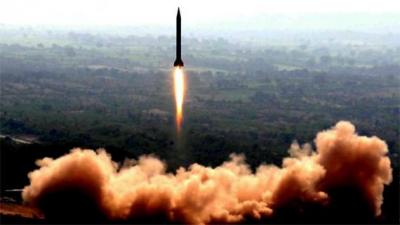
The concept of the non-proliferation of nuclear weapons has always been highly controversial because it appears to legitimate the status quo of the division of States into the nuclear “haves” and “have nots.” The need to halt the spread of nuclear weapons—and to abolish them if possible—became very evident after their use on Hiroshima and Nagasaki 70 years ago. The very first UN General Assembly resolution in January 1946 envisaged the elimination of atomic weapons from national arsenals.
Also in 1946, the US Government proposed the Baruch Plan—the establishment of an international authority to control all atomic energy activities “potentially dangerous to world security.” However, the Cold War was starting, and the USSR reversed the sequence of steps proposed by the Baruch Plan. The Soviet Union wanted the destruction of existing atomic weapons first and an institution for control later. As a result, none of the steps were taken.
Shortly after, the USSR (in 1949), the United Kingdom (1952), France (1960), and China (1964) all became nuclear-weapon States, now joined by India, Pakistan, North Korea, and Israel. The realization by government leaders and NGOs that a wider proliferation of nuclear weapons would pose a threat to world security had led to the creation in 1957 of the International Atomic Energy Agency (IAEA) with its elaborate system of nuclear safeguards and inspections.
Continued fears and strong efforts of NGOs led to the Treaty on the Non-Proliferation of Nuclear Weapons, opening for signature in1968 and coming into force in 1970. As conditions in world politics can change relatively rapidly, it was decided that the Treaty should have an article (Article VIII) calling for a Review Conference at five-year intervals to “assure that the purposes…of the Treaty are being realised.” Thus, the first NPT Review was held in 1975, and the reviews continue to be held every five years.
The readiness of States to continue renouncing the development of nuclear weapons hinges on continuing efforts to create alternative security strategies, such as nuclear-weapon-free zones. There is a relationship between global and regional security policies on the one hand and non-proliferation on the other. Thus, the Soviet intervention in Afghanistan colored the 1980 NPT Review and the Iraq-Iran War the Review of 1985. The current tensions and armed conflicts in the wider Middle East may influence the 2015 Review.
Negotiations leading to the NPT took 10 years in Geneva in the UN disarmament body—then called the Eighteen-Nations Committee on Disarmament, which existed from 1962 to 1969. In 1959 Ireland had introduced a resolution into the UN General Assembly calling for negotiations of a non-proliferation treaty.
The NPT has three related pillars:
1) the non-proliferation of nuclear weapons beyond the original five: the US, the USSR, the UK, France, China.
2) In exchange for renouncing the development of nuclear weapons, the other Treaty members were to receive help with civilian, ‘peaceful’ nuclear technology. As stated in the preamble,
affirming the principle that the benefits of peaceful applications of nuclear technology, including any technological by-products which may be derived by nuclear-weapon States, from the development of nuclear explosive devices, should be available to peaceful purposes to all Parties of the Treaty …all Parties to the Treaty are entitled to participate in the fullest possible exchange of scientific information for…the future development of the applications of atomic energy for peaceful purposes.
3)The nuclear-weapon States in the Preamble and in Article VI pledge to “refrain in their international relations from the threat or use of force against the territorial integrity or political independence of any State or in any other manner inconsistent with the Purposes of the United Nations.”Specifically, the nuclear-weapon States in Article VI are to “pursue negotiations in good faith on effective measures relating to cessation of the nuclear arms race at an early date and to nuclear disarmament and on a treaty on general and complete disarmament under strict and effective international control.”
It must be said that negotiations on general and complete disarmament under strict and effective international control apparently are being carried out in secret, as they have escaped all notice, at least of this observer. However, we will look in my next piece at the evolution of the NPT since the first Review in 1975 and at the challenges ahead.
by Tony Fleming | May 1, 2015 | United Nations
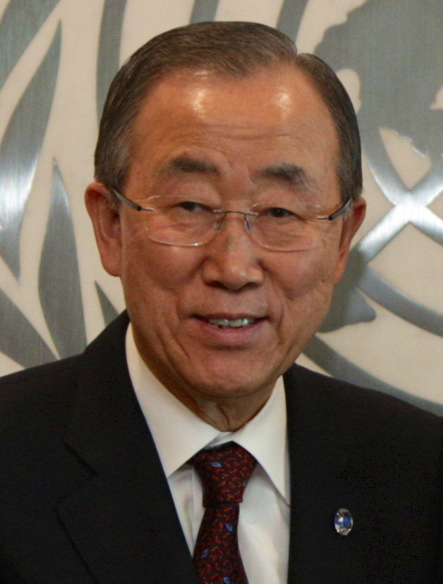
The United Nations General Assembly convened this week to discuss specific proposals in selecting the organization’s top officer.
The Charter provides a rather uncomplicated process for electing the Secretary-General: appointment by the General Assembly upon nomination of the Security Council. There is no mention of the veto, term of office, or other criteria that have received criticism in recent years. Those provisions arise mostly from a 1946 General Assembly resolution. In recent years, members of the General Assembly have come to view that resolution as a restriction on their ability to select from among several qualified candidates.
During the discussion, India called for multiple nominees to be presented by the Security Council, with the Assembly appointing one as the new Secretary-General by a two-thirds majority vote. This would revise two core provisions of the 1946 rules. Indonesia proposed another significant reform by suggesting that the nominees from the Security Council not be subject to the veto.
Not surprisingly, permanent members prefer to avoid any changes that could limit their role in selecting the Secretary-General. France opposed nominations of multiple candidates, arguing that the process could “divide states.” China argued for fidelity to the Charter. The United States noted that it was “open” to new ideas as long as the process remained within the “current framework.” It opposed deadlines that would prevent nominations for the “best Secretary-General” to come in even at the last minute. This position was hardly defensible in 2006, let alone today:
Deadlines serve as one accountability mechanism against a politicization of the process that would otherwise encourage ‘dark horse’ candidacies. Such candidates are individuals whom governments may privately support from the beginning but not formally nominate until later in the process, usually after strategically voting against announced candidates. Such nominees are usually unknown (as candidates) to the majority of governments, but become ‘compromise’ candidates after others are eliminated from consideration.
The strongest calls to enact reforms this year came from Latin American states. Brazil called for reforms to be adopted immediately; otherwise it wouldn’t be possible for at least five more years. Cuba chastised the Assembly for lacking the political will to implement changes to the 1946 rules, suggesting the body’s failure to act left the selection a “private matter” for the Security Council.
Costa Rica was the most outspoken on the need to update the process, calling the selection the “most important decision in 2016.” The country joined regional partners and other small states in calling for a single seven-year term, female nominees, public hearings, and nomination deadlines. (How such reforms can drastically impact selection processes was examined immediately following the 2006 UNSG race in this paper.)
Calls to select the first woman Secretary-General were widely supported by many states, with the exception of Russia. In responding to calls for female nominees, its (male) representative suggested that the effort would amount to “discrimination” against male candidates. In contrast, states from Latin America and Europe stated their firm support in for gender equality.
Hungary and Moldova reiterated the regional call for the post rotating to Eastern Europe this round, and Germany endorsed the emerging consensus.
Discussions on the process will now unfold in a “hurry up and wait” approach over several months. Formal nominations will likely be deposited with the President of the Security Council after the General Assembly convenes in September, but agreement on the process will likely await new Security Council members being seated in January.
by Jennifer Welden | Mar 6, 2015 | Global Justice, United Nations
On February 23rd, the United Nations Security Council held a debate on the Purposes and Principles of the UN Charter. There, US Ambassador Samantha Power made a plea for the Council, and the UN, to reaffirm its commitment to the principles laid out in the Charter. Most importantly, she urged the council to “recommit ourselves to these people – individuals in every one of our states whose basic dignity the Charter is meant to defend and uphold.”
It’s no secret that the UN isn’t the world’s best problem-solver. Even the body itself has admitted a failure to limit or stop certain events, such as the atrocities in Syria or rape in Darfur. Part of this is from inaction: many argue that it is too hard to pass a resolution, especially on the Security Council where each member’s veto power leaves propositions dead in their tracks. Power puts it best when she says, “divisions among Member States continue to prevent the Council from taking action…or even speaking in one voice to condemn the violence and call for meaningful accountability.”
But even when resolutions do pass, nothing really seems to change. Hiding behind strongly worded memos, the UN often fails to “exercise the political will and take the action needed to actually preserve international peace and security.” Power argues that part of doing this is coming up with “more effective ways to pressure” states that disregard UN/international rules, norms, and obligations.
What would some of those ways be? Power suggests that simply by showing unified support for resolutions, the UN will move toward being more effective. She cites North Korea as an example, stating that, “by shining a light on the unspeakable violations being perpetrated every day in the DPRK, UN action is helping to galvanize broader pressure on the regime to end abuses that were ignored for far too long.”
This makes sense: peer pressure can be very effective. Peer pressure can be especially important when it comes to the issue of state sovereignty, which many states argue “precludes the UN’s engagement on these issues [of human rights violations].” Though our more liberal ideologies may scoff at the very idea of this being a legitimate argument, it is still a regular topic of debate in the international arena. But why? As Power continually points out, the UN’s commitment is to individuals, not states. So why are we so beholden to them?
Part of the reason may be that the UN does not feel representative of individuals; after all, it’s called the United Nations, not the United Individuals. This has prompted many to push for a UN Parliamentary Assembly, something that could be truly representative of the people the body is meant to serve.
While it is easy to say what is wrong with the UN, it is harder to say how to fix it. (And even if you could, the old adage “It’s easier said than done” comes to mind.) However, Power’s speech is a necessary reminder of why the UN was founded in the first place: to “unite us in advancing the safety, security, and human rights of people across the world.” Ideals are often chided as being unreachable, but would we rather have a body founded on the reverse: realism that views crossing a border as more unjust than not protecting people?
Moving forward, the UN must not forget its ideals when facing reality. Reaffirming its founding priciples then, is the first step toward reaching its goals.
by Father Ben Urmston | Oct 9, 2014 | Global Cooperation, United Nations
Each year Cuba asks the United Nations to lift the economic embargo the United States imposes on the nation of Cuba.
For the past 22 years, the United Nations has overwhelmingly supported Cuba in this resolution. Last year the resolution was passed188 to 2, with only the United States and Israel voting against it.
An article in The Guardian points out,
Although many US allies join Washington in criticizing Cuba’s one-party system and repression of political opponents, the Americans have lost nearly all international support for the embargo since the collapse of the Soviet Union. No other nation besides the United States has an economic embargo against Cuba.
The fact that the US stands alone shows the undemocratic nature and ineffectiveness of the UN. Sensible changes proposed by Transforming the United Nations System: Designs for a Workable World by Dr. Joseph E. Schwartzberg would be a step forward toward a better world.
US intransigence also shows a lack of openness to new approaches and better ideas. If 188 nations have a different approach in a matter that adversely affects the citizens of a whole nation, isn’t it time that we rethink a policy that seems to hurt everyone–including ourselves?