by Rene Wadlow | Oct 24, 2016 | Global Cooperation, United Nations
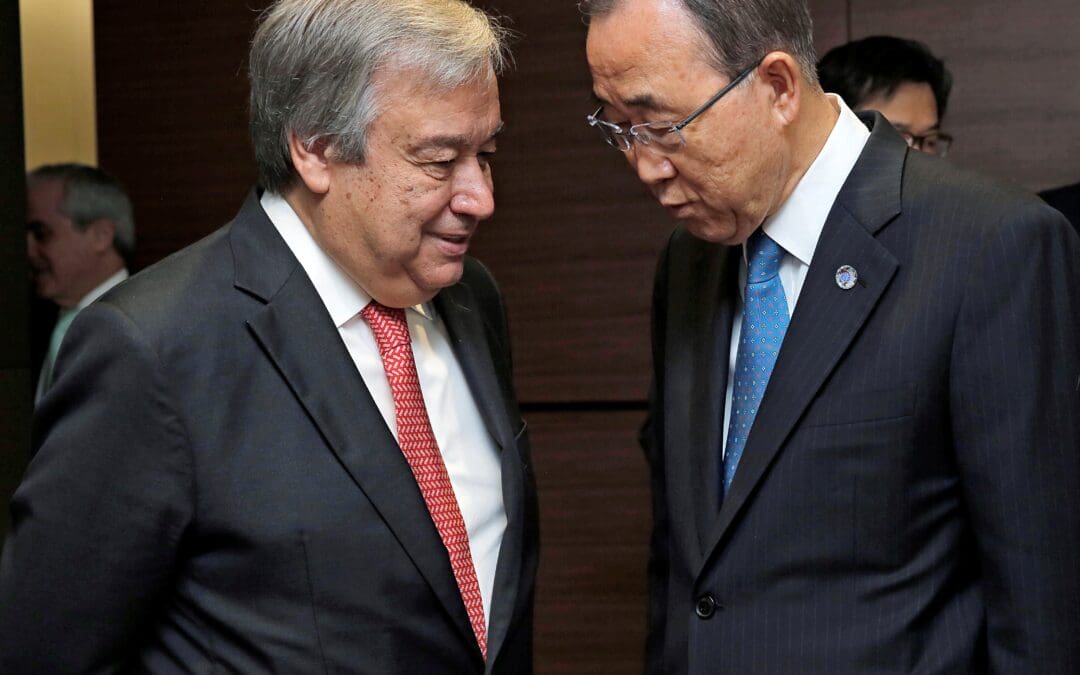
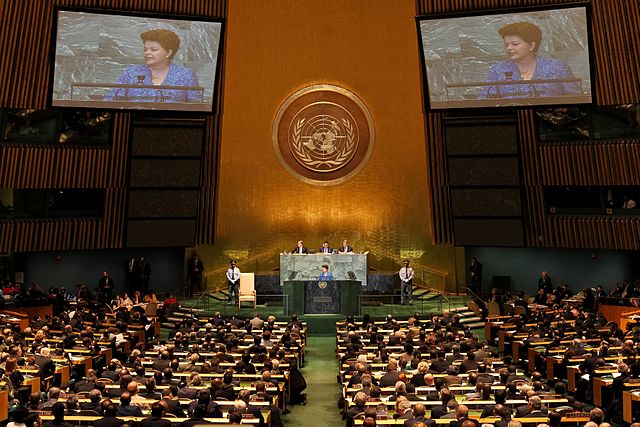
UN Day, 24 October, this year is marked by preparations for a changing of the guard. The ten years of Ban Ki-moon as Secretary-General will give way on one January 2017 to the new Secretary- General, Antonio Guterres, who was during the same ten-year period the UN High Commissioner for Refugees. As with the changing of the guard in front of a palace or national monument, the persons change but the guards have the same uniform.
Ban Ki-moon brought his long experience in South Korean diplomacy and a certain non-confrontational Asian style – somewhat similar to that of the Berman U Thant- to the UN. (1) The major road marks of UN action during his leadership of the organization were related to socio-economic development: the setting of the 2015-2030 Sustainable Development Goals and the Paris Agreement on Climate Change. Both agreements are important and needed a good deal of “behind the meeting hall” efforts to reach consensus. However development goals and anti-poverty measures have been relatively the same since the early 1960s when the former African colonies joined the UN. As has been said, setting goals is relatively simple, reaching them is more difficult.
Development is at the heart of the UN system – the UN and its programmes and the major Specialized Agencies (FAO, ILO, WHO, UNESCO) as well as the two financial bodies (the World Bank and the IMF). There are issues of coordination and overlap of tasks, but basically the development efforts continue with few changes.
The same steady continuation can be said to be true of the UN’s human rights efforts. The international norms have been set, but the UN Secretariat has relatively few ways of control or pressure on what member States do in the human rights field. In keeping with the development focus of the UN system, there has been a somewhat greater emphasis on socio-economic rights and the fight against poverty but most of these goals had also been set earlier.
The reputation of the UN Secretary General most often rests on peace-making and conflict resolution. The UN was designed in 1945 as a bulwark against invasion of one State by another on the model of the Second World War. In today’s world, security is more often threatened rather by forces acting trans-nationally such as ISIS or by the internal disintegration of a State on the model of Somalia. On the “peace front” there have been no breakthroughs or radical improvements under Ban Ki-moon. There has been some increase in combined UN-regional organization- basically the African Union – peace-keeping missions, but with little increased impact on armed conflict resolution. UN military can keep people apart by controlling a road as they do in the Central African Republic, but the military can do little to bring people together which requires non-military skills and techniques.
The leadership of Antonio Guterres as High Commissioner for Refugees was appreciated by many in the UN system. He faced an unprecedented flow of refugees without the funds necessary nor much cooperation from governments. He was confronted with the need to deal with the armed conflicts which cause the refugee flows. He was able to develop strong cooperation with non-governmental organizations which are at the heart of work with refugees, their care and their re-settlement. He had good working relations with his staff as well as with the diplomatic milieu.
Thus many of us who have close relations with the UN system have high hopes for the role that Antonio Guterres will play. The UN in New York has recently taken the comic strip character of Wonder Woman as a role model for the equality and dynamism of women. Unfortunately, there are no Wonder Woman or Superman in real UN life. Overly high expectations of what one individual can accomplish can lead to disappointment. We must accompany Antonio Guterres with our encouragement, but more important, we need to see how non-governmental organizations can facilitate reaching UN goals.
Note
1) See Tom Plate. What the United Nations is Really Like. The View from the Top: Conversations with Ban Ki-moon (Singapore: Marshall Cavendish Editions, 2013, 238pp)
Rene Wadlow is President, Association of World Citizens.
by Rene Wadlow | Jul 29, 2016 | Global Justice, United Nations
You wake from dreams of doom and −for a moment− you know: beyond all the noise and the gestures, the only real thing, love’s calm unwavering flame in the half-light of an early dawn. Dag Hammarskjold Markings1
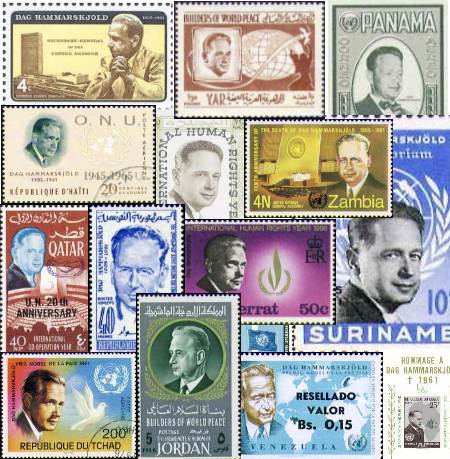
Dag Hammarskjold became Secretary-General of the United Nations at a moment of crisis related to the 1950-1953 war in Korea, and he died in his plane crash in 1961 on a mission dealing with the war in the Congo. The first Secretary-General of the UN, Trygve Lie, had resigned in November 1952 in the light of the strong opposition of the Soviet Union and its allies to the way the United Nations Command operated in Korea. Even though it was called the “United Nations Command”, the main fighting forces and the logistic support were provided by the United States.
Among UN Security Council members and other important delegations, it was felt that, given the way Trygve Lie was pushed out before a second term, he should be replaced by a person from a Nordic country, and the name of Dag Hammarskjold started to be proposed as a suitable candidate from an appropriate country, Sweden. It took five months of discussions before on 10 April 1953 Hammarskjold took office in New York.
Little in his background or experience had prepared Hammarskjold to be a crisis manager. He came from a distinguished Swedish family. His father had been Prime Minister, and other members of his father’s family had been civil servants or military officers. On his mother’s side, the family had been well-known Lutheran clergy and academics. Dag Hammarskjold was known for his active interest in literature, art and music − interests which he continued throughout his life. However, he was trained in economics and by age thirty-six he was chairman of the National Bank of Sweden, concerned with long-range economic trends. He was not a stock-market trader having to make quick decisions with very incomplete information to “buy or sell”.
Hammarskjold had a very strong sense of duty. As he wrote to himself in 1951 in a dairy published after his death as Markings(1) “Only he deserves power who everyday justifies it.”
Hammarskjold came to the United Nations just as socio-economic development was being considered as a permanent mandate for the UN Secretariat. At the time of the creation of the United Nations in 1945, economic and social issues were considered as the functions of specialized agencies formally related to the UN through the Economic and Social Council but in effect, independent with their own governing boards, budgets and administrative procedures: the World Bank and the International Monetary Fund in Washington, and UNESCO, FAO, ILO, WHO, all located in Europe. By 1949, influenced by the “Point Four” idea of US President Harry Truman, there started to grow the idea that the UN itself should become operative in providing economic, administrative, and technical assistance. A modest “Expanded Program of Technical Assistance to Underdeveloped Countries” was created in 1949, and through different incarnations has become the UN Development Program (UNDP)’s, complex and multi layered activities.
Hammarskjold was a strong supporter of economic and social programs. He appointed well-known and active economists to guide these programs. By training and temperament, he would have wanted to follow economic and social issues as he saw such programs as important buildings blocs of the world community.
However, it was as a crisis manager that he filled his days. These were often long days, and he was able to work for 18 hours a day for long stretches of time. He started as Secretary-General when the war in Korea was ending, but peace had not been established. Korea was still divided into two hostile States, a large number of people had been uprooted and much of the economic infrastructure destroyed. The French war in Indochina was still going on, and many observers feared that there could be a generalized Asian conflict. In 1952, the UN General Assembly created the “Commission on the Racial Situation in South Africa” – the start of a decades-long concern. The French war in Indochina was followed by the start of the war in Algeria. In April 1955, the “Asian-Africa Conference” was held in Bandung, Indonesia, a sign that decolonization would stay on the agenda of world issues for a long time. In November 1956, the first session of a UN Special General Assembly condemned the military aggression of the UK, France and Israel against Egypt, which later led to the use of UN Peacekeeping forces.
Dag Hammarskjold became an expert crisis manager, to the point that there was a common slogan in the UN- “Leave it to Dag”. He liked to work alone but had created a team of people working under him who were highly competent and totally devoted to him.
His last crisis-management effort was in the former Belgium Congo which had become independent in July 1960, followed quickly by violence, the breakdown of public order, the murder of the former Prime Minister Lumumba, the effort of Moise Tshombe to create a separate state in Katanga, and the sending of UN troops. USA-USSR Cold War tensions increased over Congo issues. Hammarskjold was to try an effort of mediation at the airport of Ndola, now in Zambia when the UN plane crashed, and all were killed.
Shortly after assuming office Dag Hammarskjold set out his view of his task as a world public servant faced by conflicting government − a vision which he fulfilled fully;
“The Secretary-General should express with full frankness to the governments concerned and their representatives the conclusions at which he arrives on issues before the organization. These conclusions must be completely detached from any national interest or policy and based solely on the principles and ideals to which the governments have adhered as members of the United Nations.”
At a time when there are active discussions on the selection of the next UN Secretary General, it important to recall the drive and initiatives of Dag Hammarskjold.
1Dag Hammarskjold. Markings (New York: Alfred A. Knopf, 1964, 222pp.)
by Michael Curtin | Feb 26, 2016 | Global Cooperation, United Nations
This article was originally written for the Northern New Jersey Chapter of UNA-USA. It has been cross-posted with the author’s permission.
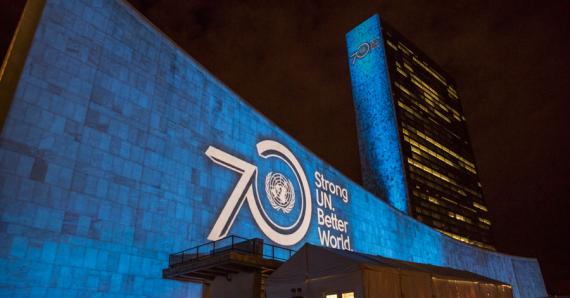
Last year marked a significant time in the history of the United Nations: It celebrated its 70th anniversary. This is no small accomplishment. There are many who over the years wished the global institution out of existence, yet here it is today, still standing and performing the work it was created to do.
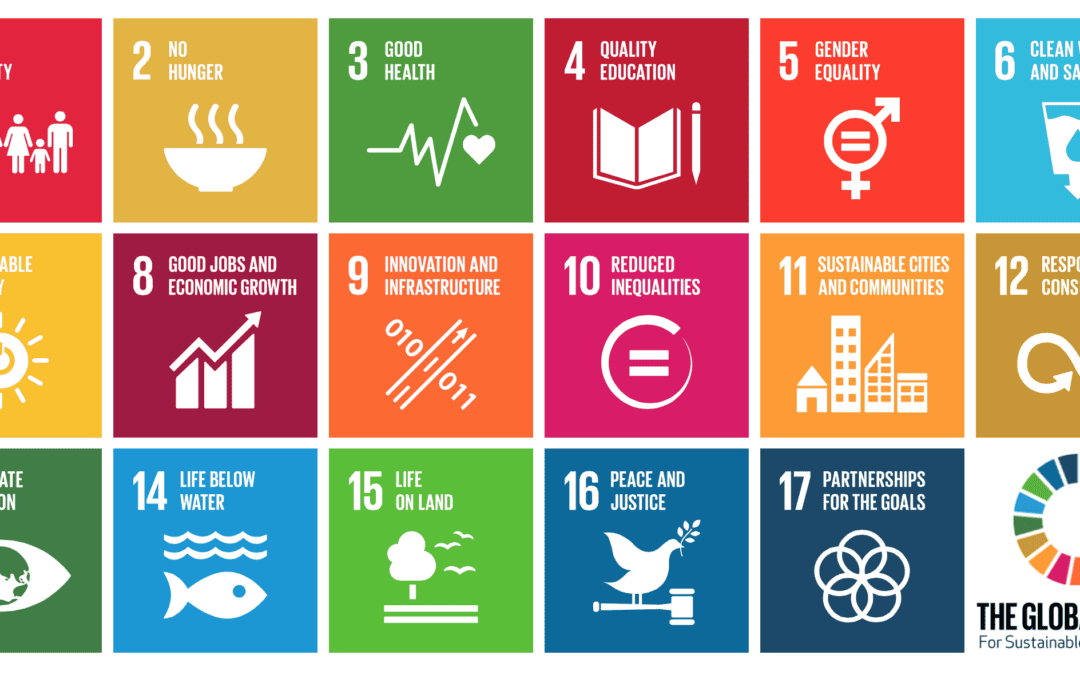
2015 also saw the expiration of the Millennium Development Goals (MDGs) and the transition to the Sustainable Development Goals (SDGs). The SDGs are an ambitious agenda consisting of 17 goals with 169 targets that seek to tackle some of the world’s largest challenges, such as: poverty, hunger, clean water, climate change, education, health, and inequality, to name a few. It is a significant task that can only be undertaken by an institution like the UN.
To highlight a few of the MDG successes, those living in extreme poverty (characterized as living on $1.25 a day) was reduced to 836 million people in 2015 from 1.9 billion people in 1990. In addition, the enrollment for primary school-age children showed an increase. However, the number is not quite where officials wish it to be so there is more work to be done in this regard. A notable achievement was in the area of people garnering access to clean drinking water. There was a net increase of 2.6 billion people since 1990, which was met in 2010—five years ahead of schedule.
Moreover, last July the UN held a financing for development (FFD) conference in Addis Ababa, Ethiopia to discuss how the post-2015 sustainable development agenda would be funded. On the heels of this conference came the landmark climate change agreement in Paris where nearly 200 nations committed to reducing greenhouse gas emissions. This was no small achievement to get close to 200 nations to each agree on one single issue, yet through the leadership of the UN, they made it happen.
Though much work awaits, there is a hopeful anticipation for many around the world that as the implementation of the SDGs proceeds, the curve will continue on an upward trend.
2016 Brings Promise to the Global Body
For all that the UN was able to accomplish in 2015, 2016 promises to be equally successful. To begin, this year could be quite historic as well; Secretary-General Ban Ki-moon’s term expires at year’s end and elections will be held. The biggest question being asked is whether a woman take the helm and become the first to do so. There are a number of very notable names being circulated through the media, and each one certainly has the credentials to take over the leadership role. It is truly an exciting time to be an observer of the UN.
This year holds the possibility of each of us finally witnessing the eradication of polio* in our lifetime. The World Health Organization (WHO), the global health arm of the UN, reported that it has been able to contain the outbreaks in conflict-ridden states such as Syria, Iraq and Somalia through the process of immunizing children over the course of the last two years.
Christopher Maher, the point person on regional polio eradication, commented that there is a chance to “finish polio forever”in 2016. The disease is still prevalent in Pakistan and Afghanistan, but signs are encouraging as the number of cases are declining.
In speaking to delegates at the General Assembly in January, Secretary-General Ban Ki-moon stated that the world body needs to get its “priorities right”by performing its work in a better way.
The UN leader added that sustainable development and climate change are inextricably linked, and it is imperative that the Paris Agreement be enforced as quickly as possible. Furthermore, he added, the worldwide scourge of drugs, the refugee crisis and the problem of youth unemployment are issues that will be addressed this year through specific UN sessions and meetings. Furthermore, WHO will be working very hard to contain the Zika virus, which is most prevalent in Latin America, but also recently has spread elsewhere.
The UN was founded upon the bedrock principles of peace and security. These two important concepts have not gone unnoticed by the Secretary-General. Conflict continues to ravage many parts of the world today, which prevents many of the important UN programs from reaching the ground.
Mr. Ban Ki-moon was adamant that the international community must do more to protect those populations who cannot protect themselves. The UN leader referenced specific areas of the world such as the Middle East and Africa where conflict prevention is of paramount importance. North Korea’s continued missile launches and testing will require heightened attention this year.
As with any large institution, the UN is not without its share of concerns, as The New York Times editorialized last week. The issue of peacekeeping abuses is a serious matter, and should alarm everyone at the highest levels of the global body.
While this year holds promise, there are clearly a host of challenges awaiting—not unlike the last 70 or so years. However, as in the past, the UN will confront each one head on, seeking a solution that will benefit the broader global community.
*Author’s note: On a personal level, it is exciting to see that the scourge of polio may finally be eradicated. It is an issue close to my heart for my Dad, who passed away in April 2015. He contracted polio at the tender age of five. I know he would be happy to see the day it ends.
by Rene Wadlow | Sep 26, 2015 | Peace & Disarmament, United Nations
The struggle against the nuclear weapon cult and threats it poses to the international peace, security and development, like all struggles against belief systems which have outlived their times, is going to be long and arduous.” –K. Subrahmanyam
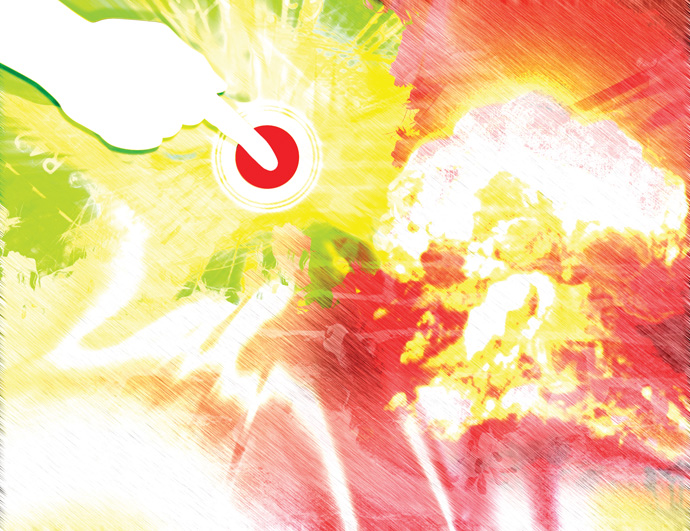
The United Nations General Assembly has designated September 26 as the International Day for the Total Elimination of Nuclear Weapons. It is being celebrated this year for the second time to “enhance public awareness and education about the threat posed to humanity by nuclear weapons and the necessity for their total elimination in order to mobilize international efforts toward achieving the common goal of a nuclear-weapon free world.”
Achieving global nuclear disarmament–or at least forms of nuclear arms control–is one of the oldest goals of the UN. Nuclear weapon control was the subject of the first resolution of the UN General Assembly and it is the heart of Article VI of the Treaty on the Non-Proliferation of Nuclear Weapons (NPT): “Each of the Parties to the Treaty undertakes to pursue negotiations in good faith on effective measures relating to cessation of the nuclear arms race at an early date and to nuclear disarmament, and on a treaty on general and complete disarmament under strict and effective international control.”
A Review Conference on the Treaty is held at the United Nations once every five years since 1975, and the representatives of non-governmental organizations (NGOs) have constantly reminded governments of their lack of “good faith.” I chaired the NGO representatives at the 1975 and 1980 Review Conferences, and while our views were listened to with some interest, the Review Conferences have been a reflection of the status of world politics at the time, not momentum for change.
There are still some 16,000 nuclear weapons in the world, largely in the hands of the US and Russia, some on “ready alert.” There are plans to “modernize” nuclear weapons, and there are at least seven other States with nuclear weapons: North Korea, Pakistan, India and China in Asia; Israel in the Middle East; and France and the UK in Europe. The instability and tensions of current world politics merit that we look at the ways in which governments and NGOs have tried to deal with the existence of nuclear weapons, their control and their possible abolition.
There have been four avenues proposed since 1945 which have been presented, dropped, re-presented, combined with other proposals for political settlements, or linked to proposals for general disarmament or nuclear issues alone.
1. The first avenue proposed was the Baruch Plan, which proposed creating an International Atomic Development Agency that would have a monopoly of all activities connected with atomic research and development, such as mining, ownership and management of refineries and the construction of atomic reactors. The Agency staff would be internationally recruited and would be free from interference from national governments.
However, the Baruch Plan was proposed as the Cold War (1945-1990) was starting to heat up and become more structured. In 1949, the US nuclear monopoly was broken by the explosion of the first Soviet bomb, and then in 1950, war started in Korea. The Korean War led to the next stage, the second and third avenues in nuclear arms policy, someone contradictory but proposed at the same time, and in the light of the Korean War experience.
2. Avenue two proposed that limited war could be carried out, but with nuclear weapons that were smaller than the bomb dropped on Hiroshima and that would not necessarily lead to an all-out war between the US and the USSR. This avenue is most closely associated with Henry Kissinger’s Nuclear Weapons and Foreign Policy. The 1950-1953 Korean War showed that war was a real possibility, due perhaps to political miscalculations, erroneous intelligence, and failure to see how a local situation could have a much broader impact. The Korean War stopped without a victor, leaving a divided Korea, a situation which has gone on until today. The Korean experience augmented by the French-Vietnamese War which ended in 1954 led strategic thinkers to reflect on the nature of limited war.
3. It was in Europe where the opposing NATO-Warsaw Pact forces faced each other most closely that the third avenue was proposed: nuclear-weapon free zones. In October 1957, the Polish Minister of Foreign Affairs, Adam Rapacki, put forward the Rapacki Plan for creating a nuclear-weapon free and neutral zone in central Europe. The first stage would be “freezing” nuclear armaments in Poland, Czechoslovakia, and the two German States. The second stage would consist of reducing conventional armaments and completely denuclearizing the four States.
Although there had been intense discussions within the Warsaw Pact States before the Rapacki proposal was made public, mutual mistrust and suspicion among NATO and Warsaw Pact countries prevented negotiations from being undertaken. The situation was made all the more complicated by Western refusal to recognize the German Democratic Republic.
However, nuclear-weapon free zones took shape after the 1962 Cuban Missile Crisis. Negotiations for a Latin American nuclear-weapon free zone began, and in 1967, 21 Latin American States signed the Treaty of Tlatelolco, which provided a confidence-building framework among nuclear capable regional powers, including Argentina and Brazil. This led to other treaties creating nuclear-weapon free zones in the South Pacific, Africa, and Central Asia.
4. The fourth avenue and the one most discussed at the UN these days is a convention to ban the possession and use of nuclear weapons along the lines of the conventions to ban chemical weapons, anti-personnel landmines, and cluster munitions. These bans are based on the unacceptable humanitarian consequences of the use of nuclear weapons, the inability to distinguish between civilians and military, and other violations of the principles of humanitarian law.
A Nuclear Weapons Convention has captured the imagination of many in the disarmament community, initially among NGOs but increasingly within the governments of non-nuclear States and the diplomatic community. The Nuclear Weapons Convention is strongly modeled on the Chemical Weapons Convention. Having followed from the sidelines the decade-long negotiations in Geneva that led to the Chemical Weapons Convention, I see two major differences.
First, there had not been the wide discussions of the strategic use of chemical weapons as there had been on the strategic use of nuclear weapons in limited war situations. Second, the major chemical companies in Western Europe and the US did not want to get involved in making chemical weapons. The costs for securing the manufacture of such weapons was greater than what they could charge governments for chemical weapons. Western governments were also reluctant to construct government-owned factories for making chemical weapons, all the more so that there existed a 1925 Geneva Protocol against their use. However, there is still money to be made in the nuclear weapons field.
My own view is that effective nuclear-weapon control will come from a combined regional conflict resolution and nuclear-weapon free zone approach that was first set out in the Rapacki proposals. I believe that the Korean Peninsula holds the most potential for a settlement within a nuclear-weapon free zone. There are proposals for re-starting six-power talks, and there are some Track II-NGO efforts along this line. A Middle East nuclear-weapon free zone coupled with conflict resolution and security provisions would be the most necessary given the current tensions and armed conflicts. The recent agreement with Iran may be a step in this direction. India-Pakistan tensions have gone on so long that both States may know how not to push too hard, but there are always dangers of events slipping out of control.
September 26 serves as a reminder of the avenues proposed for nuclear disarmament, but disarmament diplomacy has stalled too often, and inconsistent policies by governments have made the goal of complete elimination seem unreachable in the short term. Nevertheless, we, as non-governmental peacebuilders, must continue to work creatively to generate the groundswell of opinion that will create a momentum of political will to move to a world without war and without nuclear weapons.
by Rene Wadlow | Sep 23, 2015 | United Nations
There is currently an active discussion among UN delegations in New York concerning how the next UN Secretary-General will be appointed in 2016. The discussions are likely to heat up as many heads of government come to New York in late September for a special summit to adopt the post-2015 Sustainable Development Goals. As chair of the Non-Aligned Movement (NAM), Iran is likely to play a leadership role in the selection process both in formal and informal negotiations.
Currently, formal discussions are taking place in the Ad Hoc Working Group on the Revitalization of the General Assembly. There is widespread demand that the General Assembly have a greater role in the selection of the Secretary-General. In the past, the negotiations took place in the Security Council, mostly among the five permanent members. Then the General Assembly was only asked to “bless” the selection made within the Security Council.
Unease with this usual process comes not so much from the choices made as from the lack of inclusiveness of the process itself. There is an increasing demand that all member states know the candidates, their qualifications, and their vision for leading the UN.
This perhaps could be done through a series of presentations and question-and-answer sessions such as those carried out in the European Parliament for the selection of the Commissioners of the European Union. Currently, there is an ad hoc Accountability, Coherence, and Transparency (ACT) group of 27 governments meeting in New York that are considering different possibilities, such as having a term limit for the Secretary-General. A non-renewable term of seven years has been proposed, giving greater scope to implement a vision without pressure from re-election considerations.
But more than just inclusive selection procedures are involved in the discussions. At this time of trying to set broad sustainable development goals, many are asking what should be the role for the United Nations in dealing with the changing scene of world politics? What qualities should the Secretary-General and the leadership team around him possess? The Secretary-General is accorded a central role by the UN Charter and by history. We need a realistic vision of the responsibilities, the potential and the limitations of the UN Secretariat, and the broader leadership of world-level institutions—the World Bank, the International Monetary Fund and the major specialized agencies, such as the ILO, FAO, WHO, and UNESCO, as well as programs within the UN such as the UN High Commissioner for Refugees, the UN Development Programme, and the World Food Programme.
The UN, the financial institutions, and the specialized agencies must work together as a team. However, this broad leadership team must also symbolize the diversity of cultures and geographic areas of the world. Increasingly, there is also a need for gender balance, and some women must be visible at the highest level. The team must also symbolize independence, integrity, and impartiality.
The United Nations was created, as the League of Nations before it, in the shadow of the destruction of worldwide wars. It was the start of the Second World War that was on the mind of those planning the UN Charter in 1944-1945: a conflict which began with a German aggression across recognized state frontiers of Czechoslovakia and Poland with a formal declaration of war by most of the states involved.
Today, the majority of wars are fought within states, not between them. The United Nations faces the fundamental problem that the UN has no explicit mandate for internal armed conflicts beyond a vague “threat to peace” justification for action within a member state. The UN is a state-based organization with an emphasis on disputes among states and “nonintervention in domestic affairs” because those drafting the UN Charter were not thinking of the promotion of human rights at the national level or even of socio-cultural development, which, of course, are interventions into domestic affairs.
Preventing intra-state conflicts cannot be accomplished by the UN alone. Prevention and conflict resolution once violence breaks out requires a multi-track approach, harnessing the abilities of a wide range of actors: the UN, regional state organizations, individual states, and non-governmental organizations (NGOs). Today, many armed conflicts are not fought between competing state formations with clear command structures. State frontiers recognized by the UN are being challenged in pursuit of ethnic aspirations as well as local and provincial autonomy. Armed conflicts as we see in Syria and Iraq are complex affairs between disparate militia groups with no overall leadership. In addition, foreign states are involved, sometimes directly or through less visible security forces.
The old channels of state-controlled diplomacy with recognized officials are no longer operative in these new settings, as we see in the difficulties of knowing who represents what in possible negotiations in the Syria-Iraq conflicts. Peace in such a conflict which is both trans-frontier and internal requires the participation of the internal combatants, exiled political groups, and the representatives of governments with an interest in the outcome.
The UN Secretary-General should be a person who can deal creatively with this changing nature of conflict. She or he must have the political skills to urge governments to give the UN the personnel and financial backing it so badly needs. In addition, the Secretary-General needs the active support of NGOs that have the skills and contacts to develop new approaches to tackling conflicts.
Non-governmental organizations are increasingly the real agents of progress in such areas as ecologically sound development, human rights, relief and health. Harnessing all stakeholders to solve problems is the way forward to mobilize talent and resources.
The UN system is operating in a world of much greater complexity than when it was founded. In order to tackle the range of urgent problems now demanding its attention, the leadership team needs to inspire broad confidence and a willingness to serve the world interest on the part of many. There is a need to improve the level of Secretariat personnel nominated by national governments and to improve the level of UN staff training. This is particularly true of the UN humanitarian emergency operations. There is also a need to improve cooperation with NGOs and academic institutions.
Top quality UN personnel leadership is essential to address the quality of the UN civil service. Restoring the quality and morale of the UN civil service must start with a change in the attitude of member state governments.
To be effective, the UN, its programs, and its specialized agencies need leadership that can promote world interests without undue influence of individual states. The challenges ahead for the emerging world society require strong and devoted leadership in which the Non-Aligned Movement can play a positive role.
by Michael Curtin | Sep 16, 2015 | Global Cooperation, United Nations
In the last few weeks, the world’s attention has been riveted on the crises in China and the upheaval in the emerging markets. We have all felt the consequences of the global economic turmoil. The moral of this story: What happens abroad has significant ramifications here at home. It would behoove the American public to take note of this fact.
This story is no different than the one that will soon play out at the United Nations at the end of September. Heads of State and other well-known dignitaries will descend upon New York City for the 70th UN General Assembly. This is no ordinary meeting of the General Assembly; this year it will pay tribute to the global institution’s 70th anniversary of its founding. The post-2015 development agenda will take center stage as leaders will mark the transition from the Millennium Development Goals (MDGs) to the Sustainable Development Goals (SDGs) that will lead the way forward for the next 15 years.
How do they work? Why should I care?
As with the global economic turbulence we continue to witness on a daily basis leaving none of us unscathed, the SDGs will play a similar role in that all sectors of global society will be touched in some way. From ending poverty and hunger to ensuring the health and well-being of all; to providing education and access to clean water and energy; to growing economies in a sustainably responsible manner to galvanizing the world to act on climate change; to preventing conflicts and promoting peace and ensuring post-conflict peacebuilding, everyone is affected in some way by these goals.
The interconnected and interdependent world in which we all live and work requires each of us to contribute as global citizens and to be good stewards of the environment and the world around us. We are dependent upon one another to make it work; apathy can play no role moving forward if these goals are to succeed.
These goals are guidelines for the world to follow. The criticism of the MDGs was that they were too narrow in scope; the SDGs have expanded upon them to include areas such as human rights and economic development.
In addition, it is now incumbent upon every State to follow and achieve these goals, not only developing or poor nations. The focus now is upon getting to the root causes of global poverty, something the MDGs did not adequately do.
Data shows the arrow is pointing up as a result of UN efforts
There has been a great deal of criticism levied against the UN regarding the MDGs. The SDGs has its share of critics as well. The criticisms have been levied at the number of goals—17—and the number targets—169. However, a closer look at the numbers reveals there has been some remarkable success achieved due to their efforts.
To compare, 50 years ago 20 million children under the age of five died. In 2011, according to the founder of the Copenhagen Consensus Center, Bjorn Lomborg, the world saw a 33% decrease to 6.9 million—still far too high, but a significant drop nonetheless.
In 1970, only 5% of infants were vaccinated against diseases such as measles, tetanus, whooping cough, diphtheria, and polio. When the MDGs began in 2000, this rate increased to 85%, which had the positive effect of saving three million children. Vaccines have proven to work and be effective against a multitude of illnesses.
In the area of education, the rate of children not attending school is estimated to be below 10%; over 50 years ago, it was more than 30%. With respect to global poverty, there has also been a dramatic decrease in people below the poverty line. Based on figures from the World Bank, “…in 2011, 17 percent of people in the developing world lived at or below $1.25 a day. That’s down from 43 percent in 1990 and 52 percent in 1981.”
Where do we go from here?
What these statistics show us is that the UN plays a vital role in transforming the lives of people around the world. It is now incumbent upon the global community to build upon the successes the UN achieved through the MDGs. The SDGs are the next set of ambitious goals the global body has laid out for the next 15 years. It is vital that the world takes heed of what can be accomplished if we all work together for a common purpose.
This article was originally published for The Northern New Jersey Chapter of UNA-USA. It has been cross-posted with the author’s permission.