by Lawrence Wittner | Sep 7, 2026 | Global Cooperation
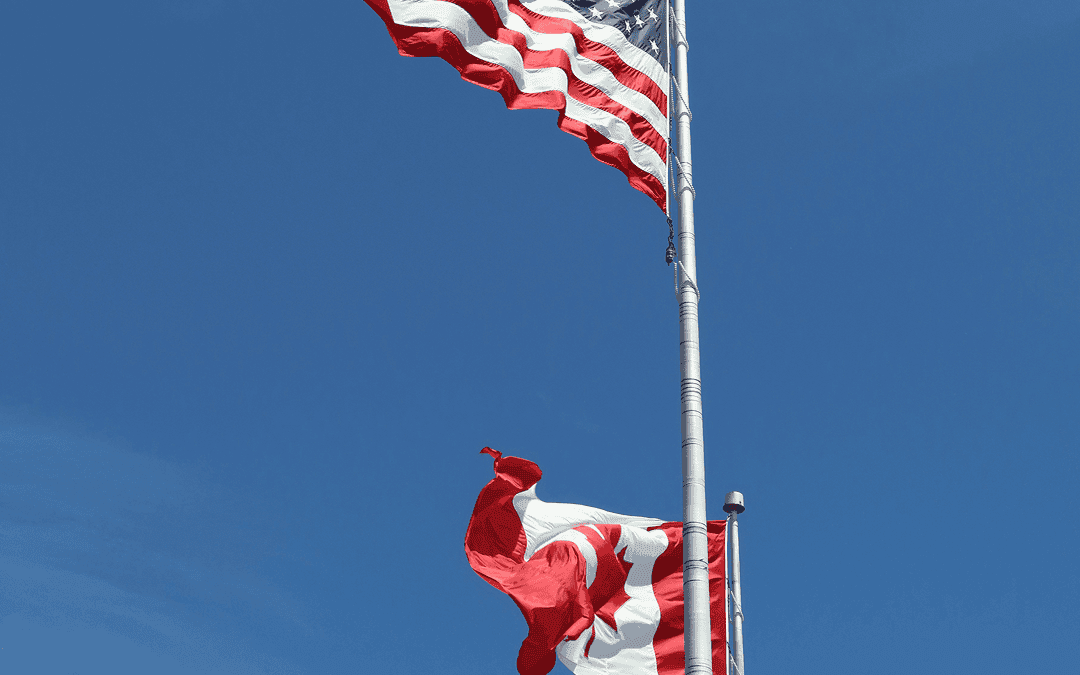
Canada and the United States have frequently maintained that they have a special relationship, characterized by the world’s longest undefended international border, peaceful interaction, common values, and a close defense partnership through NATO.
Nevertheless, the two nations are currently locked in an increasingly destructive battle.
In late 2024, shortly after his re-election as U.S. President, Donald Trump started provoking Canadians by referring to their country as the 51st American state. Over the following months, he continued alluding to Canada’s U.S. statehood, posted a map on his Truth Social media platform showing it as part of the United States, and taunted Canadian Prime Minister Justin Trudeau by calling him “Governor Trudeau.” Canadians could retain “O, Canada” as their anthem, Trump remarked, “but it’ll be for the state.”
Mark Carney, having replaced Trudeau as leader of the Liberal Party as nationwide parliamentary elections loomed, responded bluntly: “America is not Canada, and Canada never, ever will be part of America in any way, shape, or form.” Canadians seemed to agree, for, in response to Trump’s incendiary remarks, they gave the new Liberal leader and his party―initially trailing by huge margins in polls on the forthcoming elections―a stunning election victory.
Trump’s arrogant attitude toward Canada reflects not only his belief that the United States should dominate the Western Hemisphere, but his assumption that the U.S. government, with its vast economy, has the upper hand when it comes to its relationship with Canada. Because the United States purchases the bulk of Canadian exports while Canada purchases only a small fraction of America’s vast exports, “we don’t need Canada,” Trump explained, “they need us!”
In these circumstances, it’s hardly surprising that Trump, a keen admirer of the tariff, has weaponized it to bring Canada to heel. This August, dissatisfied with the Canadian response to his trade demands, he slapped a 50 percent tariff on Canadian imports into the United States. Canada “wants the benefits of being a State, without being one,” he complained.
Carney responded: “Last spring, I warned that America is trying to break us so that they can own us. And promised: ‘That will never, ever happen.’ We are keeping that promise.”
Canadians overwhelmingly approved of Carney’s stance. Polling conducted shortly after U.S.-Canadian talks collapsed indicated that three-quarters of Canadians agreed with Carney. Even Doug Ford, the conservative Premier of Ontario, said Carney had his “full support” and that Trump could “kiss my ass.”
Clearly, something has happened to the friendly relationship between the two nations.
Actually, it was not always so friendly. During the War of 1812 between Britain and the United States, U.S. military forces invaded Canada in the hope of seizing portions of it and annexing them to the United States. But they were soundly defeated by British troops, Canadian militia, and their Native American allies. American enthusiasm for annexing portions of Canada flared up again during the 1840s, when British and American joint control of the Oregon Territory was opposed by those who, rallying behind the slogan “Fifty-four Forty or Fight,” demanded it all. Ultimately, though, the territory was divided at the 49th parallel, with the northern half becoming British Columbia and the southern half forming the states of Oregon and Washington. Cross-border violence, though, did flare up from 1866 to 1871, when armed bands of Irish-Americans conducted Fenian raids on British army forts, customs posts, and other Canadian border targets in an unsuccessful attempt to trade Canada for Irish independence.
Beginning in the 1870s, however, Canadian-American relations improved considerably. Disputes over maritime rights and boundaries were settled amicably, while military alliances between the two governments during the two world wars and the Cold War helped foster good feelings between officials and the public of both nations. Friction did develop, at times, over trade policies, as well as over the Canadian government’s more peace-oriented foreign policy, which included closer cooperation with the League of Nations and the United Nations, plus stronger support for nuclear arms control and disarmament. Canadian public opinion was usually strongly pro-American―at least until the advent of Donald Trump, when such opinion dropped precipitously. Also, unlike Trump, 80 percent of Americans have a favorable view of Canada.
Sadly, then, the many years of increasingly friendly relations between Canada and the United States have been sabotaged by Trump’s reckless, domineering behavior.
Of course, the cordial relationship between the two North American nations could be restored by a variety of future developments, including a sharp repudiation of Trump in the November 2026 U.S. Congressional elections, his departure from public office, or merely his sudden obsession with another issue.
Even so, the ease with which the Canadian-American relationship has been damaged illustrates the fragility of international relations and, more specifically, the fact that centuries of growing cooperation among nations can be upended by the sudden tantrums or crackpot nostrums of individuals. Indeed, the current situation is all too reminiscent of how deranged and power-mad national rulers wrecked the international order in the past.
Remedying this deeper problem of international fragility calls for a shift toward a world order more strongly grounded in international law. Following this law, developed by the global community, would provide a considerably more rational and effective way to handle international disputes and foster international cooperation.
Thanks to centuries of effort, there are currently international institutions―for example, the United Nations, the International Court of Justice, and the International Criminal Court―that create this international law and interpret it.
Admittedly, these international institutions remain relatively weak, largely because the rulers of powerful nations prefer to bypass them so that they can keep the reins of power in their own hands. Nevertheless, with public effort, these institutions can be strengthened so that they can more effectively perform their vital role of safeguarding the human community.
The current crisis in U.S.-Canadian relations is the latest indication that it’s time to get on with that job.
by Andrew Idgal | Aug 19, 2026 | Global Cooperation
From raw materials and food staples, to advanced manufactured goods and life-saving humanitarian supplies, 12.3 billion tons of goods move by sea each year—a nearly fivefold increase from 2.6 billion tons in 1970, and the highest volume in recorded history (UNCTAD, 2018, 2024). This level of trade is facilitated largely by the expectation that shipping lanes remain open and free. Yet, this expectation may not always hold, and disruptions to sea lanes can have far-reaching, long-lasting, and unevenly experienced impacts.
During the eight years that the Suez Canal was closed between 1967 and 1975, trade between countries whose shipping routes depended on the canal fell by roughly one-fifth (Feyrer, 2009). For every dollar that was lost in trade, national incomes across the affected countries contracted by 25 cents (Feyrer, 2009).
Today, over 80% of world trade by volume moves by sea (UNCTAD, 2018). Much of this trade concentrates through a handful of chokepoints—the Strait of Malacca carries 23.7% of seaborne trade volume, the Strait of Hormuz 11.1%, and the Suez Canal roughly 10% (UNCTAD, 2024)—making the entire system vulnerable to disruption at just a few narrow passages. Recent disruptions in the Red Sea caused by the Houthis, a Yemeni armed group controlling much of northern Yemen, reduced Suez traffic by 90%, added approximately $1 million per voyage in rerouting costs, and may have increased global consumer prices by approximately 0.6% (Defense Intelligence Agency, 2024; UNCTAD, 2024).
And more than just merchant trade is disrupted. Freight costs rose more than 40% and transit times increased from two weeks to over a month when the International Rescue Committee (IRC) suspended the humanitarian shipping route through the Red Sea to Sudan (Yusuf, 2024). In Yemen, where food insecurity threatens half of the roughly 34 million population, the United Nations World Food Programme’s (WFP) sea-freighted cargo dropped 81% year over year (World Food Programme, 2024). These are not isolated incidents. They reveal a failure of world governance in critically shared spaces.
While collective security for land-based conflict was addressed in Chapter VII at the UN’s founding, the same cannot be said of conflict on the remaining 70% of the Earth’s surface. In 1982, the United Nations Convention on the Law of the Sea (UNCLOS) codified freedom of navigation as a legal right but created no enforcement mechanism. This may be the Charter’s most consequential and under-appreciated gap. Put simply, freedom of navigation is the fundamental global public good left ungoverned by the UN. The current system of unilateral provision is economically irrational and strategically fragile. At the same time, the technology necessary to enforce freedom of navigation is increasingly more affordable. Therefore, Article 109 should be invoked to add a new chapter to the Charter establishing a multilateral maritime security force.
The current system faces two distinct and interconnected problems.
First, freedom of navigation on the high seas is a classic global public good: one ship’s safe passage does not reduce another’s, and it cannot, by definition, be denied to non-contributors (Ostrom, 1990; Sandler, 2020). This naturally creates a free-rider problem because every trading nation benefits from secure sea lanes whether or not it contributes to their protection, each has an incentive to let others bear the cost. Today, one state provides the overwhelming share of the world’s maritime security: the U.S. Department of the Navy (DON) alone spent $255.8 billion in fiscal year 2024. Historically, Washington’s commitment to global freedom of navigation has been so credible that allies can rationally redirect their own defense spending elsewhere (Feldman & Shipton, 2024). After the North Atlantic Treaty Organization’s (NATO) 2014 Wales spending pledge, even non-U.S. allies’ naval capabilities declined–a pattern consistent with burden shifting away from maritime assets when U.S. commitment remains credible.
It is only rational for other states to free ride such an under-institutionalized public goods regime. Furthermore, a perverse structure emerges: the better the U.S. Navy is at assuring maritime stability, the less anyone else needs to invest in it. The United States improving actually makes the system more fragile, because the gap between its contribution and everyone else’s widens with every success (Heerman & Wessel, 2025).
The second issue lies in UNCLOS’ enforcement-mechanism-free legal structure. While establishing the legal right of freedom of navigation (FON), enforcement rests entirely on flag state jurisdiction. Flags of convenience—where shipowners register vessels in states like Panama, Liberia, or the Marshall Islands that impose minimal regulation—create what the House of Lords called a “jurisdictional vacuum on the high seas” among states with “no meaningful capacity to enforce regulations” (House of Lords International Relations and Defence Committee, 2022). Its dispute settlement mechanisms are “not applicable to breaches of law carried out by non-state actors” (House of Lords International Relations and Defence Committee, 2022)—exactly the actors, from Houthi missile crews to Somali pirates, that pose persistent threats to shipping. Even when arbitration does apply to state actors, compliance is voluntary: China rejected the 2016 Permanent Court of Arbitration ruling on the South China Sea and continued building military installations on disputed reefs with no enforcement consequence (Permanent Court of Arbitration, 2016).
The clearest illustration of both failures together is the Black Sea Grain Initiative (BSGI). Brokered by the United Nations and Türkiye in July 2022, the BSGI was a diplomatic success. It moved roughly 33 million metric tons of grain to 45 countries in a single year, including 725,000 tons purchased by WFP for Afghanistan, Ethiopia, Kenya, Somalia, Sudan, and Yemen. It helped drive the FAO Food Price Index down more than 23 percent from its March 2022 peak (United Nations, 2023). But its Joint Coordination Centre had only voluntary security guarantees. On 18 July 2023, Russia simply walked away. Two days later, it struck Odesa’s port infrastructure, destroying an estimated 60,000 tons of grain. The Security Council could not act against a withdrawing permanent member.History shows that enforceable protection works when it is provided. During the Somali piracy crisis, roughly 90% of WFP food aid to Somalia arrived by sea. When naval escorts began in November 2007, no escorted WFP ship was ever attacked. When escorts lapsed in mid-2008, shippers refused to load WFP cargo for Somalia entirely (UN News, 2008). The lesson is plain: armed maritime protection of humanitarian corridors works, and without it, the corridors collapse.
Ad hoc coalitions of the willing are useful as stopgaps and moral victories, but they remain voluntary, temporary, and are often commanded by a single capital. This is a recurring pattern. They are not a standing public institution for a standing public good. The issue is not that diplomacy fails, but that diplomacy without enforceable maritime security has no base on which to be effective. So what is to be done?
The Charter’s framers expected Article 109’s comprehensive review mechanism to be used relatively early in the organization’s life (Global Governance Forum, 2024; United Nations, 1945). Eighty years on, it has not occurred once. The failure to address the gaps in securing the maritime commons is a fitting candidate for a first review.
A helpful reform may look like a new Charter chapter creating a Maritime Collective Security Organization (UNMCSO). It would have three clear mandates: (1) protect freedom of navigation in designated international chokepoints and sea lines of communication; (2) secure humanitarian maritime corridors when disruption risks mass civilian harm; and (3) provide integrated surveillance, deterrence, and response against maritime coercion by state and non-state actors. Funding would be assessed in proportion to each member’s share of global seaborne trade by volume: durable commons governance requires proportional equivalence between the benefits a member receives and the costs it bears Ostrom (1990). The UNMCSO would operate in two layers.
First, a persistent network of unmanned surface vessels (USVs), aerial drones, and shared maritime domain awareness systems would provide wide-area monitoring, convoy screening, and low-cost interception against asymmetric threats. This is where technological change alters feasibility. Low-cost interceptors have increasingly challenged unfavorable cost-exchange ratios in drone defense, with systems in the low-thousands range engaging attack drones priced an order of magnitude higher (Khan, 2026; Segal, 2026). At the platform level, U.S. congressional planning around the Modular Attack Surface Craft (MASC) program points toward several dozen armed autonomous vessels as a credible force concept, while conventional frigates remain billion dollar platforms (Congressional Budget Office, 2020; Congressional Research Service, 2026). These autonomous systems don’t replace navies, but they dramatically reduce the fixed cost of presence.
Second, an international, rotating conventional-deterrent fleet of frigates and destroyers contributed by member states, modeled directly on UN peacekeeping troop contributions, would provide credible deterrent presence at major chokepoints such as Malacca, Hormuz, and Bab el-Mandeb. Command would rotate among contributing regions rather than resting permanently with one state, unlike the U.S.-commanded Combined Maritime Forces (CMF).
Evidence that this model works comes from the field: Ukraine reopened its own grain corridor unilaterally, using naval drones for sea denial rather than escort. Relatively low-cost Ukrainian uncrewed systems helped force a much larger fleet into a defensive posture and retreat key assets away from contested waters (Raveendran, 2025; Sutton, 2024). In the assessment of the Royal United Services Institute, this force pushed the Russian fleet back toward Novorossiysk and, “denied Russia sea control” over the western Black Sea (Sutton, 2024). By December 2023, Ukraine was exporting 4.8 million metric tons of grain per month, exceeding the BSGI’s own peak volume, without any diplomatic concession from Moscow. The drones did not escort grain ships. Instead, they removed Russia’s capacity to threaten the corridor, and that removal of threat persuaded insurers and shippers to use the route again. This is credible enforcement that functions independent of the adversary’s cooperation, and such capacity is now affordable to more states at war, not only to a superpower.
Ratification would be no easy feat. Any Charter amendment under Article 109 requires approval by two-thirds of UN member states, including all five permanent members of the Security Council (United Nations, 1945). But every P5 member is a major maritime trading nation with a direct stake in stable sea lanes, and burden-sharing reduces what each of them, including the United States, must spend unilaterally. Additionally, some will ask whether autonomous systems can be trusted with enforcement authority. The EU’s COLOSSUS project, a Horizon Europe initiative building unmanned swarm patrol systems for port security (European Commission, 2025), and the deployment of Ukrainian-designed STING interceptors at the U.S. Central Command’s (CENTCOM) Prince Sultan Air Base (Khan, 2026) demonstrate that these technologies already operate within existing legal and command structures.
By trade-assessing and rotating command, UNMCSO would be far more democratic than the status quo, in which one state’s domestic politics largely decide whether the global commons remains open. Nations disproportionately dependent on seaborne imports and disproportionately harmed by shipping disruptions currently have no voice in maritime security decisions made almost entirely in Washington (UNCTAD, 2024). Trade-proportional funding lets smaller nations contribute in proportion to their stake while still holding formal governance standing.
The causal chain has already been demonstrated twice across generations. In Feyrer’s historical natural experiment, chokepoint closure reduced trade and then income (Feyrer, 2009). In current crises, maritime disruption increases logistics costs, raises consumer prices, and degrades humanitarian delivery (Defense Intelligence Agency, 2024; UNCTAD, 2024; World Food Programme, 2024; Yusuf, 2024). The status quo responds with legal rights that lack executors, diplomacy that lacks enforcement, and burden sharing that relies on voluntary restraint of free-rider incentives.
In that light, Charter reform is not institutional ambition for institutional ambition’s sake—it is a needed correction. If convened, an Article 109 General Conference should consider a new chapter establishing an institution like the one explored in this paper: a standing, trade-proportionally funded, democratically governed maritime collective security institution built on cooperation and the force asymmetries enabled by technology. The mechanism exists and the technology exists. The only variable remaining is political will.
References
Congressional Budget Office. (2020). The cost of the Navy’ s new frigate. Congressional Budget Office. https://www.cbo.gov/publication/56675
Congressional Research Service. (2026). Navy large unmanned surface vessels (USVs): Background and issues for Congress (No. R45757). Congressional Research Service. https://www.congress.gov/crs-product/R45757
Defense Intelligence Agency. (2024). Yemen: Houthi attacks placing pressure on international trade. Defense Intelligence Agency. https://www.dia.mil/Portals/110/Images/News/Military_Powers_Publications/YEM_Houthi-Attacks-Pressuring-International-Trade.pdf
European Commission. (2025). COLOSSUS: Multi-purpose unmanned vehicle swarm patrol intelligence platform for port security and resilience (Project 101225980). European Commission, CORDIS. https://cordis.europa.eu/project/id/101225980
Feldman, N., & Shipton, M. (2024). Gunboats and butter: The two percent guideline and NATO burden shifting in the maritime domain. Contemporary Security Policy. https://doi.org/10.1080/13523260.2024.2343637
Feyrer, J. (2009). Distance, trade, and income: The 1967 to 1975 closing of the Suez Canal as a natural experiment. NBER Working Papers, (15557). https://doi.org/10.3386/w15557
Global Governance Forum. (2024). Article 109, for a renewed UN Charter. https://globalgovernanceforum.org/un-charter-reform-coalition/
Heerman, K., & Wessel, D. (2025). Chokepoints and coercion: Iran’ s challenge to maritime openness. Brookings Institution. https://www.brookings.edu/articles/chokepoints-and-coercion-irans-challenge-to-maritime-openness/
House of Lords International Relations and Defence Committee. (2022). UNCLOS: The law of the sea in the 21st century (HL Paper 159). House of Lords. https://committees.parliament.uk/publications/9005/documents/159002/default
Khan, B. (2026). Shahed drone: Iran’ s attrition weapon and the 2026 cost crisis. Quwa. https://quwa.org/iran/military-news-iran/shahed-drone-irans-attrition-weapon-and-the-cost-exchange-crisis-of-2026/
Ostrom, E. (1990). Governing the commons: The evolution of institutions for collective action. Cambridge University Press.
Permanent Court of Arbitration. (2016). The South China Sea arbitration (The Republic of the Philippines v. The People’ s Republic of China) (Case No. 2013-19). Permanent Court of Arbitration. https://pca-cpa.org/en/cases/7/
Raveendran, S. (2025). Sea denial: The Ukrainian case study and the future of naval warfare. Journal of Strategic Security, 18 (4). https://doi.org/10.5038/1944-0472.18.4.2564
Sandler, T. (2020). Global public goods: A survey. Journal of Economic Literature, 58 (3), 648–680. https://doi.org/10.1257/jel.20191546
Segal, J. (2026). Better late than never, US and allies race toward Ukrainian counter-Shahed tech. Foreign Policy Research Institute. https://www.fpri.org/article/2026/03/better-late-than-never-us-and-allies-race-toward-ukrainian-counter-shahed-tech/
Sutton, H. I. (2024, August 20). Uncrewed platforms have been critical to Ukraine’ s success in the Black Sea. Royal United Services Institute. https://www.rusi.org/explore-our-research/publications/commentary/uncrewed-platforms-have-been-critical-ukraines-success-black-sea
UN News. (2008, August 6). UN hails Canada’ s decision to provide escorts for food ships heading to Somalia. https://news.un.org/en/story/2008/08/268492
UNCTAD. (2018). 50 years of review of maritime transport, 1968–2018: Reflecting on the past, exploring the future. United Nations Conference on Trade; Development. https://unctad.org/system/files/official-document/dtl2018d1_en.pdf
UNCTAD. (2024). Review of maritime transport 2024 . United Nations Conference on Trade; Development. https://unctad.org/publication/review-maritime-transport-2024
United Nations. (1945). Charter of the United Nations. https://www.un.org/en/about-us/un-charter/full-text
United Nations. (2023). The Black Sea Grain Initiative: What was achieved? Why was it important? https://www.un.org/en/black-sea-grain-initiative/achievements
World Food Programme. (2024). Yemen annual country report 2024. United Nations World Food Programme. https://reliefweb.int/attachments/bd15b9d7-efcc-472c-ab20-bd1eb2f8bb27/WFP%20Yemen%20-%20Annual%20Country%20Report%202024%20-%20Full%20Report%20%28English%29.pdf
Yusuf, M. (2024). IRC suspends Red Sea route for Sudan aid amid rising cost, risks. Voice of America. https://www.voanews.com/a/irc-suspends-red-sea-route-for-sudan-aid-amid-rising-cost-risks/7506761.html
by Lawrence Wittner | Jul 9, 2026 | Global Cooperation
As Americans and people of other former colonies recognize, there’s a great deal to be said for national independence.
But, at times, we might also wonder: is it sufficient?
Until recently in human history, imperialism was widespread. In 1939, Britain’s Empire and Commonwealth alone had direct or de facto political and economic control of 25 percent of the world’s population and 30 percent of its land mass. In fact, only a century ago, nearly half of today’s independent nations were European colonies.
Imperialism, of course, had severe drawbacks. For the colonized, these drawbacks included genocide, enslavement, exploitation, and the looting of resources. But the colonizers, too, despite the vast riches acquired by a small minority among them, suffered losses. They perished in imperialist wars, died of starvation and diseases, and became infected by arrogance, brutality and racism. Above all, imperialism denied people in the colonies the right to self-government and, therefore, the right to determine the future of their own nations.
But World War II destabilized the imperialist system and, also, discredited it. As a result, a vast wave of decolonization occurred in the aftermath of the war, especially in the 1950s and 1960s. Although there are still holdouts from the worldwide anti-imperialist approach―Vladimir Putin, committed to annexing Ukraine, Benjamin Netanyahu, battling to prevent Palestinian statehood, and Donald Trump, constantly demanding new territory―for the most part national independence has become the acceptable norm.
The problem, however, is that although national independence is preferable to imperialist domination, it does not get us very far toward solving some of the world’s most pressing problems.
Perhaps the most serious of the problems facing us today is war, with wars currently raging throughout large portions of the world. Global military spending continues to soar (reaching $2.9 trillion in 2025), with enormous increases already slated for the future. The result is―and seems likely to continue to be―an enormous loss of lives and economic resources.
Nuclear weapons, of course, threaten to turn war into a catastrophe almost beyond human comprehension, annihilating virtually all life on earth. And yet, in a sharp break with the nuclear arms control and disarmament measures of past decades, the nuclear powers have recently abandoned their commitment to reducing and, ultimately, abolishing the nuclear menace. Having increased their nuclear spending by 19 percent in 2025, they are currently developing a dazzling array of new nuclear weapons.
How are nations going to deal with the immense problem of war and modern weaponry without collective action? Certainly, the solution to the problem does not lie in the hands of any one nation.
If human beings, as well as other species, are not exterminated in the near future by war, they are likely to face gradual extinction by environmental catastrophe. Global warming, the loss of biodiversity, air pollution, deforestation, melting ice caps, sea level rise, soil degradation, overfishing, and a host of other ills are already here and leading to an increasingly unsustainable, unlivable future. Meanwhile, intense heat, raging wildfires, and massive floods are destroying agriculture and sending millions of desperate climate refugees fleeing from their homelands.
Effective protection of the world’s environment surpasses the ability of any one nation, however well-meaning. Surely it is a global matter, requiring global cooperation.
Diseases, of course, also transcend national lines. The COVID-19 pandemic, for example, caused between 15 million and 18 million deaths in nations around the world. But, of course, in recent decades there have been other disease epidemics and pandemics that have shown no regard for national boundaries, including HIV/AIDS, malaria, influenza, hepatitis, SARS, swine flu, dengue fever, Western African Ebola, mpox, MERS, and cholera.
When it comes to diseases, there has been widespread recognition that a global approach is necessary. As a result, 192 nations belong to the World Health Organization (WHO). Three nations, however, stubbornly resist WHO membership. The United States is one of them, thanks to the decision of U.S. President Trump to withdraw from it.
Numerous other challenges―including widespread poverty, the irresponsible behavior of multinational corporations, mass migration, resource scarcity, and the risks of advanced technologies like artificial intelligence―also suggest the need for global collaboration.
These kinds of global issues are frequently discussed at the United Nations, leading to statements made by the UN Secretary-General and other UN officials that appeal for remedial action. But, unfortunately, some nations, and especially the great powers, which seem less committed to global betterment than to their own national agendas, have seen to it that the United Nations is denied the authority and the resources to adequately address these challenges. Russia, for example, has repeatedly vetoed UN Security Council resolutions calling for an end to its continued military invasion, occupation, and annexation of Ukraine. For its part, the United States has compiled a debt of nearly $4 billion to the cash-strapped United Nations by halting its payments for UN dues and UN peacekeeping operations.
The logical solution to the frustration of collective action is to strengthen the United Nations. Several proposals have been advanced along these lines, including enhancing the power of the General Assembly and limiting the veto in the Security Council. In addition, a campaign has recently been launched to reduce the obstacles to more effective UN action in global affairs by employing Article 109 of the UN Charter to hold a UN Charter review conference. If this conference were held and the Charter revised, it could transform world organization into what the campaign calls “a stronger, fairer, and more inclusive international system.”
But the strengthening of the United Nations won’t occur automatically. It will require worldwide public pressure, driven by citizens’ organizations committed to peace, environmental sustainability, public health, and other global imperatives. Ultimately, it’s up to these organizations and to their allies among wise public officials to secure the next great shift in human consciousness and behavior―a shift from a parochial national independence to the interdependence of nations.
by Lawrence Wittner | Jun 11, 2026 | Global Cooperation
One of the curious ironies of our time is that, although many politicians spout heated nationalist rhetoric, rail against foreign nations, and belittle international cooperation, this approach to international affairs is not at all what most people want.
The climate of aggressive nationalism is clear enough. In nations around the globe, demagogues (usually of a rightwing variety) whip up xenophobia, preach superpatriotism, demand vast military buildups, and―if holding public office―often launch invasions of other nations under the banner of restoring an allegedly glorious national past.
But what is often overlooked is that, across the planet, most people favor a very different way of engaging with the world. In late 2025, Focaldata, a major research company commissioned by the Rockefeller Foundation, conducted a landmark survey of 36,405 people across 34 countries. The resulting report, Demanding Results: Global Views on International Cooperation, revealed that 55 percent of people worldwide “believe their country should cooperate on global challenges even if it means compromising on national interests.” If international cooperation was proven to solve global problems, public support jumped to 75 percent. Respondents viewed such cooperation as essential for food and water security, jobs, health, trade, and climate.
Other opinion surveys confirm the widespread nature of internationalist sentiment. An Ipsos poll conducted between February and April 2026 found a substantial increase over the previous year in support for global solidarity and cooperation, with net disagreement shifting to net agreement. Among the more than 22,000 adults in the 31 countries surveyed, nearly two-thirds now supported the claim that, “for certain problems, like environmental pollution, international bodies should have the right to enforce solutions.” Some 42 percent (a plurality) agreed with the idea that “my taxes should go towards solving global problems.” And nearly four out of ten respondents (a plurality) endorsed the statement: “I consider myself more a world citizen than a citizen of the country I live in.”
Another measure of the worldwide support for international cooperation is provided by polling on public attitudes toward international organizations. The Rockefeller Foundation-Focaldata study reported that public trust was strong for the United Nations (58 percent) and the World Health Organization (60 percent), although weaker for international financial institutions. The global popularity of the United Nations was also attested to by a Pew Research Center survey that appeared in September 2025. Covering 31,938 adults in 25 countries, it found that a median of 61 percent of adults had a favorable view of the world organization, while only 32 percent had an unfavorable one.
Even proposals for new, avant garde global institutions have attracted more public support than opposition. Commissioned by Democracy Without Borders, Nira Data conducted a global survey in September 2025 of public attitudes toward the election of a citizen-elected world parliament to handle global issues. The survey, released in January 2026, drew upon 117,000 people in 101 countries that held 90 percent of the world’s population. The finding was that 40 percent of respondents approved of the world parliament idea, while only 27 percent opposed it.
But what about the United States? Surely in this flag-waving nation, engulfed in the “America First” rhetoric of the Trump administration and its MAGA supporters, we might expect that the ideals of global solidarity and cooperation would be supported by no more than a small minority.
But that’s not the case at all.
One of the most striking findings of the Rockefeller Foundation-Focaldata survey is that 61 percent of U.S. respondents believed that the United States should cooperate on global challenges even it meant compromising on some national interests.
When it came to the United Nations, the Pew Research Center report revealed that 57 percent of Americans held a positive view of the world organization, as compared to 41 percent with a negative one. Moreover, it found that positive views of the United Nations had increased by 5 percent over the preceding year.
A study by the Chicago Council on Global Affairs, issued in September 2025, reported an even more favorable public attitude toward the United Nations. Two-thirds of the Americans surveyed, it noted, said that the United States should be more willing to make decisions within the framework of the United Nations, even if this meant that the country would sometimes have to go along with a policy that was not its first choice.
Admittedly, opinion surveys found that the level of support for international cooperation varied significantly from country to country. Thus, for example, the backing for international cooperation when that meant compromising on some national interests was greater in India (81 percent) and South Korea (73 percent), the countries highest on the scale, than in Argentina (41 percent) and Japan (34 percent), the countries at the bottom of the scale.
Furthermore, there was often a political dimension to worldwide public attitudes toward foreign affairs. According to the Pew Research Center, “people who place themselves on the left of the ideological spectrum are more likely than those on the right to have a positive view of the UN.”
This political division was particularly wide in the United States, where, as the Pew report maintained, “81% of liberals―versus 34% of conservatives―have a favorable opinion” of the United Nations. When it came to the issue of support for cooperation with other nations, the surveys by Rockefeller-Focaldata and the Chicago Council on Global Affairs both found substantial differences between the attitudes of Democrats (quite positive) and Republicans (far more negative).
Even so, in most countries, including the United States, support for international solidarity and cooperation is very substantial, and growing. Consequently, political activists and politicians shouldn’t be reluctant to speak out for them. Indeed, given the popularity of this internationalist approach to global affairs, it might even prove a winning political issue.
by Lawrence Wittner | Dec 19, 2025 | Global Cooperation
Pundits frequently remark on the warm and friendly relationship between Vladimir Putin and Donald Trump. In explanation, some suggest that Putin possesses compromising material on Trump. Others point to their autocratic style and their right-wing agendas.
But another factor plays a role in the Putin-Trump bromance: their embrace of great power imperialism.
For example, their aggressive policies toward Ukraine and Venezuela are remarkably similar. Putin began his takeover of Ukraine by charging that its government was controlled by “fascists” and, moreover, that its closer relations with Western Europe would irreparably damage Russian national security. Similarly, Trump has sought to overturn the Venezuelan government, arguing that it is controlled by drug traffickers and represents a significant menace to U.S. national security.
In fact, both national leaders seem to be driven by more traditional concerns. Before Ukraine’s recent independence, that land, for centuries, had been part of the Russian empire, and, through reconquest, Putin has sought to restore Russia’s imperial glory. As for Trump, the flimsiness of the drug trafficking charges and his obsession with military power and fossil fuels suggest that he is primarily concerned with using military power to oust a stubbornly independent regime and, thereby, gain control of Venezuela’s proven oil reserves, the largest in the world.
Both Putin and Trump began gradually with a display of vast military might, hoping to intimidate these smaller nations and secure their goals. When Ukraine resisted capitulation, a full-scale invasion ensued. The same pattern appears to be playing out in U.S. relations with Venezuela.
Meanwhile, like sophisticated mob bosses, Trump and Putin are attempting to avoid conflict with one another by staking out different territory.
In accord with this approach, the Trump administration’s official National Security Strategy, released on December 4, promotes an arrangement for the two great powers to focus on separate imperial spheres. Avoiding any suggestion that Russia is a threat to the United States, the document instead criticizes European officials for blocking U.S. efforts to end the Ukraine War on terms advanced by Putin. It also prioritizes reestablishing “strategic stability with Russia.” Europeans, it adds disparagingly, face “civilizational erasure” thanks to the immigration of non-white people, and should support Europe’s right-wing, “patriotic” parties, which follow the Russian line on European affairs.
Having more or less abandoned Europe to the Russian imperium, the Trump National Security Strategy allocates Latin America to the United States. Invoking what it calls the “Trump Corollary” to the Monroe Doctrine, the document declares that “the United States must be preeminent in the Western Hemisphere as a condition of our security and prosperity―a condition that allows us to assert ourselves confidently where and when we need to in the region.” This assertion, the document explains, includes the use of “lethal force.”
Naturally, the Russian government is pleased by Trump’s new National Security Strategy. “The adjustments we’re seeing…are largely consistent with our vision,” declared the Russian regime’s official spokesperson, Dmitry Peskov. “We consider this a positive step.”
Thus far, the Venezuelan conflict, like its Ukrainian counterpart, is being managed within this collaborative framework. Although the Russian government has provided substantial military aid to the Maduro government in the past, it has rejected Maduro’s more recent and pressing request for military hardware to fend off a U.S. military invasion. Instead, Russian support for the embattled regime has been reduced to statements, by lower-level officials, expressing alarm and concern. “We hope that the Trump administration will refrain from further escalating the situation,” observed Russia’s Deputy Foreign Minister on December 7, and “we urge it to do so.”
The tepid nature of this support for Venezuela might reflect Russia’s preoccupation with the demands of its military invasion of Ukraine. But it might also result from Putin’s acceptance of the Trump administration’s proposal that, when it comes to empire, the Western Hemisphere belongs to the United States, while Europe belongs to Russia.
Of course, this relapse into the crude great power imperialism of the past comes as a shock to a world that has witnessed the gradual development of international law and attempts at its enforcement. Are we really condemned to live on a planet where military might makes right?
Not necessarily, for there is an alternative for coping with the stormy world of international relations: democratic global governance.
Nations have been working to develop a less violent, more equitable world for more than a century and, as a result, there are now international institutions in existence that have begun the slow, painstaking process of building it. These include the United Nations, the International Court of Justice, and the International Criminal Court (ICC).
Now, given the revival of retrograde behavior, it’s necessary to empower them further.
A key measure along these lines would be to break the disproportionate influence of the great powers in the UN Security Council. Article 109 of the UN Charter provides a procedure for amendments through convening a Charter Review Conference. This conference could democratize international security operations by ending or modifying the veto in the Security Council. Or it could simply abolish the Security Council and transfer its responsibilities to the General Assembly, where majority rule prevails.
Other reform measures include adding a UN Parliamentary Assembly, with representatives chosen by the people rather than by governments, and increasing the jurisdiction and use of the International Court of Justice.
Democratic global governance could also be enhanced by increasing the number of countries ratifying the Rome Statute of the ICC. At present, only 125 nations are parties to the ICC, with some of the most powerful, such as the United States, Russia, China, India, and Israel, remaining holdouts―one additional illustration of how the great powers manage to operate with impunity in the realm of international affairs.
Great power imperialism can be ended. But it will take a major effort on the part of people and nations.
by Lawrence Wittner | Jul 28, 2025 | Global Cooperation
At a time when international cooperation provides the key to preventing a variety of global calamities―including nuclear war, climate catastrophe, and massive starvation―it’s tragic that major nations, ruled by nationalist, rightwing parties, are on a collision course with the organizations that represent the international community.
Chief among these international organizations is the United Nations, with a Charter that bans “the threat or use of force against the territorial integrity or political independence of any state.” Nevertheless, ignoring this ban, the Russian government has engaged since February 2022 in a massive military invasion and occupation of Ukraine, the Israeli government has continued a brutal occupation and military bombardment of Gaza, and the President of the United States has ordered the bombing of Iran and talked glibly of seizing Gaza, Greenland, and the Panama Canal.
These same nations have refused to comply with or stymied the mandates of numerous key international organizations.
The Russian government has refused to abide by the February 2022 ruling of the International Court of Justice that Russia cease its military invasion of Ukraine immediately, has defied repeated votes by the UN General Assembly condemning its invasion, occupation, and annexation of Ukraine, and has rejected compliance with an International Criminal Court arrest warrant for Russian President Vladimir Putin for his regime’s kidnapping of Ukrainian children. In the UN Security Council, Russia used its veto to frustrate international denunciation of its war on Ukraine and condemnation of Russian annexation of Ukrainian territory.
The Israeli government has spurned vast numbers of UN General Assembly resolutions calling for fair treatment of Palestinians and an end to Israeli occupation of their land or to honor the International Criminal Court’s arrest warrant for Prime Minister Benjamin Netanyahu for war crimes against humanity in Gaza.
For its part, the U.S. government, under the new administration of Donald Trump, belittled the United Nations, pulled the United States out of the World Health Organization, abandoned the UN Human Rights Council, suspended U.S. payment for the UN Relief and Works Agency for Palestine Refugees, and announced a review of its membership in the UN Educational, Scientific, and Cultural Organization. It also employed its veto to block passage of a UN Security Council resolution demanding a permanent ceasefire in Gaza.
The fervent resistance of these governments to international authority is illustrated by their vehement responses to the work of the International Criminal Court (ICC), a global juridical entity endorsed by 125 nations. In Russia, the government opened criminal cases against the prosecutor and judges of the court, while former President Dmitry Medvedev publicly threatened to target the court with missile strikes. In Israel, Prime Minister Netanyahu fiercely denounced the ICC warrant for his arrest as an “antisemitic act” by a corrupt prosecutor and biased judges. In the United States, President Trump issued an executive order in early February 2025 imposing economic and travel sanctions against the ICC prosecutor, establishing a framework for imposing additional sanctions on ICC officials, and directing the U.S. officials to submit the names of other individuals to be targeted.
Indeed, the Trump administration has launched an all-out attack on the work of international institutions, especially the United Nations. In February, Trump ordered a six-month review of U.S. membership in all international organizations, conventions, and treaties with a view toward reducing funding, ending funding, or simply withdrawing from them. This review included a critical examination of the United Nations, with the result that the administration’s 2026 budget proposal reduced UN funding by 87 percent. This draconic UN budget cut will drastically undermine the World Food Program, assistance to children (e.g. UNICEF), refugee, migration, disaster relief, family planning, and economic development programs, the International Court of Justice, the International Atomic Energy Agency, and UN peacekeeping missions, with disastrous consequences. Global starvation, for example, is now widespread, with acute hunger confronting 343 million people in 74 nations.
Meanwhile, in Congress, Republican legislators have introduced bills in the Senate and the House to terminate U.S. membership in the United Nations and affiliated institutions. Representative Chip Roy of Texas, a MAGA stalwart, declared that it was time to dissociate the United States from “this corrupt globalist organization.”
Despite these attacks and a retreat from international responsibility by other nations, it remains possible that international organizations can weather the rightwing, nationalist storm. At the United Nations, Secretary-General António Guterres has been working to modernize and streamline the UN system’s structure, priorities, and operations to meet the new challenges it faces. Nevertheless, given the need to reduce the UN core budget by 20 percent, his new UN80 reform plan does call for thousands of job cuts.
A more promising solution to the problems created by nationalist ideologues in major nations is for other nations to pick up the slack in supporting international institutions. The European Union (EU) is particularly well positioned to assume this role, for it generally favors multilateral action to address global challenges. And it also possesses substantial financial resources. Together with Britain and some potential non-Western partners, such as Japan and South Korea, the EU could substitute for the United States in bolstering the United Nations and other organizations that now provide the rudiments of cooperative global governance.
In addition, it’s certainly possible that, given the inability of governments with a narrow nationalist approach to effectively address contemporary global problems, they will sooner or later be replaced by governments better able to cope with the modern world.
Of course, the League of Nations and the hope of international cooperation were destroyed in the 1930s thanks to the rise of rightwing, hyper-nationalist regimes, and a comparable process might be unfolding today.
Even so, with the onset of World War II, most people finally realized that narrow nationalism had to give way to global cooperation. Let’s hope that it won’t take another world war or comparable catastrophe to convince people again.