
The Norman Cousins Lecture Series
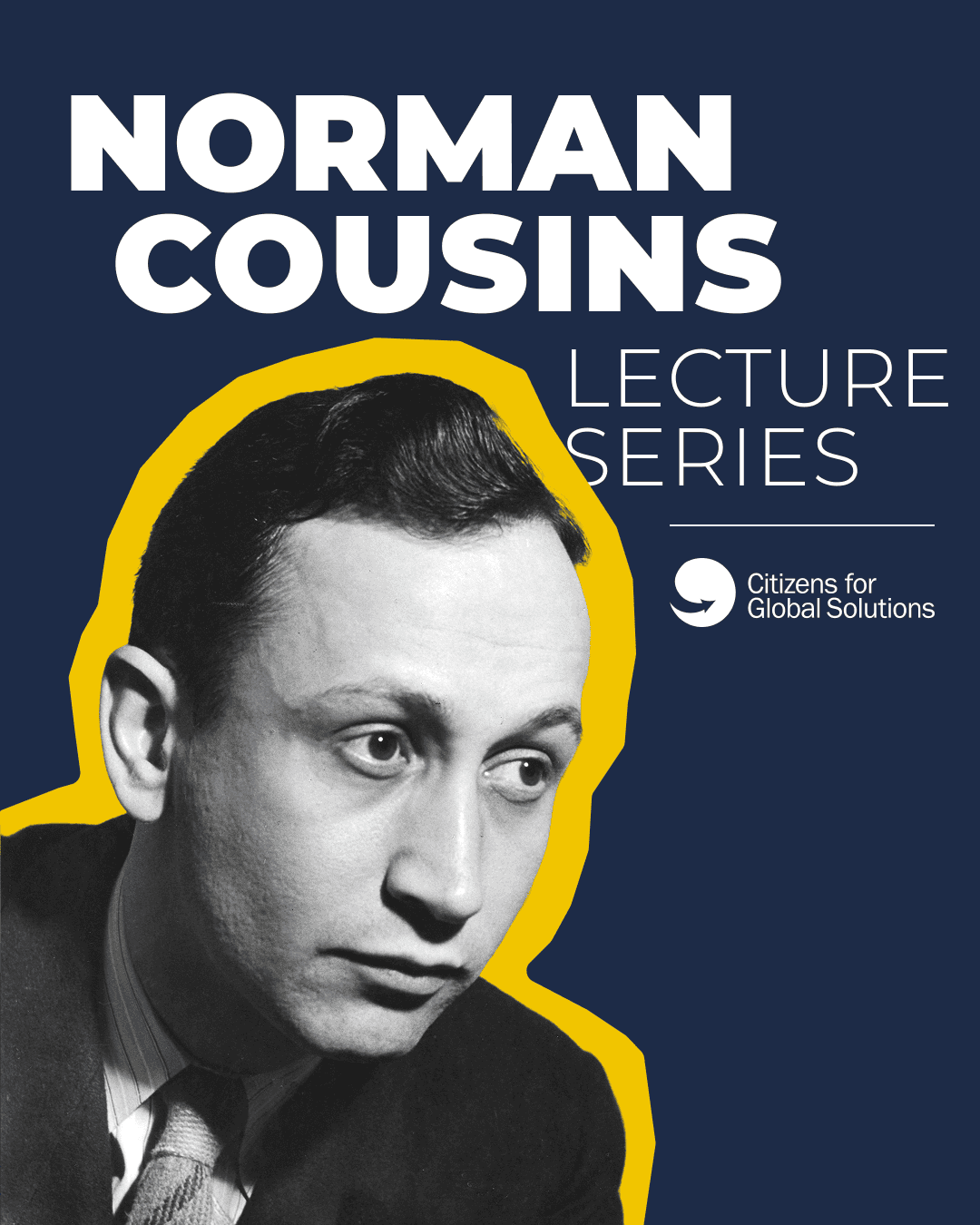
The Norman Cousins Lecture is designed to bring the expertise and leadership of our National Advisory Council (NAC) directly to the public. Each year, one of our distinguished NAC members, recognized leaders in diplomacy, law, scholarship, activists and civic life, is invited to deliver a keynote lecture on their area of expertise.
This series honors the legacy of Norman Cousins, a lifelong advocate for peace and world federation, by advancing open dialogue on the systemic reforms needed for a more just and democratic global order. Lectures highlight the values at the core of our mission: world citizenship, a democratized and empowered United Nations, and enduring peace through enforceable world law.
To recognize their contributions, each invited lecturer is presented with the Norman Cousins Award for Leadership, honoring their vision, service, and enduring commitment to building a safer and more democratic world.
The series takes place online, ensuring accessibility to participants across the United States and beyond. In doing so, it creates a national space for civic learning and global engagement, bringing the insights of globally recognized leaders into living rooms, classrooms, and communities.
Over time, the Norman Cousins Lecture Series will become a hallmark of our movement: a source of inspiration, thought leadership, and intergenerational dialogue about the future of democratic world federation.
Past Lectures
Browse the earlier lectures and watch the recordings.
Advancing Global Justice: The Campaign for a Crimes Against Humanity Treaty
Professor Leila Nadya Sadat
May 16, 2026