by Christopher Davis | Jul 31, 2014 | Global Justice, News, Peace & Disarmament
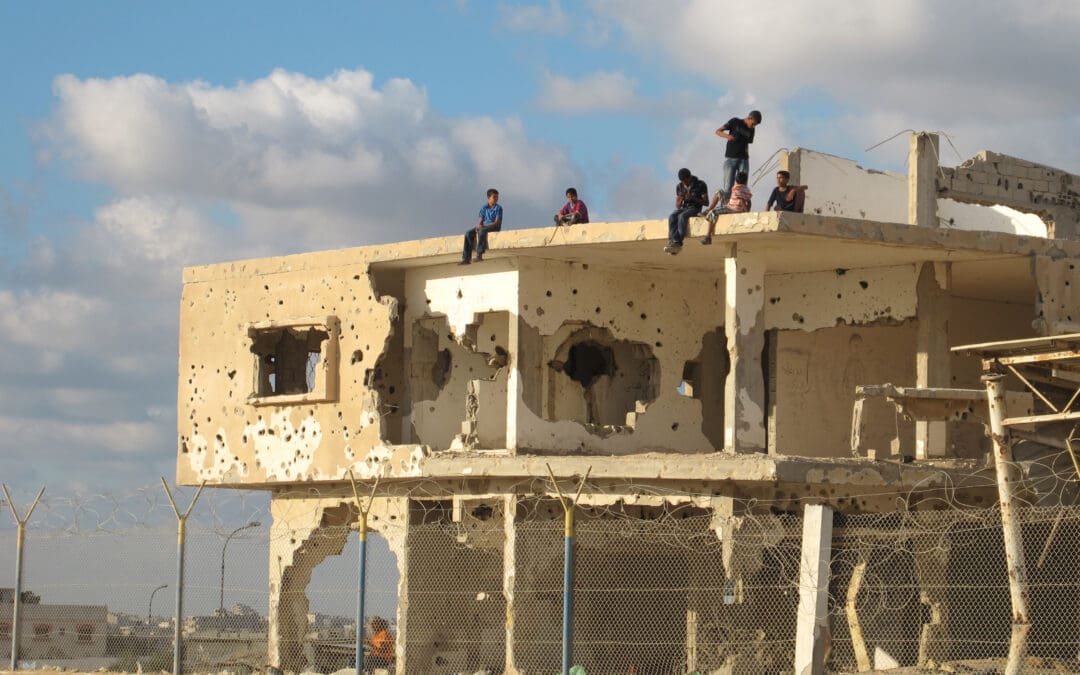
Operation Protective Edge, the name given to the Israeli Defense Force’s ground assault against Hamas’ military arm, is aimed at halting rocket and mortar fire on Israeli territory. In addition to cross border fire, Protective Edge is targeting a network of ground tunnels Hamas’ militants use to infiltrate Israeli territory.
Whatever Israel’s intentions are, one thing is clear; the loss of life has been alarming.
The death toll has passed 1,000 and, according to UN reports, 72 percent of those killed have in fact been civilian, including a larger number of women and children. Last week, an air strike killed five and wounded dozens of others inside a Gaza hospital. Israel’s target was a cache of anti-tank missiles that was identified as being in the “immediate vicinity” of the hospital. More recently, a UN shelter was hit killing 16 and injuring many.
In addition to civilian casualties, more than 100,000 citizens have been displaced by the conflict. The international community is calling for a ceasefire agreement, warning that the war crimes from both sides must end, including UN Secretary-General Ban Ki-moon who stated that Israel’s attack on the densely populated Shejaiya neighborhood of Gaza “an atrocious action“.
A series of humanitarian cease-fires were observed over the weekend however a long term agreement has yet to be achieved.
Unfortunately, a long term deal seems unlikely until Israel has achieved its military goals.
Israel’s Minister of Communications stated “Israel must not agree to any proposal for a cease-fire until the tunnels are eliminated,” referring to the Hamas’ ground tunnels into Israel. Hamas is demanding that Israel and Egypt open their borders and ease travel restrictions; the two sides are all but assuring that there will not be a quick, peaceful end.
As the fighting continues, concerns must shift toward humanitarian efforts.
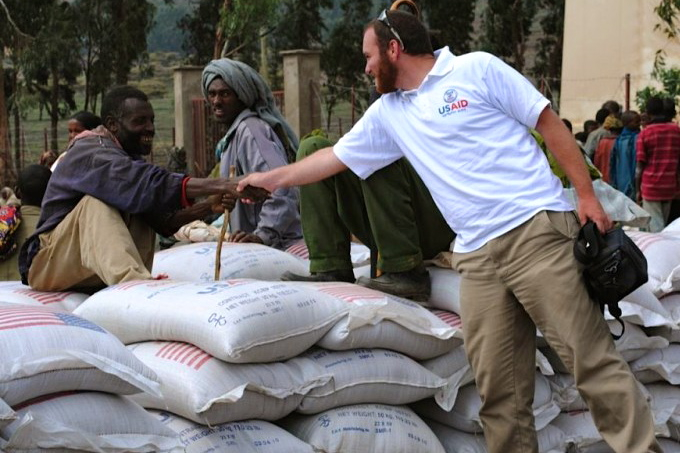
The US is set to send $47 million in aid to Gaza in an attempt to “alleviate the immediate humanitarian crisis.” Additionally, Secretary of State John Kerry is in Cairo working with Egyptian and Arab League officials in the hopes of achieving a ceasefire.
Secretary-General Ban Ki-moon spoke alongside Israeli Prime Minister Benjamin Netanyahu, urging both sides to open dialogue and end the fighting that left the region in turmoil. Additionally, the Secretary-General urged Israel to exercise restraint; Mr. Netanyahu made it clear that this will be a difficult process, stating, “What grievance can we resolve for Hamas? Their grievance is that we exist.”
The modern Israel-Palestine conflict is one that has raged on since 1947; while a ceasefire may end the violence today, it will not provide a resolution to this longstanding rift between the Jewish and Arab states. Our hope and focus must be directed toward the preventing the unnecessary loss of civilian life.
by Logan Cotton | Jul 18, 2014 | Climate Justice, Global Cooperation, News
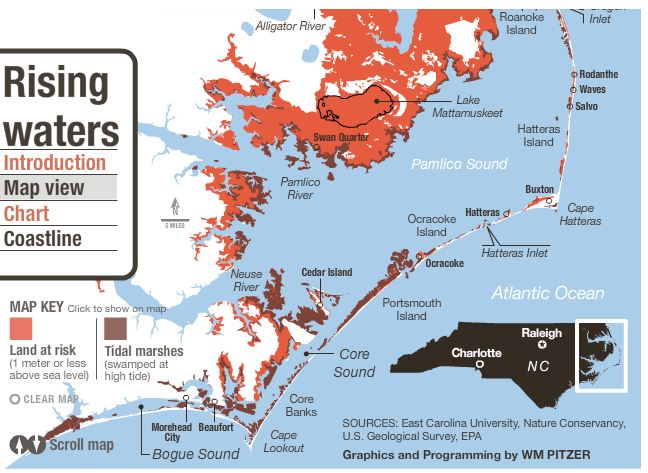
Despite the obvious danger that rising sea levels pose to communities on the Gulf Coast, tensions over climate change are flaring most acutely in the beach towns of North Carolina. In 2010, the North Carolina Department of Environment and Natural Resources (NCDENR) established the North Carolina Coastal Resources Commission (NCRC) to study the effects of rising sea levels by 2100. Lawmakers were dismayed when the report predicted a 39-inch rise in sea level by 2100.
By the summer of 2011, realtors and community members living on North Carolina’s Outer Banks saw the figures and were shocked. Even worse, the state was already developing a website to enable residents to check the vulnerability of their property. In response to this news, realty organizations fought back against the commission’s report, arguing that its scientific methods were questionable, lacking an assessment of economic impact, and devoid of any maps.
As the state produced the maps using Light Detection and Ranging (Lidar) technology, the outlook was increasingly dour for NC residents. Highway 12, Roanoke Island, and Pamlico Sound all faced significant flooding. Homeowners and businesses were understandably outraged at the report. The projections drove many to call for re-zoning of the North Carolina Coast in a manner that would consider much of the populated communities as uninhabitable land, devastating tourism and property values.
Lori Montgomery wrote in the Washington Post that one realty lobbyist, “worries that codifying the 39-inch forecast would crush the local economy, which relies entirely on tourism and the construction, sale and rental of family beach houses. In Dare County alone, the islands’ largest jurisdiction, the state has identified more than 8,500 structures, with an assessed value of nearly $1.4 billion, which would be inundated if the tides were 39 inches higher.”
Montgomery continued to explain that even a more modest forecast would be devastating to North Carolina. There are 414 properties in Dare County, valued at $70 million, which would be underwater. Widespread awareness of this danger would torpedo property values in the area.
North Carolina’s state legislature called for a new study, considering the work of the NCRC into question. Instead of projecting to 2100, the new study will only look 30 years forward – likely hoping to assuage concerns about the viability of NC’s coastline. The move has angered many, particularly environmental advocates. Gov. McCrory has stymied efforts to publish or publicize any sort of climate research.
Decreasing the timetable for the new climate study will help lawmakers avoid another glaringly alarming figure, like the 39-inch prediction. The new study, however, does not evade the urgency of the climate crisis. Short of serious legislation and action on climate change, there is little hope to save much of the United States’ coastal land.
Clearly there is need for civil society to push lawmakers at the state and federal level to honor climate studies instead of simply playing games with numbers. As the United States looks to develop infrastructure in the 21st Century, climate change plays an increasingly significant role. As seasons shift, temperatures rise, and the oceans press above their previous limits, our previous designs grow obsolete. While no one wants to see the worth of homes on North Carolina’s coast sunk, the seemingly-imminent danger of rising sea levels demands a more proactive approach by our governments.
As much as we may like to do so, covering our eyes and fudging the truth will still leave us high and dry – or below sea-level and quite wet, I suppose.
by Kevin Burke | May 1, 2014 | Human Rights, News, Peace & Disarmament
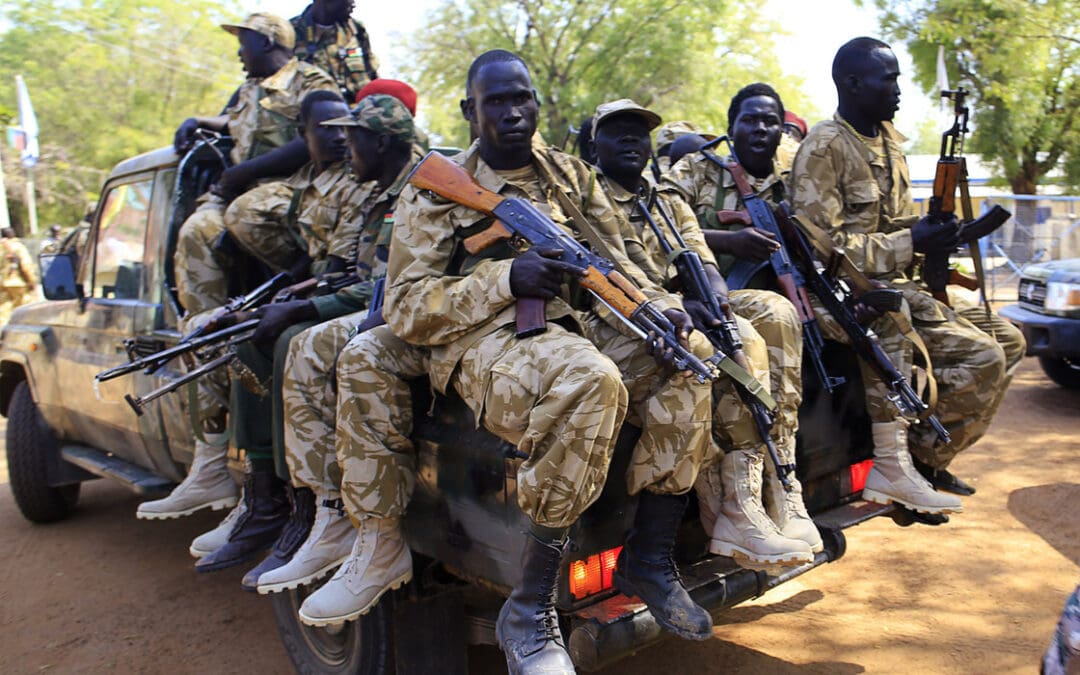
Violence has re-escalated in South Sudan as a new wave of attacks this month have included a UN base, places of worship, and other sites typically treated as neutral ground in conflicts. With the conflict taking on an increasingly ethnic and retaliatory tinge, we now must worry about how we might prevent these setbacks from spiraling into something far worse.
The last few months of conflict in South Sudan originate from a political falling out between President Salva Kiir and former Vice President Riek Machar, when Kiir dismissed Machar and the entire cabinet in July 2013. After months of recriminations, a rebel movement began attacks in December 2013. Machar took responsibility for this movement and its continued operations just two weeks after a public ceasefire agreement between Kiir’s government and rebel groups in January.
That ceasefire has been broken repeatedly in the months since, and is all but dead in the wake of this recent wave of attacks.
The April attack on the UN base at Bor is noteworthy not only because it’s an attack on one of the most reliable remaining institutions in South Sudan. Rather, it’s most troubling because these UN bases have been a key refugee sanctuary, so the forces attacking the base were clearly seeking to murder civilians. Couple these concerns with attacks on mosques and churches in Bentiu and the deaths of hundreds of civilians, where it seems as if killing is beginning to equate to tribal warfare, and where local radio stations encourage men to rape women of certain ethnicities. Attacks are becoming more about revenge than about fighting for territory or ideals: we’re approaching a dangerous tipping point.
The good news is the international community is taking this escalation of violence seriously.
The UN Security Council threatened additional sanctions while U.S. Secretary of State John Kerry has also signaled an interest in further sanctions; UN High Commissioner for Human Rights Navi Pillay is leading a mission to South Sudan investigating rights abuses and appealing for the safety of the displaced; the African Union is also investigating human rights abuses in South Sudan, a key first for that institution.
Most importantly, the government and rebel groups have come together in Addis Ababa, Ethiopia, to discuss peace once again.
The bad news is that it may be too late.
These talks have been delayed because of violence before and it’s not clear that all the fighting is centrally organized, leaving open the possibility for further recriminations. The worst humanitarian disasters are likely to come from the fact that refugees are being forced into tight quarters with little food and shelter during the rainy season; famine and disease are sure to follow and it will be difficult to serve the needs of the nearly 1 million displaced in Ethiopia, Kenya, and Uganda.
But perhaps the worst news of all is that a region that had been healing from decades of strife is finding itself back in conflict because politicians couldn’t find a way to compromise. Leaders decided to fight their way out of problems rather than negotiate and brought the well-beings of millions of people into the balance along with them.
With luck, the African Union or other organizations can lend a hand in the process of finding peace in South Sudan, or at least can help mitigate the likely humanitarian disasters already here and that are yet to come. But in the case of young states like South Sudan, the international community has to do a better job developing institutions and leaders that don’t turn to violence at the first sign of disagreement.
by Colleen Chiochetti | Mar 12, 2014 | Global Justice, Human Rights, News
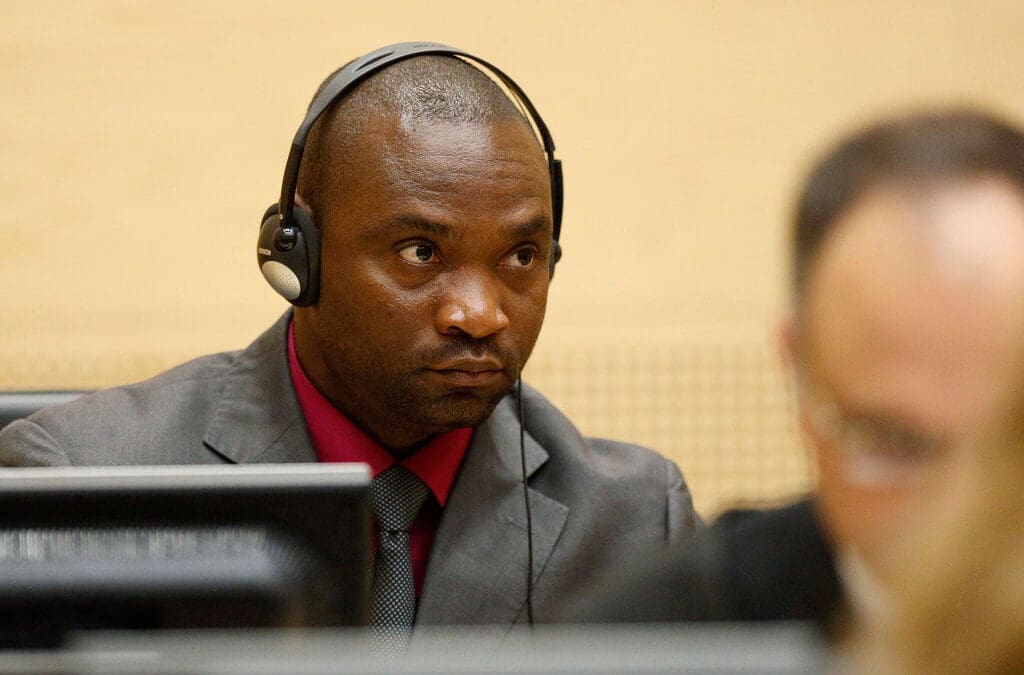
On Friday March 7th, the International Criminal Court (ICC) handed down its second conviction in its 12 year history.
This conviction found Congolese warlord Germain Katanga guilty of being an accessory to one crime against humanity and four counts of war crimes, including murder, attacking a civilian population, destruction of property, and pillaging. Katanga now faces up to 30 years in prison when sentencing is passed down.
This case came out of fighting in the northern Congolese province of Ituri that lasted from 1999 to 2003. The violence in this diamond-rich region began as a struggle for control of land and resources, but quickly developed into an interethnic conflict that by its end left approximately 50,000 people dead. The specific charges against Katanga revolve around his role as a leading member of the Ngiti militia and this group’s 2003 attack on the village of Bogoro that left over 200 dead. He was convicted as an accessory to this violence because of his role orchestrating and supplying weapons for the attack. Also as a result of the trial Katanga was acquitted of one crime against humanity and three war crimes, including sexual slavery, using child soldiers, and rape.
This landmark decision was lauded by Secretary-General Ban Ki-Moon is a statement saying,
“This is an important verdict for the victims of these horrific crimes, for international justice, and for the fight against impunity in the Democratic Republic of the Congo.”
The split verdict of two to one came after a long six year trial. While the conviction builds on the Court’s credibility and its effectiveness in the wake of five other cases, it does little to address criticisms on the Africa-heavy caseload of the Court, the length and expense of trials, and the efficacy of the Court as an institution.
by Colleen Chiochetti | Feb 8, 2014 | Global Cooperation, News, Peace & Disarmament
Last Tuesday, Congress finally passed the 2014 Farm Bill that was three years in the making. And after a long wait, the bill is a win for food aid and security around the world. The nearly $1 trillion bill allots $2.5 billion for the Food for Peace Act that sends food aid overseas in the form of not only food but also community development programs. The bill also increases funding to nonprofits and international organizations that are providing aid abroad to $10 million and adds new provisions to improve the nutrition and quality of food the US gives as aid.
The biggest win for food security advocates, however, comes from the program that provides $80 million annually for global emergency food aid programs. This program allows managers to buy food supplies closer to the recipient rather than exclusively from the US, allowing food to be delivered faster and in a more cost-efficiently. The program builds on a 2008 pilot effort carried out in part by the UN’s World Food Program that showed that we could provide aid at half the cost and delivery time in both emergency and non-emergency settings.
For GlobalSolutions.org this outcome is particularly important because of the campaign we put out last year, Buy Local, Feed Global, championing this issue. Our members lobbied for this change, sending messages to over 168 Members of Congress, asking that they support lifting food aid restrictions that have limited our capacity to feed millions and support sustainable local food markets.
While this bill is a big step in the right direction, overall, food aid reform is still a work in progress. As we celebrate this victory, we need to continue fighting to keep this momentum going with the ultimate goal of feeding millions more around the world.
by Don Kraus | Nov 21, 2013 | Climate Justice, Global Cooperation, News
Time is running out for countries to forge a new global agreement to address climate change. The intent of the COP19, this year’s meeting of the UN Framework Convention on Climate Change in Warsaw, Poland, was to lay the foundation of a new agreement. The hope was that then, world leaders would commit to substantial reductions in greenhouse gas emissions at a UN Climate Summit in 2014 in New York, with climate accords signed in Paris in 2015 – to come into force by 2020.
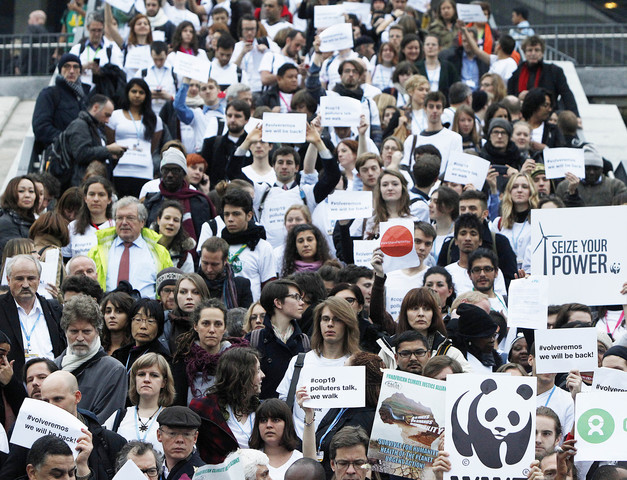
However, hundreds of activist walked out of COP19 to protest a lack of progress. The walkout was organized by groups such as Greenpeace, Oxfam, 350.org, the International Trade Union Confederation, ActionAid International, WWF and Friends of the Earth. Here’s a Democracy Now report on the walkout:
Their action followed a walk out by a group of 133 developing nations from an important negotiation. The issue at the core of this controversy is centered on how much responsibility nations that have emitted the most greenhouse gas should have to compensate developing nations that are receiving the brunt of damage from climate induced extreme weather.
In addition, emerging economies like China and Brazil are resisting a push to lay down clear commitments by 2014. The U.S. has also said its commitments would not be ready until early 2015 (my guess is to avoid controversy in the 2014 midterm elections). Japan announced that because of the Fukushima disaster, instead of a 25% greenhouse gas reduction by 2020, it would have a 3% increase. Canada, Russia and Australia are also reported to be walking away from previous commitments.
“If we go with the spirit of the lack of urgency that we see in these talks, we are headed for another disaster in Paris in 2015 and we need to avert it at all cost,” Greenpeace head Kumi Naidoo told The Associated Press. “We cannot afford to get it wrong again in 2015,” he said.
The bottom line is that climate change must be resolved. We face no greater challenge. It demands a global solution. Our immediate goal should be to focus on U.S. leadership in New York in 2014. President Obama must come armed with an agreement that can be accepted around the world and in Washington. Not an easy goal, but an essential one. More to come on this topic.