by Josh Spesaison | Oct 28, 2015 | Human Rights, News, World Federation
It’s not uncommon to hear issue advocates claim that different organizations are “siloed”—focused on their approach to the issues that concern their organization. Working every day on any one issue can create tunnel vision and prevent sharing best practices. It’s for that reason that Citizens for Global Solutions is committed to working across a number of issue groups that bring together like-minded organizations working broadly on related issues, but in different ways. It’s this work that makes CGS a prime example of an interdependent and collaborative organization.
Citizens for Global Solutions is currently active in seven coalitions or working groups. Personally, my favorite is WICC, the Washington Working Group on the International Criminal Court, but since I’m WICC’s Advocacy Chair, maybe I’m biased. CGS co-founded WICC, which is why as Advocacy Chair, I’ve been happy to keep CGS at the forefront of ICC advocacy on Capitol Hill and continue to bring the CGS brand to many congressional offices. WICC regularly meets with congressional staffers and sponsors briefings and other events to raise awareness of the Court’s important work in international justice and human rights.
The newest working group CGS has joined is the Civil Society Working Group on Women, Peace and Security (CSWG). We are supporting this group’s cutting edge work on promoting the implementation of the National Action Plan (NAP) on Women, Peace and Security. Recently, CGS took action to call for the passing of the Women, Peace, and Security Act, which would codify and ensure the implementation of the NAP. Through networking and organizational relationship building, CGS is also in the loop on Cities for CEDAW, a “grass-tops” effort to adopt CEDAW, the Women’s Rights Treaty, as local law. We have a long history of advocating for CEDAW; we even co-founded a DC-based working group dedicated to its ratification.
The Campaign for US Ratification of the Convention on the Rights of the Child (CRC) is another network of activists CGS is proud to be part of. CRC has continued to carry the torch on ratifying the children’s rights treaty in the US, which is now the only nation that hasn’t ratified. CGS will continue to support the volunteers of CRC in their efforts to restore US leadership in human rights and improving conditions for children everywhere.
Citizens for Global Solutions also cooperates with a large coalition of over 80 organizations on nuclear security issues. The Fissile Materials Working Group (FMWG) has built consensus among these organizations through its consensus recommendations and 5 Priorities for the 2016 Nuclear Security Summit. CGS and all other member organizations have endorsed these policies. Message consistency is a powerful asset in the global effort to secure the world’s deadliest weapons.
On the issue of climate change, CGS has been active with the US Climate Action Network (USCAN). This dynamic global network offers a place to share policies, actions, and build relationships between its members. CGS recently has signed on to several letters, including one asking President Obama to include $500 million for the Green Climate Fund in his 2016 budget proposal.
CGS also remains up to date in our fields of interest through the Human Rights Working Group and the Partnership for Effective Peacekeeping (PEP), another coalition CGS co-founded. Both of these groups are excellent ways to promote CGS’s own activities and expand our reach. From small clicktivism actions to large events and policy forums, these two groups help us stay in the know on what many other like-minded organizations are up to.
The benefits of working collaboratively are immeasurable, not only for the expanded reach of one organization’s grassroots efforts, but also for the collective power directed at policy makers to change how we govern our nation and our world. This kind of group collaboration can be highly effective, and CGS will continue to work with valued colleague organizations.
by Victoria Barrow | Oct 12, 2015 | Global Cooperation, News, Peace & Disarmament
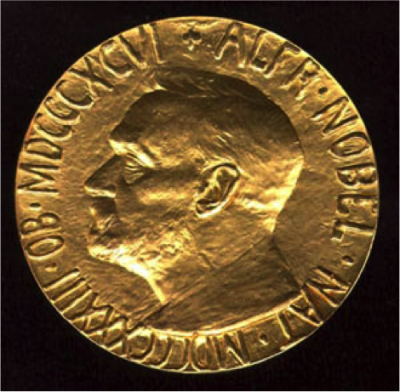
The Nobel Peace Prize was awarded on Friday to the Tunisian National Dialogue Quartet for its contribution to democratizing the country. The group is made up of four civil society organizations: The Tunisian General Labour Union, The Tunisian Confederation of Industry, Trade and Handicrafts, The Tunisian Human Rights League, and the Tunisian Order of Lawyers.
The quartet, formed in 2013, organized a long and difficult national dialogue between Islamists and their opponents, forcing them to work together while dealing with the political unrest that occurred after the Tunisian Revolution. Thanks to their establishment of an alternative and peaceful political process, Tunisia was able to “establish a constitutional system of government guaranteeing fundamental rights for the entire population.”
Today, Tunisia is the only country in the region that has made genuine progress in transitioning to a democracy. After the revolution forced the country’s dictator Zine al-Abidine Ben Ali to step down, Tunisia freely elected its current president, Beji Caid Essebsi. Meanwhile, the revolution, which would come to be known as the Arab Spring, spread to a number of other countries in North Africa and the Middle East.
Unfortunately, as the results of the Arab Spring have shown us, abolishing an old political order is just the first step of a revolution. It is extremely difficult to then establish a new, lasting system. Most of the countries who partook in the uprisings have had their battle for democracy and fundamental rights suffer major setbacks. The devastating civil war currently taking place in Syria is just one example of this.
The Nobel Peace Prize, more than just rewarding the Tunisian National Dialogue Quartet, serves as an encouragement to Tunisia’s civil society as a whole. The prize will hopefully inspire Tunisia to continue working towards democratization.
by Victoria Barrow | Oct 9, 2015 | Climate Justice, Global Cooperation, News
India has just stepped up its efforts in the global fight against climate change.
The country has now joined over 140 others in submitting a climate change plan, or Intended Nationally Determined Contribution (INDC), to the UN. India, which is expected to become the world’s most populous by 2028, has pledged to focus on clean energy and obtain 40% of its electricity from low carbon sources by 2030.
Nations are submitting INDCs in preparation for an important UN climate change summit occurring in Paris this December. Here, the UN will attempt to come up with a global agreement to determine how climate change will be tackled after 2020, when current climate targets expire.
Last November, the United States and China kicked off this process by unveiling an agreement to reduce greenhouse emissions, with the US pledging to cut its emissions to 26-28% below 2005 levels by 2025 and China agreeing to cap its emissions by 2030.
Both countries recently submitted INDCs based on this agreement, with China– the world’s largest carbon emitter– further committing to cut greenhouse gas emissions by 60-65% from 2005 levels. Since then, some 148 other countries have followed suit, submitting their plans before the informal October 1 deadline set by the UN.
Almost 90% of world emissions are currently covered by INDC pledges. Forty-eight countries have yet to submit their climate plans.
The upcoming Paris conference will be highly important, as it will attempt to establish the first legally binding multinational agreement on climate change. Today’s level of greenhouse emissions is putting the world at the risk of a 5C temperature increase. Although that may not seem like much, it will have devastating impacts on ocean levels, plant and animal life, weather patterns, health, and more.
It is important to note that even if all countries stick to their pledges, global warming will not be slowed enough to prevent catastrophic results. For this reason, we cannot rely on the Paris conference alone to solve our climate problems. Non-state actors such as municipalities, businesses, and local governments also must be engaged.
Finally, every one of us has a responsibility to cut back on our emissions and support a more sustainable world.
by CGS Blog Archive | Feb 4, 2015 | Global Justice, News, Peace & Disarmament
Palestine’s recent accession to the International Criminal Court is a crucial step toward accountability for grave crimes in the region and toward a peaceful resolution of one of the world’s longest running conflicts. The ICC’s jurisdiction will take effect on April 1st, making Palestine the 123rd state party.
In joining the Court, Palestine also submitted a declaration to the ICC under Article 12.3 of the Rome Statute granting the Court jurisdiction over alleged crimes committed on Palestinian territory since 13 June 2014—the date of the initiation of the Israel-Gaza hostilities this past summer.
“The Coalition fully supports Palestine’s accession to the Rome Statute,” said William R. Pace, convenor of the Coalition for the ICC. “For 12 years, the Coalition has urged all states to exercise their right to join the ICC, and key members have made special appeals to both Israel and Palestine to join the Court during the last year, which saw some of the deadliest and most destructive armed conflict between the two countries.”
“We hope this move will contribute to ending the cycles of violence between Israel and Palestine,” Pace continued. “Contrary to the position of some, Coalition members argue that enforcing international humanitarian law strengthens the peace process, while also giving victims recourse to legal remedy.”
Civil society has long urged both Israel and Palestine to join the ICC in order to stem well-documented mass violations of human rights during the course of the decades-long conflict between the two.
“We call upon Israel, rather than sanctioning Palestine for such a move, to ratify the Rome Statute as well. We call upon the US and all States publicly opposed to Palestinian accession to the international justice system to end their efforts to block accountability access and instead support the rights of victims to justice and redress,”
said Katherine Gallagher, vice president of theInternational Federation for Human Rights.
The ICC is a permanent international court with jurisdiction over war crimes, crimes against humanity, and genocide. Central to the Court’s mandate is the principle of complementarity, which holds that the Court will only intervene if national legal systems are unable or unwilling to investigate and prosecute perpetrators of genocide, crimes against humanity and war crimes.
Ishai Menuhin, executive director of the Public Committee Against Torture in Israel, urged that “…universal values and norms become the framework through which the Israeli-Palestinian conflict is viewed and resolved. It is time that complaints of torture and suspicions of war crimes be examined by the Israeli justice system. Otherwise, they will be investigated by The Hague.”
In April 2012, the ICC Office of the Prosecutor rejected a special ad-hoc declaration made by Palestine in 2009 accepting the Court’s jurisdiction over acts committed on its territory since 1 July 2002, noting that such declarations are reserved for states only. In November 2012, the UN General Assembly upgraded Palestine’s status from observer entity to non-member observer state, and in December 2014 at the Assembly of States Parties, Palestine was for the first time invited to participate with non-state party observer status.
There are currently nine active investigations before the Court and the Prosecutor’s office is examining nine other situations in Africa, South America, Europe and Asia. Currently, there are two trials ongoing.
While the ICC will have jurisdiction over grave crimes committed on the territory of Palestine irrespective of the nationality of the alleged perpetrators, or by Palestinian nationals anywhere, the prosecutor will only investigate and/or prosecute if domestic authorities are genuinely unable or unwilling to do so. Should the prosecutor decide to open an investigation, it would be subject to authorization by ICC judges.
by Wade Meyerhoffer | Dec 12, 2014 | Human Rights, News, World Federation
After months of hard work, it was finally time to pull out all the stops and make a highly anticipated trip to Capitol Hill to lobby congressional staffers! Dressed to the nines, as any three young professionals in DC should be, two colleagues and I left our cozy Eastern Market office for the mountainous doom and gloom of Capitol South for the day. Our objective: to successfully lobby three offices into co-sponsoring or supporting HR 3344, which deals with issues of human trafficking and foreign labor processes.
Our journey started in the annals of the Rayburn office building, and luckily for us, it was downhill from the metro station. We made our way up to the office of Rep. John Conyers Jr., where we had the only normal meeting of the day in a room filled with Smithsonian items. Did you know that members of Congress could rent items out of the Smithsonian back in the day? We didn’t either. But apparently this only worked for Rep. Conyers because of his illustrious tenure on the Hill. Aside from the wondrous nature of the office, the meeting was a home-run in every sense of the word, and we can look forward to a bright new relationship.
Our second meeting took place in the office of Rep. Chris Smith, whom we had the pleasure to meet for about 15 seconds before he excused himself to give a speech on the floor. No big deal. Side note: Did everyone in the world besides me know that there is an underground tram that runs from the office buildings to the Capitol? Crazier yet, ABC conducts interviews with Senators on it. You can see an example here. But I digress. Our second meeting didn’t go quite as planned. We had to settle for a phone interview, but it was very positive. Rep. Smith’s office is very aware of human trafficking issues and looked forward to working with us in the future.
Lastly, we met with a staffer from Rep. Rohrabacher’s office. Unfortunately, she could only meet with us for a few minutes in the lobby of the O’Neil building, but there were some good takeaways from it. We had expected that she would put up the most resistance to supporting the bill, but nothing could be further from the truth. The staffer was very excited to review the materials we provided, and looked forward to corresponding with us on any issues she might have with the bill.
Overall, it was a busy but rewarding day. All of our efforts over the semester culminated into tangible action, and it is always nice to see hard work pay off. The only sad bit is that I will not be here in the spring to finish what I’ve started. With the session winding down, it does not seem like HR 3344 will make it to the floor, despite its bipartisan support. What we hoped to achieve was the commitment of members of Congress in leadership roles to re-introduce and co-sponsor similar legislation if and when it gets brought up. I believe that if CGS continues to push for support, it will be easy to see similar legislation passed and approved by the President in the coming session.
One thing we learned from lobbying is that it’s a lot easier to contact your local representatives than people may think, and they aren’t all as crooked as some would have you believe. If you believe in an issue enough, meet with your representative and have a discussion about it. Better yet I’ve heard if you really push them, you can have lunch with them or get some coffee around the Capitol over a nice discussion. The bottom line is, they’re still in DC because their job is to represent YOUR interests. Let your interests be heard.
by CGS Blog Archive | Dec 9, 2014 | Global Cooperation, News, World Federation
My name is Victor, and I am a board chair of Citizens for Global Solutions (CGS). Our Board of Directors are traveling to Chicago this month to map out the road ahead for the organization.
The meeting is in conjunction with a personal enterprise of mine: the 11th Chicago International Model United Nations (CIMUN), which I’m proud to say educates and inspires over 1,400 high school students from around the world.
As we move into 2015, I can tell you that the organization is working hard to confront the effects that our economy has been having on the non-profit sector as a whole — simply put, a nerve-wracking drop in contributions (skip the rest of the article if you want to click here and help us out!).
I and my fellow Board members are rising to this challenge by undergoing a new strategic planning initiative, as well as moving forward on a smart capital project. We are converting our beautiful properties in Washington, DC into safe and comfortable income-generating housing for students coming to DC in pursuit of an International Relations internship.
Finding safe and affordable housing in DC is tough – especially for students who are only coming for one or two semesters. Converting our space is a win-win – we provide some sorely needed space for students passionate about global issues, and this helps to stabilize our budget through a tough economic time.
Your gift right now is absolutely critical!
Your gift would go a very long way toward strengthening our organization and paving the way for long-term financial sustainability.
Right now, the CGS Board Members are tasked with:
- Defining the goals of the org that best represent the opinions of our membership; and
- Developing a financially viable model for the organization that achieves our goals.
I am confident that our efforts will help CGS to become a stronger voice for our movement well into the 21st century. Help us move forward by donating now!
This holiday season, my fellow board chair Jordan and I are thankful for many things. Among them are the hard work of the staff and the dedication of our board members on behalf of this inspiring organization that I deeply believe in.
And we are also thankful for YOU and the time and support you have given to CGS over the last few years.
Please make a contribution this holiday season and support our growth in 2015!