by Jennifer Keck | Sep 4, 2016 | Climate Justice, Global Cooperation, News
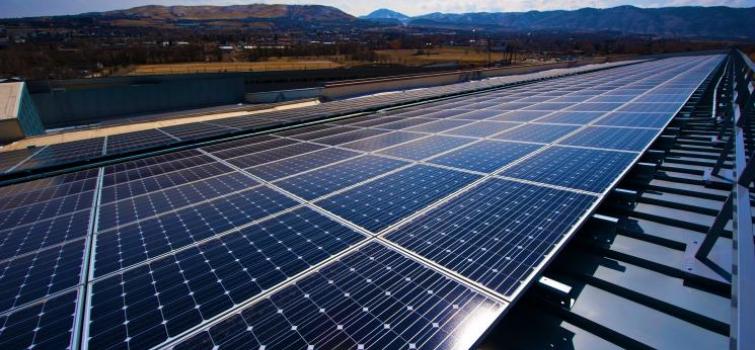
Chile has officially debunked the argument that coal is cheaper than solar.
Solarpack Corp. Technologica, a Spanish developer, won contracts to sell solar power for $29.10 per megawatt-hour at an energy auction in August, the lowest price ever. Not only does this beat out the deal in Dubai from last May, it went for almost half the price of coal at the same event. Chilean solar power is now at one of the lowest rates for any kind of electricity anywhere, according to Solarpack General Director Inigo Malo de Molina.
“Solar energy technology has evolved and proved it is competitive,” Molina told Bloomberg in a telephone interview from Santiago. “Prices for electricity generation have changed drastically in the last years. Solar energy in Chile is now the cheapest in the market.”
From Energy Crisis to Energy Abundance
It’s an amazing turn-around, given the county’s recent energy woes. Just five years ago, Chile’s energy prices were among the highest in Latin America. A few monopolistic utility companies dominated the sector, and Argentina had stopped selling natural gas to its neighbor. Facing the risk of blackouts, the private sector planned to open more coal-burning power plants and build hydroelectric dams that would have flooded Patagonia.
But mass protests soon followed. In 2010, the movement became so powerful that then-president Sebastián Piñera shut down the coal project Barrancones, even though its developer, GDF Suez, was following the law. While it was a win for the environment, the decision seriously harmed Chile’s business reputation.
Today, renewable power is on the rise, with energy investment surpassing mining investment in a nation that’s the largest copper producer in the world. Chile even started exporting electricity and natural gas to Argentina earlier this year.
So what brought on such a rapid change? In a word: competition. There were 84 bids during this month’s power auction, with the winners signing 20-year power purchase agreements. And in a surprising turn, three of Chile’s four largest generators failed to win a supply contract.
The biggest win went to Granja Solar, Solarpack’s project, a near impossible feat a few years earlier. Until recently, solar power couldn’t compete without subsidies, but the falling price of solar panels has made this form of energy more appealing. The average price has declined to a record low of 44.7 cents a watt for standard polysilicon panels.
Why Chile?
The new plant will break ground in Northern Chile’s Atacama Desert, an ideal location given its position high in the Andes near the equator. It’s one of the sunniest and driest places in the world, making it a rich option when it comes to solar power.
The Chilean government is also on board. It plans to complete transmission lines that will deliver Granja Solar’s power to the entire country, which is why Solarpack bid so low, Molina told Bloomberg.
Solar power wasn’t the only success, either. Renewable-energy companies won more than half the contracts this time around. The lowest price for wind power was $31 per megawatt-hour, natural gas sold for $47, hydroelectricity for $60, and geothermal for $66, according to Bloomberg.
The triumph of renewable energy at Chile’s recent auction is a strong indicator that the energy sector is in transition. Companies looking to compete will need to adapt quickly if they want to remain competitive, which is a major win for both consumers and the environment.
by Jennifer Keck | Jul 24, 2016 | Climate Justice, Global Cooperation, News
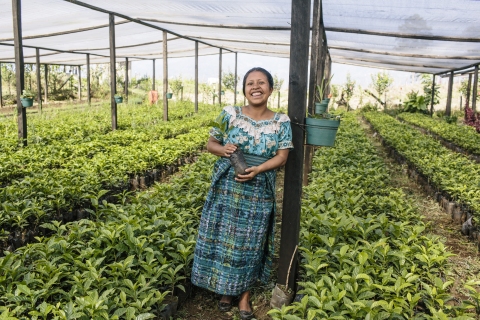
Plagued by rising temperatures, droughts, and elevated carbon dioxide levels, Central America’s agricultural sector hangs in the balance. But the Guatemalan town of San Miguel Chicaj in Baja Verapaz may have the answer to this increasingly worrisome problem. With support from the German Society for International Cooperation (GIZ), San Miguel Chicaj will soon be home to an agro-ecological center designed to serve as a model of adaption to climate change.
For the past ten years, the state of Baja Verapaz has been part of the ‘dry corridor’, making it the perfect testing ground for the agro-ecological center’s techniques. The center, located in a small forest surrounded by cornfields and nurseries, plans to teach people to adapt crop production to the changing environment.
“It will strengthen our crops…serve as a space for youth to be trained in agricultural-related activities,” the chief counselor of San Miguel Chicaj told El Periodico.
The project, which is in the second phase of the “Adapt” initiative of the GIZ, has been called “innovative” and “a new way to address climate change” by the organization’s head of cooperation Thomas Cieslik.
Under construction on municipal land, it will cost around $100,000 USD to complete. GIZ, meanwhile, is providing €10.5 million over six years (2013-2018) to invest in consulting and training. Once open, the center will fund operations by charging schools, universities, and companies for training students and employees.
It won’t be ready for about a year-and-a-half, but GIZ is already conducting workshops to teach residents of Baja Verapaz how to reduce their impact on the environment.
Like any project, San Miguel Chicaj’s agro-ecological center needs time to prove successful. However, if it does, it could become the model for agricultural innovation and food security around the world.
by Jennifer Keck | Mar 16, 2016 | Global Justice, News, Peace & Disarmament
On March 3, Sri Lanka became the 163rd state to agree to the Ottawa Treaty, a UN anti-personnel mine ban convention. It’s an important step toward recovery from the country’s 26-year long civil war, a conflict that claimed upwards of 80,000 lives, displaced an estimated 280,000, and left the Northern and Eastern regions covered in landmines.
Weapon of Choice in the Civil War
The Sri Lankan Civil War ended in 2009, but unexploded mines and ordinances (UXOs) made returning home a risky proposition. Both the rebel Liberation Tigers of Tamil Eelam (LTTE) and the Sri Lankan military relied heavily on landmines, scattering thousands undetonated devices across conflict areas.
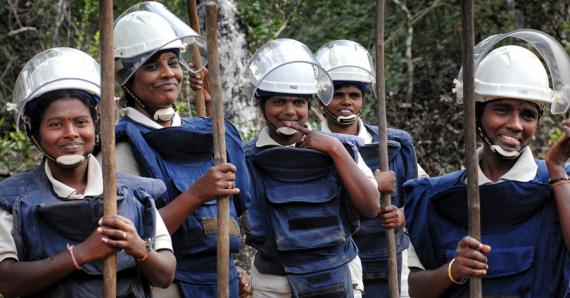
Demining efforts, in turn, became a vital part of restoring Sri Lankan civil society. But progress was slow due to random placement, lack of maps on their locations, and too few flair machines, which safely detonate landmines.
Signing the Ottawa Treaty
By joining the convention, Sri Lanka has agreed to destroy all stockpiled anti-personnel mines it owns and/or controls under its jurisdiction within four years. The country must also continue its efforts to clear the devices and assist victims. (Over 21,000 people were killed or injured by landmines during the war, according to Landmine Monitor.)
The Sri Lankan Ambassador to the UN in Geneva, H.E. Ravinatha Pandukabhaya Aryasinha, said in his speech at the First International Pledging Conference for the implementation of the Mine Ban Treaty that to date, 64 square kilometers (24.7 square miles) of mine fields remain contaminated. NGOs such as The Halo Trust, Mines Advisory Group, and DASH have already helped remove thousands of landmines.
The country will officially launch its plan to be “mine threat free” by 2020 on April 4, the International Day of Mine Awareness and Assistance in Mine Action.
“After years of campaigning, I am delighted that Sri Lanka has decided to join the international community in ridding the world of landmines. Accession to the Mine Ban Treaty reconnects Sri Lanka to the world map of disarmament,” said Vidya Abhayagunawardena, Coordinator of the Sri Lankan Campaign to Ban Landmines.
Disarmament and The Future of Sri Lanka
Now that Sri Lanka has signed the treaty, India, Nepal, and Pakistan are the only countries in Southeast Asia to remain outside the ban. The country has also announced that it started consultations in order to join Protocol V of the Convention on Conventional Weapons.
However, banning landmines is only a start if the nation wants to maintain a lasting peace. The Sri Lankan government must reintegrate returning refugees and internally displaced persons into society by giving them access to political representation in addition to housing, health care, education, and employment opportunities.
Despite progress toward disarmament, the country still has a long, slow recovery process ahead.
by Jennifer Keck | Feb 24, 2016 | Climate Justice, Global Cooperation, News
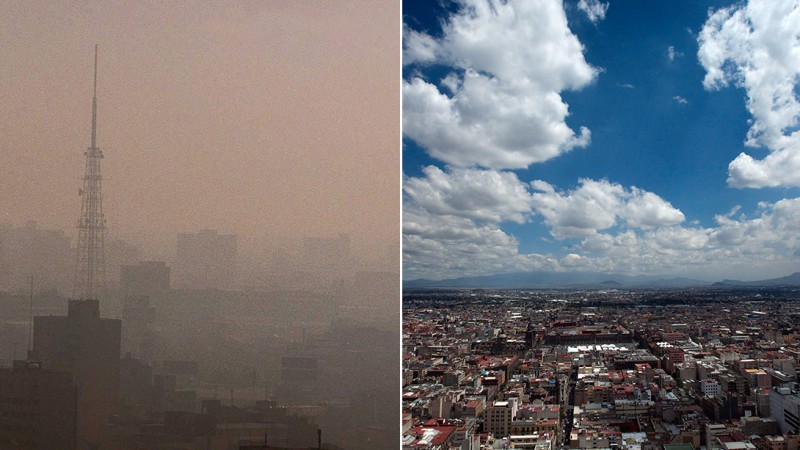
The smog-laden skyline of Mexico City may not be a poster child for air pollution much longer. Demand for clean energy is on the rise in Latin America, particularly in Mexico, Brazil, and Chile.
Clean-energy acquisitions nearly tripled in the region last year–the highest growth rate in the world, according to PricewaterhouseCoopers (PwC). An increasing demand for electricity coupled with stricter environmental policies has resulted in renewable energy deals valued at $7.6 billion, up from $2.7 billion in 2014, the consulting firm said in its annual Power & Renewables Deals report.
“There is increasing interest in the region,” Arthur Ramos, a partner at PwC’s strategic consulting unit Strategy& told BloombergBusiness. “Multinationals are taking stronger positions in Latin America where there is a perspective of lack of power supply in the long term. And many countries are offering low risk models of energy contracts for investors.”
In total, mergers and acquisitions in Latin America shot up 56 percent to $12.4 billion last year. Only the Asia Pacific region brokered more deals.
China has already jumped on the investment bandwagon. The Chinese power company Three Gorges Corp. bought the Jupia and Ilha Solteria hydropower plants in Brazil for $3.7 billion, the largest acquisition in the region. Sempra Energy, the San Diego-based natural gas company, came in second with its acquisition of the remaining stake in its Mexican joint venture Gasoductos de Chihuahua for $1.5 billion.
As energy sector reform opens the Mexican electricity sector to private investment, the country is attracting more international interest. Spain’s Iberdola has targeted Mexico as one of the four countries outside continental Europe (the others are the U.S., Brazil, and the U.K.) where it sees major growth opportunities. Mexico will also host its first long-term energy tender in March 2016, with an estimated 1.5 to 2.5 gigawatts to be awarded and further tenders to follow.
But Mexico and Brazil aren’t the only countries of interest. Chile remains a focus for companies such as Spain’s Gas Natural Fenosa, and China’s State Power Investment Corporation’s Pacific Hydro acquisition included around $1 billion worth of assets.
Steady returns from clean-energy assets make Latin America an appealing region for investment, despite its economic turmoil. “We expect this momentum to continue in 2016, despite the current challenging economic and political environment in many countries,” Ramos said.
Globally, energy deals fell 16% to $199 billion last year. However, renewable deals nearly doubled to $55.3 billion, up from $28.3 billion in 2014.
As the demand for affordable energy continues to rise in the developing world, the need for clean-energy alternatives will likely fuel investments for the foreseeable future.
by Citizens for Global Solutions | Nov 1, 2015 | Global Cooperation, News, World Federation
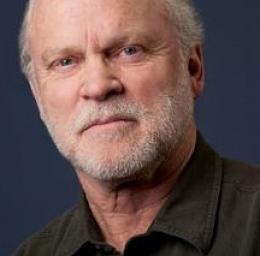
The Boards of Citzens for Global Solutions, Inc. and the CGS Education Fund have announced the appointment of Earl James as Executive Director. He will take up the role effective immediately and will be responsible for implementing the organization’s new five-year strategic plan.
The Board is pleased to appoint Earl James as our Executive Director! As a long time board member, advocate, and staffer, Earl brings experience and passion to our organization. We look forward to working with him to build a strong constituency for world peace and effective global governance.
–Victor Lang, Chairman of the Board (CGS Education Fund)
Earl James has worked for social change in the nonprofit sector for over 40 years, including a previous stint as Development Director for CGS (1994-95), where he was instrumental in establishing and funding a staff position to build a US-based coalition for an International Criminal Court, and in increasing membership in CGS by 40%.
He has also served as an International Election Supervisor in post-war Bosnia-Herzegovina, as Executive Director of CGS’s Pittsburgh Chapter, for the Rachel Carson Homestead Association (PA), and for the National Trust for Historic Preservation.
As Director of Preservation Services for the Pittsburgh History and Landmarks Foundation, he launched Rivers of Steel, a National Industrial Heritage Area, and as Director of Programs and Development for the New Mexico Environmental Law Center he organized statewide coalitions working on environmental health issues, and on cleanup and prevention of mining pollution.
He has conducted grassroots political organizing for Citizens for Global Solutions’ electioneering arm in Eastern Kentucky, Long Island and Washington State, and has helped numerous grassroots advocacy organizations become more effective by offering organizational development support. An award-winning novelist and screenwriter, he lives in Santa Fe, New Mexico with his wife Karen.
As the new Executive Director, Earl writes,
I believe we are taking a path forward that is ripe with more potential to advance our goal of achieving a democratically governed world than ever before. The convergence of two powerful developments has established these new opportunities:
First, in June of 2015, The Hague Institute’s Commission on Global Security, Justice and Governance issued a report titled Confronting the Crisis of Global Governance that clearly delineates deficiencies in the structure and resources of the UN that could be corrected within five years with adequate global grassroots support. Among these are establishment of a rapid response emergency peacekeeping force and a UN Parliamentary Network.
Secondly, CGS staff and boards have devoted a great deal of attention and energy in the last few months to assessing our own strengths. We have greatly refocused our programming to include helping the Commission plan a 2020 World Conference on Global Institutions that will provide a platform and opportunity for many of UN reform recommendations to be enacted. This is an opportunity not to be missed!
More about all of this is to come, so stay tuned! Thank you for your interest in a democratically governed world and in Citizens for Global Solutions.
by Victoria Barrow | Oct 30, 2015 | Climate Justice, Global Cooperation, News
No, it doesn’t involve pastries or the Eiffel tower.
From November 30 to December 11, over 190 nations will meet up in Paris to plan a new global agreement on climate change. This agreement will replace current policies on greenhouse gas emissions, which expire in 2020.
Here’s what you need to know:
1. What is it?
This conference is formally known as COP21, or the “21st Session of the Conference of the Parties to the United Nations Framework Convention on Climate Change (UNFCCC).”
The UNFCCC was created at the Rio de Janeiro Summit in 1992 and adopted in 1994. It has been ratified by 196 countries.
These countries make up the Conference of Parties (COP): the convention’s decision-making body. Every year the COP meets up and discusses how to meet climate change goals.
This year’s convention in Paris will be the 21st, hence the name COP21.
2. Why does it matter?
Greenhouse gas emissions cause global temperature rises. The threshold beyond which global warming becomes irreversible is 2C above pre-industrial levels.
According to the Intergovernmental Panel on Climate Change, with today’s emissions we are heading for a rise of 5C. There is still, however, time to limit climate change– just not very much time.
Need I remind you of why this temperature rise could be catastrophic?
3. What makes this conference different?
You may be thinking, “There have already been 20 other conferences. Why is this one so special?” Well, none of the prior conferences succeeded in creating a legally binding agreement accepted by all 196 countries.
In 1997, for example, the Kyoto protocol was produced, which suggested a 5% cut in emissions compared to 1990 by 2012. Because not enough countries agreed to it, however, it never became legally binding. This was largely due to the US’s decision not to ratify. Furthermore, the countries that did make commitments under Kyoto were not sanctioned if they failed to take action.
More than ten years later, at the 2009 conference held in Copenhagen, all of the world’s biggest emitters finally agreed to limit their greenhouse gas emissions. Once again, however, the conference failed to produce a legally binding agreement.
The hope for the Paris conference is that a legally binding agreement will finally be ratified by all involved countries.
Source: White House
4. What steps have already been taken?
The good news is that progress has already been made towards creating this new global agreement.
At the 2014 climate summit in Lima, countries agreed to make individual climate pledges that would be submitted to the UN prior to the Paris conference. These pledges, known as intended nationally determined contributions, or INDCs, will largely determine how countries will tackle climate change after 2020.
INDCs must contain information on how a country plans to reduce emissions. Developing countries, who have contributed less to emissions, must explain how they plan on developing in a sustainable way.
As of today, over 150 countries have submitted their INDCs, covering more than 90% of world emissions.
Even more encouraging is the fact that all of the top polluters have submitted climate pledges:
China: cut greenhouse gas emissions by 60-65% from 2005 levels and cap emissions by 2030
US: cut emissions to 28% below 2005 levels by 2025
EU: 40% domestic reduction in greenhouse gases by 2030 compared to 1990 levels
India: obtain 40% of its electricity from low carbon sources by 2030
5. What still needs to be done?
Although it is promising that so many countries have pledged to reduce emissions, the Paris agreement is far from being settled.
Many developing countries, for example, want richer countries to help finance their transition to clean technologies. Rich country governments, however, argue that funding should come from the private sector or from international development banks such as the World Bank.
Furthermore, the commitments that have been made so far will not be enough to avoid the 2C of warming temperature threshold. One suggestion that has been made is to engage “non-state actors” such as businesses, local governments, and municipalities to do more.
In other words, we cannot rely purely on the UN and the Paris conference to solve our climate problems. Every single one of us has a responsibility to reduce emissions and live in a more sustainable way.
Here at Citizens for Global Solutions, we believe that every citizen has a role to play in solving global problems.
Want to make a difference? Become a Global Citizen today!