by Citizens for Global Solutions | Feb 20, 2023 | News
Social Justice: The Foundation of Building a Sustainable Future
Washington, DC– On February 20, Citizens for Global Solutions (CGS) joins the United Nations and civil society throughout the world in celebrating the World Day of Social Justice. In November of 2007, the United Nations General Assembly passed a resolution declaring February 20 to be the World Day of Social Justice in recognition of the vital role that social development and social justice play in ensuring a more peaceful and secure world. The decision to establish a World Day of Social Justice built off of the International Labour Organization’s efforts to promote fair labor standards rooted in a respect for human rights and socially inclusive globalization, a priority that is apparent in the ILO’s Declaration on Fundamental Principles and Rights at Work of 1998.
Social justice is a key element of the “Our Common Agenda” report published by UN Secretary-General Guterres. Specifically, “Our Common Agenda” prioritizes solidarity as a guiding principle as we build a more just and peaceful world. UN General Assembly Resolution 57/213- “Promotion of a Democratic and Equitable International Order”- defines solidarity as “the virtue of which global challenges must be managed in a way that distributes the costs and burdens fairly.” To ensure an equitable and just globalization, those who benefit the most from globalization must actively support those who do not enjoy the benefits of globalization and whose livelihoods are threatened by global challenges like climate change.
“Our Common Agenda” identifies intergenerational unity as a key aspect of solidarity; we must center the interests and priorities of young people as we build a more inclusive and just world for all. Furthermore, other marginalized groups including women, indigenous communities, and the poor must play a key role in fostering global dialogue and spearheading international efforts to address shared global challenges. These critical considerations are also strongly connected to the 2030 Sustainable Development Goals (SDGs), especially Goal #5 (gender equality) and Goal #10 (reducing inequality).
We at Citizens for Global Solutions and Young World Federalists firmly believe that achieving a socially just and equitable globalization can be best achieved through strengthening global governance. We strongly support the Campaign for a United Nations Parliamentary Assembly, which seeks to create a popularly elected United Nations Parliamentary Assembly (UNPA). By empowering the citizens of the world to actively participate in global decision making, the UNPA could enhance gender equity and social and economic inclusion in the UN system. Eventually, such a Parliamentary Assembly could collaborate with the UN General Assembly to pass an internationally binding resolution ensuring universal commitment to the Universal Declaration of Human Rights (UDHR). Furthermore, to ensure intergenerational equity, we strongly support UN actions like the “Special Envoy for Future Generations” and the Declaration on Future Generations. We are also committed to civil society-led initiatives like the upcoming Global Futures Forum in March of 2023 in advance of the UN Summit of the Future, in the hope that consultations like these will enhance the participation of youth, women, and civil society groups from the Global South in global governance.
As “Our Common Agenda” succinctly states, “no one is safe until everyone is safe.” Effectively addressing the defining global challenges of today and fostering a more peaceful society will require the active input of all of humankind. Let us work together to realize our collective vision for a more inclusive, equitable, and socially just world.
About Citizens for Global Solutions & Young World Federalists
Citizens for Global Solutions (CGS) is a non-governmental, non-profit, non-partisan membership-based organization that for more than 75 years has brought together a diverse collective of individuals and organizations with a common goal of a unified world predicated upon peace, human rights, and the rule of law. From championing ratification of the UN Charter upon our establishment in 1947 to supporting creation of the International Criminal Court (ICC) 25 years ago to advocating for global instruments to confront today’s enduring challenges of war and climate degradation, CGS recognizes that true progress is a generational enterprise. We invite like-minded individuals and organizations to join us in this mission.
The Young World Federalists are a global movement fighting to give humanity a voice. We envision a sustainable, just, and peaceful world through a democratic world federation. A world run by humanity, for humanity, providing equal opportunity to all on a thriving planet.
Contact:
Donna Park dpark@globalsolutions.org
by Citizens for Global Solutions | Dec 9, 2022 | News
Displacement Due to Climate Disasters is a Human Rights Issue
Washington, DC – On December 10, Citizens for Global Solutions (CGS) celebrates Human Rights Day to commemorate the adoption by the United Nations General Assembly of the Universal Declaration of Human Rights in 1948. The UN Human Rights Office of the High Commission declares, this year’s Human Rights Day slogan is “Dignity, Freedom, and Justice for All” and the call to action is #StandUp4HumanRights.”
CGS also recognizes that in 2021, 27.3 million people were internally displaced in their own countries due to climate related disasters. From June through October of this year, Pakistan experienced the worst floods in history, internally displacing 33 million people and killing thousands. Climate change is affecting our universal human rights to life, food, water, an adequate standard of living, a healthy environment, and our health.
Legal action through ecocide law or treaties, beyond the nation-state status quo, is urgently needed today to make the destruction of our environment an international criminal act. International law with a mechanism to enforce legally binding environmental treaties can mitigate our current climate crisis.
Innovative solutions to specific environmental and human rights issues have already been proposed and it is our responsibility to call on our government to petition international organizations to implement them. For example, the UN and other multilateral institutions could establish a “Global Climate Research Registry and Climate Action Clearinghouse” to serve as a depository for research on climate change mitigation and adaptation measures, develop recommendations regarding best practices, and coordinate international action. The UN could strengthen the International Court of Justice (ICJ) so that it has mandatory jurisdiction over all member states, which would ensure universal commitment to human rights. Furthermore, establishing regional tribunals to safeguard human rights and address environmental crimes that are local to a specific region could provide an effective way to address human rights violations caused by climate-related displacement.
About Citizens for Global Solutions & Young World Federalists
Citizens for Global Solutions (CGS) is a non-governmental, non-profit, non-partisan membership-based organization that for more than 75 years has brought together a diverse collective of individuals and organizations with a common goal of a unified world predicated upon peace, human rights, and the rule of law. From championing ratification of the UN Charter upon our establishment in 1947 to supporting creation of the International Criminal Court (ICC) 25 years ago to advocating for global instruments to confront today’s enduring challenges of war and climate degradation, CGS recognizes that true progress is a generational enterprise. We invite like-minded individuals and organizations to join us in this mission.
The Young World Federalists are a global movement fighting to give humanity a voice. We envision a sustainable, just, and peaceful world through a democratic world federation. A world run by humanity, for humanity, providing equal opportunity to all on a thriving planet.
Contact:
Donna Park dpark@globalsolutions.org
by Citizens for Global Solutions | Nov 3, 2022 | News
What We all Deserve: Let’s Protect Human Rights with a Global Government and Judicial System
Washington, DC– On October 25th, in Moscow court, WNBA basketball star and Olympic medalist Brittney Griner was denied an appeal to shorten her nine-year sentence in a Russian penal colony for drug-smuggling. Griner was detained at a Moscow airport in February for carrying less than one gram of cannabis in her luggage. The arrest is even more troubling in light of the Russian invasion of Ukraine.
Specific details as to Griner’s arrest and conviction corroborate National Security Analyst Steve Hall’s assertions regarding the illegitimacy of the court proceedings. Russian authorities did not provide Griner with a lawyer after her arrest and coerced her into signing documents written in Russian. Furthermore, she was not informed of her constitutional rights within three hours of her arrest, in violation of Russian law. And, most shockingly, the average sentence for comparable drug offenses is only 5 years, with roughly a third of defendants receiving parole.
Washington Post columnist Jason Rezaian, who was unjustly detained in Iran for 544 days, asserts that the Russian government is holding Griner as a political prisoner to gain leverage to counter the inevitable political and economic backlash against its invasion of Ukraine. Griner is one of 442 other political prisoners unjustly imprisoned by the Russian government (as of April 5, 2022), according to Memorial Human Rights Centre, a well-known Russian human rights organization which was recently shut down by the government.
In response to the developments regarding Brittney Griner’s case, Donna Park, Board Chair of Citizens for Global Solutions, issued the following statement:
“What we need to protect Brittney Griner and secure the liberation of countless other political prisoners is a democratic world federation, promoted by world federalist organizations like Citizens for Global Solutions and Young World Federalists. We want to establish an ‘international judicial system’ that would address international issues like foreign political prisoners. Most importantly, it would require universal conformity to political/human rights laws established by a world legislature including a World Parliament to which the people of the world elect their representatives. Countries would no longer be permitted to violate peoples’ civil rights with impunity. In short, a democratic world government would, while respecting national sovereignty, bring to fruition a world all human beings yearn for, characterized by a respect for human rights, a commitment to justice, and a just peace that we all need.”
About Citizens for Global Solutions & Young World Federalists
Citizens for Global Solutions (CGS) is a non-governmental, non-profit, non-partisan membership-based organization that for more than 75 years has brought together a diverse collective of individuals and organizations with a common goal of a unified world predicated upon peace, human rights, and the rule of law. From championing ratification of the UN Charter upon our establishment in 1947 to supporting creation of the International Criminal Court (ICC) 25 years ago to advocating for global instruments to confront today’s enduring challenges of war and climate degradation, CGS recognizes that true progress is a generational enterprise. We invite like-minded individuals and organizations to join us in this mission.
The Young World Federalists are a global movement fighting to give humanity a voice. We envision a sustainable, just, and peaceful world through a democratic world federation. A world run by humanity, for humanity, providing equal opportunity to all on a thriving planet.
Contact:
Donna Park dpark@globalsolutions.org
by Citizens for Global Solutions | Mar 2, 2022 | News
Citizens for Global Solutions stands in solidarity with all peoples and with any nation whose rights have been violated in international disputes of any kind. But at this chilling moment, we especially stand with the people of Ukraine against Russia’s illegal act of aggression. We call for adherence to international law as underscored in Article 2(4) of the United Nations Charter which states that, “All Members shall refrain in their international relations from the threat or use of force against the territorial integrity or political independence of any state, or in any other manner inconsistent with the Purposes of the United Nations.” It is obvious that President Putin has violated the spirit, if not the letter, of this most primary of all international agreements.
In 1947, Citizens for Global Solutions was founded as the United World Federalists to promote the concept that peace with justice can only be possible through the creation of a democratic federation of nations. All these years later, it couldn’t be more obvious that although the United Nations has done much good in the world, as it is currently structured it is largely unable to stop military aggression across national borders. We must transform the United Nations from a confederation of nations to a United Federation of Nations with the ability, through the vehicle of a world constitution and a global legislature, to create and enforce international law in order to eliminate war and nuclear weapons, protect universal human rights, save our fragile global environment, and cooperatively manage global pandemics. It is time for all of us to demand this better method to govern our world.
Taking this broader view, we recognize that our current flawed system of global governance lacks mechanisms of law enforcement and fair adjudication—exemplified by the fact that Russia was in a position to veto the Security Council’s condemnation of their own immoral act of aggression. Instead, our current world system depends upon the good will of leaders of all nations upholding their treaty agreements and resolving disputes through diplomacy, in accord with the narrow “self-interest” of their nations. What is playing out before our eyes in Ukraine, as well as in numerous other instances since WWII, demonstrates the inadequacy of a system that depends on good will and self-interest—and ultimately on the global rule of the nation (or alliance) with the strongest military and a willingness to use it—rather than the rule of impartial justice. Situations such as the Ukraine war will only cease when we have enforceable global law and the use of world courts to settle disputes. Without these mechanisms of genuine civilization, all sides are victims of a system that cannot guarantee peace and security.
Given the absence of the just rule of enforceable world law, we call on the Security Council to enforce member agreements, which we view as the best existing means to ensure the safety and protection of innocent civilians. We also commend the International Criminal Court for its decision to open an investigation on the situation in Ukraine. Those who commit genocide, war crimes, crimes against humanity and the crime of aggression must be brought to justice.
by Jennifer Keck | Jan 15, 2017 | Global Justice, Human Rights, News
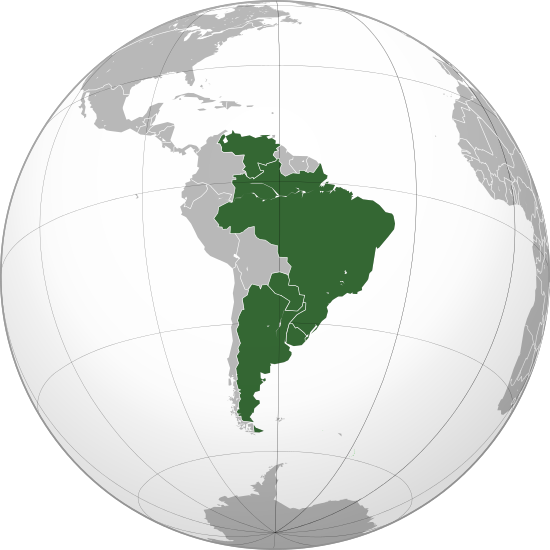
Mercosur didn’t waste any time. The South American trade group warned that it would suspend Venezuela’s membership if it didn’t improve human rights and immigration conditions by December 1st. On December 2nd, Mercosur did in fact suspend Venezuela, according to the AP Press. The move came after the country failed to meet the standards it agreed to comply with upon joining in 2012.
However, despite the unanimous decision from Mercosur’s four founding members—Argentina, Brazil, Paraguay, and Uruguay—the Venezuela government plans to fight back. President Nicolas Maduro has already threatened to take the matter to international authorities, stating that the decision was “a coup d’état.” Yet the country is unlikely to receive much sympathy in a world that is quickly veering toward the right.
When Venezuela joined Mercosur, South America was dominated by left-wing governments. But much has changed since 2012—Argentina and Brazil elected centrist leaders, and the country’s regional influence has declined since it began cutting back on oil shipments. And without the support of its neighbors, Venezuela is vulnerable to further punitive action from other nations. The Organization of American States has already debated suspending the country from the hemispheric body due to its growing authoritarianism, and some U.S. Congress members have suggested imposing economic sanctions.
Venezuela crashes the party
Yet the country shows no sign of backing down. Venezuela’s Foreign Minister Delcy Rodriguez didn’t let lack of an invitation keep her from attending a Mercosur meeting in Buenos Aires on December 15th. When she arrived to find the meeting room empty, she accused the Argentina, Brazil, and Paraguay of colluding against her country. (The meeting of foreign ministers took place in a different, smaller room.)
Argentine Foreign Minister Susana Marcorra later told BBC News that the organization ultimately allowed Rodriguez to join the meeting “because we all agreed that we did not want the situation to escalate into something bigger.” She also said that the suspension would be overturned if Venezuela complied with Mercosur’s requirements. Venezuela claims it has incorporated all the regulations except ones that conflict with its domestic laws.
Running out of options
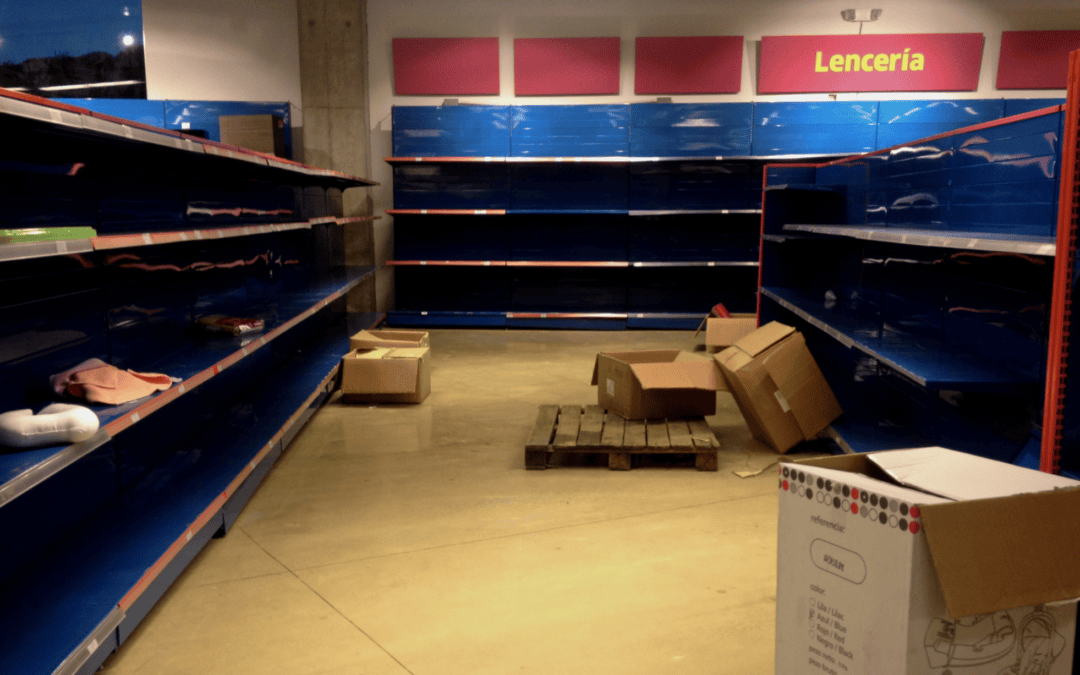
The country has obviously taken a bold stance given catastrophic its shortages of food, medicine, and other essentials. Meanwhile, protests and waning support for President Maduro have only led to more human rights violations. Authorities have jailed hundreds of activists in recent years and suppressed opposition media.
At present, Venezuela seems to be locked in a vicious cycle of shortages, protests, and government crack downs, and the loss of its closest trading partners will only exacerbate this. If the socialist nation is to recover, it must improve its human rights record and restore relations with its fellow South Americans.
by Jennifer Keck | Sep 23, 2016 | Global Cooperation, Human Rights, News
Japanese novelist Haruki Murakami famously wrote, “Hell has no true bottom.” And Venezuela may be proof. As the country continues its downward economic spiral, it now faces pressure from Mercosur to meet the organization’s human rights and immigration standards. The South American trade bloc warned that Venezuela’s membership will be suspended if it fails to meet the December 1st deadline to improve conditions, Bloomberg reported. (Upon joining in 2012, the country agreed to the four-year timeline to meet all the requirements.)
In June, Caracas was set to assume the bloc’s rotating presidency, but leading members Argentina, Brazil, Paraguay, and Uruguay filled the role using an interim team from other states in order to “preserve and strengthen Mercosur,” the ministers said. It was an early warning sign that Venezuela was on shaky ground with its trading partners.
The decline in global commodity prices has led Mercosur to seek out new ties with other trade blocs—including the European Union, which evaluates the human rights records of potential partners. Given Venezuela’s increasing political turmoil, the oil-rich nation is quickly becoming a liability.
“The European Union has condemned Venezuela for human rights violations. So (Venezuelan President Nicolas) Maduro isn’t exactly the best face for Mercosur to have right now,” Roberto Moritan, a former deputy foreign minister in Argentina, told The Wallstreet Journal.
But lack of E.U. support isn’t the only roadblock. As Latin America shifts right, the left-leaning nation is gaining more critics than allies. Argentine President Mauricio Macri has publically called out Venezuela’s human rights record, while Chile and Brazil have voiced concern about the county’s lack of due process and increase of arbitrary detentions.
Inside Venezuela, citizens have taken to the streets to protest triple digit inflation and shortages of basic goods. And President Maduro’s approval rating hovers around 20 percent, signaling that the end of his presidency may be near. In August, he accused the right-wing opposition of planning a coup under the guise of a protest.
Meanwhile, the country continues strengthening some of its controversial ties. Venezuela hosted delegates from Cuba, Iran, North Korea, and Syria, among others during the 17th summit of the Non-Aligned Movement, a group of states that are not formally aligned with any major power bloc. It was an odd move for an increasingly isolated country that wants Mercosur’s approval.
“Having that Mercosur membership is seen as important by the Venezuelan regime to show its population that it is integrated in the region,” said Oliver Stuenkel, professor of international relations at Sao Paulo-based think tank FGV. “This will certainly add pressure, but is unlikely to change things in Venezuela,” he told Deutsche Welle.
With the December deadline fast approaching, Venezuela may not be able comply in time. According to Brazil, it has only met 30 percent of the requirements. Yet founding Mercosur members haven’t specified what steps the country must take to meet them.
It’s unclear whether Mercosur will stand by its promise to suspend Venezuela’s membership if it doesn’t comply. However, it’s a powerful threat to a country that is in the midst of economic collapse. In that sense, anything that nudges Venezuela toward a better human rights record is a step in the right direction.