by Chuck Woolery | Nov 18, 2014 | Global Cooperation, Human Rights
This Letter to the Editor was published in The Washington Post on November 14, 2014.
In his Nov. 9 op-ed, “What the World Bank won’t utter,” Philip Alston made the case for the World Bank to support human rights, but he ignored the role that protecting human rights (and addressing global poverty) plays in ensuring the security of all nations. Too many nations, including the United States, resist enforcing human rights because doing so would hamper “national interests” — code for the short-term economic and political interests of the governing or ruling elite.
With the horrors of World War II still fresh in hearts and minds — governments murdering their own people and the invention of weapons capable of vaporizing thousands of innocent people in a flash — the prevention of another war was paramount. The Universal Declaration of Human Rights passed unanimously in 1948 because it was painfully clear that the human security such protections would bring was a precursor to global security.
Evolving threats such as Ebola, the Islamic State and the proliferation of weapons of mass destruction cannot be controlled without the protection of the fundamental rights and dignity of all people. Protecting fundamental human rights, such as access to clean water, food, education and basic health services, might not help the short-term interests of the powerful but will support their long-term security and prosperity.
Chuck Woolery, Rockville

by Wade Meyerhoffer | Nov 14, 2014 | Global Cooperation, Peace & Disarmament
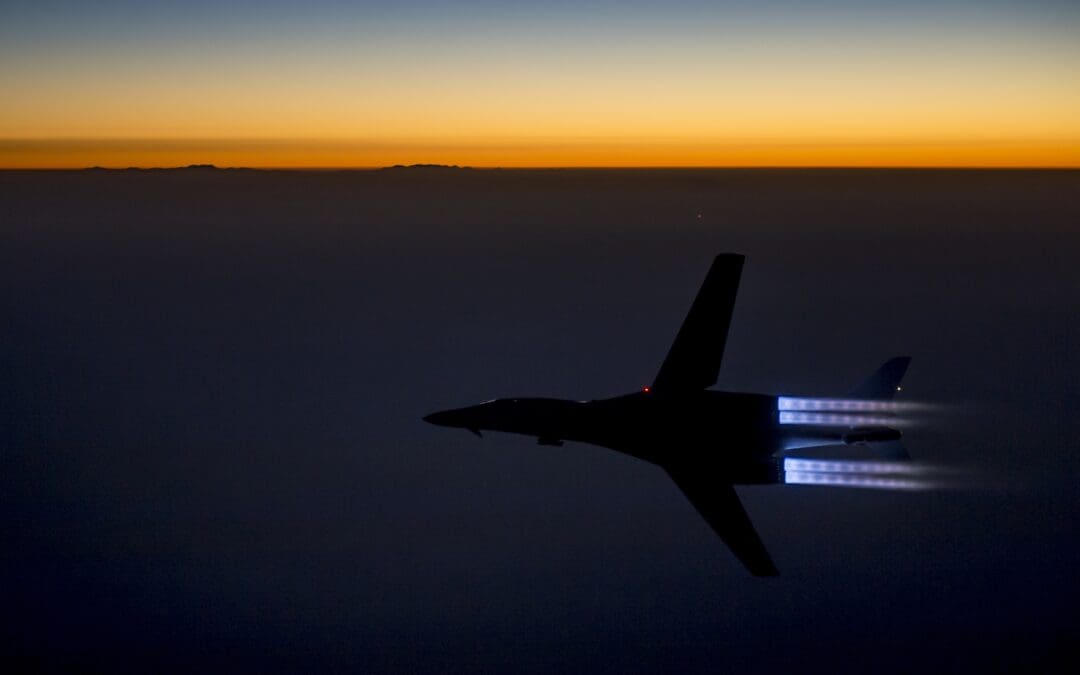
By now you may be familiar with the Islamic State and their mission to create a caliphate under Sharia law. You may also be aware that the US’s strategy of conducting airstrikes to halt their advances is not going too well.
Recently I attended an event at the Elliott School of International Affairs at George Washington University (of which I am a graduate student) concerning the inevitability of a change in US strategy towards IS and Bashar Al-Assad’s regime in Syria. The event featured distinguished experts such as Stephen Biddle, who has previously worked for General David Petraeus, and Marc Lynch, who is the director of the Middle Eastern Studies program at the school and frequently writes for a myriad of foreign policy news outlets.
The discussion started off with the acknowledgement that the US needs to take a step back, and redefine the parameters of our current Middle Eastern engagement. Specifically, the US needs to reevaluate its interests in the region, access the threats to those interests, and come up with a viable strategy where our means (investment) justify (protect) our ends (interests). This was an alarmingly refreshing take to hear from Prof. Biddle, as he went on to say that the US, more often than not, has either overinvested to protect our perceived interests (Iraq) or underinvested (IS). Both of these actions have soured relations with our allies abroad: some have seen our role as unproductive and others have clamored for a greater role for the US to create regional stability.
Biddle went on to say that the US has three real but limited interests in the region:
- to prevent terrorists from perpetrating attacks on US soil;
- to prevent humanitarian crises (e.g. the killing of innocents and those who have been displaced by war); and
- to prevent damage to the US economy from oil instability, which could lead to a 3-5% decrease in US GDP.
Troublingly, even Biddle was struggling to define the US’s interests and strategies in the region, saying that if our objective is to destroy or contain IS, then we are not putting forward enough resources to do so.
Marc Lynch then began to speak about the predictability of civil war conflicts and how, because of its relative infancy, the Syrian Civil War could drag on for another 8-10 years before the prospect of a truce is even an option, making the job of the UN and humanitarian aid workers nearly impossible. Furthermore, Lynch spoke about how, due to the bloody nature of civil wars, the role of the US should be very limited. This limited role would include: pressuring Turkey to manage its borders better, thereby helping displaced Syrians and limiting the flow of foreign fighters to IS; working with the new Iraqi government to salve relationships and create unity among Iraq’s various ethnic and religious groups; and negotiating with Iran, which could cut off some of the money flow that IS uses to conduct operations.
The two experts concluded by saying that, due to the complexity of the two interwoven situations, it is difficult to completely align our interests and strategies with allies in the region, which has resulted in the lackluster strategy the US is currently pursuing. While the US has more of an interest in preventing the spread of IS and radical religious ideology, our allies such as Turkey, Saudi Arabia, and Jordan are prioritizing the overthrow of Bashar Al-Assad–whom the US would like to see ousted, but the government is not in a position to facilitate those events.
Though emotionally jarring and thought provoking, the tone for the event was mired in pessimism. The experts said that more US advisors will most likely be headed to Iraq to help coordinate air and ground missions and that, without a better strategy going forward, humanitarian aid workers will continue to struggle to provide services.
by Ezra Douglas | Nov 5, 2014 | Global Cooperation, Peace & Disarmament
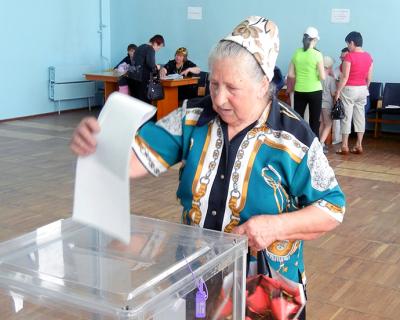
This past weekend, residents in Eastern Ukraine went to the polls to vote in leaders to pave the way for independent states in this war-torn region. Thousands came out to support creating an autonomous region with closer ties to Russia. The elections further illustrate the extreme differences felt by the people in Ukraine, raising tensions in the current conflict and worsening the relations between Russia and the West.
Already, Ukraine has witnessed many exacerbating events, from the annexation of Crimea to the downing of MH-17 and Russia’s meddling in the conflict. The conflict in Ukraine, according to the United Nations, has killed an estimated 4,000 people and has forced many to flee their homes.
With a fragile ceasefire in place, the elections only make this volatile situation worse. Many who came out to vote saw the elections as a first step towards peace, but also as an act of vengeance towards Ukraine for the damage caused by the war. The controversial elections took place in the Luhansk and Donetsk regions with backing from the Russian government, who say that this election serves as a way to facilitate dialogue between the two sides.
In the West, the elections were strongly deplored and viewed more as an act of aggression that would further “undermine the Minsk protocol and memorandum” and “breach the constitution and national law” of Ukraine, according to UN Secretary-General Ban Ki-moon. In Ukraine, Foreign Minister Pavlo Klimkin claims the elections will essentially keep the sides polarized, causing further “economic and political deadlock,” and suffering for those who live there, as violence will likely increase. With the West condemning the elections as illegal and an instigation, the divide between the two parties grows.
It remains unclear how the west will continue to respond to this precarious situation. So far, sanctions have continued to hurt the Russian economy, but that has not stopped Russia from supporting and aiding the rebels in Ukraine. These past elections have further threatened to end the ceasefire agreement, with some rebels planning to take more territory back from the government. Despite Ukraine not being a member of NATO, this crisis has been the organization’s first real test since the downfall of the Soviet Union in 1991.
The elections will have a tremendous impact on the outcome of the crisis, deteriorating the relations between the West and Russia and hindering any resolve towards the unification or peace of Ukraine. The vehement denial by Russia of any instigation and supplying of rebel soldiers only escalates the situation, with constant troop movements and convoys crossing into Ukraine with ease. It has been reported that there are at least 20,000 Russian troops on the border and at least a couple hundred within Ukraine. Despite these facts, it is evident that Ukraine will not relinquish any more regions in efforts to exert their sovereignty and keep the country whole.
Unfortunately, the elections seem to cause more harm than good for Ukraine. The situation remains fluid, but hopefully Ukraine, the rebels, and Russia can negotiate toward finding a solution to prevent further conflict from destabilizing the region and hurting the livelihoods of people caught in the conflict. The next couple of weeks are critical because if these nations act as autonomous regions without Ukraine’s concurrence, then we may see the ceasefire cease to exist and an all-out siege emerge against these breakaway regions. Already we are seeing movements of Ukrainian troops toward these regions. The elections have already illustrated Eastern Ukraine’s desire to be independent; let’s just hope that they don’t exacerbate the crisis and that peace agreements and settlements can still be reached.
by Jennifer Welden | Nov 3, 2014 | Climate Justice, Global Cooperation
Climate change is one of the bigger global issues of our time; just last month, over 400,000 people marched in New York City during the Climate Summit to call for immediate action. Despite the very real effects of climate change, and the various ways in which the issue has been framed, 71 percent of people say they “are less likely to take action on climate change because they’re unsure of the difference their actions will make.” As it turns out, skepticism over the solutions to climate change is just as big a barrier to action as skepticism over the science behind it.
That is one of the main issues with climate change messaging: it tends to focus on the problem rather than the solution(s). This has a direct impact on the public’s opinion regarding climate change; polling showed that two out of three people would be more inclined to support climate action if they heard more about the solutions.
The current messaging isn’t just depressing, it’s misleading – climate change solutions can be found all over the world! From something as simple as a bike-sharing app in Canada to something as novel as solar-powered school boats in Bangladesh, solutions are everywhere. We just have to be aware of them.
This is the goal of the #itshappening project: to create “a call to celebrate how far we’ve come and, to step up our ambition for the future.” By sharing examples of climate change progress from around the world using pictures and social media, #itshappening tries to “[fight] fatalism with hope, and [counter] apathy with agency.”
But it isn’t just about showing that there are solutions, it’s about showing that they aren’t all high-tech achievements. Take the Nigerian initiative Wecyclers: by providing recycling pick-up via bicycles, the program allows participating families to exchange garbage for consumer goods using an SMS-based point system. With an estimated only 46 percent of all municipal solid waste in Africa being collected, this program could have big implications for the future. Currently, more than 5,000 households in the start-up city have signed up, and there are plans to expand the program to other cities throughout Nigeria. A simple answer to a critical program, Wecyclers shows that solutions do not have to be hi-tech to be effective:
Initiatives might be low-tech in innovation, but high-impact when it comes to create sustainable change for entire communities.
And yet there are still barriers that make climate action seem daunting. With the current market design making something as simple as using a 90 percent recycled drink can unappealing to big brands such as Coca-Cola or PepsiCo, it would appear that widespread sustainability is still a ways off. How then do we make climate action something people rally behind rather than question? Following the lead of #itshappening, we need to make climate change solutions well known and widely publicized; moreover, we need to acknowledge the simple innovations that could be implemented easily on a larger scale. People need to see not only that solutions are possible, but also that they already exist. Finally, we need an international call to action and a consensus on what we each can do to better our planet and make the most of our resources.
As Mal Chadwick, the creator and curator of #itshappening notes,
The biggest threat to progress is cynicism – resigning ourselves to climate change because we don’t think we’re up to the task of fixing it.
by Wade Meyerhoffer | Oct 31, 2014 | Global Cooperation
The US and other first-world countries could aptly be categorized as the world’s most generous countries concerning the distribution of aid to developing foreign governments. Foreign aid or investment is generally viewed as a win-win scenario for the US: while the receiving party gets money to (hopefully) further develop their economy, the US receives good press and greater international prestige. Unfortunately, many development economists are saying that foreign aid isn’t having as a great an economic impact as we originally might have thought.
William Easterly is one such economist who believes that if the goal of US aid is to develop foreign markets, then we are failing. Easterly and others who espouse these beliefs do not think foreign aid is a bad thing. However, they do believe that the goals of aid need to be properly adjusted to align with the scope of aid productivity. Throwing money at a developing economy will accomplish nothing unless they have the correct resources and know how to develop markets. To this effect, expecting large quantities of foreign aid and loans to increase the GDP of a country is far-fetched.
Easterly provides many reasons that aid does not directly translate into economic growth. One of these reasons is that sometimes the government receiving the aid is authoritarian or has weak institutions,which will lead to money being put in the hands of a select few instead of being invested in the domestic market. This is obviously a practice that must stop, as it is a waste of taxpayer dollars and is directly funding individuals whose interests may not be aligned with ours.
It bears repeating that you would be hard pressed to find someone who believes that aid is inherently problematic. However, the mechanisms and conditions on which we provide aid require some serious updating. We need to start providing stricter conditions for the aid we send to accomplish a more specific economic goal that is mutually beneficial.
In a limited capacity, the US has been altering they ways in which they distribute aid through the Millennial Challenge Corporation. The MCC does not account for all US foreign aid, but it has brought greater transparency to the US foreign aid distribution process. In the future, we should look to government entities like the MCC to shoulder more of the lion’s share of aid projects in hope that the world looks at our example and emulates it.
by Wade Meyerhoffer | Oct 17, 2014 | Global Cooperation, Peace & Disarmament
If you’ve been keeping up with the news about the Islamic State (IS), you know that there is a strategic battle taking place in Kobane, a Syrian city close to the Turkish border. Currently, local Kurdish forces are doing their best to repel IS militants from the city with the aid of Western air support. The battle is far from over, as the Kurdish forces and the Turkish government have said that more ground troops would most likely be needed to repel IS. This then begs the question of why the Turks aren’t doing anything to impede the progress of IS, as surely Turkey could be their next target.
In quite a childish back-and-forth scenario, the Turkish and US governments have each been prodding one another to take a more active role in the battle for Kobane. We are all well aware of the US’s reputation for intervening in crises such as this, so US involvement should not have shocked anyone. What might surprise some looking in from the outside is Turkey’s seemingly carefree attitude towards a strategic border town, which, if lost, could devestate them.
The root of Turkish inaction stems from their volatile relationship with the local Kurdish population. The Kurdish people occupy a large swath of land in Turkey, Syria, Iran and Iraq, and they have been quite vocal in their mission to establish an independent state. The Turkish Kurds in particular have frequently taken violent action against the Turkish government, which has led the Kurdish political party (PKK) to be labeled as a terrorist organization in several countries. With that fact in mind, one must also remember that Turkey has a particularly strong interest in ousting neighboring Syrian leader Bashar Al-Assad. Moreover, Turkey has also spoken out against the atrocities of IS and has vowed to take serious military action if need be–though, frustratingly, that has yet to occur.
Considering these tensions, it would be easy for one to conclude that Turkey has a serious number of enemies at its doorstep, and the problem they are facing is one of complicated, intertwined actions and consequences. Turkish inaction in Kobane could most readily be attributed to not wanting to aid the local Kurds because of their strained domestic relationship. The only other plausible explanation would be the potential loss of Turkish life on the battlefield. If Kobane were to fall, IS could attempt to move into Turkey, though no one is sure if IS would be foolhardy enough to attack a NATO member.
Turkey is stuck between a rock and a hard place. They must prioritize their enemies by who poses the most imminent threat, and somehow, IS has fallen to last in that regard–to the chagrin of the West and of this blogger in particular. They don’t want to fight IS because they don’t want to aid the Kurds, but aiding the Kurds and the Western forces in Kobane might push everyone involved to take a more active military role in deposing Assad, which seems to be their primary or secondary objective.
The global community and the Western-led coalition of belligerents have an interest in solving this issue between the Kurds and the Turks. Whether that is plausible is certainly up for debate. If the Kurds and Turks could put aside their differences and see that they have a common enemy, much could be done in the fight against IS, a truly terrifying organization that has threatened to bring a centuries-old system of religious law to the world. Until a truce is struck, it seems as though it would take a drastic event for Turkey to intervene or side with local Kurdish forces fighting against IS.