by Rene Wadlow | Oct 16, 2014 | Global Cooperation, Human Rights
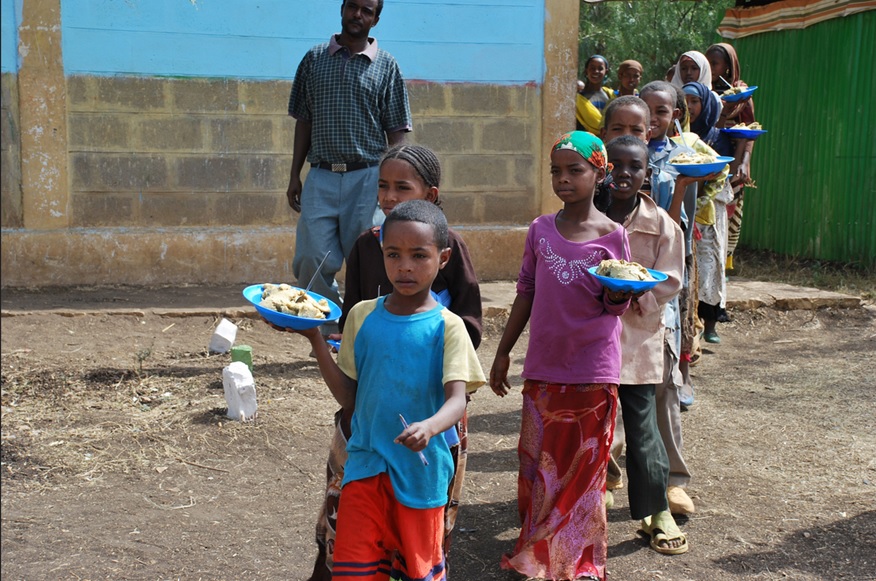
October 16 is the UN’s Food and Agriculture Organization’s World Food Day–a yearly reminder that there are people who are constantly hungry due to ineffective agricultural methods, inadequate distribution, poor food storage, and armed conflict.
The Food and Agriculture Organization (FAO) calls for the day to ensure humanity’s freedom from hunger. Frank McDougall, an Australian economist and delegate to the League of Nations, had influenced Eleanor Roosevelt, who then persuaded her husband to make food a world priority. President Roosevelt called a Conference on Food and Agriculture in May 1943. A preparatory commission was set up, and a signatory meeting for the FAO constitution was held in Quebec on 16 October 1945, the date that was later chosen to be World Food Day.
The FAO headquarters was set up in Rome, Italy, where the International Institute of Agriculture (IIA) existed. Having FAO in Rome also was a symbol of Italy’s acceptance in the world community, despite its joining the Allies late in the game. First Director-General and world citizen Sir John Boyd Orr tried to deal with both immediate and long-term issues relating to agriculture, food, and nutrition. He set the pattern for strong leadership of the FAO secretariat on food issues, with most governments dragging their feet.
William and Paul Paddock’s 1967 book Famine 1975 was regarded as “alarmist” when it was first published, for the end of the 1960s was a period of relative optimism. The “green revolution” was on its way; peaceful atomic energy was around the corner; the population would decrease with higher living standards—and perhaps population was not much of a problem after all, if improvements could be made in the distribution of wealth through better trade agreements and foreign aid.
Five decades later, optimism has waned. The green revolution turned out to be not a revolution, but a mild improvement in certain areas − at a rather high cost in terms of water and fertilizers needed. The richer farmers have benefited more than the poor, and the spread of these new seeds has in fact slowed down. Atomic fuel as a means of easily available energy is increasingly questioned due to problems of radioactive waste and environmental protection measures. Population pressure has grown with no real leveling off in sight.
Hopes have now dimmed that trade agreements and foreign aid would lead to a better world distribution of goods and services. Today, there are widespread fears of economic depression, monetary instability, and increasing unemployment.
A central theme that Citizens of the World have long stressed is that there needs to be a world food policy−and that such a policy is more than the sum of national programs.
The focus on the formulation of national plans is clearly inadequate. There is a need for a world plan of action to combat hunger with emphasis on the role that the UN and regional institutions must play. Certain regional bodies, such as the European Union, already figure prominently in setting agricultural policy, both in terms of production and export. There may be a time when the African Union also will play a crucial role in setting policy and coordinating agriculture.
Attention must be given to local and national food production, distribution, and food security. We must also take into account cultural factors, including the division of labor between women and men in agriculture and rural development; the marketing of local food products; the role of small farmers; the use of landless agricultural labor; and land-holding patterns.
Unfortunately, there are hardly ever adequate national food policies, in part because of a lack of political power on the part of rural populations. The control of government administration by the urbanized elite is strong in nearly every country − even those where the bulk of the population lives in rural areas.
For the formulation of a dynamic world food policy, world economic trends and structures need to be analyzed and policy goals made clear. The agricultural policies of the European Union and the larger food-exporting countries − USA, Canada, Brazil, Australia − need to be reviewed, along with the impact of agricultural subsidies and export encouragement.
A world food policy for the welfare of all requires a close look at world institutions and patterns of production and trade. As Stringfellow Barr wrote in his 1952 book Citizens of the World,
Since the hungry billion in the world community believe that we can all eat if we set our common house in order, they believe also that it is unjust that some men die because it is too much trouble to arrange for them to live.
by Father Ben Urmston | Oct 9, 2014 | Global Cooperation, United Nations
Each year Cuba asks the United Nations to lift the economic embargo the United States imposes on the nation of Cuba.
For the past 22 years, the United Nations has overwhelmingly supported Cuba in this resolution. Last year the resolution was passed188 to 2, with only the United States and Israel voting against it.
An article in The Guardian points out,
Although many US allies join Washington in criticizing Cuba’s one-party system and repression of political opponents, the Americans have lost nearly all international support for the embargo since the collapse of the Soviet Union. No other nation besides the United States has an economic embargo against Cuba.
The fact that the US stands alone shows the undemocratic nature and ineffectiveness of the UN. Sensible changes proposed by Transforming the United Nations System: Designs for a Workable World by Dr. Joseph E. Schwartzberg would be a step forward toward a better world.
US intransigence also shows a lack of openness to new approaches and better ideas. If 188 nations have a different approach in a matter that adversely affects the citizens of a whole nation, isn’t it time that we rethink a policy that seems to hurt everyone–including ourselves?
by Jennifer Welden | Oct 6, 2014 | Global Cooperation
If I learned anything from years of first-day-of-class icebreakers – other than the fact that I hate icebreakers – it’s this: people love food. It’s not only a common topic of conversation, but also a common precursor to conversation: it seems like every time I’m catching up with a friend, it’s over a meal of some kind.
Food is at the center of society. It’s a factor in almost every issue: climate change, human rights, development, etc. Moreover, it’s representative of our culture(s). Cities, states, and entire countries are often defined by their food; travelling has become not only about what you see, but also what you eat.
It’s not that hard to recognize, then, how food and politics intersect. A perfect example of this is the popular dish pad Thai. Often thought of as the quintessential Thai dish, pad Thai’s origins actually lie in a specific political and economic context. In the 1940s, Thailand was allied with Japan and was greatly affected with rice shortages caused by World War II. The dictator of Thailand, looking to reduce dependence on rice and foster a greater sense of nationalism, created pad Thai because it could be made with inferior quality rice. Apparently we aren’t the only country that lets politics invade our dinner plates.
Today, Thailand is still taking its food seriously. Thailand’s Prime Minister Yingluck Shinawatra, troubled by the lack of genuine Thai food abroad, pushed for the creation of the Thai Delicious Committee, which worked to design “‘an intelligent robot that measures smell and taste in food ingredients through sensor technology in order to measure taste like a food critic.’” The machine scans food samples to create a chemical signature that it then compares to an approved standard of authenticity. Overseen by the National Innovation Agency, the government-sponsored committee has already spent around $1 million, created a grading system for restaurants, and a free app that shows approved authentic recipes.
With this much emphasis being placed on food, it’s not that surprising that an academic field formed around it. Gastrodiplomacy – “using food as a tool to foster cultural understanding among countries” – has actually been around for quite a while. Many countries have a history of using food to promote their brand; while the list of countries includes South Korea, Peru, and others, Thailand once again provides the best example:
The Thai government’s rationale, The Economist noted was that the boom in [Thai] restaurants [around the world] would, “not only introduce delicious spicy Thai food to thousands of new tummies and persuade more people to visit Thailand, but it could subtly help deepen relations with other countries.”
The US State Department picked up on this trend a few years ago, launching the Diplomatic Culinary Partnership in 2012, which sends “chefs from across the country [to] serve as resources to the Department in preparing meals for foreign leaders, and [to] participate in public diplomacy programs that engage foreign audiences abroad as well as those visiting the United States.” Recently, American chef Tim Byres found “some remarkable common ground” with fellow chefs in Kyrgyzstan, of all places.
But gastrodiplomacy can also be a source of “cultural indigestion.” Some countries’ campaigns can become overwhelming to locals and food writers who tire of being surrounded by the same foods for months on end. It can also lead to more competition between countries, as seen between Israel and Lebanon during the “hummus war,” when both countries raced to win the world record for the largest bowl of hummus.
The best examples of gastrodiplomacy seem to come from local efforts, however, with a growing market of “fusion cusine”. For instance, you can now find Korean taco trucks in Los Angeles and New York. I was lucky enough to stumble upon kimchi burritos during my time in DC.
What this “homegrown” form of gastrodiplomacy shows us is that true cultural understanding may be as simple as a trip to the grocery store and a few hours in the kitchen. If our dishes can be paired together, why can’t our ideologies? Is world peace a taco truck and taste-testing robot away?
Realistically, it takes more than a creative dish to mend our differences. But it’s oh-so-delicious trying.
by Ezra Douglas | Sep 27, 2014 | Climate Justice, Global Cooperation
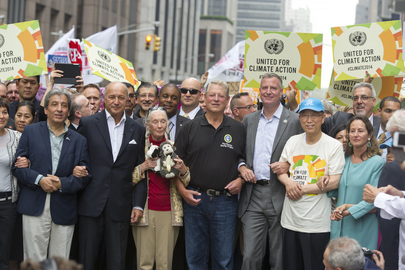
Marked with enthusiasm and high expectations, the United Nations kicked off its long anticipated Climate Summit in New York City on September 23rd. Geared towards finding solutions and methods to combat climate change, nations converged at the summit while enormous marches in support took place globally. In New York City, over 400,000 people marched to express their grievances toward climate change and iterate the need to act immediately.
Met with optimism, the summit allowed nations to collaborate and address, for the first time in five years, the challenges that they must confront. Attendees included world leaders and celebrities such as Leonardo Dicaprio, an actor and a UN Message of Peace ambassador, who gave a thunderous and monumental speech. He emphasized the importance of our planet, acknowledging the existence of global warming and stressing, “You can make history…or be vilified by it.”
Cities, companies from many sectors, and national governments announced new actions to shift away from fossil fuels to a low-carbon, climate-resilient economy. Even the biggest economies signaled that they are ready to shift to a low-carbon growth path. The US announced that it will give the World Bank $15 million to help finance a program aimed at reining in methane pollution.
French President Francois Hollande announced that France will set aside 750 million euros, or approximately $1 billion, for the Green Climate Fund, which intends to help developing countries limit air pollution. China aims to reduce its carbon emissions by 40% by the year 2020. Meanwhile, other nations like Ireland have vowed to reduce their carbon emissions to 80% by 2050, and India has committed to doubling its clean energy production by 2020.
To see a full list of country commitments, visit “Here’s What Major Nations Pledged at the Climate Summit.”
With commitments and goals in hand, it was hard not to notice the business community partaking in the climate change fight. The words of the day, “divesting” and “investing,” highlighted the business community’s participation and efforts towards this issue. Their leaders are sending a clear message to the world that climate change is a risk that cannot be ignored, and, most importantly, that they are ready to work together to bring down emissions.
A global solution will take a global effort to address climate change, with companies and countries collaborating and tackling the problem. We cannot let this global solution be swindled and manipulated by the climate change deniers. Adamant deniers such as the Koch brothers are some of the most notorious polluters in our country and have put millions into lobbying Congress. Organizations like ALEC continue to lie about the issue, resulting in Google pulling the plug in funding. With certain industries and organizations denying the threat, they prove to be the ones hindering our efforts and serving their own interest.
The Summit was successful in re-energizing the climate movement. And with several first-time speeches on climate change and new policy commitments by many nations, the Summit was indeed a step toward establishing new climate targets ahead of the 2015 Paris negotiations ,where an agreement is hoped to be made.
Here’s a snapshot of commitments made by companies:
- Google has invested over $1 billion towards renewable energy and plans to power all of its data centers with clean energy.
- The Rockefeller Foundation, founded on oil money, is divesting from fossil fuel companies and plans to invest money in clean energy instead. The foundation stated, “as an astute businessman looking out to the future, [John D. Rockefeller] would be moving out of fossil fuels and investing in clean, renewable energy” if alive today.
- The 6 biggest oil companies in the world have vowed to reduce methane leaks.
- IKEA and a dozen other companies made the ambitious pledge to source 100 percent of their power from clean energy. The effort, though, is designed to recruit a total of 100 companies to make similar commitments by 2020.
- Many other big companies like General Mills, Mars, and Apple have made commitments, resulting in new investments and over $50 billion divested from the fossil fuel industry.
- The World Bank announced that 1,042 companies signaled their support for putting a price on carbon pollution. According to the World Resource Institute, 25 of those companies, including Nestlé, Unilever, and Philips committed to price carbon internally to accelerate investments that reduce their own greenhouse gas emissions. Not only will they advocate publicly for policies that price carbon in their markets around the world, they will be reporting back on progress towards meeting those commitments.
- A major initiative was announced to cut the rate of deforestation in half by 2020 and end it by 2030. The declaration on forests was signed by 27 governments, including the governments of the US, UK, Germany, Indonesia and the Congo, as well as more than 100 companies, civil societies and indigenous peoples. The declaration was backed by commitments from food companies, including palm oil giants, to deforestation-free sourcing policies of palm oil. Krispy Kreme and Dunkin Donuts joined 19 other major food companies to make zero-deforestation pledges.
by Wade Meyerhoffer | Sep 26, 2014 | Global Cooperation, United Nations
Last week I attended at my first panel on Capitol Hill, which pertained to the currently ongoing 69th United Nations General Assembly (UNGA) in New York City. The panel was hosted by The United Nations Association of the United States of America, and included guests from the State Department, the Better World Campaign, and Peacekeeping Operations Support Section of the UN. The discussion centered on what the likely topics were going to be at the UNGA, as well as on the role of UN peacekeeping forces around the world.
After the panelists were introduced, they quickly highlighted some of their expectations from this UNGA, and what major issues the US was going to lobby for. The audience was then shown a video of an interview featuring one of the panelists, Ken Payumo, who served with the UN peacekeepers in South Sudan. He described the conditions that political refugees lived in, his role in the operation, and a harrowing story of being threatened by pro-government forces who wanted inside the UN compound to look for political dissenters. Ultimately, he did not allow these forces inside the compound and was taken out of South Sudan for his own security. Though I’m sure it wasn’t intended, a lot of the subsequent audience questions focused more than his story than the issues of the UNGA.
The bigger issues that will inevitably be brought up (and hopefully addressed), according to the panelists were the outbreak of the Ebola virus and its threat to the medical security of West Africa, the threat of the Islamic State and mustering a coalition of states to combat it from all fronts, the extra-territorial claims made by Russia in Ukraine and the ongoing hostilities in Eastern Ukraine, the growing concern posed by climate change, and nuclear disarmament.
As one can see, there is no shortage of global issues to address. The UN is often criticized for its lack of substantive results in global issues, but if that perception is going to change, we need a more receptive and proactive body of delegates who are willing to compromise and get to work. Global issues, such as terrorism and climate change, will not just fall by the wayside. I hope this UNGA is a watershed moment in the evolution of the UN and how they operate to achieve their goals.
by Wade Meyerhoffer | Sep 19, 2014 | Global Cooperation
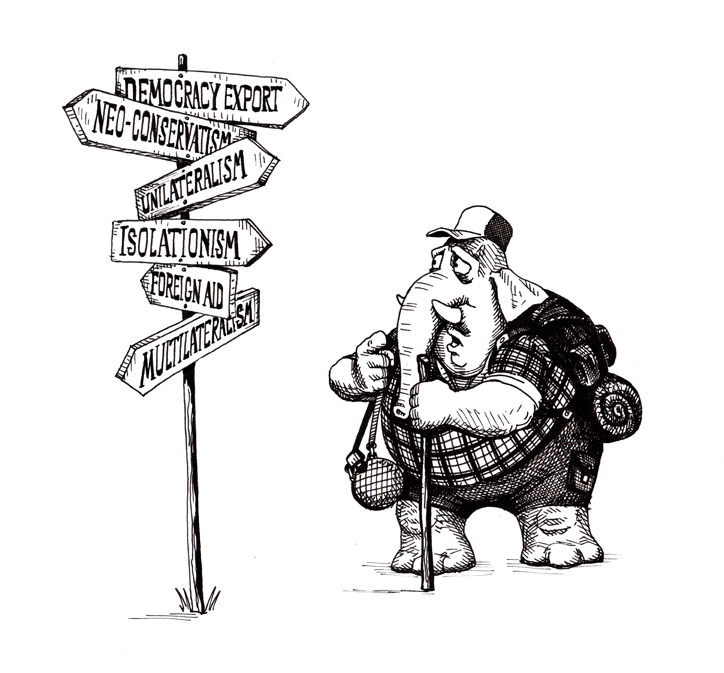
I recently had the privilege of attending a panel hosted by the Woodrow Wilson Center. The panel was convened to discuss a new report from the Chicago Council concerning the notion that Americans have changed their viewpoints on foreign policy and believe that, as a nation, we should stay out of international affairs. While the panel itself made for a healthy discussion, the report was equally interesting, and I implore everyone to read it here.
In attendance at the panel were experts such as Ivo Daalder, former US ambassador to NATO; Jill Dougherty, former CNN foreign affairs correspondent; Bruce Jentleson, a professor at Duke University; and Jane Harmon, CEO of the Wilson Center. The panel began with a summary of the main points of the report, several of which I will address below. After the summary, the experts discussed their thoughts on the report and attempted to explain some of the interesting trends in the data. Following their summations, the panel fielded a few questions from the audience, mostly concerning the trends.
Just before the conference I coincidentally stumbled upon an article by one of my political science heroes, Professor Daniel Drezner of Tufts University, concerning this very report, which he co-authored. The article details ten surprising facts concerning the data gathered and the myth of American isolationism.
Surprisingly, it would seem that from the data, Democrats and Republicans (the general public, not Congress, unfortunately) more or less agree on a wide variety of foreign policy issues. Republicans now view the wars in Afghanistan and Iraq almost as unfavorably as Democrats and Independents. Another shocking finding is Americans’ stance toward Israel. The media says a lot about US support for Israel. However, only about half of the American public would support sending troops to aid Israel if it were invaded. Moreover, the public views Israel as barely favorable on a scale of 1-100, where, unsurprisingly, Iran and North Korea were the least-favored countries.
Some good news came out of the report, with the data showing that now more than ever, Americans view globalization as a force for good. Despite the economic downturn in 2008, a majority of Americans view economic power as very important and continue to support transnational economic treaties.
The report also shed light on alarming aspects of the American view on foreign policy. To my dismay, and the dismay of CGS, a majority of Americans did not seem to care whether or not we took a unilateral or multilateral approach to military operations. The report says that, “There are no discernible differences in views among Americans toward the use of US troops when multilateral action is not specified, as part of a coalition of like-minded allies, or as part of a UN Security Council authorized military mission.”
Despite the surprising statistics, the panel noted many positives to be taken out of the report. The media seemed to portray the public as one with views that change very often, but from the 40 years of research the Chicago Council has done, one can conclude that this is not accurate. Indeed, it seems that the public is fairly static in their foreign policy beliefs, and this fact spans the political spectrum. The most important thing to take away is that the myth of American isolationism is just that: a myth. Americans do not want to disengage from international affairs. Americans want smarter decisions from their elected officials and policy makers.