
Originally published on the CGS blog on October 16, 2014.
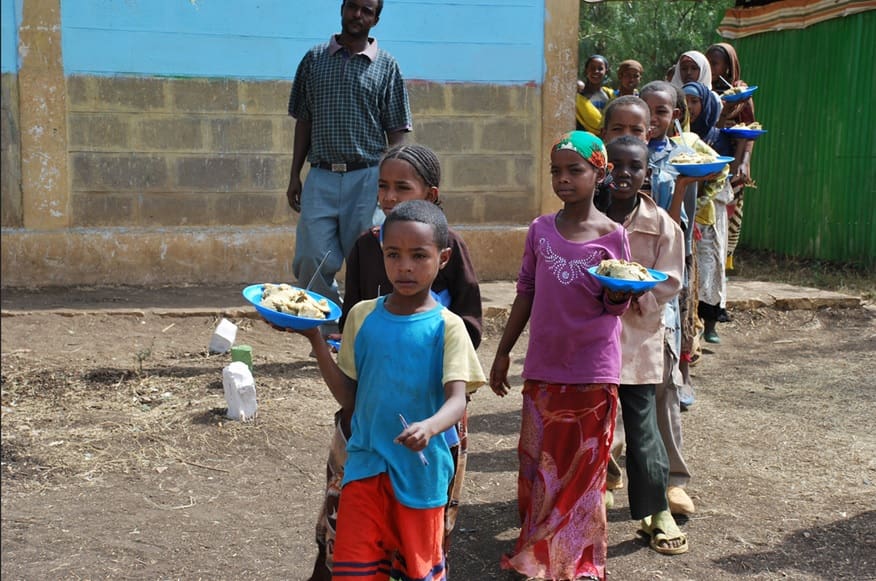
October 16 is the UN’s Food and Agriculture Organization’s World Food Day–a yearly reminder that there are people who are constantly hungry due to ineffective agricultural methods, inadequate distribution, poor food storage, and armed conflict.
The Food and Agriculture Organization (FAO) calls for the day to ensure humanity’s freedom from hunger. Frank McDougall, an Australian economist and delegate to the League of Nations, had influenced Eleanor Roosevelt, who then persuaded her husband to make food a world priority. President Roosevelt called a Conference on Food and Agriculture in May 1943. A preparatory commission was set up, and a signatory meeting for the FAO constitution was held in Quebec on 16 October 1945, the date that was later chosen to be World Food Day.
The FAO headquarters was set up in Rome, Italy, where the International Institute of Agriculture (IIA) existed. Having FAO in Rome also was a symbol of Italy’s acceptance in the world community, despite its joining the Allies late in the game. First Director-General and world citizen Sir John Boyd Orr tried to deal with both immediate and long-term issues relating to agriculture, food, and nutrition. He set the pattern for strong leadership of the FAO secretariat on food issues, with most governments dragging their feet.
William and Paul Paddock’s 1967 book Famine 1975 was regarded as “alarmist” when it was first published, for the end of the 1960s was a period of relative optimism. The “green revolution” was on its way; peaceful atomic energy was around the corner; the population would decrease with higher living standards—and perhaps population was not much of a problem after all, if improvements could be made in the distribution of wealth through better trade agreements and foreign aid.
Five decades later, optimism has waned. The green revolution turned out to be not a revolution, but a mild improvement in certain areas − at a rather high cost in terms of water and fertilizers needed. The richer farmers have benefited more than the poor, and the spread of these new seeds has in fact slowed down. Atomic fuel as a means of easily available energy is increasingly questioned due to problems of radioactive waste and environmental protection measures. Population pressure has grown with no real leveling off in sight.
Hopes have now dimmed that trade agreements and foreign aid would lead to a better world distribution of goods and services. Today, there are widespread fears of economic depression, monetary instability, and increasing unemployment.
A central theme that Citizens of the World have long stressed is that there needs to be a world food policy−and that such a policy is more than the sum of national programs.
The focus on the formulation of national plans is clearly inadequate. There is a need for a world plan of action to combat hunger with emphasis on the role that the UN and regional institutions must play. Certain regional bodies, such as the European Union, already figure prominently in setting agricultural policy, both in terms of production and export. There may be a time when the African Union also will play a crucial role in setting policy and coordinating agriculture.
Attention must be given to local and national food production, distribution, and food security. We must also take into account cultural factors, including the division of labor between women and men in agriculture and rural development; the marketing of local food products; the role of small farmers; the use of landless agricultural labor; and land-holding patterns.
Unfortunately, there are hardly ever adequate national food policies, in part because of a lack of political power on the part of rural populations. The control of government administration by the urbanized elite is strong in nearly every country − even those where the bulk of the population lives in rural areas.
For the formulation of a dynamic world food policy, world economic trends and structures need to be analyzed and policy goals made clear. The agricultural policies of the European Union and the larger food-exporting countries − USA, Canada, Brazil, Australia − need to be reviewed, along with the impact of agricultural subsidies and export encouragement.
A world food policy for the welfare of all requires a close look at world institutions and patterns of production and trade. As Stringfellow Barr wrote in his 1952 book Citizens of the World,
Since the hungry billion in the world community believe that we can all eat if we set our common house in order, they believe also that it is unjust that some men die because it is too much trouble to arrange for them to live.


