by CGS Blog Archive | Dec 9, 2014 | Global Cooperation, News, World Federation
My name is Victor, and I am a board chair of Citizens for Global Solutions (CGS). Our Board of Directors are traveling to Chicago this month to map out the road ahead for the organization.
The meeting is in conjunction with a personal enterprise of mine: the 11th Chicago International Model United Nations (CIMUN), which I’m proud to say educates and inspires over 1,400 high school students from around the world.
As we move into 2015, I can tell you that the organization is working hard to confront the effects that our economy has been having on the non-profit sector as a whole — simply put, a nerve-wracking drop in contributions (skip the rest of the article if you want to click here and help us out!).
I and my fellow Board members are rising to this challenge by undergoing a new strategic planning initiative, as well as moving forward on a smart capital project. We are converting our beautiful properties in Washington, DC into safe and comfortable income-generating housing for students coming to DC in pursuit of an International Relations internship.
Finding safe and affordable housing in DC is tough – especially for students who are only coming for one or two semesters. Converting our space is a win-win – we provide some sorely needed space for students passionate about global issues, and this helps to stabilize our budget through a tough economic time.
Your gift right now is absolutely critical!
Your gift would go a very long way toward strengthening our organization and paving the way for long-term financial sustainability.
Right now, the CGS Board Members are tasked with:
- Defining the goals of the org that best represent the opinions of our membership; and
- Developing a financially viable model for the organization that achieves our goals.
I am confident that our efforts will help CGS to become a stronger voice for our movement well into the 21st century. Help us move forward by donating now!
This holiday season, my fellow board chair Jordan and I are thankful for many things. Among them are the hard work of the staff and the dedication of our board members on behalf of this inspiring organization that I deeply believe in.
And we are also thankful for YOU and the time and support you have given to CGS over the last few years.
Please make a contribution this holiday season and support our growth in 2015!
by Rene Wadlow | Dec 5, 2014 | Global Cooperation, Peace & Disarmament
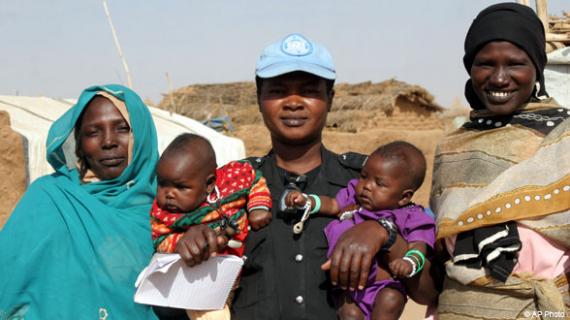
The UN General Assembly has designated 5 December as International Volunteer Day: a celebration of the role of volunteers who promote UN values and goals.
The term “volunteer” is somewhat dated. With the end of compulsory military service in many countries, almost everyone is a “volunteer” in what she or he chooses to do. Today, the term “civil society” is more often used, although in practice, most UN cooperation is with non-governmental organizations (NGOs) in consultative status through the UN Economic and Social Council (ECOSOC).
It is in the field of conflict resolution that NGO efforts with the UN are most important, but also most difficult. The relationships among security, conflict resolution, respect for human rights, and the creation of democratic institutions have now assumed a more dynamic form than at any other time since the creation of the UN in 1945. This broad mission for peace demands the concerted attention and efforts of individual States, regional intergovernmental bodies such as the European Union, NGOs, and all of the UN system.
The UN must walk a difficult line, as it is obliged to respect the fragile balance between the sovereignty of States and actions in such fields as electoral assistance, humanitarian aid, administrative activities, rural de-mining operations, the promotion of democracy, and the protection of human rights— which have in the past been under the control of the individual State.
NGOs can take a lead or cooperate creatively in a number of ways:
- Fact-Finding and Early Warning
NGOs, because of their familiarity with local situations, are well placed to play a role in early warning mechanisms by drawing the attention of governments to emerging conflicts. More must be done to coordinate activities to stop violence before it spreads. Coalition-building among NGOs can have a multiplier effect on the ability to understand the complexities of conflicts. Better consultative avenues within the UN should be developed to enable NGOs to provide early warning information and to receive information from the UN.
- Keeping channels of communication open between opponents
One of the most difficult yet necessary tasks is to keep communications open between different protagonists in an armed conflict. Every faction in a conflict is looking for allies and outside support. Often one side will break contact, which is then difficult to reestablish. Given the importance of a steady flow of information among protagonists, NGOs need to develop better ways of communicating with all parties and, if desired, to pass communications from one side to another.
- Advice on constitutional issues
Constitutional issues are at the heart of many armedconflicts as we see in Ukraine, Burma, and the Darfur region of Sudan. Constitutional issues involve questions about the balance of power between central and local government, the authority of various government branches, and citizens’ rights. This is a field in which there is a growing interest within the UN. Thus, there is a need to develop networks between university-based experts in constitutional law, NGOs and the conflicting parties themselves.
Today, there is a good deal of uncertainty among policymakers as to the best way to deal with increasing numbers and types of armed conflicts around the world. One of the major uncertainties is why local, traditional forms of conflict resolution have broken down or proved inadequate. All societies have techniques of dispute settlement which function much of the time. However, such techniques among tribes in South Sudan have broken down or have become overtaxed.
As with any new field, increased NGO-UN cooperation in conflict resolution requires a process of presenting ideas, drawing upon different fields of thought, distilling experiences, and gradually accepting a common core of ideas.
Conflicts are not static. Conflicts change as they progress from latent to manifest, from escalation to de-escalation. Conflicts can be transformed positively or negatively. 5 December should be a day for reflection on the steps that need to be taken for strong, coordinated action.
by Wade Meyerhoffer | Dec 5, 2014 | Global Cooperation
It’s probably not too much to ask that a prospective ambassador know a little bit about the country they want to work in, right? Or that they actually have been to that country? Well, apparently it is.
Recent Senate confirmations have put Colleen Bell and Noah Mamet in Hungary and Argentina respectively as US ambassadors. One would think that they are diplomats of some sort, with prestige and experience in the country in which they’ll be working. Unfortunately, ths is not the case. Both Bell and Mamet have absolutely no experience or background in the countries they’re going to. But don’t just take it from me – allow Jon Stewart to further illustrate these points.
But surely they must have SOME qualifications, right? Why else would they be approached for the position? The shocking reality is that they are not remotely equipped to head an overseas office of the United States. Bell is best known for her work as – wait for it – a soap opera producer. When asked about the US’ strategic interests in Hungary, Bell did her very best to try to sidestep the question, but couldn’t quite get past John McCain. Mamet, on the other hand, runs his own PR and communications firm. If that weren’t enough to take him out of the running, you won’t believe this: Mamet has never even been to Argentina and doesn’t speak Spanish. The only reason these two were nominated by the President is that they were big time donors to his campaigns, giving well over $500,000. So it would seem that a political ambassadorship in the US can indeed be bought.
On this topic, an ABC news anchor said, “This is not uncommon, but it is uncomfortable.” You can say that again. As a matter of fact, this disturbing trend is growing in an American political system that is being threatened by plutocracy.
It should be no wonder that there has been a backlog of appointees who have had to wait quite some time before they could be confirmed. Why would Republicans, like stalwart John McCain, even want to entertain the idea of voting for someone who hasn’t even been to the country? Why would anyone, for that matter? Well, for someone who sought to reform the political appointee system, President Obama is doing a bang-up job thus far.
Sadly, according to Justine Drennan, this is a trend that is decades old and is not going away in the near future, at the cost of our international reputation and quality of governance. She finds that usually 30% of appointees are political and 70% are career diplomats, but that the former statistic is close to 40% in the Obama Administration.
This doesn’t mean that all political appointees are unqualified. However, there is a fine line between a career diplomat and someone who has never been to the country in question. It leads this writer to think that maybe he should set up a Kickstarter to raise $500,000 and buy an ambassadorship. Surely as a graduate student studying international affairs at a reputable university in the nation’s capital, I have more qualifications than a soap opera producer, right? In any case, could I prove any worse at being an ambassador then Bell or Mamet? I suppose we will have to wait and see.
by Ezra Douglas | Dec 3, 2014 | Global Cooperation, Peace & Disarmament
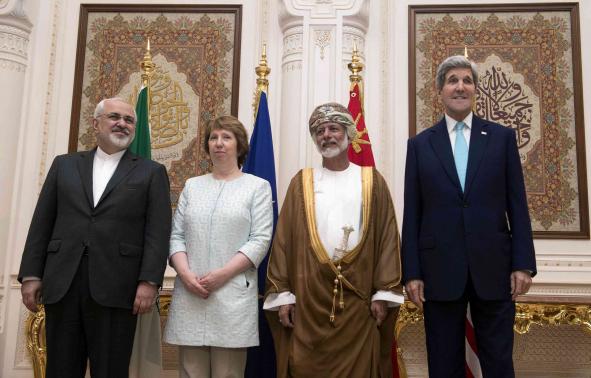
For the past couple of months, negotiations have been taking place between the West and Iran on Iran’s nuclear program. These negotiations have serious implications that are critical to fostering a lasting peace in the region and preventing further conflict. Despite the goals these negotiations aim to accomplish, a deal between these two conflicting sides has not been reached and has instead been pushed back for another seven months.
These talks serve to illustrate the importance of using diplomacy in solving the crisis of nuclear proliferation rather than aggressive action. Ever since the Joint Plan of Action deal was reached last year in Geneva, Iran has opened up its willingness to negotiate, and progress has been made on the handling of Iran’s nuclear program.
The negotiations that the two sides aim to accomplish are based on Iran’s easing its nuclear enrichment program and the West’s lifting its sanctions against Iran. The duration of such agreements are also in question. Many in the West and in the vicinity of Iran would argue that a short deal would do little to hamper Iran’s capabilities and would not solve the crisis. Nations such as Israel and Saudi Arabia, key US allies in the region, fear a nuclear Iran. Back when former president Mahmoud Ahmadinejad was president of Iran, he advocated for the destruction and annihilation of Israel. Such statements foster fear that a nuclear-armed Iran would cause conflict and push for other nations in the region to invest in nuclear technology.
The new extension that the West and Iran decided on calls for a solution by March 1, 2015 and an agreement by July 1, 2015. Foreign Secretary Phillip Hammond of the United Kingdom said that although a deal wasn’t reached, “we are all clear that enough progress has been made that maintaining the current momentum, and keeping working at it, does give us the prospect of getting to a deal.” Such optimism highlights the seriousness of the negotiations and shows that both sides are considering this an opportunity to restore order and curb nuclear proliferation.
In sum, the nuclear talks between the West and Iran highlight the importance of diplomacy over force in restoring peace. While the West aims to deter Iran from getting nuclear weapons, Iran hope to lift sanctions from the West to boost its economy. It is critical that a negotiation be reached to allow for greater peace and economic cooperation, leading to investments, jobs, and potentially a new diplomatic relationship between the United States and Iran.
by CGS Blog Archive | Dec 1, 2014 | Global Cooperation, World Federation
Once again, Citizens for Global Solutions is renewing its mission and reaffirming its values. In the last few years, the world has become smaller. Americans are much more aware of events abroad, especially those that news media and anyone with a cell phone reports in real time.
This is both an opportunity and a challenge. It is an opportunity for Americans to engage constructively with the world on both a social network level and on governmental levels. It is a challenge because Americans typically like the quick fix, whether it be quarterly profits or overseas military interventions.
At the same time, the daily news feed makes it increasingly clear that no quick fix that will enable the establishment of democratic processes in large and increasingly important areas of the world. Although the World War II victory of the democratic western countries led people at the time to perceive their institutions as universally applicable and desirable, the increasingly developed and assertive societies in Asia, Africa, and the middle east are espousing other solutions.
This process is repulsive in many ways to Americans. Countries around the world, including our own, contravene customary international law and treaties when it is convenient. It is apparent to most people that the historic commitment of Citizens for Global Solutions to establish conditions under which democratic world federation can take place will not be a quick process It is not even clear how political processes to work toward international institutions will be established in the US, let alone in other countries.
Yet institutional funders more than ever are committed to outcome measures and demonstrated results. Not only must programs be conducted, they have to be assessed and outcome metrics developed; that itself takes substantial design and financial resources. We will have to focus our future efforts on manageable projects with achievable and demonstrable results, though not necessarily legislative or elective ones. There are educational goals and policy research projects that CGS programs can realistically achieve in ways that the public and policymakers can accept and embrace, and that donors will support.
So how does Citizens for Global Solutions work toward its historic long-term commitment to world federation while delivering relevant intermediate and empirically demonstrable accomplishments? That is one of the challenges that we will be addressing in our planning process.
We have started the planning process by getting to know each other as CGS members. We have individuals with extraordinary accomplishments and knowledge on our Board of Directors and in our active membership. In order for CGS to benefit from their presence, we are learning to appreciate and listen to their perspectives.
For the past four months, the Women’s Caucus at CGS has sponsored a comprehensive series of interviews and meetings of board members and a few others. On November 21st , they delivered a report identifying the themes underlying the concerns and perceptions of the interviewees. This will be an integral part of the subsequent planning process, not to mention the cooperative relationships that have developed as a result of their work.
The next stage in the planning process is visioning, both what CGS members aspire for the world to look like as a result of CGS activities and alternate visions for our own organization, but also the values that we want to represent and showcase in the process. This began a month ago and hopefully will be completed in December at a two-day meeting of the Strategy Committee to be held in Chicago, to which all members of the Board and senior staff are invited. We will carry this forward in January with an in-person retreat of the Board of Directors in Washington to formulate a renewed mission for CGS given our history, competing and complementary organizations, and the current fundraising and political environment.
Subsequently, we will design and target strategies with achievable goals and designated responsibilities to flesh out the plan. We will also design the structure and processes of the Board of Directors that will enable sound decisions to be made and continuously adjusted in the light of experience.
We look forward to the participation of CGS’s membership and active supporters in this process. In a sense, we must keep alive the hope of finding a better way to do things in the world.
by Ezra Douglas | Nov 19, 2014 | Global Cooperation, Peace & Disarmament
Marked with glamour and excitement, China’s capital Beijing has not held such a monumental event since hosting the 2008 Olympics. World leaders and foreign dignitaries recently attended the Asian-Pacific Economic Cooperation (APEC) summit to discuss trade agreements and increase regional cooperation. Although many agreements were reached between countries, the summit was marked with high tension due to China’s aggressive policy towards territories in disputed waters.
In the past few years, China has begun to widen its territorial claims in areas that it believes it rightfully owns. These territorial claims have been driven by the demand for new natural resources and sources of food.
In the East China Sea, Japan and China have been fighting over Japan’s Senkaku Islands. Tensions have increased dramatically as China has sent coastguard ships and aircrafts to patrol the area. With a territorial claim by China, Japan is arguing that China’s aggressive tactics are violating its sovereignty. Before the start of the APEC summit, China and Japan established a four-point agreement to deescalate the situation.
Further south in the South China Sea, China has been flexing its muscle and causing agitation with its neighbors of Vietnam, Malaysia, the Philippines, and Taiwan. Vietnam has been outraged by China’s actions near its coastal waters. In early May, protests against China occurred in Vietnam after China moved an oil rig to disputed waters near the Paracel Islands, both claimed by China and Vietnam. Despite these actions, China and Vietnam have held talks to cooperate more on maritime disputes and prevent future conflict.
China’s actions raise serious alarm to the regional stability and growth of the region. These waters have a tremendous amount of shipping traffic and one accidental mistake could lead to a catastrophic war between neighboring sides. China’s desire to grow and expand its economic prowess by taking these disputed waters has been fueled by the findings and understanding that there are over 11 billion barrels of oil and 190 trillion cubic feet of natural gas that lay beneath the seabed.
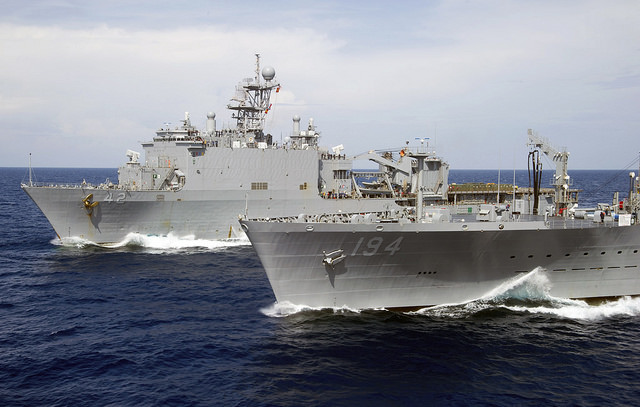
All this begs the question: Is China willing to act aggressively to claim control of these disputed territories? China has been rapidly advancing its naval capabilities by purchasing aircraft carriers from Russia and developing a new fleet of nuclear naval submarines. Their aircraft capabilities have also advanced rapidly. These advances in military capabilities have given China an edge over its neighbors, allowing them to act further out from the mainland.
A majority of the countries in this region (with the exception of Taiwan) have signed and ratified the Convention on the Law of the Sea. These aggressions by China signal an erosion to the treaty and show why US ratification could make a difference. China’s dangerous acts illustrate a failure to uphold its international responsibility. With these countries ratifying the convention, US participation would further reinforce the treaty’s provisions, help prevent conflict in this region, and halt China’s advances.
In sum, China’s territorial ambitions are causing rifts that could lead to conflict with its neighbors. Asia already has many border disputes, but China’s acts have gone beyond the norm. As China builds up its military, its neighbors might be compelled to follow suit. The growing threat is perhaps a reason to why the United States has started to increase its focus on the region and build more military bases as it sees China has a potential threat. Already the stage is set for a potential conflict. Hopefully, China will scale back from its acts of aggression, uphold its obligations under the Law of the Sea treaty, and cooperate with its neighbors to resolve these disputes rather than acting unilaterally.