by Kevin Burke | Feb 16, 2015 | Global Cooperation, Peace & Disarmament
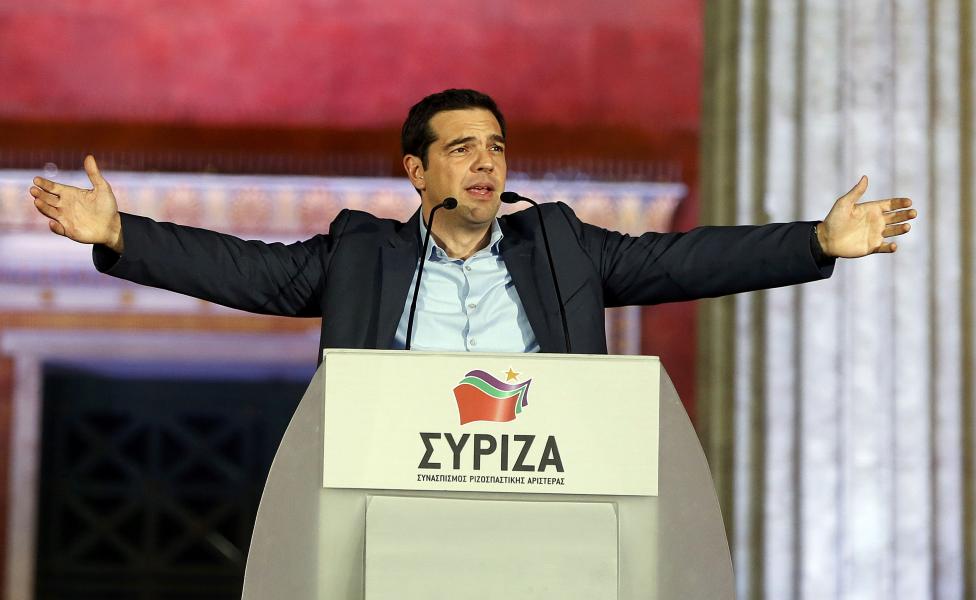
Following recent elections, Greece has us asking big questions about how its sovereign debt will be managed going forward. These questions carry implications well beyond Greece: a collapse in talks over the next steps could result in a severe crisis for the European Monetary Union (EMU), with potential effects throughout the global economy. What are the implications for global politics?
A brief refresher first. Greece joined the European Monetary Union in 1999. The country wasn’t in good financial shape, and things only got worse throughout the next decade. The full extent of the problem wasn’t known until a new finance minister discovered deceitful accounting in 2009. Greece was defaulting on its debt, but it started to take steps to fix the problem.
A troika of international creditors had substantial leverage over how Greece would repay its debt. For Greece to receive relief from this group, it would have to increase taxes, cut government spending, and modify labor standards. With no alternative, Greece agreed to the conditions and accepted a bailout package.
Since then, Greece has achieved a primary budget surplus, but it isn’t paying off its debt as quickly as its creditors prefer. The austerity measures demanded by the troika resulted in high unemployment and a shrinking Greek economy. Thus the elections: Greeks want a change in the conditions for repaying the nation’s sovereign debt so they can go back to work and live better lives.
Our global financial system needs to enable borrowing for public projects because of the cyclical nature of the global economy: sometimes tax receipts fall in a recession but program expenses remain the same, so deficits ensue. We also need public institutions that are responsible to their lenders and earn the trust of the public.
But if we over-prioritize the lender-debtor relationship, we risk missing the fact that sovereign debt is taken out in the name of the public good: repayment measures fall back on the individuals who make up these countries. And demanding too much can risk undoing the original good done by the loans and can cause new harm. Limited options for restructuring sovereign debt leave governments apparently ceding sovereignty to organizations that may not have the best interests of the state or its citizens as a priority.
As a global community, we must carefully review the moral implications of sovereign debt and the institutional structures we use to manage it. If Greeks were to feel so punished by its creditors that its only options were to leave the EMU or to ignore its debt entirely, the ensuing global financial catastrophe would likely extend to every corner of the globe, as lenders could lose faith in governments, development aid could dry up, and international trade could fall apart.
Nobel Prize-winning economist Joseph Stiglitz recommends a more formal, global institutional framework for managing sovereign debt issues. But as the troika of Greek creditors has proven, lender conditions on debt management can be problematic. We need a framework that provides multiple options for debtor states so that their sovereignty is kept intact while protecting public welfare. If nothing else, this years-long crisis has proven that we need to put more effort into developing this sort of solution.
As the Greek situation unfolds, we need to remember that sovereign debt is necessary, but that there are more factors involved than merely how much debt there is and when it can be resolved. There are real people in debtor countries who are affected by the terms of repayment plans. And in a globalized world, repercussions resonate throughout the global economy. In a worldwide community, we need to consider a more permanent global solution to sovereign debt problems.
by Jennifer Welden | Feb 4, 2015 | Global Cooperation, World Citizen
A few weeks ago, House Republicans passed a bill that, along with providing more funding for the Department of Homeland Security, could reverse Obama’s recent executive order providing amnesty for millions and lead to the deportation of many undocumented immigrants. Regardless of which side of the constitution you are on, this seems more like immigration refusal than reform. But do we even know what real immigration reform would look like?
To be honest, I don’t know much about immigration. While I live in California, which has more immigrants than any other state, I am not am immigrant. My parents are not immigrants. Sure, I know the rhetoric (from both sides of the political spectrum) about the problem of illegal immigration, but I never knew enough to feel comfortable talking about the issue, let alone analyzing policy. Recently, however, I’ve begun taking a class on immigration, and while (spoiler alert) I still don’t know much—we’ve only had three lectures—I wanted to write something applying what I’ve learned so far.
One more spoiler alert: there is too much to be said about immigration for any one blog post to do it justice. The point of this one is to give some quick facts, leave some food for thought, and call it a day. If you think I missed something, you’re probably right, but please don’t mistake my brevity for bias; I just want to get everyone thinking about an important issue, no matter which side you are on.
For a quick “immigration-for-dummies” version of Obama’s executive action last year, along with some other facts about immigration, I found this Washington Post article to be quite helpful. The main thing to remember is that the order gives amnesty to “undocumented parents of U.S. citizens and permanent residents who’ve resided in the country for at least five years,” while also expanding the qualifications for who can apply for a deportation deferral.
While for many this is a much better step forward than what the Republicans are offering, it isn’t reform either. “Reform” literally means “the improvement or amendment of what is wrong, corrupt, unsatisfactory, etc.” Though this temporary solution might be the right (and only) option right now, it doesn’t make any changes to the structural problems within the current system.
In fact, as Tina Griego argues, the current system actually encourages illegal immigration by setting up levels upon levels of bureaucracy that extend the “line” for coming into the country and give people more reasons than not to skip the process entirely.
Ours is a system of many legal detours, cul-de-sacs and dead-ends. A straight path is hard to come by.
Reform is important, then. But what are the right reforms to make?
Some say we should close our borders. Ignoring how hard this policy is in practice, let alone the moral arguments against it, let’s just focus on the economics. These close-border advocates often paint immigration as a drain on our resources – taking away jobs from citizens, using welfare and public assistance, etc. And yet, much research shows the benefit of immigration, legal or illegal: they take the jobs we don’t want, and sometimes even drive wage growth. As capitalist theory predicts, moreover, the market will adapt to this increase in labor and firms can grow. In fact, where crackdowns on immigration have been particularly tough, many employers have been struggling to find workers. For once, capitalism seems to be on the side of the proletariat.
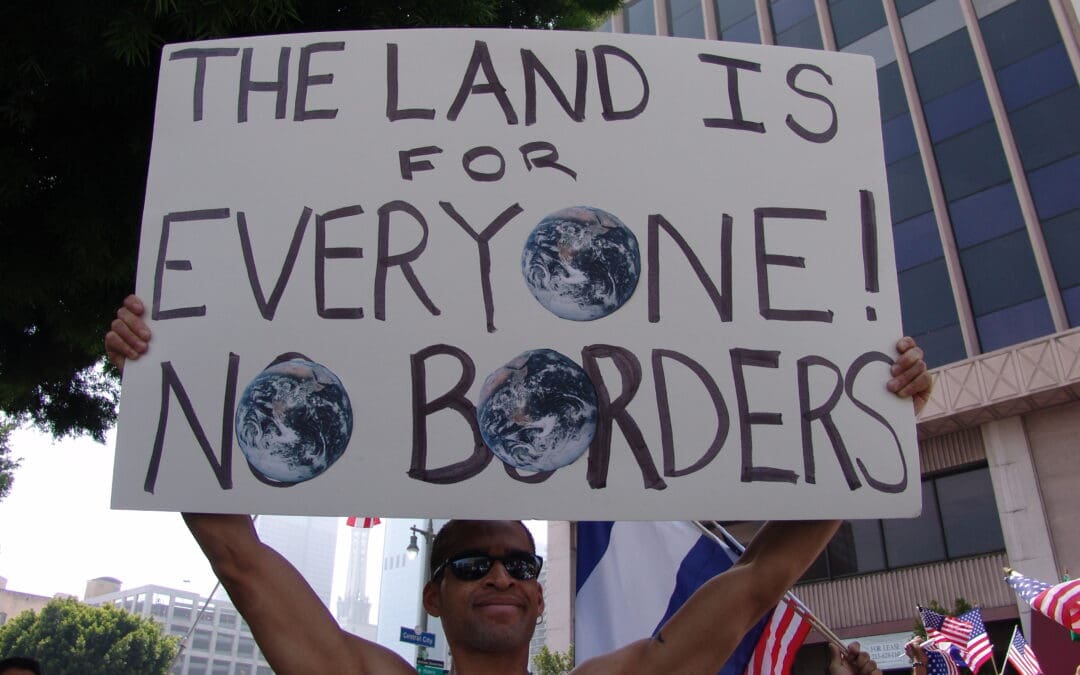
Others say we should open our borders completely, simply on the grounds of morality. If we believe everyone to be equal and have the same rights, how can we restrict something like migration? How can we separate families? And if there are jobs to be filled, who’s to say which of us can take them? There is also the issue of refugees, which hasn’t been addressed in this post at all, but falls completely under this moral ground as well.
Within this vein of the argument, there are those who argue that borders are irrelevant – we are all global citizens, are we not? I can’t disagree with this point. So many of the world’s problems become everyone’s problems – climate change, terrorism, trade – regardless of territorial lines. Why is human movement thought to be immune to these trends?
I still don’t know what “immigration reform” is exactly. My economic side sees the benefit to a more efficient bureaucratic process that has some restrictions but still enables movement; my moral side sees the lack of humanity in blocking someone from a better life for any reason.
I still don’t know what “immigration reform” is, but I’ll let you know when I find out. (Hopefully, Congress beats me to it.)
by Kevin Burke | Feb 2, 2015 | Global Cooperation, Peace & Disarmament
He will be remembered…for his commitment to peace and for strengthening understanding between faiths.
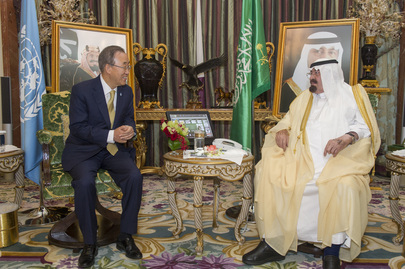
So said British Prime Minister David Cameron following the death of Saudi Arabian King Abdullah on January 24th. These words were spoken of a man whose kingdom is widely lambasted for its draconian justice system, marginalization of women, suppression of dissent, and turning a blind eye to terrorist funding. How could Cameron or other world leaders praise someone whose policies stand at such odds with their own?
The answer lies in resolving a fundamental dilemma of diplomacy in a time when liberal democracy has not reached every nation, but cooperation is required to achieve mutual and global goals. If we make alliances with dictators, are we supporting their crimes? If we shun them as criminals, will we suffer the consequences of ignoring our self-interest while leaving the oppressed to suffer?
How do we resolve the conflict between two seemingly bad choices?
Perhaps the best way to think of diplomatic relationships is as a spectrum of possibilities rather than as an on/off binary. Sometimes allies can disagree and enemies can find common cause. Sometimes countries share common interest in one policy area but have divergent needs in another. There are many possible ways for countries to interact.
Our first attempt to resolve the dilemma comes in realizing that despite claims that Western leaders are hypocrites for supporting Abdullah, this sort of rhetoric fails to account for the varieties of international relations and extent to which any of those relations endorse a particular regime. Maintaining an embassy in a foreign capital is a basic feature of recognizing sovereignty. Most aid to developing countries recognizes those countries’ needs, but doesn’t support a government’s specific actions.
Closer alliances may or may not approach endorsement depending on the how close the relationship is, awareness of the specifics, how invested the ally is in the unacceptable policy, etc. There are certainly bridges too far: China’s direct involvement in lining the pockets of genocidal regimes in Africa, for instance, or its direct support for North Korea. But much simpler things can involve responsibility, like how the United States stood by and watched as the Ben Ali regime milked Tunisia dry and then supported Ben Ali as an uprising occurred.
With a variety of international relations, then, we see many potential ways to interact with illiberal regimes, but this still leaves quite a bit of gray area. Perhaps it’s better to just stay away.
But perhaps not.
By maintaining alliances with despots, we gain something that we wouldn’t have by keeping our distance: the opportunity to pressure these allies to change their backwards policies. Engagement requires long-term commitment at the highest levels of government, radiating out through various diplomatic channels and civil society. But past successes indicate that engagement can produce positive outcomes. In the long term, the possibility of constitutional change is on the table; in the shorter term, we have the opportunity to stop heinous actions or improve unjust laws.
Furthermore, by forming alliances between democracies and autocracies, we can work with these allies to achieve global priorities and involve them ever more deeply in global society. As that involvement increases, it becomes more difficult for them to ignore the body of international law to which they have become party.
In the end, we solve the dictator diplomacy dilemma by treating it as an opportunity. Sometimes in these alliances, all we achieve are self-serving goals like access to natural resources. But diplomacy with dictatorships encourages those regimes to get ever more entangled in the global society that will help protect and empower the citizens they are marginalizing.
by Rene Wadlow | Jan 22, 2015 | Global Cooperation, World Federation
Progress results only from the fact that there are some men and women who refuse to believe that what they know to be right cannot be done.
–Russell Davenport
With the US presidential campaign preliminaries already being discussed in the Democratic and Republican parties, it may be useful to recall one of the most innovative of campaign strategists: Russell Davenport, the spirit behind those chanting “We want Willkie” at the 1940 Republican convention in Philadelphia.
Russell Davenport was one of the founders of the early 1939 World Citizens’ Association along with Quincy Wright, professor of international law at the University of Chicago, and Adlai Stevenson, then a young Illinois lawyer. Davenport was a resolute opponent of the isolationist movement then strong in the Republican Party (and among some Democrats as well). As he wrote,
There come times in history of every people when destiny knocks on their door with an iron insistence…the shape of things to come depends on us: our moral decisions, our wisdom, our vision and our will.
However, it was less because of his role in the world citizens’ movement than because he was the editor of Fortune in Henry Luce’s publishing empire that early supporters of Wendell Willkie brought the two men together in the summer of 1939 at a Fortune brainstorming session with industrialists, bankers, labor union leaders, economists, and sociologists.
Willkie had been a Democrat most of his adult life and was considered a “wild card” among the Republican elite. Moreover, he had never run for a political office, and to start out by running for President struck some as premature. Willkie was disliked by Democrats as a renegade and by Republicans as an interloper. He was a lawyer for large corporations of the sort that advertised in Fortune and had defended the big electric-generating companies against government regulations. Since the TVA and its state-sponsored creation of energy was one of the major projects of FDR’s New Deal, Wendell Willkie became an opponent of Roosevelt’s policies, but without any base among Republicans whom he had joined only at the end of FDR’s first term.
Russell Davenport was a fellow Yale classmate that Henry Luce had brought first to Time, thenLife and Fortune. Davenport was more of a writer and idea person rather than an editor. He had imagination, and Fortune under his editorship produced a number of in-depth reports on world economic conditions. Davenport also edited and published in the April 1940 issue Wendell Willkie’s campaign credo: “We, the People.”
Davenport put his energy, writing skills, and contacts in the publishing world at the service of Wendell Willkie in 1940. The political amateurs with access to considerable money from publishing and other business sources overwhelmed the Republican political establishment, who were divided in their support between Robert Taft, Senator from Ohio, and Thomas Dewey, Governor of New York. The political professionals did not see the Willkie train moving down the tracks until it was too late.
In the 1930s and 1940s, primary elections for party candidates had not taken on the role that they have today, and party conventions were times of political deals in “smoke-filled rooms.” The Willkie campaign, with Davenport as “personal representative,” filled the visitors’ galleries and balcony with Willkie supporters who took up the chant, “We want Willkie” at every occasion with growing force. On the sixth ballot, Willkie was nominated for President and began his campaign just as World War II broke out with the German attack on Norway and France.
Davenport took leave from Fortune to be chief writer on Willkie’s campaign train, which crossed the US several times. Davenport wrote speeches which attacked FDR’s internal policies while supporting his international role in helping England under Nazi attack. Franklin Roosevelt won easily, but Willkie received more votes than had Republicans in the two earlier presidential contests of FDR.
Willkie’s style and the fine prose with which Davenport had filled Willkie’s speeches had impressed Roosevelt and his circle, in particular his right-hand man Harry Hopkins, who was a personal friend of Davenport’s. In 1942, Roosevelt decided to send Wendell Willkie on a round-the-world tour to meet allied leaders to show that the US was united on world policy across the political party divisions. Thus Willkie began a series of meetings with world leaders, including the new Soviet partner Joseph Stalin, as well as going to Africa, the Middle East and China. On his return, Willkie had notes and impressions that Russell Davenport helped pull together, suggesting “One World” as the title.
Willkie’sOne World became a best-seller and the term “one world” became part of everyday vocabulary. World citizens were called “one worlders,” and the isolationist wing of the Republican Party became largely powerless. Unfortunately, Wendell Willkie did not live long after the publication of his book. He died in the autumn of 1944 at the age of 52.
Davenport’s writing skills and imagination were also largely absent from the organized world citizens’ movement which began structuring itself at the end of World War II and the start of the Cold War. His health declined, and most of his writing projects were left unfinished. The more developed were published as The Dignity of Man after his death in 1954 at the age of 53. A little like “We want Willkie,” Davenport’s contribution to cosmopolitan thinking has faded from the scene, his skill with words often replaced by more academic styles. Yet destiny keeps knocking, and the shape of things to come still depends on our moral decisions, our wisdom, and our wills.
by CGS Blog Archive | Dec 23, 2014 | Global Cooperation, Peace & Disarmament
What holiday treats await foreign policy wonks?
Our team here at Citizens for Global Solutions is hoping that US foreign policy will continue to embrace international cooperation. The global challenges that we face internationally do not lend themselves to quick fixes. It is extremely difficult for America to act unilaterally to solve the problems to which our prosperity and way of life are inextricably connected.
We believe that the world wants and needs global leadership. And we believe that the US remains uniquely capable of providing it. Engaged, cooperative US leadership–not necessarily direct US power–will produce better outcomes in Syria, the Ukraine and elsewhere.
The US can and should be more selective and more circumspect about intervening militarily, responding to Americans’ strong support for more economic and diplomatic engagement in the world instead. Promoting democracy as a matter of economic, diplomatic, and political relations is and should continue to be an enduring part of US foreign policy.
As we get ready to enjoy the holiday season with our friends and families and make plans for the New Year, let us pause to take a look back from where we’ve come. The challenges of weak and failing states affect us all, and global problems require citizens—like you—for global solutions. We need to work together even more this year to help those living in abject poverty, changing environments, and oppressive regimes.
To our friends and colleagues in the Citizens for Global Solutions community, we wish you a joyful holiday season and a happy, healthy, and peaceful New Year! May you celebrate and bask in the warmth of your family and friends. Our CGS staff and leadership are grateful that we can continue our work with you to abolish war, protect our environment, and solve problems facing humanity that no nation can solve alone.
In Peace,
The Citizens for Global Solutions Team
To make a holiday gift, click here.
by Rene Wadlow | Dec 18, 2014 | Global Cooperation, Human Rights
Let us make migration work for the benefit of migrants and countries alike. We owe this to the millions of migrants who, through their courage, vitality and dreams, help make our societies more prosperous, resilient and diverse.
—Ban Ki-moon, United Nations Secretary-General
In 2000, the United Nations General Assembly proclaimed 18 December International Migrants Day to commemorate the UN’s 1990 adoption of the International Convention on the Protection of the Rights of All Migrant Workers and Members of Their Families. Although migration to and from countries is a world-wide phenomenon, only 42 countries (including Indonesia, the Philippines, and countries in Latin America and North and West Africa) have ratified the convention.
The convention created a Committee on Migrant Workers, which meets in Geneva every four years to review a report of State parties on their application of the convention. The convention also created a mechanism by which the Committee could receive individual complaints. Only three States have ratified this individual complaints mechanism: Mexico, Guatemala and Uruguay.
Today, there are some 232 million persons who reside and work outside their country of birth. The reasons for migration are diverse—most often they are economic, but there are also refugees from armed conflict and oppression, and increasingly what are called “ecological refugees”—persons who leave their home area due to changing environmental conditions: drought, floods, rising sea levels, etc. Climate change may increase the number of these ecological refugees.
Although migration is an important issue with a multitude of consequences in both countries of origin and destination, the Committee on Migrant Workers—whose members function in their individual capacity and not as State representatives—has a low profile among what are called “UN Treaty Bodies” –the committees which review the reports of State parties to UN human rights conventions such as the International Covenant on Civil and Political Rights or the International Covenant on Economic, Social and Cultural Rights.
Since the great majority of States receiving migrants—Western Europe and North America—have not ratified the Convention on Migrant Workers, other ways have to be found within the UN system to address migration issues. Outside of but in close cooperation with the UN, the Global Forum on Migration and Development and the Global Migration Group were created to address the opportunities and challenges of international migration. Within the UN, there was the recent October 2013 “High-level Dialogue on International Migration and Development.”
The Governments at the dialogue unanimously adopted a Declaration (A/68/L.5) calling for greater cooperation to address the challenges of irregular migration and to facilitate safe, orderly, and regular migration. The Declaration also emphasized the need to respect the human rights of migrants and to promote international labor standards. It strongly condemns manifestations of racism and intolerance, stressing the need to improve public perceptions of migrants.
UN conferences and such dialogues or forums serve as a magnet, pulling Governments to agree to higher ideals and standards collectively than they would individually. This is not simply hypocrisy—though there is certainly an element of hypocrisy, as some Governments have no plans to put these aims into practice. Rather, it is a sort of “collective unconscious” of Government representatives who have a vision of an emerging world society based on justice and peace.
The role of non-governmental organizations is to remind Government representatives constantly that it is they who have written the text and voted for it without voicing reservations. Numerous States that ratified the International Convention on Migrant Workers made reservations limiting the application of the convention on their territory. Thus, the Declaration of the High-level Dialogue was not written by the Association of World Citizens, but by Government diplomats.
The Declaration is a strong text and covers most of the important issues, including human mobility as a key factor for sustainable development, the role of women and girls (who represent nearly half of all migrants), the need to protect the rights of migrant children, and the importance of remittances to
families.
The Declaration merits greater prominence in the ongoing discussions and debates on migration policies and practices.