by Rene Wadlow | Apr 24, 2015 | Global Cooperation, World Federation
The people of the earth [have] agreed that the advancement of man in spiritual excellence and physical welfare is the common goal of mankind…that therefore the age of nations must end, and the era of humanity begin.
—Preamble to the Preliminary Draft of a World Constitution
Elisabeth Mann Borgese (24 April 1918 – 8 February 2002) was a strong-willed woman. She had to come out from under the shadow of both her father, the German writer and Nobel laureate Thomas Mann, and her husband, Italian literary critic and political analyst Giuseppe Antonio Borgese.
Thomas Mann’s novel The Magic Mountain was a monument of world literature between the two World Wars, and Mann felt that he represented the best of German culture against the uncultured hordes of the Nazis. He took himself and his role very seriously, believing that his family existed basically to facilitate his thinking and writing.
G.A. Borgese regularly lectured at various universities on the evils of Mussolini. A leading literary critic and professor in Milan, he left Italy for the United States in 1931 when Mussolini announced that an oath of allegiance to the Fascist State would be required of all Italian professors. For Borgese, with a vast culture including the classic Greeks, the Renaissance Italians, and the 19th-century nationalist writers, Mussolini was an evil caricature which too few Americans recognized as a destructive force in his own right, and not just as the fifth wheel of Hitler’s armed car.
G.A. Borgese met Elisabeth Mann on a lecture tour at Princeton, and despite being close to Thomas Mann in age, the couple married very quickly. Elisabeth moved to the University of Chicago and was soon caught up in Borgese’s efforts to help the transition from the Age of Nations to the Age of Humanity.
For Borgese, the world was at a watershed period. The Age of Nations—with nationalism that could be a liberating force in the 19th century, as with the unification of Italy—had come to a close with the First World War. From then on, nationalism became only the symbol of death. However, the Age of Humanity, which was the next step in human evolution, had not yet come into being, in part because too many people were still caught in the shadows of the previous age.
Since University of Chicago scientists had played an important role in the coming of the Atomic Age, G.A. Borgese and Richard McKeon, a cultural anthropologist and Dean of the University felt that the University should take a major role in drafting a world constitution for the Atomic Age. Thus, the Committee to Frame a World Constitution was created in 1946. To re-capture the hopes and fears of this period, it is useful to read Rexford Tugwell’s A Chronicle of Jeopardy. The book contains Tugwell’s reflections on the years 1946-1954, written each year in August to mark the A-bombing of Hiroshima.
Elisabeth had become the secretary of the Committee and the editor of its journal Common Cause. G.A. Borgese published a commentary on the Constitution, dealing especially with his ideas on the nature of justice. It was the last thing he wrote, and the book Foundations of the World Republic was published shortly after his death. In 1950, the Korean War started. Hope for a radical transformation of the UN faded. Weary and disappointed, Borgese and his wife went to live in Florence, where he died in 1952.
The drafters of the World Constitution went on to other tasks. Robert Hutchins left the University of Chicao to head a “think tank”—Center for the Study of Democratic Institutions—taking some of the drafters, including Elisabeth, with him. She edited a booklet on the Preliminary Draft with a useful introduction, A Constitution for the World. However, much of the energy of the Center went into the protection of freedom of thought and expression in the US, at the time under attack by the primitive anti-communism of then-Senator Joe McCarthy.
In the mid-1950s, from world federalists and world citizens came various proposals for UN control of areas not under national control. Elisabeth Mann Borgese thus turned her attention and energy to the law of the sea.
In 1967, Ambassador Arvid Pardo of Malta proposed at the UN General Assembly that the seabed be internationalized as the Common Heritage of Mankind, so as to put it outside the control of the technologically-advanced States. The seabed was to be exploited for the benefit of the entire world, the common heritage requiring a system of autonomous management. The Malta proposal led to the 1974 start of the Law of the Sea conference.
As the UN Law of the Sea Conference continued through the 1970s (sometimes in New York, sometimes in Geneva), Elisabeth was active in seminars and conferences with the delegates, showing that a strong treaty on the law of the sea would be a big step forward for humanity. Many of the issues raised during the negotiations leading to the Convention, especially the concept of the Exclusive Economic Zone—fought by Elisabeth but championed by Ambassador Alan Beesley of Canada—are with us today in the China sea disputes.
While the resulting Convention on the Law of the Sea has not revolutionized world politics as some of us hoped in the early 1970s, it is an important building block in the development of world law. We are grateful for the values and the energy that Elisabeth Mann Borgese embodied.
by Tad Daley | Apr 15, 2015 | Global Cooperation, World Federation
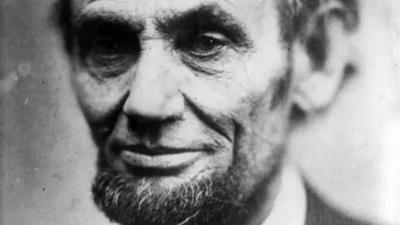
Today, April 15, 2015, is the 150th anniversary of the death of Abraham Lincoln. He was shot shortly after 10 PM on the night of April 14th, 1865, inside Ford’s Theatre, then was carried across the street: 10th Street, between E and F, NW, to the Petersen boarding house, where he expired at 7:22 AM the next morning.
Since I live in Washington, DC, and since I am usually a bit of a night owl, I spent some time there last night and into this morning. The solemnity of the candlelight vigil in the middle of 10th Street in the middle of the night, commemorating the hours when the president lay dying, was quite moving to me — and, it seemed, to virtually all the participants.
I spent some time touring the museum in the Ford’s Theatre basement, and the recently-opened “Center for Education and Leadership” immediately adjacent to the Petersen House. I have done this before and will undoubtedly do it again.
But this time, I noticed something new.
Daniel Webster, in a famous 1837 speech, said of our United States of America: “One country, one constitution, one destiny.” The first and last of those clauses was apparently embroidered into the lining of the “great coat” that Abraham Lincoln wore to Ford’s Theater on the night of April 14, 1865. Whether this was the choice of the client, or instead of a tailor particularly well-attuned to the particular sympathies of this particular client, appears to be historically unclear.
But the very delicate remaining fabric of the lining is now on display at the Center, and you can see the four words quite clearly. “One Country One Destiny,” it states, in delicate thread, a century and a half later still quite vivid.
So there I am, back in the middle of 10th street in the middle of the night, surrounded by people mostly thinking about the unity of our one country, the United States of America forged in the crucible of civil war.
But for me, I suspect alone in the street last night, it set me to wondering. To speculating about the future. To dreaming.
Would it be too much to suggest that the sentiment embroidered inside Lincoln’s great coat might someday apply not just to the United States of America, but to the single family of humankind?
One Country. One Constitution. One Destiny.
by Donna Park | Apr 8, 2015 | Global Cooperation, World Federation
Letters to Jake Series, Letter #7
Dear Jake,
I am proud to say that words my Cincinnati team wrote to share at the 2014 Greater Cincinnati World Peace Festival have been posted on the Globalsolutions.org website. The title is Embracing a United Federation of Nations and you can find it here.
The text begins with our vision of a world at peace, where all people have the Right to Life, Liberty, and the Pursuit of Happiness. Many great thinkers, including Socrates, Alfred Lord Tennyson, Albert Einstein, and Martin Luther King have pointed the way. The web-pages that unfold when you follow the red prompts explain why this is a good idea, what it includes (and excludes), and what are the benefits. They also provide answers to frequently asked questions.
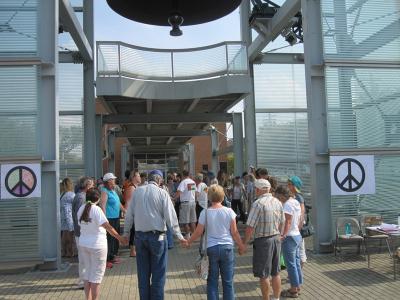
At our World Peace Festival which took place at the World Peace Bell in Northern Kentucky, I gave a brief speech entitled “We are citizens of the world.” I also introduced Father Ben Urmston, SJ, who had his 89th birthday on the day of the festival. It was so fitting to be able to honor Father Ben at the peace festival. He is a World War II veteran who has been working for peace ever since. He is the one who introduced me to the concept of a democratic federation of nations and the need for global citizenship. Ben firmly believes that war would not be needed if we establish world laws in a democratic manner and used them to protect universal human rights. We could use world courts to solve disagreements instead of bombs and guns. The laws would apply to every individual on the planet, and the leaders who made the decision to go to war are the ones who would be brought to court. That certainly would be a better way to govern the world.
I wish you were there with me to sing “Happy Birthday” to Father Ben. You would have enjoyed that. We could have used your good voice.
I am including some pictures of the festival for you to share with your little sisters. Looking forward to my next visit with all of you.
Love,
Gram
by CGS Blog Archive | Mar 20, 2015 | Climate Justice, Global Cooperation
This blog was authored by Edward Rawson, Executive Director of Haiti Friends (not to be confused with Ed Rawson, founding member of CGS).
By the turn of the 21st century, 98% of Haiti had been deforested due to logging for timber, slash-and-burn agriculture, and the great demand for cooking fuel. Most of the land’s rich topsoil has washed into the sea, where it chokes the reefs and marine life.
Haiti’s mountains have eroded to bedrock and its aquifers are drying up. The habitat loss for wildlife is staggering, with many native plants and animals on international registries of endangered species. The deforestation and the resulting desertification is Haiti’s single largest ecological problem, which has had a negative ripple effect on the overall ecology of Haiti and its surrounding waters.
In response, the Haiti Timber Re-Introduction Program (HTRIP) began in 2008 as a grassroots movement that applies a scientific and education-based approach to support communities in the mountain regions. HTRIP seeks to transform the mountains with three approaches:
- Building rock walls to lessen topsoil erosion while collecting soil and limiting flow down into the coastal alluvial plains.
- Building water basins to collect rain water to extend the rain season, establishing greater access to water for people, and providing irrigation during dry spells.
- Reintroducing trees to the mountainsides; some for timber, some for fruit, and some for ecologic reasons such as nitrogen fixation and addressing the relatively low ratio of organic material to lithic material In the soil due to desertification.
Because deforestation is a human-caused issue, HTRIP puts the power of change in the hands of the people.
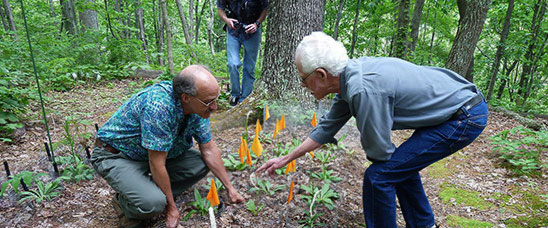
HTRIP educators and technicians have worked with committees of farmers in more than 63 communities, providing education, technical assistance, and basic tools to convert currently unproductive farmer-owned land into productive fields through erosion control, contour trenches, composting, and planting indigenous trees. Farmers in the communities we serve have planted 1.6 million trees to date, and in July of this year, the communities will be planting the 2-millionth tree using our tried and tested approach.
In each new HTRIP community, committee members participate in monthly education sessions on agricultural techniques and soil management. Community member’s neighbors help out by participating in communal work sessions to control erosion and prepare plots for planting. The farmers work to plant a variety of trees in each site, providing diversity through the mixture of trees, which provide timber, produce fruit, or support nitrogen-fixation. Food crops, such as millet, corn and several varieties of beans, are planted among the young trees. The introduction of animal husbandry and apiculture techniques completes the cycle in creating highly productive farms on once desolate land.
Each HTRIP community acquires technical skills, and the techniques of collaborative work and decision-making is encouraged. The leadership garnered means people are tied to making change and reducing environmental distress.
by Hiram Helfman | Mar 13, 2015 | Global Cooperation, Human Rights
The attacks on the French Satirical Newspaper Charlie Hebdo show the need for more interfaith dialogue in Europe, both in the expansion of already existing efforts and the creation of new programs. Sadly, interfaith and multicultural dialogue in Europe, like everywhere else, does not receive much attention in the media.
Even countries like Holland, which has seen a rise in Islamophobic attitudes, have been engaging in dialogue via community programs, such as those in the Slotervaart neighborhood in Amsterdam.
Muslim-Jewish dialogue and cooperation have even been going on in several European countries, particularly Norway. For instance, after an attack on a synagogue in Denmark this February, Muslims in Norway gathered around a synagogue to protect its parishioners from acts of extremism.
Even in France, there has been a history of Muslim-Jewish dialogue. During the attack on Kosher marketplaces shortly after the Charlie Hebdo attack, a Muslim citizen from Mali saved the lives of some of the hostages.
Today’s Western Europe is a society of multiculturalism and many religions because of globalization and people looking for opportunities away from their home countries. The countries of Western Europe are thriving democracies that value freedom of speech and separation of church and state.
Unfortunately, misunderstanding other cultures, a desire among some of Western Europe’s population not to be a multicultural society, and some immigrant youth feeling marginalized create a hotbed for extremist yearning and tragedies. In other words, extremism from one side feeds extremism on the other side. And this extremism, whether ethno-religious or secular-nationalistic in nature, is a threat to democracy.
A two-pronged approach has been occurring in several European countries to resolve the issue: interfaith and intercultural dialogue and intervention for youth considered likely to go extreme. I will focus on the former in this blog and go into the latter in my next.
Just as the attacks on Charlie Hebdo happened, Pope Francis met with Bishop Michel Dubost (Head of French Bishops Council for Interfaith Relations) and four French Imams at the Vatican to condemn the attack, denounce all forms of hate and violence in the name of religion, and promote interreligious dialogue. Dubost says that people need to be united in their response to terrible attacks such as this one. Otherwise, interfaith dialogue becomes even more difficult. He also said that people need to be willing to engage in dialogue with other cultures.
Interfaith dialogue in Europe needs to include secular people, especially those who may not understand and may be uncomfortable with religious expression in public. Even secular people have advocated extreme measures to counter religious-based extremism.
Although Marine Le Pen, leader of the rightist Front National Party in France, is more socio-politically moderate than some of the other people mentioned in this article, Le Pen believes that French Muslims should not pray openly in public and that Muslim women should not wear headscarves. There are many people on the left who share similar attitudes. Le Pen also believes that public schools should not bother providing halal or kosher food to students.
Reactions to religion such as this one only aggravate tensions in French society. Although secular people like Le Pen believe they are trying to unite everyone in France and emancipate people, this only 1) creates resentment and continues the cycle of marginalization, 2) provokes violent reactions when the marginalized youth are influenced by extremists, and 3) incites volatile backlash against that reaction.
Extremism needs to be defined and agreed upon by religious and non-religious people in France and the rest of Europe. It should not be defined as attire preference or diet. Extremism from one side only fuels extremism on the other side and maintains a toxic environment for disaster and tragedy to brew. Dialogue is needed to end extremism altogether.
by Rene Wadlow | Mar 6, 2015 | Global Cooperation, World Federation
We recently celebrated the birthday of Louis Sohn (born 1 March 1914), who played a key role in the development of world law. His Cases and Other Materials on World Law stressed the difference between “international law,” which is born of treaties between two or more States, and “world law,” which is the composition, functions, powers and procedures of organs of the world society.
World Law consists of norms and values which are binding on all States and individuals, regardless of whether a State has ratified a specific treaty. The 1948 Convention against Genocide, for example, is world law even if a State has not ratified it.
Additionally, when a State joins the United Nations, it pledges to follow the norms set out in the Universal Declaration of Human Rights. However, the Declaration as world law is binding on individuals and the administration of States which are not UN members, such as Abkhazia, South Ossetia, Transnistria, Nagorno-Karabakh, Kosovo, and what may become States in eastern Ukraine.
Louis Sohn, who died in 2006, would no doubt be following current events in Ukraine with passion. He was born in Lviv, then part of the Austria-Hungarian Empire; the city became part of Poland during his youth and university studies, then part of the Soviet Union and now Ukraine − a testimony to the changing nature of States and nationality.
In addition to having national identity imposed by a place of birth, Sohn was by birth considered a Jew − regardless of what his religious ideas may have been. While he was studying law in Poland, there was social discrimination against Jews, especially in the legal profession. Hoping to study in a country without the same restrictions, he received a fellowship to Harvard Law School in 1939 and was able to leave on a boat two weeks before the German invasion.
Both of his parents, who were medical doctors, were sent to concentration camps. His mother died there, and his father, his health broken by the camp experience, died shortly after the end of the Second World War. Thus, Sohn’s advocacy of human rights as a core of world law was linked to direct experience.
At Harvard Law, he worked as an assistant to Manley O. Hudson, who had been a judge on the Permanent Court of International Justice created by the League of Nations. Hudson, as a well-known professor of international law, was asked to be part of the US delegation to draft the UN Charter in San Francisco, and Hudson took Sohn along with him to help with the writing. Sohn worked on the transformation of the Permanent Court of International Justice into the International Court of Justice – similar to the earlier court but now considered an organ of the United Nations.
Sohn, having been present at the birth of the UN, understood both the strength and the limitations of the organization. The San Francisco conference which wrote the Charter in June 1945 worked while the war in the Pacific was still on. Some delegates, in particular those from Australia, were unhappy with the “take it or leave it” presentation of the Charter by the US and UK delegations. Australia insisted that the possibility of a review of the Charter would be on the UN agenda after 10 years of experience in 1955.
With the start of the Cold War and the hot Korean War of 1950, a good number of concerned individuals such as those in the United World Federalists began thinking about what a Charter Review Conference might propose. A prominent New York lawyer with government experience, Grenville Clark, had organized a meeting in 1945 at his home in New Hampshire to study the Charter and he organized in 1953 a new conference in light of a possible 1955 Review.
Clark and Sohn then worked together to write World Peace through World Law, an article-by-article revision of the UN Charter with an emphasis on creating a strong disarmament authority and a UN police force under UN control.
The US and the Soviet Union had collaborated to push a Charter Review Conference in 1955 under the rug in exchange for agreeing to admit a large number of States who were waiting at the door, blocked by Cold War considerations.
Sohn was a pragmatist who continued to work for the transformation of international law into a system of world law based on a common acceptance of values and procedures. He had two main concerns: disarmament and dispute settlement for the new Law of the Sea Treaty. It was around these two major concerns of his that I got to know him and published one of his major essays on disarmament in Transnational Perspectives.
I met him in person in Geneva during a Law of the Sea conference in the 1970s. Sohn was on the US delegation and realized that the extension of national jurisdiction would lead to disputes − as we see these days among China and its neighbors. He worked hard to have dispute settlement procedures written into the treaty. His knowledge and fairness was recognized by many of the delegates, and his suggestions form the base of the dispute settlement procedures.
Sohn saw that world law is a constantly evolving process, based on vision and hope. It is up to us to continue on the path he set out.


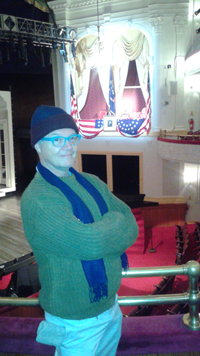 I spent some time touring the museum in the Ford’s Theatre basement, and the recently-opened “Center for Education and Leadership” immediately adjacent to the Petersen House. I have done this before and will undoubtedly do it again.