by Jack Pearce | Jun 5, 2015 | Climate Justice, Global Cooperation
As I discussed in Part 1 of this blog series, Over the next 70 years, our children and grandchildren will need to negotiate three major transitions in human civilization: the transition to large-scale sustainable energy flows, managing the environmental impact of human civilization, and maintaining global governance systems that enable humans to meet these challenges. CGS and its members can play a role in all three transitions.
Thinking about environmental issues often evokes a feeling of impending doom, due to dwindling fossil energy supplies, population above environmental and economic sustainability, and heedless, ungovernable “human nature.”
However, analysts around the world now suggest that if we are disciplined, patient, and prudent, we may be able to expand sustainable energy supplies to civilization-maintaining levels. We now see early versions of ideas for managing economic and environmental assets to produce futures both ecologically sustainable and reasonably comfortable for humankind.
I suggest a few major themes to keep before us:
First an evolutionary product of nature, we as humans are now evolving along with nature (though the processes are not equal—nature is bigger.) Microscopic nature has adjusted to us and will continue to do so, at least on land. Microbes rule. Plants and other animals are experiencing major difficulties with our teeming numbers. But we are going to have to adjust to what works for them also, or they will not support us.
Ecologists have calculated that humans have assumed some control of about 40% of the earth’s vegetation, and either use or otherwise cause to be lost to other creatures about 25% of the world’s potential vegetation biomass. We humans might think that impressive, but we may be wrenching the life circumstances of honeybees so drastically as to imperil their ability to pollinate crops making up major parts of our diet. The U.S. White House is orchestrating a response to this threat. In the oceans, fish populations are under great stress. So we have to let the rest of nature live if it is to let us do so.
Second, we need to move from parasite to producer. Most of the life system works off organic photosynthesis. If we replace energy from life-stored fossil fuels with sun, wind, and nuclear alternatives, we will be in a position to add to the world’s energy. With this sustained energy flow, we would have the capability to add measurably to the overall scope of life on this earth instead of merely plundering it. We need to reduce where we impose too much and add where we can.
Third, closely related, we need to recognize that to sustain a high energy, high complexity lifestyle there must be a huge life system (including the oxygen in the air, microbes, and much else), much of it lower in complexity, into which humanity fits. This has to do with “power law” understandings pioneered by Mark Buchanan and Stephen Jay Gould. (Here is an extended treatment of these concepts as applied to humans. See also cosmologist Eric Chaisson’s treatment of complexity in his marvelous website on cosmic evolution).
Fourth, in this co-evolutionary process, local realities sum up to global reality, and global imperatives must be localized. As the United Nations Environmental Program recognizes, diverse circumstances require diverse solutions. But lessons learned locally can often be shared. The sum total of humanity’s successful reconciliation with nature is its successful local initiatives: setting aside wildlands for bees, perhaps, economizing on water use in watersheds, protecting wetlands, maintaining vegetation in arid regions, and the like. We may not often need projects of the scope of China’s 1400-year-old, thousand-mile-long grand canal. Many less grand but useful programs may do.
CGS is actively involved in a current, pressing global issue: keeping the temperature of the earth’s atmosphere from rising dangerously. CGS climate change resources and actions offer opportunities to make contributions in a number of ways. Keep informed and stay active.
by Rene Wadlow | Jun 1, 2015 | Global Cooperation, Peace & Disarmament
As Winston Churchill once quipped, “God so loved the world that he did not send a committee.”
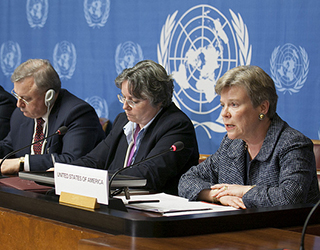
The Drafting Committee of the Review Conference on the Treaty on the Non-Proliferation of Nuclear Weapons (NPT) was unable to draft an outcome document. Even with last-minute efforts of the Conference President and the UN Disarmament Secretariat to smooth over all controversial wording in the document, there was no consensus. In the end, the US, the UK, and Canada refused to accept the final document citing the proposal of a nuclear-weapon free zone in the Middle East.
Since there has been no visible progress on reducing nuclear weapons through negotiations among the nuclear-weapon States–the US and Russia hold some 95% of weapons–efforts have been made to make legally-binding nuclear-free zones.
The first nuclear-free zone to be negotiated was a direct aftermath of the Cuban Missile Crisis in 1962. A nuclear exchange between the US and the USSR was close enough that Latin American leaders were moved to action. Mexico immediately began to call for a de-nuclearization of Latin America. In February 1967, the Treaty for the Prohibition of Nuclear Weapons in Latin America was signed. It established a permanent and effective system of control containing several pioneering elements, as well as a body to supervise the Treaty.
The Latin American Nuclear-weapon Free Zone was followed by four other geographic zones: the South Pacific, Southeast Asia, Africa, and Central Asia– basically States that have neither the financial or technical capacity to develop nuclear weapons.
Today, there are four tension areas involving nuclear States where no negotiations are going on: Korea, India-Pakistan, the wider Middle East, and US-Russia. Only Korea and the Middle East were mentioned by name in the draft final statement. However, when the draft speaks of “nuclear-weapon States,” they have the US and Russia in mind.
The Conference notes with concern that, despite the achievements in bilateral and unilateral nuclear arms reductions, the total estimated number of nuclear weapons deployed and in stockpiles of nuclear-weapon States still amounts to several thousands and many remain on high alert. The Conference stresses in this regard that the reductions in deployment and in operational status are welcome but cannot substitute for the irreversible elimination of nuclear weapons as required under Article VI of the Treaty.
There have been earlier calls for a Middle East nuclear-free zone. The NPT Review and Extension Conference in 1995 called for negotiation on such a zone. The desirability of establishing one is widely recognized; indeed, the UN General Assembly has had several resolutions calling for one, first introduced by Egypt and Iran in 1974. Since 1980, such resolutions have attracted consensus support, including the qualified endorsement of Israel, which has supported the concept but argued that it cannot proceed until peace settlements are achieved with its Arab and Islamic neighbors.
There is also the possible linkage between nuclear and chemical weapons, involving the perception that nuclear options may be needed as security against chemical attacks.
Mohamed ElBaradei, former Director of the UN’s International Atomic Energy Agency (IAEA) has called for negotiations on such a zone, saying,
This is the last chance to build security in the Middle East based on trust and cooperation and not on the possession of nuclear weapons.
At the 2015 NPT Review, it was the delegation of Egypt led by Assistant Minister of Foreign Affairs Hashim Badr that most actively pushed for the UN Secretary-General to call for a conference in 2016 to discuss a Middle East nuclear-weapon free zone–whether Israel wants to attend the conference or not. He also called for the replacement of Ambassador Joakko Laajava of Finland for being ineffectual. Finland has been charged by the UN to organize such a conference and has been willing to host it, but no visible progress has been made.
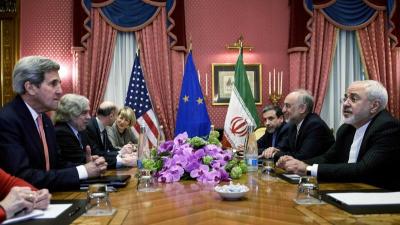
There were some, myself included, who felt that the recent nuclear agreement with Iran would create an atmosphere that would allow for progress. However, I underestimated the difficulties that would arise over the Middle East.
A major difficulty of moving to good-faith negotiations on a Middle East nuclear-free zone is the absence of a regional organization involving all States in the wider region. There needs to be leadership from within the Middle East for constructive, institution-building action. I believe that there is an urgent need to take steps toward creating a broad security and cooperation zone that has conflict resolution, arms control, human rights, and economic cooperation dimensions.
The prime example of such a multi-purpose regional security organization is the Organization for Security and Cooperation in Europe (OSCE). The creation of such an organization arose from proposals and discussions in the late 1960s as an effort to find ways for structured discussions between NATO, Warsaw Pact and neutral countries of Europe. In the late 1960s and early 1970s, it was a small number of NGOs first calling for a pan-European agreement.
Formal talks among government representatives started in Helsinki during the first half of 1973 and then were carried on from September 1973 to June 1975 in Geneva. However, prior to 1973 and during the Geneva stage of the negotiations, there had been a number of informal discussions which included NGOs and academics.
Today, there still may be such great suspicion of the motives of States in the Middle East that NGOs must again take the lead. Helping to build an Organization for Security and Cooperation in the Middle East is a challenge to all of us of good will–a creative challenge we must undertake together.
Another major difficulty in reaching a consensus is that there is no real UN forum to discuss disarmament and arms control. In the early Reviews, compromises were reached because the most active disarmament ambassadors were willing to accept weak “final statements,” knowing that they could fight again another day in the Conference on Disarmament in Geneva. Today, the Conference on Disarmament is so soundly asleep that what arms control discussions are carried out in the UN are done at the UN General Assembly. However, the General Assembly was not designed for continued and technical discussions on arms issues. The NPT draft statement was polite yet noted that,
The Conference expresses its concern that since the 2010 Review Conference, the Conference on Disarmament has not commenced substantive work on any agenda item in the context of a comprehensive and balanced programme of work.
I tend to be pessimistic concerning the will of governments to deal with disarmament and arms control issues. I see no national leaders, and when States regularly met at the UN or in treaty reviews such as the NPT Review, there is constant repetition but little forward motion. Unlike human rights and socio-economic development–where NGOs can work at the local level while trying to influence national and world policy at the UN–military strategy, arms production, deployment of military forces are in the hands of national executives (with some small influence from legislatures).
The area where NGOs might have an impact, as I mentioned, is to focus on the creation of an Organization for Security and Cooperation in the Middle East. Perhaps efforts to reduce unreasonable reactions from Ukraine and NATO also would be useful. Strong and diverse NGO leadership is needed–leadership whose voice can be heard above the beating drums and saber rattling.
by Jack Pearce | May 25, 2015 | Climate Justice, Global Cooperation
This is the first of three planned blogs to focus on three crucial levers to a sustainable and ample life for our children and grandchildren.
Over their lifespans—the next 70 years—they are going to need to negotiate three major transitions in human civilization:
- The transition to large-scale sustainable energy flows
- Managing the massive impact of human civilization on the environment which created and sustains us
- Maintaining global governance systems that enable humans to meet these challenges
Regarding energy, there can be little doubt that only solar energy is large enough to sustain a growing and more widely prosperous human civilization, though solar can be supplemented by wind, nuclear, some biomass, and possibly geothermal energy sources. But the transition to this sustainable regime will leverage off the fossil fuel foundation and will take a few decades.
For further information check out:
We must maintain a significant amount of fossil fuel use for some time without producing massive harm to global and local ecosystems. This means controlling the levels of greenhouse gas emissions even as we use fossil fuels. There are proposed geoengineering’ solutions, but they have major issues with scope and effective implementation over decades.
With public support such as research facilities and state or local clean energy promotion agencies, major renewable energy technologies seem to be rapidly approaching cost levels competitive with fossil fuel energy. We need to continue to smooth the way for solar and other renewable developments while removing or diminishing subsidies for fossil fuels.
What can a CGS member do? The opportunities for useful activities will change and evolve over time. But today has some opportunities.
Much solar energy development is linked to the electricity supply system. Participants in this system see the big changes coming, with traditional electric utilities at something of a crossroads. You can encourage development in useful directions by:
- Letting your local and state utility commissions know that you want to see ample scope for energy conservation (including measures like distributed generation, microgrids, ‘‘smart” grid management, solar energy, and battery backup deployment).
- Supporting federally funded research into the technologies of the future, including solar, wind, and battery systems, and federal efforts to encourage states and localities to lower the costs of solar and wind energy.
In the climate change area, you can continue to support:
- Innovative ways in the United States to lower emissions, such as Representative Van Hollen’s “cap and dividend” proposal.
- Maintenance of Environmental Protection Agency emissions control authorities, regardless of which political party may have the Presidency or Congressional majorities at any given time.
- Worldwide efforts to target lower greenhouse gas emissions, and create programs in our government and others to meet those targets (for example, Kyoto Protocol, in which the US, China and India are major laggards). The United Nations Environmental program has recently released an informative report on pathways to limit and reduce greenhouse gas emissions.
CGS will continue to alert you to developments in these areas, and seek your support for timely action opportunities as they arise.
by Rene Wadlow | May 20, 2015 | Global Cooperation, Peace & Disarmament
In my last blog, I outlined the framework of the Treaty on the Non-Proliferation of Nuclear Weapons (NPT) and the role of the Review Conferences. Here I will deal first with the evolution of the NPT Reviews and then with possible avenues for future action.
Every five years, the NPT Review Conferences provide an opportunity for governments and non-governmental organizations (NGOs) to evaluate progress in disarmament among the nuclear-weapon States and to sound a warning about tension areas, such as the Middle East, the two Koreas, and India-Pakistan relations. The hope of governments participating in the Review is to seek consensus on a “Final Document” embodying agreed statements of policy and recommendations for action. It has also become practice to measure the success of each Review Conference according to whether or not it was able to reach agreement on such a final statement.
The First Review in 1975 had great difficulty in drafting a consensus statement. The drafting committee had failed to reach agreement, and the Review was “saved” by the last-day dynamic efforts of the President of the Conference, Inga Thorsson of Sweden, who largely wrote and then presented a “President’s Statement” accepted by the reluctant participants.
In 1980, the Second Review Conference was unable to agree to a Final Document, despite three extra days and all-night meetings. From 1975 to 1980, negotiations on nuclear arms control between the US and the USSR had seen a lack of progress or results. The Soviet intervention in Afghanistan in the last days of December 1979 made any arms control agreement even less likely, especially on a Comprehensive Test Ban Treaty (CTBT), which was the focus of efforts at the time.
The basic position of the most active of non-nuclear States was that the NPT only stopped the dissemination of nuclear weapons, but did not curb the continued manufacture, stockpiling or sophistication of weapons by the existing nuclear States − what became known as the difference between horizontal and vertical proliferation.
The Third Review Conference was held in Geneva in 1985. Since the 1980 Review had failed to reach a consensus, there was real pressure not to have two “failures” in a row. NGOs were particularly active in the period just prior to the conference, setting out propositions, and holding talks with the most “NGO-friendly” ambassadors. There had been no progress in nuclear arms control since 1980. Moreover, the stagnation of the world nuclear energy markets had dashed the hopes of many developing countries that accession to the NPT would bring them the benefits of nuclear energy. Originally, the NPT was to have three pillars: disarmament, non-proliferation, and access to nuclear energy and technology for peaceful uses.
In 1986, the disastrous accident at Chernobyl indicated that Soviet nuclear-energy technology was as unsafe as the 1979 Three Mile Island accident. Finally, Fukushima in Japan has ruled out prospects for nuclear energy. All that is left is some unspectacular nuclear technology in medicine, agriculture, and the testing of materials.
A day before the end of the 1985 Review, I met the President, Mohamed Shaker, and because much of the negotiations are closed to NGO representatives, I asked him how things were going. He replied “Fine,” and said not to worry. The next day, Middle East issues almost destroyed the consensus. Iran demanded that its condemnation of the Iraqi attacks on the Bushehr nuclear reactor under construction be entered into the final document. Iraq responded by threatening to withdraw its support of the document.
The unexpected issue, which reached its climax around 3 AM, was being discussed in the President’s office just behind the meeting hall. During this time everyone stayed in the hall, not knowing when the discussions would end. I spent much of the time talking with the Ambassador of Yugoslavia, who had played a leading role as spokesman for the Non-Aligned Movement. He said that he would not call for a vote so as not to destroy the consensus, but as there is always an occasion to make last comments after the Final Document is accepted, he had a 23-page speech of observations on why the Final Document was inadequate and ended by saying that had there been a vote, he would have voted no.
At nearly 6 AM, the Conference started its final round. Iran agreed to a compromise. Its statement would be printed in an annex to the Final Document, but not in the document itself. With that, the Final Document of 1985 was accepted. The President said that since everyone had been up for at least 24 hours, he would forego the customary speeches thanking the President for his efforts.
I passed the Yugoslav Ambassador in the parking lot as we were leaving and asked, “And the 23 page speech?”
He replied, “It will go down in history as one of the great speeches never made.”
The 1990 Review was the last held in Geneva and the last in which I participated directly. By 1990, the USSR was nearing its collapse, and the Eastern European group was more independent of Soviet views than in the past. The Soviet withdrawal from Afghanistan had calmed some of the East-West tensions. The difficulties reaching consensus were obvious from the start with the early statement of Yugoslavia on behalf of the Non-Aligned. The criticisms and demands from the 23-page 1985 speech were no doubt dusted off and remade, stressing the importance of the NPT as a “legally binding instrument which confirms the urgency of the cessation of the nuclear arms race and of nuclear disarmament.” The emphasis was on the concept of “legally binding” and the fact that the nuclear-weapon States were not living up to Article VI by negotiating disarmament, but in fact continuing the race unabatedly with qualitative improvements of nuclear weapons.
However, the main issue in 1990 was whether some nuclear States had breached their obligation not to help any non-nuclear State acquire weapons, particularly the US and the UK to Israel. The potential nuclear ambitions of North Korea, Iraq and Libya were also on the minds of delegates, but only Israel was named in a statement circulated by Egypt on the creation of a nuclear-weapon-free zone in the Middle East.
Since 1990, the creation of a Middle East nuclear-weapon free zone has been the heart of the NPT Review. There has been no progress since 1990, and there is a feeling among some governments that the Review is not the most appropriate place to discuss this issue; at the 1995 Review, it was recommended that a separate conference be organized to deal with it. Such a conference has yet to be held.
In 1990, Mexican Ambassador Miguel Marin-Bosch led the charge on the failure of the nuclear-weapon States to deal in good faith with nuclear disarmament, or even with partial arms control steps. In the 1975 Review, I had worked closely with Marin-Bosch, who was the link between NGO representatives and Ambassador Alfonso Garcia Robles. We would exchange whatever information we gathered in the hallways. Both Garcia Robles and Marin-Bosch had free hands at the Reviews because few people in Mexico cared about NPT issues, even in the Foreign Ministry; meanwhile, US negotiators had to keep an eye on what the State Department wanted, how Congress might react, and what the White House was thinking. To get an agreement on a consensus statement, the US delegation was willing to make compromises.
In past Reviews, Garcia Robles was willing to go to the brink to get diplomatic concessions, but then step back so consensus could be reached. Marin-Bosch was not so polite, considering that the prospects for genuine disarmament were growing worse and could not be modified by changes in a written document. The Review went on into the weekend, but the President of the Review had to bring the Conference to a close without a Final Document.
In 1995, the Review Conference, moving to the UN in New York, was divided—the Review as usual and a separate section on the continuation of the treaty. The NPT had originally been designed for 25 years. In 1995, it was decided to continue the treaty “indefinitely and unconditionally,” keeping the five-year Reviews. The Review segment of the Conference was again unable to reach a consensus statement.
Since 1995, the Reviews have followed the same pattern. The key issue is a possible nuclear-weapon free zone in the Middle East. No progress has been made on this, though tensions and armed violence in the region have continued. There have been no disarmament negotiations among the nuclear-weapon States. The UN disarmament body is in a dormant phase, having unofficially closed up shop. Thus, issues raised in the NPT Reviews but not acted upon cannot be continued in a more permanent UN disarmament body. There are usually yearly resolutions in the UN General Assembly, but these do not lead to negotiations. In light of this lack of progress within the UN, there have been two related proposals to advance matters through a concentration on values and world law rather than geostrategic considerations.
One avenue is to view nuclear weapon use through a humanitarian lens. There have been a number of governmental conferences, first in Oslo and most recently in Vienna to stress that setting off nuclear weapons would violate the core values of humanitarian law. Personally, I think that although nuclear weapons have been “improved” since Hiroshima and Nagasaki, the evidence of their destructiveness is clear. How we deal with the evidence is the real question. In the key countries, there is an abundance of information, but a paucity of ideas.
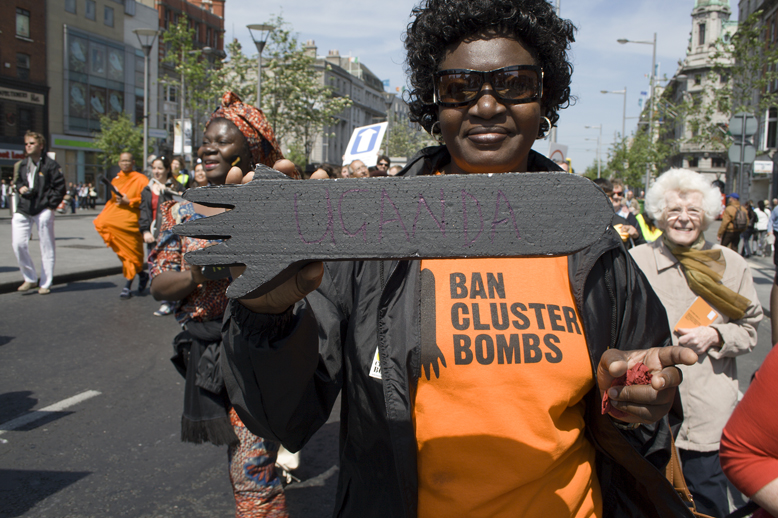
The second approach is to negotiate a Convention to render nuclear weapons “illegitimate,” somewhat along the lines of the Anti-Personnel Mine Ban and the Convention on Cluster Munitions. A number of States, supported by NGOs, are seeking to delegitimize nuclear weapons by prohibiting their use and even possession under international law based on their indiscriminate effects. This approach draws on the 1996 advisory opinion of the International Court of Justice as well as international human rights law, as use of nuclear weapons would infringe on the inalienable right to life. The UN General Assembly has passed resolutions along the same lines, and the idea will no doubt be highlighted during this year’s Review.
Such a Nuclear Weapons Convention would embody the universal condemnation of nuclear weapons by the emerging world society and so become part of world law. The hope is that the convention would be an important step toward the abolition of nuclear weapons, combining both the technical aspect of disarmament with the broader world law value of the right to life.
After the Review Conference, I will try to see how ideas have developed and what can be useful for next steps.
by Rene Wadlow | May 11, 2015 | Global Cooperation, Peace & Disarmament
The Saudi-led aggression on Yemen has on at least two separate occasions used cluster bombs to attack villages in Yemen’s northern Saada Province, according to Human Rights Watch. Cluster munitions are imprecise weapons which often fail to detonate on impact, leaving the unexploded bomb on the ground, ready to kill or maim when disturbed or handled.
The failure rate of cluster munitions is high, ranging from 30 to 80 percent. But “failure” may be the wrong word. They may, in fact, be designed to kill later. Reports from humanitarian organizations and mine-clearing groups have shown that civilians make up the vast majority of the victims of cluster bombs, especially children attracted by their small size and often bright colors.
Cluster weapons had been largely used by US forces during the Vietnam War, especially along the Ho Chi Minh Trail in Laos, Cambodia, and Vietnam. The impact is still being felt, and much land is unfit for cultivation.
The revulsion at the consequences and long-lasting impact led to the start of negotiations in Geneva leading to the Convention on Prohibition on the Use of Certain Conventional Weapons which may be Deemed to be Excessively Injurious or to have Indiscriminate Effects − called by its friends “the 1980 Inhumane Weapons Convention.”
My NGO text presented during the negotiations in August 1979 for the Citizens of the World on “Anti-Personnel Fragmentation Weapons” called for a ban based on the 1868 St Petersburg Declaration—at the time the only law of war standard which seemed to apply.
As I have been concerned with investigation and judgment on violations of the laws of war, I recommended that
permanent verification and dispute-settlement procedures be established which may investigate all charges of the use of prohibited weapons whether in inter-State or internal conflicts and that such a permanent body include a consultative committee of experts who could begin their work without a prior resolution of the UN Security Council.
The procedures I proposed were drawn from the 1976 negotiations on the Convention on the Prohibition of Military or Any Other Hostile Use of Environmental Modification Techniques.
The 1980 Inhumane Weapons Convention was to be a “framework” convention, and prohibitions on specific inhumane and indiscriminate weapons were to be negotiated separately, with potential investigation procedures determined for each weapon. Thus the cluster bomb issue was set aside as memories of the Vietnam War faded from the disarmament agenda.
Unfortunately, governments—like public opinion—react only when faced by a crisis. Thus cluster bombs returned to the world agenda as a justified reaction to the wide use by Israel in south Lebanon during July-August 2006.
It is estimated by the UN Mine Action Coordination Centre (UNMACC) that one million cluster bombs were fired on south Lebanon during the 34 days of war, many during the last two days when a ceasefire was a real possibility. The Hezbollah militia also shot off rockets with cluster bombs into northern Israel. It was this indiscriminate use of cluster bombs against Lebanon in a particularly senseless and inconclusive war that finally led to a sustained effort for a ban on cluster weapons.
In a remarkable combination of civil society pressure and leadership from a small number of progressive States, a strong 2008 Convention on Cluster Munitions was drafted. It prohibits production, transfer, stockpiling and use of cluster munitions. The Convention also reacquires the destruction of stockpiles, clearance of areas contaminated by remnants, and victim assistance.
The inspection, investigation, and dispute settlement aspects of the convention are weak. It was hoped that the treaty’s unequivocal language would be so strong that even non-signatory countries would be reluctant to use the weapons. Saudi Arabia, Yemen and the US have all refused to sign the Convention. Thus, the use by Saudi Arabia of cluster bombs in Yemen and the sale of cluster weapons to Saudi Arabia by the US is legal.
Some 90 States have ratified the convention, and 26 have signed but not yet ratified. I would argue that these numbers and the general framework of humanitarian law make the use and sale of cluster munitions a violation of world law. For global citizens, “world law” is the law and values of the world community which go beyond “international law” (treaties between two or more States).
Because the situations that lead to disarmament agreements keep changing, and governments’ understanding of “world law” keeps evolving, a five-year-interval Review Conference was included in the cluster-weapon ban convention. The first Review Conference will be held in September 2015 in Dubrovnik, Croatia.
The Preparatory Commission for the Review Conference will start meeting on 24 June at the United Nations in Geneva. Between now and then, governments will be preparing their positions. Thus I would recommend that representatives of non-governmental organizations and all persons of good will contact their government to see what forms of investigation and dispute settlement procedures they favor and what steps they plan to take concerning the allegations of Saudi Arabian use.
by Jack Pearce | May 4, 2015 | Global Cooperation
The drama over a nuclear control deal with Iran displays the United States as a global visionary. We seek to bring a proud, powerful, and estranged nation back into the wider global community. At the same time, we would reduce the risks of nuclear war by imposing tight controls on bomb-making technologies.
Some allies are horrified. Many conservative legislators are rebellious. Some intelligent commentators seem so mired in regional rivalry issues that they miss the broader (and even the regional) benefits of opening up the region to more peaceful trade and political interaction.
The initial American opposition to the Chinese-sponsored Asian Infrastructure Investment Bank and our exclusion of China from our proposed Trans-Pacific Partnership (TPP) would put us in the position of acting as a conservative empire protector. That role would have us so concerned with maintaining Western internationalist-oriented global political and economic structures that we risk failing to accommodate the rise of governments having over two billion citizens (including China and India, as well as other BRIC countries).
Fortunately, President Obama has reportedly backed off opposition to the Asian Infrastructure Investment Bank. The architecture of TPP remains the same.
How multipolar will the world will be? How do we craft over time a globalization that allows for some economic and cultural competition while maintaining a sustainable and productive over-arching framework? I have addressed some of those requirements in a posting on the International Affairs Forum. A useful analysis is Power Shifts and New Blocs in the Global Trading System, published by the International Institute of Strategic Studies. We need to see where the world is going and needs to go if we are to maintain a leadership role in it. It is not clear that we do or will.
In first example above, I laud the current Presidency and chide much of Congress. In the other two, the President is making progress in the right direction, but the evidence of parochial constraints is clear, and Congress expresses much of that parochialism.
One of the glories of democracy is also sometimes acutely embarrassing. Democracy gives political expression to a wide spectrum of the public. Some of that expression reflects intensely local, limited, and faction-oriented viewpoints – for example, denying climate change or asserting that there are no norms in international relations (as John Bolton has on his bad days).
What is the remedy? You.
You can, for example, support Citizens for Global Solutions through donations, online interaction, or volunteering. The larger task is to pursue the continuing education of yourselves, your fellow citizens, our offspring in coming generations—and the people we put in office.
Academic degrees are not enough. Senators Cotton and Cruz, graduates of top-ranked colleges, seem to have a limited grasp of how a global society works. Perhaps their constituents haven’t figured that out yet.
Much of this is local work. You help shape the curricula of our public and private educational institutions. You participate in electing public officials. CGS can keep you updated on needed actions and key issues in international affairs. CGS can also play a role in identifying and trying to help you support candidates for public office who seem to be capable of thinking clearly in a global framework.
CGS members need to keep their feet on the local ground and their eyes on the challenging heights before us. So do our elected representatives.