Originally published on the CGS blog on October 22, 2014.
When we think of forests, we think of those in the Amazon, China, Congo, Canada and many more places throughout the world. People throughout history have been drawn to forests, intrigued by the mysteries, adventures, and animals hidden within them. Forests today cover about 30 percent of the earth’s surface, but each year we lose an area equivalent to the size of Panama.
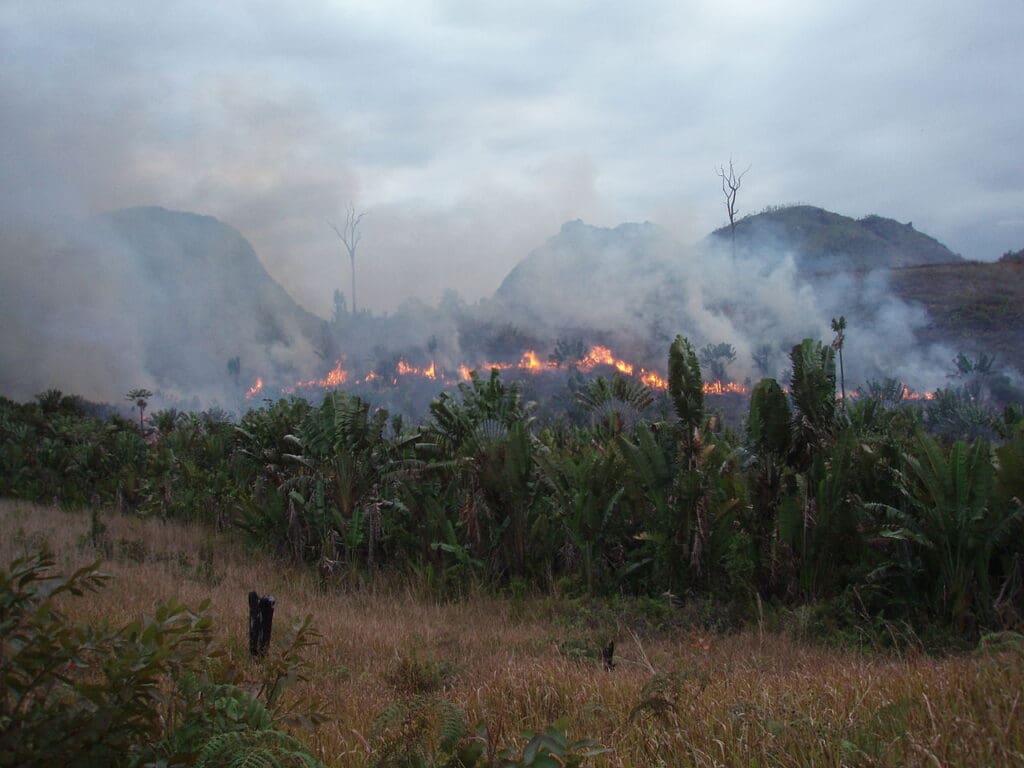
Deforestation is the driving force behind the loss of our forests. According to the Environmental Protection Agency, deforestation can be defined as the “permanent removal of standing forests.” There are numerous reasons this occurs. These reasons do vary but deforestation can intentionally or accidently occur.
So how does this affect you? Deforestation has a tremendous impact on everything around us. The effects are plentiful and include loss of habitats, increased greenhouse gases, soil erosion, and the destruction of homeland for natives.
It estimated that in 100 years, there will be no more forests on our planet if we continue at the current rate. The benefits from these forests are irreplaceable and essential to our survival. For example, 20 percent of our oxygen comes from the Amazon, and these forests help regulate the water cycle and keep the soil rich with nutrients. The removal of forests caused by deforestation accounts for 12-17 percent of global annual greenhouse gases emitted into our atmosphere.
Human activities are the main cause of deforestation. With the exception of natural events such as disease and fire, protection of our forests is attainable. Despite this, our forests continue to shrink rather than grow.
There are many factors in the unjustifiable deforestation that occurs on our planet. Most forests are cut for agricultural purposes. In fact, most of the countries that suffer from deforestation are poor. As they clear for farms or fuel, they get richer–until “alarm bells ring and they attempt to recover their loses”. Other reasons include clearance for cities, firewood, and, most notably, paper. The fact that deforestation occurs in a lot of poor countries creates further challenges, as laws are not enforced or applied to curtail deforestation.
The need to keep our forests clearly outweighs the benefits of destroying them. Even though a lot of forests are cut down for agricultural use, the removal of trees causes the ground to lose its nutrients, thus defeating the purpose of growing healthy crops and increasing the likelihood of flooding. Deforestation also is a leading cause of climate change because with fewer trees on our planet, there is a greater abundance of CO2 in our atmosphere. It is important to defend our forests because 70 percent of Earth’s land animals and plants live in forests, and many cannot survive when deforestation destroys their homes.
Many forests in the world are home to indigenous groups that have lived in them for thousands of years. In South America, there are over 400 indigenous groups that thrive in these forests, and if deforestation continues, this could jeopardize and threaten their livelihoods. Deforestation will increase conflict as native tribes will try to defend their homelands, threatening peace and security in some countries.
Overall, deforestation is an issue that will have disastrous global implications if governments don’t act to prevent it. With the prospect of no forests in the near future, the effects are far too significant to ignore. There are already organizations and laws that limit the loss of forests, but more can still be done to ensure that our beautiful forests are not destroyed.