
Originally published on the CGS blog on November 14, 2014.
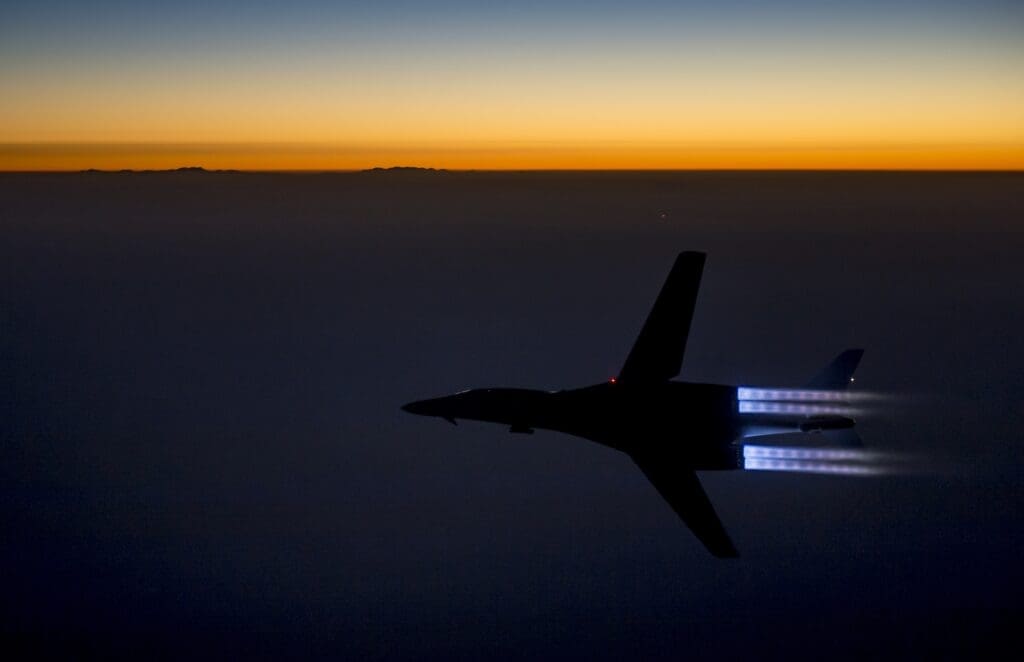
By now you may be familiar with the Islamic State and their mission to create a caliphate under Sharia law. You may also be aware that the US’s strategy of conducting airstrikes to halt their advances is not going too well.
Recently I attended an event at the Elliott School of International Affairs at George Washington University (of which I am a graduate student) concerning the inevitability of a change in US strategy towards IS and Bashar Al-Assad’s regime in Syria. The event featured distinguished experts such as Stephen Biddle, who has previously worked for General David Petraeus, and Marc Lynch, who is the director of the Middle Eastern Studies program at the school and frequently writes for a myriad of foreign policy news outlets.
The discussion started off with the acknowledgement that the US needs to take a step back, and redefine the parameters of our current Middle Eastern engagement. Specifically, the US needs to reevaluate its interests in the region, access the threats to those interests, and come up with a viable strategy where our means (investment) justify (protect) our ends (interests). This was an alarmingly refreshing take to hear from Prof. Biddle, as he went on to say that the US, more often than not, has either overinvested to protect our perceived interests (Iraq) or underinvested (IS). Both of these actions have soured relations with our allies abroad: some have seen our role as unproductive and others have clamored for a greater role for the US to create regional stability.
Biddle went on to say that the US has three real but limited interests in the region:
- to prevent terrorists from perpetrating attacks on US soil;
- to prevent humanitarian crises (e.g. the killing of innocents and those who have been displaced by war); and
- to prevent damage to the US economy from oil instability, which could lead to a 3-5% decrease in US GDP.
Troublingly, even Biddle was struggling to define the US’s interests and strategies in the region, saying that if our objective is to destroy or contain IS, then we are not putting forward enough resources to do so.
Marc Lynch then began to speak about the predictability of civil war conflicts and how, because of its relative infancy, the Syrian Civil War could drag on for another 8-10 years before the prospect of a truce is even an option, making the job of the UN and humanitarian aid workers nearly impossible. Furthermore, Lynch spoke about how, due to the bloody nature of civil wars, the role of the US should be very limited. This limited role would include: pressuring Turkey to manage its borders better, thereby helping displaced Syrians and limiting the flow of foreign fighters to IS; working with the new Iraqi government to salve relationships and create unity among Iraq’s various ethnic and religious groups; and negotiating with Iran, which could cut off some of the money flow that IS uses to conduct operations.
The two experts concluded by saying that, due to the complexity of the two interwoven situations, it is difficult to completely align our interests and strategies with allies in the region, which has resulted in the lackluster strategy the US is currently pursuing. While the US has more of an interest in preventing the spread of IS and radical religious ideology, our allies such as Turkey, Saudi Arabia, and Jordan are prioritizing the overthrow of Bashar Al-Assad–whom the US would like to see ousted, but the government is not in a position to facilitate those events.
Though emotionally jarring and thought provoking, the tone for the event was mired in pessimism. The experts said that more US advisors will most likely be headed to Iraq to help coordinate air and ground missions and that, without a better strategy going forward, humanitarian aid workers will continue to struggle to provide services.


