by Wade Meyerhoffer | Oct 8, 2014 | Global Justice, Human Rights
There are more slaves in the world now than at any other point in history. Let that sink in for a second. Whether for labor or sexual exploitation, human trafficking (HT) is a constantly growing problem, which requires a coordinated international response.
HT is defined by the UN as,
The recruitment, transportation, transfer, harboring or receipt of persons, by means of the threat or use of force or other forms of coercion, of abduction, of fraud, of deception, of the abuse of power or of a position of vulnerability or of the giving or receiving of payments or benefits to achieve the consent of a person having control over another person, for the purpose of exploitation.
Estimates put the total number of victims of HT somewhere between 14 and 27 million, and those profiting off their exploits are bringing in $32 billion worldwide. Even more upsetting is that the average age of those being trafficked is 12 years old. The average HT victim can be forced to have sex 20-48 times a day.Usually, the victims are promised a worthwhile opportunity in a foreign country. When they arrive, they are physically and mentally abused and exploited against their will. They are often told that if they try to escape or tell anybody about their situation, their families will suffer. It should therefore come as no surprise that only 1-2% of HT victims are ever rescued and only 1 in 100,000 human traffickers in Europe are ever prosecuted.
It’s easy to think of HT as a foreign problem, something that does not happen in the US, but this couldn’t be further from the truth. According to the Department of Justice, approximately 300,000 minors are at risk to be trafficked and HT generates $9.5 billion dollars annually. In the United States the problem of HT is growing rapidly, and while laws and legal organizations have responded to the growing concerns, the efforts and resources can always be expanded.
The primary piece of legislation concerning HT is the Trafficking Victims Protection Act (TVPA), passed in 2000, and subsequent reauthorization laws that seem to be passed every few years. TVPA is a great start to combating HT in the US. However, there is still much we can do. There are a few bills introduced during this session that aim to amend existing laws to combat several aspects of HT:
- H.R. 3344 requires the State Department and USAID to, “Incorporate anti-trafficking and anti-slavery priorities into other aspects of foreign assistance to ensure that assistance programs do not contribute to vulnerability to, or the prevalence of, human trafficking and slavery.”
- S. 1823 “Directs the Secretary of Health and Human Services (HHS) to develop and publish guidelines to assist state, Indian tribe, and tribal organization child welfare agencies and juvenile and family courts in efforts to serve appropriately youth who are victims of trafficking and youth at-risk of becoming such.”
- H.R. 1823 holds that, “Legislation is necessary to provide consumers information on products that are free of child labor, forced labor, slavery, and human trafficking; and businesses and consumers, by means of publicly available disclosures, can avoid inadvertently promoting or sanctioning these crimes through production and purchase of goods and products that have been tainted in the supply chains.”
CGS will be closely monitoring these bills as well as fundraising and lobbying in the near future, so be on the lookout for more information on these developments. In the meantime, get involved; call or write your representatives and let them know these issues are important to you and require their support. If the US can take decisive action against HT, it could spur the international community to act as well.
by Corrie Hulse | Sep 26, 2014 | Global Justice, Peace & Disarmament
The Atrocities Prevention Board (APB) in theory is a cosmopolitan dream. It is the embodiment of the idea that we are connected as neighbors with the world around us. That as a country, we have a unique set of skills and resources that we use in to help our neighbors who might find themselves in harm’s way. The APB allows us to glimpse a world where we focus not on backroom politics, but on honest attempts to halt atrocities before they occur. A world where our intervention in a region is altruistic, and not simply political theater.
This cosmopolitan ideal is what had human rights organizations so excited at the board’s introduction in 2012. The President was finally making atrocity prevention a US priority. No longer were we simply focused on our own national security, but we were acknowledging our moral imperative to help prevent atrocities in the far reaches of the world. We had now created an inter-agency board specifically focused on strengthening early warning systems, building broader prevention strategies, and bringing together national and international bodies to work in cooperation toward better atrocity prevention.
Yet today we are left wondering how that moral imperative is being addressed. The board’s near invisibility has left many questioning what, if anything, it is actually accomplishing, and whether it was ever meant to accomplish anything at all.
Amelia M. Wolf, a researcher for the Council on Foreign Relations’ Center for Preventative Action, recently published a piece in The National Interest questioning whether Obama has been flat-out suppressing the APB. She argues that the board’s lack of transparency has served to delegitimize it, and has diminished congressional support as well. Furthermore, she raised concern over the future of the board. “If the White House and the APB continue to conceal the board’s work, its existence beyond 2016 will remain in question.”
Allyson Neville-Morgan of the Friends Committee on National Legislation (FCNL) offered some insight into the work and struggles of the APB. The FCNL has had the opportunity to sit down with members of the APB through their own work, and as a part of the Prevention and Protection Working Group (PPWG).
While many continue to question the progress made by the APB, Neville-Morgan refers to the board’s progress as “substantial, if incomplete”—noting what many have been overlooking, which is that the APB has a daunting mission and has indeed been working hard toward actualizing it.
Referring to the Presidential Study Directive 10 (PSD-10), she explained, “The final PSD-10 report contained over one hundred recommendations that the APB is now responsible for putting into operation.” While it has not been visible to Congress, NGOs, or the American public, according to Neville-Morgan the APB has been slowly working on addressing these recommendations.
Yet the question remains, if this is the case, why are we still having to beg for some semblance of transparency? Why would the current Administration hide the work of this board dedicated to atrocity prevention?
Arguably, President Obama has more to gain from an invisible board than a transparent and fully functioning one. Right now, he has to deal with a few upset NGOs and members of Congress who are disappointed in the board’s lack of visibility and their lack of access to it. As it stands, he can continue to gain insight on situations such as Iraq and ISIS from the APB without media interference, which might pressure him to act. A visible board can create inconvenient political obligations.
Fair or not, for most Americans an invisible APB is an idle APB. For the Atrocities Prevention Board to reach its potential, it must begin to interact on a serious level with Congress, NGOs, and the public at large. Speaking on the APB’s future, Neville-Morgan suggested, “the development of top of the line talking points on [the APB’s] work more generally, and increased engagement with NGOs to help monitor warning signs and utilize expertise to help brainstorm case-specific actions.”
The fact of the matter is that if President Obama and the APB are serious about the longevity and the work of the APB, there are a few things that will need to happen in the last 40 months of this Administration.
From the APB:
1. Appoint a spokesperson
Prior to her appointment as Ambassador to the United Nations, Samantha Power served as a great spokesperson for the APB. Now, however, the board is lacking a public persona. For transparency, seeing a visible leader for the board is crucial.
2. Release Regular Progress Reports
Obviously the board works with sensitive material, but there is no reason regular progress reports cannot be released. This would help build trust between the board and NGOs, Congress and the general public.
3. Create a website
I can think of absolutely no reason this doesn’t already exist.
From President Obama:
1. Bold Reaffirmation of Commitment to APB
This could be as simple as finally implementing the promised executive order which would govern the board and outline its purpose.
2. Encourage a better relationship with Congress
While the board can also take on this task, it is crucial that President Obama use his influence to encourage its growth.
3. Acknowledge its Involvement
There has been much speculation as to whether the APB was involved in our decision to go into Iraq, or was in discussion on action in Syria. What is the purpose of not acknowledging the board’s involvement?
by Ronald Glossop | Sep 24, 2014 | Global Justice, Peace & Disarmament
Almost the whole world community agrees that the barbaric Islamic State (ISIL) terrorists should be resisted by everyone. Even the often veto-plagued UN Security Council has unanimously passed two relevant resolutions. Resolution 2170 (Aug. 15) aims to cut off financial assistance to that group and sanctions its leaders. Resolution 2171 (Sep. 19) expresses outrage at ISIL’s brutal activities and urges international support for the Iraqi government’s efforts against ISIL.
The UN Security Council could also help to deal with the civil war in Syria by resolving to send humanitarian aid to the nations sheltering Syrian refugees; putting Assad’s chemical weapons under UN control; and referring the situation to the International Criminal Court to hold accountable those who have committed atrocities.
To confront ISIL in Syria, however, the view of the US Administration and others is that more support must be given to the moderate rebels in that country. But precisely which rebel groups should be helped, and can we be sure that they won’t become enemies in the future?
How will the various national governments in the area which are on opposite sides be encouraged to participate in the international effort against ISIL? Will any national governments provide the needed “boots on the ground” and might they eventually start fighting one another?
This situation, as well as others such as the conflict in Ukraine, shows that the United Nations needs its own standing, globally-recruited, all-volunteer, highly-trained Peace Corps under direct UN command that can respond robustly to recognized threats, as was recommended in the 2000 Panel on UN Peace Operations (the Brahimi Report).
The world community desperately needs a neutral UN-controlled rapid-response force. It can’t be created overnight, so now is the time to start.
by Wade Meyerhoffer | Sep 12, 2014 | Global Justice, Peace & Disarmament
The Islamic State in Iraq and Syria (ISIS) is continuing to gain both territory and vital resources in their quest of religious cleansing and spreading the control of their caliphate. Consequently, pressure is mounting on President Obama and the rest of the world’s leaders to step up and extinguish the violence in the area. The US has successfully conducted airstrikes against ISIS in Iraq. However, it is clear that it is going to take an international coalition to eliminate the threat that they pose.
US military forces have been unable to enter Syrian sovereignty due to the bloody civil war that continues to rage on, having already killed 100,000 people. Furthermore, the situation is escalated by Syrian leader Bashar Al-Assad’s close ties with Russian leader Vladimir Putin. Putin has vehemently warned against any US invasion into Syrian territory, in part because Russia exports arms and resources to Al-Assad’s forces. Currently ISIS’ stronghold is located in Raqqa, Syria. For any substantial work to be done, a coalition force must be able to conduct operations within Syrian territory.
Conversely, US involvement in Syria has the possibility of dragging us into yet another bloody civil war. The US would be wise to stay out of this fight, considering the allegations of Assad’s use of chemical weapons against his enemies. Moreover, some Syrian rebels have in the past been associated with different sects of Al-Qaeda, making any entrance into this conflict extremely controversial.
ISIS has spoken out against the likes of Iran, Russia, Syria, and of course the United States. A situation that pits these four countries in a battle against a common enemy might have been inconceivable five to ten years ago. Despite having a common enemy, however, one should not hold their breath on the possibility of this being a cohesive coalition.
The US is currently at odds with Russia over their extra-territorial conflict in Ukraine, Syria is in the midst of a civil war in which no side has a clear US sponsor, and Iran’s quest to gain nuclear weapons has put off many in US leadership. Despite these shortcomings, a coalition must be raised to with deal with the humanitarian threat that ISIS poses to religious minorities.
So far the US has coordinated airstrikes with local minority militants to target key ISIS resources, but much more needs to be done. It’s not unreasonable to think that several European powers could be under threat if these ISIS militants were to have dual citizenship and cause damage to key European cities. This is the threat that the US is facing as well.
An international coalition must be raised to provide the support that the local militants need to defeat ISIS. The US and major European powers could provide air support and resources while leaving the ground battles to other belligerents such as Iran, Iraq, Syria, or Russia. This may be easier said than done with the civil war still going on in Syria.
CGS believes that the best way to resolve the conflict in Syria is through UN Security Council resolutions. Such resolutions would include sending humanitarian aid to the nations sheltering Syrian refugees, putting Assad’s chemical weapons under UN control, making a referral to the International Criminal Court on war crimes, and more.
President Obama has been dragging his feet, according to some of his critics, in regards to dealing with ISIS’s threat to US interests in Iraq, but now he has outlined his comprehensive strategy. Obama has made it clear that unilateral military action is not his style. He has opted instead to send 475 military advisors to further train and help gather intelligence for Iraqi forces. Moreover the president has made it clear that US forces will start to target ISIS locales in Syria via airstrikes. This strategy undoubtedly raises important questions about the United States’ role in supporting multilateral coalitions against terrorism.
by Don Kraus | Sep 11, 2014 | Global Justice, Peace & Disarmament
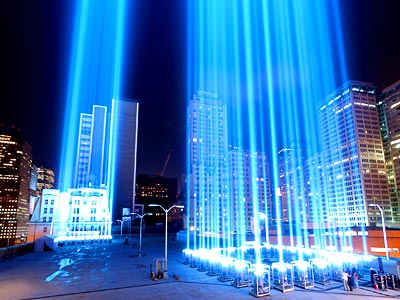
This piece was originally published on September 11, 2011. It has been reposted to reflect on the tragic events and impacts of 9/11 and on our international strategy going forward.
Ten years ago, while driving to work, I watched in horror as smoke and flames billowed from the Pentagon from across the Potomac River. Later, huddled in a basement office, our small staff overcame its fear that this was “the beginning of the end” and got to work.
The message sent that day to our members began, “The world has shifted.” Like the first few moments after an earthquake, we didn’t know how bad the damage was, but we knew the world would never be the same again. I wrote then:
“Right now, I am as fearful of the knee jerk reaction that our nation could embark upon, as I am by the damage that those forces behind these attacks can inflict.
We who work for a more peaceful and just world must be the voice that says more than ‘strike back.’ We must talk about what we can do to stop this from happening again…. Military might is not enough to halt a determined foe that is willing to sacrifice their lives for what they believe in and use all means available to lash out. The United States should seek to find those behind this attack and bring them to justice. But at the same time it should evaluate what damage it has done by hamstringing the growth of a democratic system of international governance that will allow members of every society to feel that they are stakeholder, rather than downtrodden serfs, in our global village.
I ask all of you in the days ahead to be the courageous voice of sanity and reason and help turn this tragedy into the beginning of a healing rather than the beginning of the end.”
In 2001, the U.S. had an opportunity to treat the attacks as either the terrible crimes they were, or as acts of war. Ten years later it is clear that reason did not prevail. A front page news article in the Washington Post declares that this “is the American era of endless war.” It goes on to say that “peace” has become “a dirty word in Washington foreign-policy circles.”
The cost of the wars in Iraq and Afghanistan has been staggering:
- About 135,000 civilian and military lives have been lost.
- The Nobel Laureate economist Joseph Stiglitz estimates the costs of these wars between 3 and 5 trillion dollars.
- United States’ reputation as a human rights leader is still stained by the torture and horrors of Abu Ghraib and Guantanamo.
- The clamp down on student and tourist visas has denied the U.S. of vital income as well as tens of thousands of opportunities to export democratic values.
It didn’t have to be this way. The conservative columnist, George Will, noted that the mastermind of 9/11, Osama Bin Laden was “brought down by intelligence gathering that more resembles excellent police work than a military operation.” The response to the 9/11 attacks should have been treated primarily as a violation of law rather than an act of war. Unfortunately, the Bush administration and Congress blew it.
But it is time to stop looking backwards. Ten years ago we allowed fear to rule us. But now we have some important questions to answer:
- How do we end the “endless” war?
- How can we ensure we do not choose war over law again?
- What ways can we cooperate with other nations to build a safer and more secure world?
It was most likely a coincidence that the 9/11 attacks happened on the opening day of the United Nations General Assembly. On Tuesday, two days after the 10 year commemoration, President Obama will address the gathered leaders of the world at this year’s General Assembly open session. While domestic and economic issues are dominating his attention, this would be an ideal opportunity for him to recommit to a vision where human rights and the rule of law are once again the foundation of how the United States engages the world.
But if I were in his shoes, I’d want to know that the American people had my back and are ready to move forward in a rational and pragmatic way to address the challenges of our interconnected world. Will we finally demand the closure of Guantanamo? Will we allow rampant military expenditure to continue at the expense of diplomacy and development?
Ten years later, we know the policies of war have failed. Yet we still allow the fear generated by the horrors of 9/11 and the terrorist acts that followed to silence our better selves.
GlobalSolutions.org is committed to forging a path of peace. America’s ability to overcome the “fear of the other” has allowed us to become the great nation that we are. This year, join me in reasserting this fundamental American value.
by Jennifer Welden | Sep 3, 2014 | Global Justice, World Citizen
The Ice Bucket Challenge – a fundraising and awareness campaign for Amyotrophic Lateral Sclerosis (ALS) or “Lou Gehrig’s Disease” – has gained widespread popularity in the last month, with everyone from celebrities to fugitives posting videos of their participation. This campaign has not come without its controversies, however, with many all over the world criticizing the challenge. In my home state of California, which is in a state of emergency because of the current drought, the ice bucket challenge has left many conflicted as we struggle to save water. Residents of the drought-stricken Henan province in China have reacted similarly, staging a protest urging, “Henan, please say no to the Ice Bucket Challenge.”
In India, where more than 100 million people lack access to clean drinking water, an alternative was created: the Rice Bucket Challenge. Started by 38-year-old journalist Manju Kalanidhi, this challenge asks people to donate a bucket of rice to a person in need. Then, just like the Ice Bucket Challenge, the participant snaps a photo, puts it on social media, and nominates friends to do the same.
Today, a third of India’s 1.2 billion people live on less than $1.25 USD a day; a kilogram of rice, or 2 pounds, costs between 80 cents and a dollar. A family of four goes through about 45 pounds of rice a month, according to Kalanidhi.
The Rice Bucket Challenge has blown up on social media, and Manju estimates “that at least 200 people have taken part and more than 4,000 pounds of rice have been donated.” The movement has also grown beyond India’s borders, with people all over the world beginning to take part in what is universally viewed as a more sustainable form of charity.
But what does the success of the Ice Bucket Challenge (which arguably has become more of a publicity stunt than an act of altruism), and now the Rice Bucket Challenge, say about us as a society? Is this just another example of people wanting to follow a trend, or is it a sign of a more charitable generation? Will future campaigns for charity only be successful if they give people the opportunity to document their good deeds?
Does an instagrammed bucket of rice taste better than a benevolent one?