by Christopher Davis | Dec 4, 2014 | Global Justice, Human Rights
The ideal of international human rights spans over 40 years, beginning with the Unverisal Declaration of Human Rights. Since then, there have been nine international human rights treaties adopted by the United Nations General Assembly. These treaties, along with the Universal Declaration of Human Rights, stand as the pillars by which the rights of the world’s citizens are based.
Recently, we have highlighted two key treaties that have gone too long without ratification: the Convention on the Elimination of All Forms of Discrimination against Women (CEDAW) and the Convention on the Rights of the Child (CRC).
As we approach Human Rights Day 2014, it is important to explore a brief history of the relationship between the US and human rights treaties.
The US has long been viewed as the free world, the very pillar of freedom and democracy. Better yet, the US has remained a champion of human rights around the globe, even urging the international community to take action in the wake of human rights violations. Yet the US has done so without guaranteeing many of those same human rights for its own citizens.
To date, the US has only ratified three human rights treaties:
Although these treaties are significant in the broader, global picture, they are non-controversial from a US perspective.
However, even ratifying these three treaties was not done without declared exemptions, or reservations. A reservation is a statement by which a state can exclude or modify the legal effect of certain aspects of the treaty to that state. Simply put, a country can choose which components of a treaty for which it can be held responsible. This loophole of sorts allows a country to evade international law.
The US has also done something few, if any, states have done: abandon a treaty it has previously signed. In 2000, US President Bill Clinton signed the Rome Statue of the International Criminal Court; a year later, his successor un-signed the treaty.
Regardless, these treaties have led to significant changes to national legislation in many of the countries that have ratified them. We can see this in the case of CEDAW. In 2010, The US Ambassador-at-Large for Global Women’s Issues, Melanne Verveer testified before a Senate subcommittee regarding the effectiveness of CEDAW, providing examples of advancements for women in countries such as Afghanistan, Mexico Morocco, the Philippines, and Uganda.
Even so, the definitive language within the treaties that is meant to better the lives of all citizens can be seen as a hurdle facing US ratification. Clauses regarding family planning and employment practices, both atop some domestic political agendas, undoubtedly remain sticking points for many legislators.
Some theories would point to institutional constraints. While it is true that treaty ratification faces significant obstacles, this idea fails to explain how the US has ratified some treaties while failing to bring others to a vote. CEDAW has been brought before the Subcommittee on Human Rights and the Law five times, each time failing to reach the Senate floor. In 1994, the Senate approved the Convention to Eliminate Racial Discrimination shortly after it failed to bring CEDAW to a vote.
Additional theories point to interpretation. Ambiguous language in some treaties can leave them open to interpretation, thereby diminishing their implementation. Whether it be on the basis of legal, religious, institutional, or partisan reasons, one thing is clear: human rights treaties face significant hurdles in the US.
We must stand together as globally-minded citizens and call for the ratification of all human rights treaties, not just those that are non-controversial. Ratifying landmark human rights treaties would continue our proud, bipartisan tradition of protecting and advocating for human rights while ensuring the protection of all US citizens and would build credibility in today’s fast-paced, constantly evolving geopolitical sphere.
by Wade Meyerhoffer | Nov 21, 2014 | Global Justice, Human Rights
I’ll preface this blog by saying that I have good news and bad news. The bad news is that the Global Slavery Index 2014 was released recently and reports that there are close to 36 million modern day slaves in the world, roughly 0.5% of the world’s total population. Startlingly, these numbers are a significant increase to previous estimates, due to what the report calls “improved accuracy and precision of measures,” and that they are “uncovering modern slavery where it was not seen before.” The good news, though, is that information is always the first step towards taking positive action.
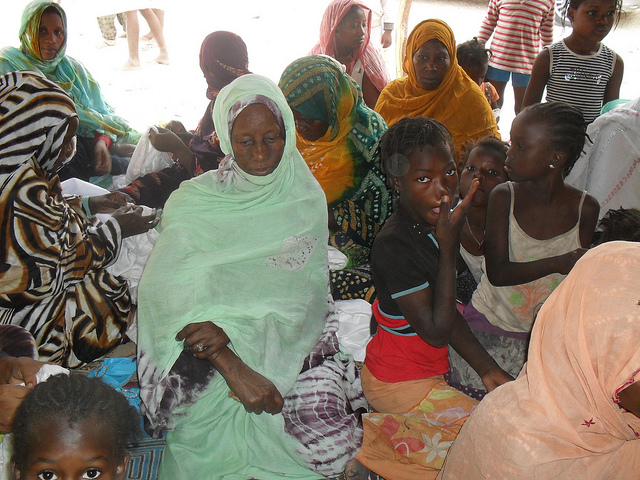
The report also listed which countries had the highest percentage of slaves and which had the highest numbers total. Coming in at the coveted number 1 spot in slaves per capita was the West African nation of Mauritania, with 4% of its population in bondage. Mauritania has consistently struggled to eliminate the practice of modern-day slavery, and many experts agree that those in power likely don’t want it abolished. Mauritania was the last country on the planet to abolish slavery formally in 1981 and only passed legislation laying out legal ramifications for traffickers in 2007, after giving in to international pressure.
Unfortunately, several factors have contributed to Mauritania’s lack of effective abolition. Like many arid countries, Mauritania struggles to police its territory adequately (like it wants to anyway). Its lack of resources and critical infrastructure also play a key role in that respect. Moreover, Mauritania’s slave culture is deeply embedded in civil society. African history professor Bruce Hall has said that the depth of slavery in Mauritania is “unusually severe” in a country where darker-skinned Haratins have been slaves to the lighter-skinned Berbers for centuries.
Even more troubling is the jailing of Mauritania’s foremost abolitionist Biram Dah Abeid. While not much is known about the reason for his incarceration, Abeid’s presidential ambitions and resolve are probably a good jumping-off point for the discussion. With these facts in mind, we can conclude that slavery is not only a cultural epidemic, but also institutionally reinforced, making it difficult for outside forces to free those in chains.
After Mauritania, Uzbekistan, Haiti, Qatar, and India round out the top five countries in slaves per capita respectively. In terms of total number of slaves, India, China, Pakistan, Uzbekistan, and Russia make up the top five. India alone has about 14 million people in some type of slave condition, while second-place China has 3.2 million in bondage. From these statistics one can see that slavery isn’t confined to third-world countries, but also democracies in India, thriving economies like China and developed countries like Russia.
Slavery doesn’t work within our classical definition of state sovereignty. It’s a global illness that spreads and often benefits from crossing borders, luring people abroad with the false promise of legitimate work. The world needs to look at this report and understand that there are hot spots for human trafficking and slavery, but also to realize that there is work to be done everywhere—on every level of governance. That’s why CGS soon will be working to lobby for H. R. 3344 to address a few key issues related to human trafficking. If the US takes a proactive role against this issue, we can encourage other states to do the same, and IGOs like the UN will follow suit.
by Kevin Burke | Nov 17, 2014 | Global Justice, Human Rights
What would you do if you literally were not considered a person?
Today over 10 million stateless people are living that reality – a life where no state recognizes them as a part of their legal community. Our lives are intricately linked to the states into which we’re born, and our citizenship brings with it basic access to schools, health care, employment, and an extensive bundle of other rights and privileges. But because stateless people aren’t recognized as persons before the law, they don’t have access to any of these basic human rights. They’re exiled from life as we know it.
Statelessness happens in a variety of ways. The state is the basic administrative unit of global politics, but it is an imperfect unit, attempting to govern both a territory and a people, and the governments in charge of states don’t always recognize all the groups within a territory as a part of their political community, often due to ethnic, religious, or other differences. Disagreements about inclusion often happen when territories break off from an original state, with people ending up on the wrong side of a border. And as conflicts force people to flee their homes, they may lose track of their original nationality documents, or their state of origin may cease to exist altogether.
This month, the UN High Commissioner on Refugees is launching a ten-year campaign to end statelessness, to ensure that everyone, everywhere has the basic protections afforded by having a state. Some of the goals of this campaign include:
- Resolving major situations of statelessness, such as the Rohingya in Burma or people of Haitian descent born in the Dominican Republic, through law and policy reform;
- Ensuring that no child is born stateless;
- Preventing deprivation of nationality on the basis of discrimination;
- Removing gender discrimination in nationality laws;
- Granting protection status to stateless migrants;
- Issuing nationality identification documentation to those entitled to it.
This will not be an easy campaign. States are in some ways fundamentally exclusionary entities: they have to decide who is and is not a member as a routine matter of differentiating among one another, picking who has this set of rights and who has that set of rights within each territory. But illegitimate forms of discrimination get included in laws and practices too easily; conflict, natural disaster, and border changes can easily put people in unexpected places that aren’t legally prepared for them.
Two UN conventions on statelessness help to protect the rights of these individuals, but neither has been widely adopted. The 1954 Convention relating to the Status of Stateless Persons currently has only 84 state parties as of today; the 1961 Convention on the Reduction of Statelessness has just 61. There are 193 member states in the United Nations.
The United States is a signatory to neither convention.
And while the US political climate may seem antagonistic toward international law, the United States can still be a significant contributor to the campaign to end statelessness. Sri Lanka, Kyrgyzstan, and Vietnam, among others, have implemented programs to integrate stateless populations, and the US can be a key part of the UNHCR’s campaign to help current problem states integrate their own populations.
And perhaps most importantly, the global political community should recommit to resolving international conflict quickly and peacefully. This is easier said than done, obviously, but the conflicts currently dispersed around the world have serious long-term consequences. A stateless refugee today may have children who are the stateless of tomorrow; in fact, one-third of today’s stateless are children. The sooner we can calm this conflict pandemic, the sooner we stop the cycle of statelessness.
by Melanie Pino-Elliott | Oct 30, 2014 | Global Justice, Human Rights
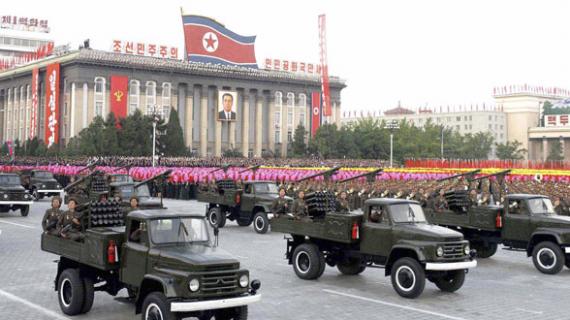
For the first time, a broad coalition of nations is pushing to refer North Korea, or the Democratic People’s Republic of Korea (DPRK), to the International Criminal Court (ICC) for prosecution.
This development follows a series of efforts that began six months ago with a commission of inquiry report documenting the rampant human rights abuses in DPRK.
Several entities, including Citizens for Global Solutions and the Global Centre for the Responsibility to Protect, have called on the Security Council to refer DPRK to the ICC. Last week, Japan and the European Union distributed a draft resolution among UN member states asking for the same, to which 43 countries now have signed on in support.
This may signify progress on a previously stagnant situation: despite widespread awareness of and outrage at mass atrocities committed in DPRK—including torture, starvation, forced labor, execution without trial, rape, forced abortion, and infanticide—the government has remained indifferent to efforts from the international community to effect change, with Pyongyang threatening to walk out of nuclear negotiations if the issue was raised.
However, DPRK now appears alarmed by the prospect of leader Kim Jong Un and minions being brought before the Court. North Korean diplomats and propagandists are actively engaging critics, apparently sensitive to the possibility of international pressure leading to the country’s top officials being charged with crimes against humanity.
It must be noted that DRPK still has not accepted any of the Commission of Inquiry’s findings. DPRK counselor Kim Song described the commission as “a political conspiracy by the United States and hostile forces.”
Additionally, DPRK’s chief ally China, which as one of five permanent members of the council holds veto power, is not likely to cooperate with an ICC referral.
On the other hand, Beijing currently is seeking to improve its international standing. If momentum continues to build and diplomatic pressure reaches the Security Council in the next few months, it may influence China to do the right thing.
Let us hope that this is what happens. A united effort is necessary to intervene successfully in DPRK and bring an end to the atrocities.
As Special Rapporteur on the situation of human rights Marzuki Darusman writes,
The international community must seize this unique opportunity and momentum created by the commission of inquiry to help to make a difference in the lives of the people of [North] Korea, including victims, and to ensure accountability of those responsible for serious violations of human rights, including crimes against humanity.
by Ezra Douglas | Oct 22, 2014 | Climate Justice, Global Justice
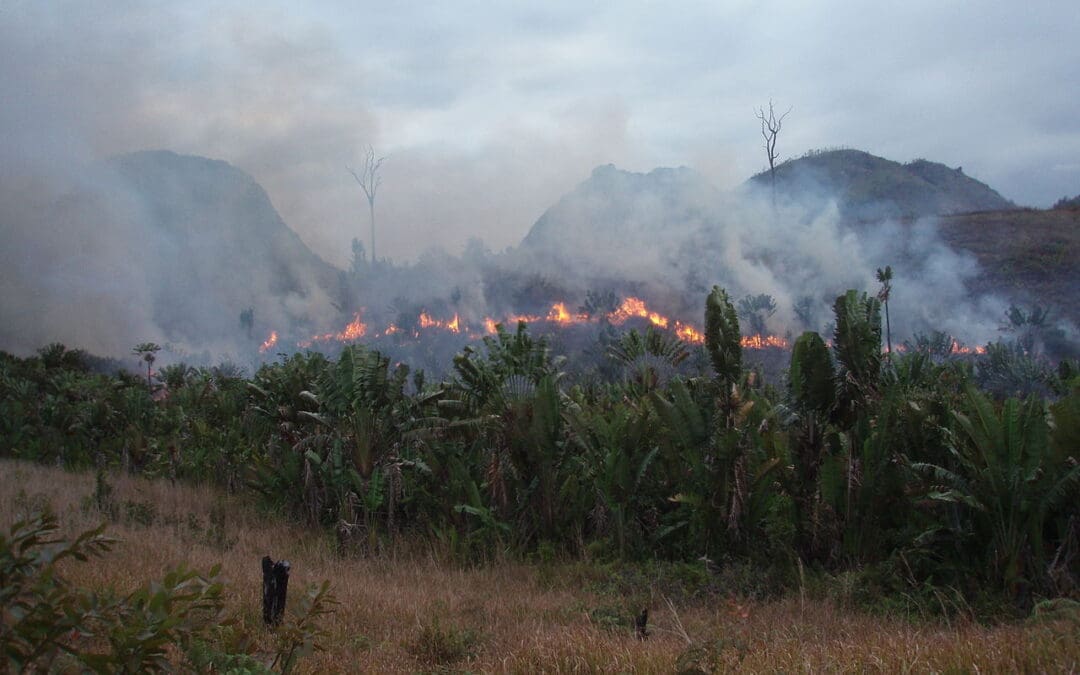
When we think of forests, we think of those in the Amazon, China, Congo, Canada and many more places throughout the world. People throughout history have been drawn to forests, intrigued by the mysteries, adventures, and animals hidden within them. Forests today cover about 30 percent of the earth’s surface, but each year we lose an area equivalent to the size of Panama.
Deforestation is the driving force behind the loss of our forests. According to the Environmental Protection Agency, deforestation can be defined as the “permanent removal of standing forests.” There are numerous reasons this occurs. These reasons do vary but deforestation can intentionally or accidently occur.
So how does this affect you? Deforestation has a tremendous impact on everything around us. The effects are plentiful and include loss of habitats, increased greenhouse gases, soil erosion, and the destruction of homeland for natives.
It estimated that in 100 years, there will be no more forests on our planet if we continue at the current rate. The benefits from these forests are irreplaceable and essential to our survival. For example, 20 percent of our oxygen comes from the Amazon, and these forests help regulate the water cycle and keep the soil rich with nutrients. The removal of forests caused by deforestation accounts for 12-17 percent of global annual greenhouse gases emitted into our atmosphere.
Human activities are the main cause of deforestation. With the exception of natural events such as disease and fire, protection of our forests is attainable. Despite this, our forests continue to shrink rather than grow.
There are many factors in the unjustifiable deforestation that occurs on our planet. Most forests are cut for agricultural purposes. In fact, most of the countries that suffer from deforestation are poor. As they clear for farms or fuel, they get richer–until “alarm bells ring and they attempt to recover their loses”. Other reasons include clearance for cities, firewood, and, most notably, paper. The fact that deforestation occurs in a lot of poor countries creates further challenges, as laws are not enforced or applied to curtail deforestation.
The need to keep our forests clearly outweighs the benefits of destroying them. Even though a lot of forests are cut down for agricultural use, the removal of trees causes the ground to lose its nutrients, thus defeating the purpose of growing healthy crops and increasing the likelihood of flooding. Deforestation also is a leading cause of climate change because with fewer trees on our planet, there is a greater abundance of CO2 in our atmosphere. It is important to defend our forests because 70 percent of Earth’s land animals and plants live in forests, and many cannot survive when deforestation destroys their homes.
Many forests in the world are home to indigenous groups that have lived in them for thousands of years. In South America, there are over 400 indigenous groups that thrive in these forests, and if deforestation continues, this could jeopardize and threaten their livelihoods. Deforestation will increase conflict as native tribes will try to defend their homelands, threatening peace and security in some countries.
Overall, deforestation is an issue that will have disastrous global implications if governments don’t act to prevent it. With the prospect of no forests in the near future, the effects are far too significant to ignore. There are already organizations and laws that limit the loss of forests, but more can still be done to ensure that our beautiful forests are not destroyed.
by Ezra Douglas | Oct 15, 2014 | Global Justice, Peace & Disarmament
Throughout history, numerous empires, nations, and city-states have suffered from various internal and external dilemmas that have led to their ultimate collapse. Such examples include the Roman Empire, the Soviet Union, and the former British and French empires, all once formidable in history, but ultimately succumbing to downfall. The Fund for Peace attributes “state fragility” to twelve indicators that include economic decline, erosion of legitimate authority, inability to provide reasonable resources, and more.
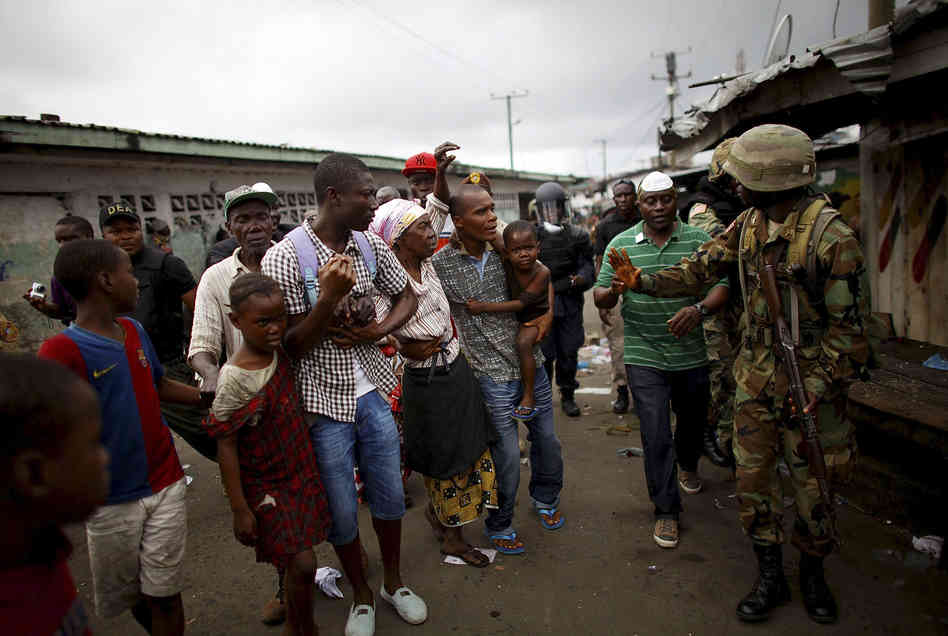
The Ebola outbreak in West Africa may lead to the possibility of failed states, according to the World Health Organization (WHO). The nations hit hardest by the outbreak–Liberia, Sierra Leone, and Guinea–are stretched to the limit in providing resources to just to sustain their own people, let alone to combat the disease. As money and resources are diverted, public services decline and populations that relied on government assistance are severely affected and left vulnerable. As the Ebola outbreak grows exponentially, panic has emerged in these countries as people have started to lose confidence and trust in their governments.
While Ebola has strained state resources, the economic impacts of the virus are another reason that the “failed state” idea is plausible. These countries were recovering economically from the onset of civil wars and coups that had hindered their potential growth in the past. Ebola has created another setback for them, and the effects may last years if the outbreak is not contained.
In the hardest hit areas, “the outbreak has paralyzed economic life…shops are closed, hotels vacant, flight cancelled, fields untended, investments on hold,” impeding if not retracting the states’ economic growth.
What’s unfortunate is that these countries had high growth forecasts predicted by the World Bank, but now have been downgraded. The Bank predicts that Guinea will grow 2.4%, down from a previously forecast 4.5%; Liberia 2.5%, down from 5.9%; and Sierra Leone 8%, down from 11.3%. Investments and projects such as the Mount Coffee hydroelectric plant, aimed at ameliorating the power supply of Liberia, have ceased to continue.
And there are grim reports that if the virus is not contained to these countries, there could be an “economic drain of as much as $32.6 billion by the end of 2015.”
All these numbers, facts, and statistics have a tremendous impact on the hope that these countries once had to escape the poverty that plagued them before the arrival of Ebola.
With resources stretched to the limit and economic growth stagnant and retracting, the Ebola outbreak may lead to the possibility of the first failed states caused by disease in the modern era. We are already seeing health care workers in Liberia going on strike over pay raises, though the chances of this becoming widespread and continuing are slim. Yet this example paints a reality of the serious challenges these governments face as the virus persists.
Governance in these countries is critical in containing the spread of Ebola. As people have become fearful of the disease, there has been a decrease in confidence in their governments. Examples can be seen in victims of Ebola lying in the street for days or not enough hospitals to cope with the influx of patients.
Governments abroad must aid these nations to help combat the disease and prevent states from collapsing, or else we may be facing problems that cannot be controlled. The potential is real and situations are dire to the point that the head of WHO said,
I have never seen a health event threaten the very survival of societies and governments in already very poor countries.
One thing is for sure: if more help is not sent, the Ebola virus will dramatically affect the economic output of these countries, lead to potential state failure as resources get stretched and confidence erodes, and have a lasting impact on generations to come.