
Originally published on the CGS blog on February 25, 2014.
North Korea’s state control over where people live and work, and the practice of arbitrarily arresting and executing citizens evokes images of the “Hunger Games.”
Sadly, it is without the “Games” aspect — just state-sanctioned death. A brief look of the Human Rights Council (HRC) summary of North Korea depicts citizens subject to revolting, inhumane punishments. There are stark parallels between North Korean society and that of Nazi Germany. (This is not a violation of Godwin’s Law; that comparison was made by no less than John Everard, the former UK ambassador to the authoritarian state.) However, the key differences, such as not being outwardly aggressive, make it nearly impossible for the international community to stop North Korea’s crimes against humanity.
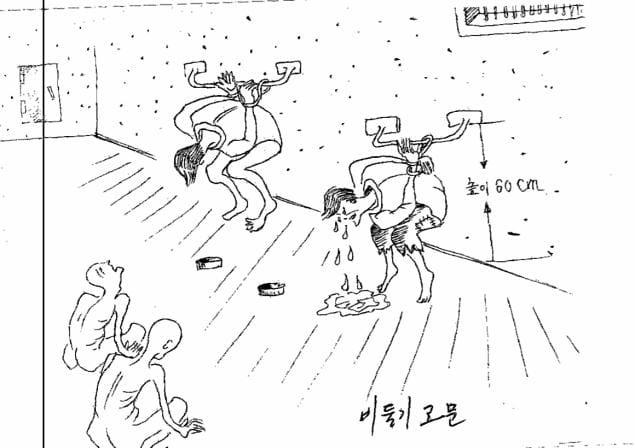
The UN report shines a light into the darkest corners of North Korea and the treatment people receive there. North Korea’s political prisons purposefully degrade the inmates as sub-human through acts like ordering someone to kneel, open their mouth and swallow the spit of several guards; any sign of disgust is reason for further punishment. People are regularly forced to remain in a position that’s neither standing nor sitting for days upon days, exhausted, dehydrated, and living in their own waste. Women are very often raped, impregnated, and forced to abort the pregnancy or kill the child at birth. These are just a few of the more grotesque atrocities the North Korean authorities commit. The political camps are modern-day versions of Nazi concentration camps; human rights doctrines are rooted in our rejection of these death camps.
After decades of these atrocities in North Korean and repeated pleas by the international community to stop them, it’s clear that North Korea simply doesn’t care to listen. Therefore, it’s unlikely that any kind of ad-hoc tribunal court would be effective; the North Korean Government would have to cooperate. The International Criminal Court (ICC), however, can hold individuals accountable without the cooperation of the State involved, but instead through the authority of the UN Security Council. Of course, China is likely to veto any resolution that threatens North Korea’s stability and sovereignty.
At the moment, China is the only nation that has cordial relations with North Korea, but is offering little to no help. Any strategy to end the human rights violations in Korea will have to include China, providing it with an overriding interest for not vetoing a referral to the ICC and/or a way to save face politcally if it abstains. If China at least abstains from vetoing a Security Council resolution, then the world could send the strongest message of disapproval possible to North Korean leaders.
The United States must assume a leadership role in the fight against the evil controlling North Korea. Three courses of action could set the US on the path to ending North Korea’s crimes: one, support a resolution in the Security Council to refer North Korean perpetrators to the ICC, because it is designed to prevent leaders from hiding behind sovereignty as they torture populations; two, pressure China to not veto any such resolution, because it ought to recognize their responsibility not to veto resolutions on matters of mass atrocities lest it be responsible for aiding in the atrocities; and three, close Guantanamo Bay, because it’s embarrassing that our nation has any similarities to North Korea. US policy can’t afford to be hypocritical or opposed in the least to international human rights law.


