by Hiram Helfman | Jan 30, 2015 | Global Justice, Human Rights
China’s international mantra is that human rights start with a socio-economically stable foundation–before democratization. In other words, people need to eat breakfast before they cast ballots.
China is also an advocate of sovereignty and emphasizes not interfering in other countries’ internal affairs. This comes from interference by Western powers in the past, particularly Great Britain during the opium wars, who told the Chinese Imperial Court to give up its protests about the drugs being smuggled into the Chinese Empire, despite the social ills it was causing to Chinese society.
It’s unrealistic to ask China to demand that North Korea end its political prison system or to accept North Korean escapees as political refugees. China itself has the largest number of political prisoners in the world. Lists such as this one indicate only some of the thousands of people in China held in political prisons.
China also has many citizens who escape it or are deported from it as political refugees, such as Wei Jingsheng and Harry Wu, to name a few.
Overall, China has human rights issues similar to North Korea. It does, however, allow people slightly more freedom of expression than North Korea does as long as the Communist Party is not subject to rhetoric that undermines it.
For example, people have the right in China to say that things aren’t perfect, and people can sometimes air their opinions about certain issues like economic problems that need to be resolved.
This isn’t the case in North Korea. The Kim Regime projects via the state media propaganda that everything in North Korea is great–thanks to the Kims! This is especially evident on the Korean Central News Agency website, which is full of grandiose articles.
China prefers an orderly and harmonious society, but it does encourage economic innovative thinking–something that North Korea does not openly advocate, but allows on small levels. Also, North Korea has been looking north to its economically successful neighbor, China.
Perhaps democratic countries could encourage China to coax North Korea to improve its socioeconomic conditions so that people won’t be as desperate to escape the state. Democratic countries like the United States would prefer that North Korea allow its citizens the right to come and go as they please, as freedom of movement is a sacred right in democratic society.
However, China might also be willing to persuade North Korea to provide its citizens with economic opportunities based upon individual talent rather than supposed ancestral political loyalty in its Songbun caste system.
After all, Karl Marx never would have believed in setting up such a caste system, as it’s anathema to his ideas of an egalitarian society where everyone works for the common good. China could point out that North Korea loses potential innovative talent via its continued reliance on such an outdated sociopolitical favor system.
Democratic countries should encourage China to provide advice to North Korea on how to improve its socioeconomic conditions, as this will alleviate much of the suffering that most of its citizens go through on a daily basis. China could encourage North Korea to allow more individual economic initiative, as it can help society as a whole when distribution of goods and services can get to the people who need or want them.
Democratic countries also could persuade China to convince North Korea that it should provide economic opportunities to repatriated refugees instead of sending them to political prisons, especially since China considers these refugees to be economic migrants.
In conclusion, although we may not see a democratic North Korea in the near future–especially since China is still authoritarian and is bound to be for years to come–asking for help in persuading North Korea to address its socioeconomic issues might motivate China to practice what it preaches on the global stage.

by Chuck Woolery | Jan 14, 2015 | Global Justice, Human Rights
One day after a failed bid at the UN to push a Middle East peace settlement between Israel and the Palestinians, the Palestinian Authority President announced a move for the PA to join the International Criminal Court (ICC) as a way of seeking to get international judicial support for its ‘war crimes’ allegations against Israel. Now UN Secretary-General Ban Ki Moon has indicated that the Palestinian Authority will be allowed to join the ICC.
Israel’s Netanyahu noted that the Palestinian Authority really should refrain from taking this case to the ICC because of Hamas’s own rocket attacks on Israeli population centers and their use of civilians as human shields. ICC prosecutors have made it clear in the past that they will investigate all allegations of misdeeds in a dispute, not just those of one side.
Most unprejudiced people would agree that there must be accountability for anyone committing war crimes, crimes against humanity or genocide. Unfortunately, at present the ICC can work only in those cases where nation-states, even those accused of crimes, allow it in their jurisdiction. This is another example of the miserable state of the present international system where unlimited national sovereignty is allowed to trump human rights. Even though 139 countries have signed the 1998 Rome Statute establishing the ICC, the most horrific crimes against humanity perpetrated in the past decade—in North Korea, Syria and Sri Lanka, among other places—presently remain outside of the ICC’s reach.
This is not justice. This is not a deterrent against mass murder, crimes against humanity or genocide, as the ICC was intended to be. We need a fundamental change in the current international system where unlimited national sovereigny takes priority over the protection of human rights. Such a change is likely to come only with much more awareness about the present international system and a resulting massive change in public opinion.
The sovereign rights of “we the people” must take priority over the interests of national governments and the misplaced devotion to unlimited national sovereignty if international law is ever to be considered anything other than hopeful ideals.
by Rene Wadlow | Jan 11, 2015 | Global Justice, Human Rights
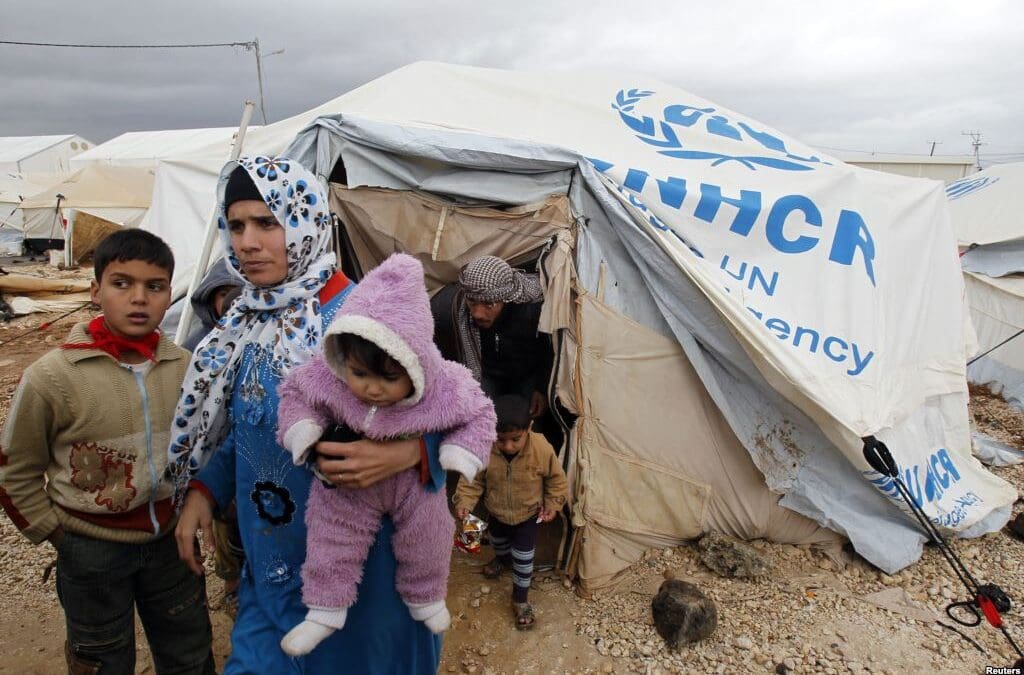
The recent interception by the Italian Navy of two ships filled with refugees from Syria and other countries has dramatically highlighted the ever-growing trade in persons.
11 January has been designated by the UN General Assembly as a day to develop awareness of human trafficking. Awareness has been growing, but effective remedies are slow and uncoordinated. These remedies often are not accessible to victims of trafficking due to gaps between setting international standards, enacting national laws, and then implementing them in a humane way.
The international standards have been set out in the United Nations Convention against Transnational Organized Crime and its Protocol to Prevent, Suppress and Punish Trafficking in Persons, Especially Women and Children. The Convention and the Protocol standards are strengthened by the International Convention on the Protection of the Rights of All Migrant Workers and Members of their Families. The worldwide standards have been reaffirmed by regional legal frameworks such as the Council of Europe Convention on Action against Trafficking in Human Beings.
Despite clear international and regional standards, many countries have poor implementation due to limited government resources and infrastructure, a tendency to criminalize victims, and restrictive immigration policies.
Basically there are three sources of trafficking in persons. The first, as highlighted by the intercepted ships, are refugees from armed conflicts. Refugees are covered by the Refugee Conventions supervised by the UN High Commissioner for Refugees (UNHCR) in the country of first asylum. Thus Syrian refugees are protected and helped by the UNHCR in Lebanon, but not if they leave Lebanon. As a quarter of the population of Lebanon now consists of Syrian refugees, the Lebanese government is increasingly restricting Syrians’ ability to work in Lebanon and to receive schooling, medical services, proper housing, etc. Many Syrians therefore try to leave Lebanon to find a better life in Western Europe. Refugees from Iraq, Afghanistan, and Sudan follow the same pattern.
The second category are people leaving their country for economic reasons − sometimes called “economic refugees.” Migration for better jobs and a higher standard of living has a long history. Poverty, ethnic and racial oppression, and gender-based discrimination are all factors in people seeking to change countries. With ever-tightening immigration policies and a popular “backlash” against migrants in some countries, would-be migrants turn to “passers” − individuals or groups that try to take migrants into a country, avoiding legal controls.
A third category − or a subcategory of economic migration − is the sex trade, usually of women but also children. A Human Rights Watch study notes, there are an estimated 150,000 non-Japanese women employed in the Japanese sex industry, primarily from other Asian countries such as Thailand and the Philippines. According to the study,
Abuses are common as job brokers and employers take advantage of foreign women’s vulnerability as undocumented migrants: they cannot seek recourse from the police or other law enforcement authorities without risking deportation and potential prosecution, and they are isolated by language barriers, a lack of community, and a lack of familiarity with their surroundings.
We find similar patterns in many other countries.
The scourge of trafficking in persons will continue to grow unless strong counter measures are taken. Basically, police and governments worldwide do not place a high priority on the fight against trafficking unless illegal migration becomes a media issue, as did the interception of the two ships.
Real progress therefore needs to be made through non-governmental organizations (NGOs). There are four aspects to this anti-trafficking effort. The first is to help build political will by giving accurate information to political leaders and the press. The other three aspects depend on the efforts of the NGOs themselves. Such efforts call for increased cooperation among NGOs and capacity building.
The second aspect is research into the areas from which children and women are trafficked. These are usually the poorest parts of the country and among marginalized populations. Socio-economic and educational development projects must be directed to these areas so that there are realistic avenues for advancement.
The third aspect is the development of housing and of women’s shelters to ensure that persons who have been able to leave exploitive situations have temporary housing and other necessary services.
The fourth aspect is psychological healing. Very often women and children who have been trafficked into the sex trades have a disrupted or violent family and have a poor idea of self-worth. This is also often true of refugees for armed conflict. Thus, it is important to create opportunities for individual and group healing, such as teaching meditation and yoga. There is also a need for adult education services so that victims may continue their broken education cycles.
There are NGOs who are already working along these lines. Their efforts need to be encouraged and expanded.
by CGS Blog Archive | Jan 8, 2015 | Global Justice, World Federation
As 2014 drew to a close, we said goodbye to a beloved global citizen. Walter F. Hoffmann, prominent civil rights attorney and tireless advocate for world peace, died at age 90 on Wednesday, December 31.
Passionate for UN reform, Walter was a member of World Peace Through Law, founder of the Campaign For UN Reform, the Center for UN Reform Education, and Executive Director of the World Federalist Association in Washington, DC. In 1993, he was appointed by the Speaker of the House of Representatives to serve on the Commission on Improving the Effectiveness of the United Nations.
Born in Newark, Walter grew up in Glen Ridge and spent most of his adult life in Wayne, NJ. Walter was an Eagle Scout, graduated from Glen Ridge High School in 1942, and served with the Marine Corp in the Pacific in World War II. He was stationed on Tinian Island as a member of the 18th Anti-Aircraft Battalion when the Enola Gay took off from Tinian for Hiroshima on August 6th, 1945.
Walter graduated from the University of Michigan in 1948 and the University of Chicago Law School in 1951, where he was an editor of the Law Review. He was a trial attorney for the National Labor Relations Board and a staff attorney for the US House Ways and Means subcommittee investigating the administration of the IRS. He then returned to New Jersey and was a founding partner of Hoffmann, Humphreys & Lafer, in Wayne.
As a civil rights attorney in the 1960s, he successfully challenged residential covenants in NJ communities that excluded homeowners based on race and religion.
Walter served as Adjunct College Professor at William Patterson and Ramapo Colleges, teaching courses in Government and Political science.
Walter met his first wife, the former Lois Anne Johnson at the University of Michigan. They married in 1948 and had a good and loving marriage for 52 years until Lois’s passing in 2000. He remarried in 2003 to Nancy Cecere and enjoyed their 12 years together traveling and living in Cedar Crest Village.
No one who met Walter will forget him, not his family, not his friends or office staff, or fellow travelers anywhere. He genuinely wanted to know people and what was important in their lives. His integrity, wise counsel and joy in his family will be missed.
He is survived by his wife Nancy, daughters, Anne Hoffmann, Laura Calixte, son, Charles Walter Hoffmann (Susan), three grandchildren: Sylvianne Mulholland (Michael), Raymond Walter and Gregory Hoffmann; and two great-grandchildren, Jackson Walter and Kellan Mullholland.
In lieu of flowers, please consider making donations in Walter’s name to the World Federalist Movement or Citizens For Global Solutions.
Click here to find out memorial information, sign the guest book, or send a private message of condolence.
by Christopher Davis | Dec 18, 2014 | Global Justice, Human Rights
The Senate Intelligence Committee recently released a much-anticipated executive summary of a more than 6,000-page report on the Central Intelligence Agency’s tactics in questioning detainees in the wake of the September 11th terrorist attacks.
The report documents in detail the inhumane “enhanced interrogation techniques” used by the CIA at various facilities around the world. The techniques included the use of insects, rectal feeding and rehydrating, sleep deprivation, prolonged standing, and threats to family.
Findings indicate that interrogators frequently went beyond the limits outlined by the Department of Justice, subjecting detainees to extremely aggressive tactics that often proved fruitless.
The report details the interrogation of at least 39 detainees, focusing specifically on one detainee, Abu Zubaydah. In the case of Zubaydah, waterboarding was more regular and more extreme than previously reported. During one session, he lost consciousness and water and air bubbles began to come out of his mouth.
The US is now coming under scrutiny of many international organizations and countries, including the UN. The UN special Rapporteur on human rights, Ben Emmerson, has called on the US to hold senior officials accountable, stating that there is an international obligation to re-open inquiries into alleged breaches of human rights.
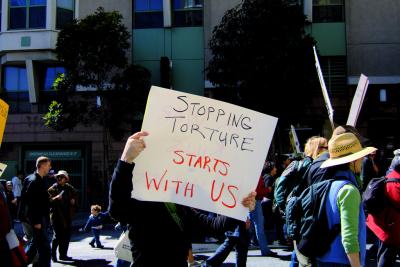
What Emmerson is referring to is the Convention against Torture and Other Cruel, Inhuman or Degrading Treatment or Punishment (CAT). CAT is one of nine international human rights treaties aimed at securing the rights of the world’s citizens, which the US co-authored and signed onto in 1988, eventually ratifying in 1994.
While CAT gives the US the opportunity act as an example for other countries and hold itself accountable for what President Obama has called a “mistake,” this is unlikely to happen. The US ratified CAT with significant reservations, leaving some accountability to be desired.
Several reservations are worth noting in aftermath of the Committee report. First, the definition of torture has been left open to interpretation. While the definition of torture in CAT seems only to require general intent to inflict severe physical and mental pain and suffering, the US reservation understands this intent to be specific.
Specific intent to inflict severe physical and mental pain and suffering will be difficult to prove, and US the report stops short of qualifying torture in any of the circumstances outlined. This likely will make it difficult to bring charges against those involved.
Additionally, the US declared that CAT is not self-executing, meaning that it cannot implemented without national legislation. Luckily, the US has a legal instrument in place: the 2009 Federal anti-torture statute, enacted as an Executive Order, which could function as a pathway to accountability.
The US cannot continue to call for international action on human rights violations while failing to hold itself to those same standards. We must urge the US to remain a champion of human rights, both at home and abroad, and that includes taking substantive action when human rights violations are uncovered.
by Jennifer Welden | Dec 8, 2014 | Global Justice, Human Rights
Japan has begun implementing Prime Minister Shinzo Abe’s new strategy to revive its economy. Dubbed “Abenomics,” the plan – which includes printing more money and a huge buy-back of government bonds – has one key focus: women.
Slightly less than half of Japanese women participate in the workforce, making them a largely untapped resource in increasing the country’s productivity, outputs, and buying power. In fact, it is estimated that Japan could raise its GDP by as much as 14% if female participation in the workforce increased to 80%. Moreover, “‘higher female employment could actually help raise, not lower, fertility rates’,” helping to “insulate Japan from the impending economic challenges posed by its aging population.”
This is the logic behind Abe’s mission to “unleash the power of ‘womenomics,’” the idea that “a country that hires and promotes more women grows economically.” Some of his goals of pursuing womenomics include:
- Boosting female workforce participation from 68% to 73% by 2020
- Challenging Japanese corporations to have women in 30% of top managerial positions by 2020
- Having women occupy 30% of leadership positions in government by 2020 (though his government has only reached a rate of 3% so far)
Though many are skeptical of these goals’ feasibility, particularly when it comes to alleviating female poverty and overcoming Japanese norms toward women, others point to them as an important step in a broader movement toward gender equality. In particular, it is clear how the rapid increase in women’s education is creating drastic changes within the Muslim world. As countries make massive investments in education, gender gaps in achievement begin to disappear and women’s presence in the workforce increases as a result; this in turn creates a movement where “economics trumps culture.”
While these strides and successes are important and should be celebrated, they must not lead us to think the market will take care of everything; we are still quite far from a gender-equal world, especially in developing countries. Whereas in Japan the infrastructure and market incentives are already in place for economics to, in fact, trump culture, in the developing world they are less, well, developed. In India, for example, there is evidence of “occupational segregation,” where women tend to be grouped into specific industries like basic agriculture, sales and elementary services, and handicraft manufacturing, all of which have seen little or no job growth in recent years. While this is due in part to a lack of education, an equally important factor is entrenched culture of violence against women, a culture that will take government, not market, action to fix.
Although these changes ultimately need to come from the countries themselves, the US has a role to play internationally to build on the momentum of womenomics. By ratifying the Women’s Rights Treaty (CEDAW), the US will send a message to other countries that equal and humane treatment of women is a right, regardless of differing cultures or ideologies. Moreover, it’s a step toward building the institutions necessary for womenomics to evolve from an idea to a reality.
We must not forget those living the consequences of discrimination in the face of our own feminist achievements. As Heather Stewart notes:
‘Womenomics’ is not just about those who have fought their way to the top, but also those who remains [sic] trapped at the bottom.