by Rene Wadlow | May 26, 2014 | Global Cooperation, Peace & Disarmament
With the resignation of Ambassador Lakhdar Brahimi as the UN-League of Arab States mediator in the Syrian conflict, I fear that we may be “back to square one” in terms of negotiations in good faith.
After the failure of Geneva II, where the Syrian government representatives and those of different armed opposition movements were unwilling to deliberate seriously—often refusing even to meet in the same room—the resignation of Lakhdar Brahimi was openly discussed by participants, including Brahimi himself.
Brahimi had to walk between the two rooms in the UN Palais des Nations − one where the government representatives sat and the other filled with some representatives of the armed opposition. (Fortunately, the rooms were on the same floor). However, despite Brahimi’s skills and experience as a negotiator and help from the UN Secretariat, Geneva II negotiations went nowhere.
Although an NGO representative does not have the standing of official mediators, I have been involved since the early days of the armed uprising in Syria in discussions with some members of opposition groups in Paris and Geneva. I have also worked at some length with the Syrian Ambassador to the UN to find ways to encourage negotiations in good faith.
My hope was to find issues that were negotiable and thus create a sort of agenda for face-to-face negotiations. I knew from the start that there were certain issues that were not negotiable. The departure of President Assad and the creation of a transition government on the Yemen model always seemed to me to be a “non-starter,” although the Geneva I negotiations, which were only between US and Russian diplomats, had pushed for such a transition.
However, I was never able to draw up an agenda of issues on which the parties might negotiate. My hope was that some of the issues, such as those for greater inclusiveness and a wider base of groups in the government—which had been the early March 2011 demands when the protests were non-violent and there was no mention of the departure of Assad—might serve as a basis for negotiations in good faith.
There is the classic problem in intra-state conflicts of trying to know what the different groups represent and if the agents in Europe are really mandated to speak for the group. I thus had no way of knowing if representatives of Syrian groups who met in Europe could make commitments for the groups they said they represented. The same problem exists for official mediators, but they have more access to information and can move between Turkey, Saudi Arabia, Iran, Jordan and Lebanon to speak with groups which I could not.
Given the difficulties of the situation and the continuing violence, we have to see if there are some alternatives to proposing face-to-face negotiations as each side sets conditions that will not be met. I have thus proposed to revive an approach set out in the early 1960s by Charles E. Osgood to reduce US-USSR tensions at a time when there were no real negotiations going on. Osgood called his approach “The Graduated Reciprocation in Tension-reduction” (GRIT), which he later renamed “The Graduated and Reciprocated Initiatives in Tension-reduction” keeping the GRIT shorthand. Soviet writers referred to it as the “Policy of Mutual Example”, but their title lost the graduated and reciprocal aspect.1
The basic pattern that Osgood was proposing was that the tensions/arms race spiral may offer the model for its own reversal. Just as no unilateral measure to increase arms would change the basic equilibrium of the arms race, no reduction in arms would change the basic equilibrium but might reduce tensions. Each unilateral increase was usually met with an effort to “catch up” and even to “get ahead.” Unilateral decreases therefore would not decrease “national security,” which was the stated aim of both the US and the USSR. Each state would carefully monitor its own initiatives on the basis of its own evaluation of the reciprocal actions taken by the other side. However, unilateral actions might not be of the same nature. The reduction of nuclear warheads by one side might not be met by similar reductions but by other actions, such as reducing the number of military bases.
The Soviet Union and the US were both states and, as far as arms policy was concerned, rather similar with a small number of people at the center taking decisions on military policy. The situation in Syria is different. On one side is a government with a small number of people at the center making decisions. No doubt there are advisors from Iran and Russia, but we do not know how actively they advise and with what details. On the other side, there is a fairly large range of armed opposition groups who also most likely have foreign advisors, but we do not know who they are or how detailed the advice is. In between, there are refugees, internally displaced, and some civil society groups with relatively little impact on decision-making of either the government or the armed opposition.
For Osgood’s GRIT, “Unilateral initiatives must be as unambiguous and as susceptible to verification as possible.” The problem with the Syrian situation is that nothing is unambiguous, and measures can be taken as “self-interested” and perhaps even as a “trap.” There are two examples that I use in my discussions as models for unilateral initiatives that might justify reciprocal action. One was the government’s granting Syrian citizenship to some 250,000 Kurds whose earlier requests had been refused or postponed. The second measure, a partial response to earlier demands to enlarge the governmental base, was to have two non-Ba’ath political figures join the government as ministers. Both initiatives were self-interested, but no government or group takes an action in which self interest is absent. There have also been a few −very few–cease-fires to allow humanitarian relief.
Osgood had hoped that GRIT would be part of a policy framework. He wrote,
Graduated Reciprocation in Tension-reduction is not a collection of isolated acts, to be tried on like the bonnets in a lady’s wardrobe as the occasion permits. Rather, it is an over-all policy and as such it demands a complete analysis and reorientation of thinking about international relations. If our positions on questions like Algeria and Goa and our tactics in places like Berlin and Laos are to be anything other than opportunistic, then we must have an explicitly thought-out policy framework within which positions and tactics on specific issues like these can be consistently decided.
I am not sure that anyone in Syria has an over-all policy framework, but lacking face-to-face negotiations, we could see if graduated reciprocation might work.
Notes
1Charles Osgood set out his proposals in An Alternative to War or Surrender (Urbana, IL: University of Illinois Press, 1962).
The Canadian peace researcher Alan Newcombe devoted two issues of his Peace Research Reviews to GRIT, January and February 1979 (Dundas, Ontario).
by Levi Leatherberry | May 22, 2014 | Global Cooperation
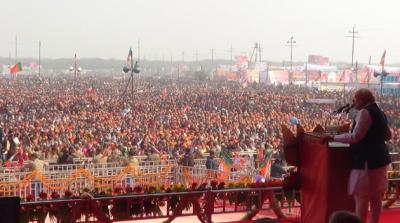
After winning a landslide victory, Narenda Modi is now officially the Prime Minister elect of India. The race was far from close: Modi won by the largest margin in 30 years for a prime ministerial candidate. Alongside Modi, the Bharatiya Janata Party (BJP) is set to win far more than the 272 seats it needs to form a majority, a feat not accomplished since the assassination of Indira Gandhi and the subsequent change in public sentiment towards the Congress – the leaders of the current government and BJP’s bitter rival for decades.
India, much like the US, has a two-party system. The key to such an astonishing victory has many parallels to the US election of Barack Obama in 2008, in which the BJP was able to pull in a record number of Millennials (those 35 and under).
In fact, Millennials play a larger role in Indian politics than they do in US politics. Why? The answer, some analysts say, may be as simple as a faster-growing demographic, the effect of which is compounded by the rapid adoption of mobile technology throughout the country.
The city which perhaps best exemplifies this trend is Bangalore. Bangalore is India’s third-largest city and second-fastest growing, where an astonishing 63 percent of its population is under 25. The influence of such a young population has repercussions throughout the state. “We have no toilets in my home village, but everybody has a smartphone, and we all check every day for what’s happening in the [2014] campaign,” states 22-year-old Hanamanthray Biradar, who is from a city in the same state as Bangalore.
What are young voters’ primary concerns in India? Like youth anywhere, they care about creating jobs, enhancing economic opportunities, and fighting political corruption and social inequality.
The political clout of the India’s youth first gained national media attention following the mass protests of a largely metropolitan middle-class, who fought against persistent corruption in their government and society at large in 2012 and 2013. The turmoil this raised was so potent that it helped spawn a new political party: “Their demands for honest governance and an independent anti-corruption watchdog led to anti-graft legislation and the formation of the AAP,” a national media outlet mentioned of the so-called common man’s party.
Because of its youth support, The AAP (Aam Aadmi Party) has risen as India’s most legitimate third party in many years, in conditions of a two-party system that are comparable to the US in their entrenched funding cycles and institutional barriers.
Although the rise of the AAP demonstrates the influence of young voters’ collective will, it also played a fundamental role in the run up to the national election by framing the youth vote as a political imperative for any party. As a local newspaper mentions, “the AAP’s relevance as a movement cannot be limited to its performance in its first national election. Its style of politics continues to capture the imagination of many young people who were previously armchair critics, fatalistic, or disconnected with the politics of the country.”
Being the underdog for almost a decade, the BJP spent many years preparing for the 2014 election and successfully created the best funded and most expansive youth outreach program to date. The BJP put out many ads to the youth encouraging them to participate via their mobiles in the BJP party as well as the 2014 elections.
More than just modernizing their campaign in the years leading up to the election, the BJP as the opposition party supported many of the student and youth protests that occurred in response to the now-famous New Delhi gang rape case. This terrible incident caught the eye of a nation and then the world when a 23-year-old girl was gang-raped and thrown off a moving bus, later succumbing to her injuries. Throughout the New Delhi rape protests, BJP worked with Bollywood to garner support for speedy justice from the government, and broadcasted widely their role in the affair in videos aimed at youth activists. Well-timed popular actions such as these will help win over the loyalty from both female and first-time voters in years to come, and have already paid off in 2014.
The BJP’s youth outreach, activism and a string of corruption scandals, and a general economic slowdown ultimately turned the tables in the Indian elections, the biggest democratic election in human history. The lesson that can be learned from this is that in any democracy, timing and political maneuvering may be important in winning an election, but so are Millennials.
by Rene Wadlow | May 20, 2014 | Global Cooperation
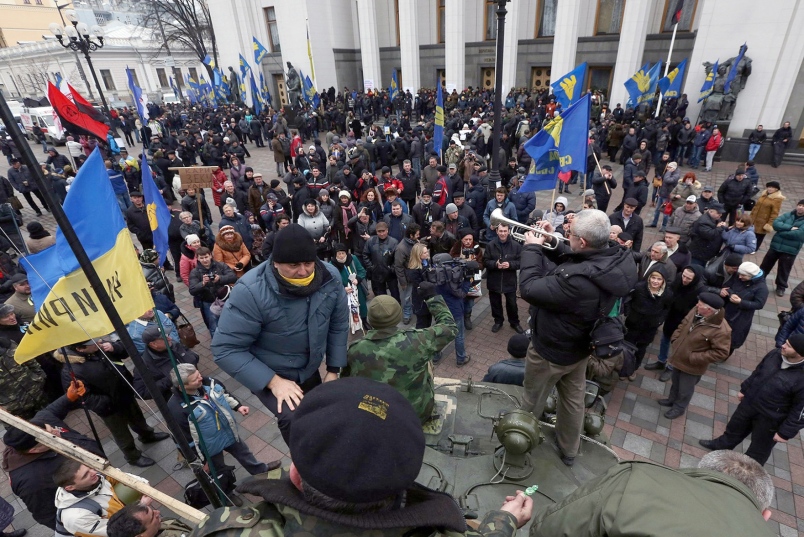
In a previous blog post, I asked the question “Ukraine: A Federalist Future?” At the time, there had been proposals to link a referendum on the structure of the Ukrainian state with the planned 25 May election for President and Parliament. Even 25 May would have been a short time to discuss the structures of the state in a country with sharp tensions and in which different factions were not speaking to each other.
Unfortunately (in my view), factions in Eastern Ukraine decided to hold a referendum on Sunday 11 May in a hastily organized way, with little if any public debate on the consequences of the referendum and strong pressure to vote “yes” on the only option presented. The central government, the European Union and the US have all indicated that they considered the referendum and its results invalid − in fact, illegal.
President Vladimir Putin of the Russian Federation had suggested on the eve of the referendum that it be postponed or cancelled. However, after the referendum, the Russian government indicated that the referendum showed the “will of the people” and that Russia would abide by the results.
Thus, we can ask: what was the subject of the referendum? What are its immediate implications? What role should outside institutions play–Russia, the European Union (EU), the Organization for Security and Cooperation in Europe (OSCE) and the US?
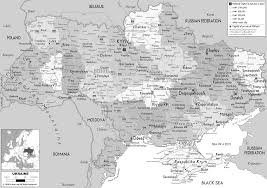
The referendum was organized in only part of eastern Ukraine, in what is newly proclaimed as the Donetsk People’s Republic and the Luhansk People’s Republic. The question posed concerned “yes” or “no” on the Russian word samostoyatelnost, which can be translated as “self rule.” Since there had been no real public discussion, the term could mean − and did mean − different things to different people: everything from greater autonomy within the existing constitution of Ukraine but with a greater recognition of Russian language and culture, autonomy within a to-be-created new Ukrainian federation, an independent state along the lines of Abkhazia, formerly part of neighboring Georgia or a willingness to join the Russian Federation on the model of Crimea. People were discouraged from voting “no,” and few did.
Thus, the 25 May election to be held in the rest of Ukraine will only concern a vote for members of Parliament and President with no referendum on the structure of the country. It is yet to be seen if people in the two “People’s Republics” who wish to do so will be allowed to vote on 25 May and if voting facilities will be created. The socio-political atmosphere remains tense, and there are all sorts of armed groups or militias under unclear command moving around. The central Ukrainian Army has been trying to take back some of the “lost ground.” It is unclear if there will be a halt and a cease-fire in the run-up to the election.
One possible model for the Donetsk and Luhansk People’s Republics are the states created earlier in the Republics at the time of the breakup of the Soviet Union: Abkhazia and South Ossetia in Georgia, Transnistra in Moldova, Nagorno Karabagh still torn between Armenia and Azerbaijan, and the ill-fated Chechen Republic within the Russian Federation. One reason that President Putin suggested not having a referendum in Ukraine may have been his fears that the pattern of holding an unauthorized referendum would spread. There are a good number of peoples in Russia who are unhappy with the current constitutional status of their area and could look to creating a referendum to express their wishes. “You know where things start but not where they end.”1
Ukraine faces real internal problems: political, economic, and social. There is a need for dialogue, trust-building, and reconciliation within the country − all stepping stones to stable internal peace. There is also a need for a de-escalation of international tensions in which the US government can play a role. There may also be possibilities for US non-governmental organizations and academic institutions to play a role in mediation and in facilitating discussion on federal forms of government.2 Switzerland chairs the OSCE for 2014, and the Swiss Foreign Minister Burkhalter has been to both Ukraine and Russia and has proposed some broad de-escalation measures that need to be encouraged and made more specific.
There are also longer-term issues and geo-strategic considerations, but the short period to the 25 May elections remains crucial, and we have to see if some steps for reconciliation can be taken.
Notes
1 For a useful and detailed history of the creation and current status of Abkhazia and South Ossetia see: George Hewitt Discordant Neighbours, A Reassessment of the Georgian-Abkhazian and Georgian-South Ossetian Conflicts (Leiden-Boston: Brill, 2013, 389pp.).
2 The US Institute of Peace had some interesting round tables held in cooperation with the US Department of State’s Policy Planning Staff in 1996, basically concerning the conflict in Chechnya. It would be useful to see what they are doing on the Ukraine situation. The Chechen discussion was only among US specialists. Obviously, there needs to be facilitated discussions among Ukrainians. See Patricia Carley Self-Determination: Sovereignty, Territorial Integrity, and the Right to Secession ( Washington, DC:US Institute of Peace, 1996).
by Josh Spesaison | May 16, 2014 | Climate Justice, Global Cooperation
Climate change is one of the most divisive issues in Congress today. Nearly any vote related to climate change, energy policy, or conservation is split along party lines, which is well documented by Global Solutions’ 2014 Congressional Report Card. Mitch McConnell’s floor statement on May 6th is representative of this partisanship. He belittles the entire issue by stating the President will “talk about the weather at the White House” and “lecture everybody…about low-flow toilets.”
This is the kind of talk that needs to stop. Senator McConnell is not an un-educated man. He cannot seriously equate climate change to everyday weather. He does this purposefully as a political move that panders to the extreme right: the Tea Party.
McConnell also boils down the proposed policy changes to a single punitive tax on energy. However, it’s not that simple, and he knows it. In recent years many Representatives and Senators have proposed laws that would help combat climate change without new taxes. Ending big oil tax breaks, funding renewable energy, and yes, taxing carbon pollution would all have significant impacts on reducing the speed of increasing global temperatures, but these are not the only options.
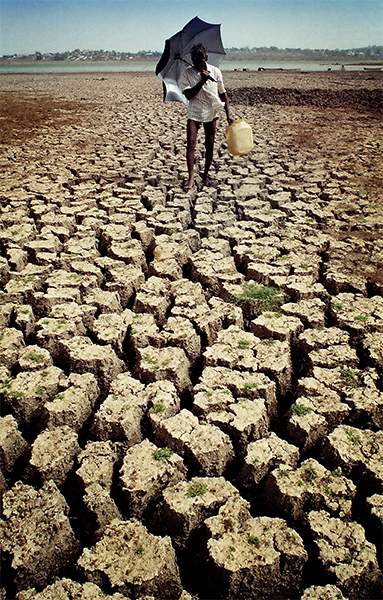
What makes the debate over climate change different now than in years past is that the effects are already happening – something the newest National Climate Assessment makes crystal clear. The report also explains just how dangerous the climate threat is to all sectors and livelihoods. The effects on agriculture have broad implications that could be felt by everyone, including McConnell.
The success and sustainability of agriculture is a national security concern for every nation. If crop yields are decreased by extreme weather, then food security for the nation’s entire population is reduced. Food prices could become much more of a burden for the average citizen.
With every passing day it becomes more important that addressing climate change finds bipartisan support. Republican leaders need to be convinced of the peril of this threat. That’s why there needs to be more focus on the economic symptoms of climate change.
Senator Marko Rubio said, “I do not believe that the laws that they propose we pass will do anything about [climate change], except it will destroy our economy.” However, allowing climate change to go unchecked will certainly destroy the economy.
The report does have several examples of climate and extreme weather events directly correlating to economic hardship. Yet, the report never talks about the economic effects specifically.
In the interest of building bipartisan support, climate change needs to be exampled as a threat to Republican interests as well. Thorough cost-benefit analyses of climate change effects should be brought to the forefront of Congress’ attention. Climate change advocates need to start speaking the language of the opposition if there is to be hope for making the needed policy changes.
by Rene Wadlow | May 3, 2014 | Global Cooperation, Peace & Disarmament
Can tensions in Ukraine be lowered without a federalist-constitutional restructuring of the State?
On Thursday, 17 April 2014, US Secretary of State John Kerry, Russian Foreign Minister Sergy Lavrov, Ukraine’s acting Foreign Minister Andriii Deshchytsia, and the European Union Foreign Policy representative Catherine Ashton met in Geneva for a one-day exchange to address concerns over the situation in Ukraine and to take steps to limit the growing violence within the country.
The meeting came shortly after the Office of the UN High Commissioner for Human Rights warned in a 15 April report that “Misinformation, propaganda and incitement to hatred need be urgently countered in Ukraine to avoid the further escalation of tensions in the country…It is critical for the Government to prioritise respect for diversity, inclusivity and equal participation of all− including minorities− in Ukraine.”
Also on the eve of the Geneva talks, President Vladimir Putin said on Russian television that he had been authorized by Parliament to use military force in eastern Ukraine if necessary, but hoped that it could be avoided. The statement highlighted the possible use of Russian forces, some 40,000 of which are stationed on the Russian-Ukraine frontier.
The Russian Government has denied that the pro-Russian armed militias around occupied government buildings in eastern Ukraine are under their control, begging the question of whom the men in unmarked military uniforms are working for. Turmoil, including the shooting of some of these pro-Russian demonstrators, is growing. In response, NATO forces have been strengthened in Eastern Europe and the Baltic States.
The negotiations stressed the “leading role” that the 100 civilian monitors from the Organization for Security and Cooperation in Europe (OSCE) should play in monitoring the human rights situation including the rights of national minorities and in reporting on the security situation and possible violent incidents.
The concluding statement of the Geneva meeting called for the disarming of “all illegal armed groups” and vacating “all illegally occupied streets, squares and other public places in Ukrainian cities and towns.” However, since the pro-Russian faction has said that they consider the provisional Ukraine Government “illegal,” one must not expect swift results unless there are radical changes in the near future.
One possible way to lower tensions on a longer-term basis is to start discussions on a federal decentralized government structure for Ukraine that would not divide the country, but would foster local and regional autonomy. Both a 13 April statement from the current President of Ukraine and authorities of the Russian Federation have raised the possibility of new federal structures to be approved by referendum. At a press conference following the Geneva meeting, Sergey Lavrov said that the Ukrainian crisis must be resolved by the Ukrainians themselves and that they should “start a nationwide national dialogue within the framework of the constitutional process, which must be inclusive and accountable.”
Efforts of both governments and non-governmental organizations must be undertaken to create opportunities for such a creative constitutional dialogue. World citizens who have a long history of reflection on federalist approaches in conflict resolution have warned against simplified concepts in the Ukraine discussion. Federalism is not a first step to the disintegration of the Ukraine, but it is not a “magic solution,” either.
Government structures are closely related to the aims that people wish to achieve. The aims of the Ukrainians are multiple. Open discussion is necessary to clarify these aims and to create structures to facilitate them. Those outside Ukraine, both governments and NGOs, must facilitate this dialogue so that common interests may be found and current tensions reduced.
by Josh Spesaison | Apr 28, 2014 | Global Cooperation, Peace & Disarmament
On April 3, 2014, the United States ratified three treaties, all of which help protect oceanic wildlife and eliminate the black market fishing industry. Black market fishing is an enormous industry that produces up to $23.5 billion each year–that’s some serious competition for fishermen who play by the rules. Not only that, but pirate fishers commonly use banned fishing gear, slaughter unwanted fish and other sea creatures, and participate in drug smuggling and human trafficking.
The Convention on the Conservation and Management of High Seas Fishery Resources in the South Pacific Ocean and its sibling convention by a similar name for the North Pacific Ocean are two regional treaties that have been adopted. These conventions have set up monitoring groups for each region that will implement conservation measures to protect the marine wildlife and sustain the legal fishing industry.
The largest of the three treaties, commonly known as Port State Measures Agreement, is not in effect due to the lack of participating coastal countries. The agreement will only go into effect once 25 countries have ratified; only 11 have ratified so far. This treaty would require ports to refuse products offered by any vessel suspected of illegal fishing. Widespread adoption of this treaty would strangle the profits of illegal fishing and bring a significant portion of the entire fishing industry back in line with conservation regulations.
The United States has hit a rough patch in ratifying multilateral treaties, to say the least. There’s such a strong, well-funded and integrated opposition to international law in the US that a major international treaty has not been ratified since 1997. Yes, you might say that there is a war on international law.
So when the Senate actually does ratify a treaty, it deserves some attention. However, I found only one mention of the US ratification of this treaty in major media – by The New York Times. Does this suggest that the high profile and subsequent lobby interests of other global treaties cloud Senators’ judgment? I think so.
By ratifying the Port State Measures Agreement, the U.S. is demonstrating its commitment to maintaining open seas and the rule of law. Now that the U.S. has taken leadership on this issue, hopefully more nations will see the value of the legislation. While this recent development is good news, it bewilders me all the more that the Senate refused to adopt the Disability Treaty. Maybe these fishing agreements will loosen the grip treaty opponents have on conservative senators and pave the way for future ratification efforts.