
Originally published on the CGS blog on May 3, 2014.
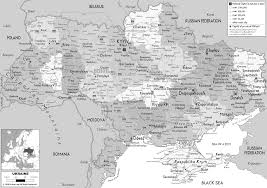
Can tensions in Ukraine be lowered without a federalist-constitutional restructuring of the State?
On Thursday, 17 April 2014, US Secretary of State John Kerry, Russian Foreign Minister Sergy Lavrov, Ukraine’s acting Foreign Minister Andriii Deshchytsia, and the European Union Foreign Policy representative Catherine Ashton met in Geneva for a one-day exchange to address concerns over the situation in Ukraine and to take steps to limit the growing violence within the country.
The meeting came shortly after the Office of the UN High Commissioner for Human Rights warned in a 15 April report that “Misinformation, propaganda and incitement to hatred need be urgently countered in Ukraine to avoid the further escalation of tensions in the country…It is critical for the Government to prioritise respect for diversity, inclusivity and equal participation of all− including minorities− in Ukraine.”
Also on the eve of the Geneva talks, President Vladimir Putin said on Russian television that he had been authorized by Parliament to use military force in eastern Ukraine if necessary, but hoped that it could be avoided. The statement highlighted the possible use of Russian forces, some 40,000 of which are stationed on the Russian-Ukraine frontier.
The Russian Government has denied that the pro-Russian armed militias around occupied government buildings in eastern Ukraine are under their control, begging the question of whom the men in unmarked military uniforms are working for. Turmoil, including the shooting of some of these pro-Russian demonstrators, is growing. In response, NATO forces have been strengthened in Eastern Europe and the Baltic States.
The negotiations stressed the “leading role” that the 100 civilian monitors from the Organization for Security and Cooperation in Europe (OSCE) should play in monitoring the human rights situation including the rights of national minorities and in reporting on the security situation and possible violent incidents.
The concluding statement of the Geneva meeting called for the disarming of “all illegal armed groups” and vacating “all illegally occupied streets, squares and other public places in Ukrainian cities and towns.” However, since the pro-Russian faction has said that they consider the provisional Ukraine Government “illegal,” one must not expect swift results unless there are radical changes in the near future.
One possible way to lower tensions on a longer-term basis is to start discussions on a federal decentralized government structure for Ukraine that would not divide the country, but would foster local and regional autonomy. Both a 13 April statement from the current President of Ukraine and authorities of the Russian Federation have raised the possibility of new federal structures to be approved by referendum. At a press conference following the Geneva meeting, Sergey Lavrov said that the Ukrainian crisis must be resolved by the Ukrainians themselves and that they should “start a nationwide national dialogue within the framework of the constitutional process, which must be inclusive and accountable.”
Efforts of both governments and non-governmental organizations must be undertaken to create opportunities for such a creative constitutional dialogue. World citizens who have a long history of reflection on federalist approaches in conflict resolution have warned against simplified concepts in the Ukraine discussion. Federalism is not a first step to the disintegration of the Ukraine, but it is not a “magic solution,” either.
Government structures are closely related to the aims that people wish to achieve. The aims of the Ukrainians are multiple. Open discussion is necessary to clarify these aims and to create structures to facilitate them. Those outside Ukraine, both governments and NGOs, must facilitate this dialogue so that common interests may be found and current tensions reduced.


