by Colleen Chiochetti | Apr 23, 2014 | Global Cooperation
Politico Magazine put out an article last week by James Bruno about how US diplomats stack up to Russian diplomats. Based on his experience as a foreign service officer, he concludes that America’s diplomats are woefully inferior in experience to their Russian counterparts.
Only one ambassador to a major NATO ally, Turkey, is a career diplomat — Mr. Francis Ricciardone. Of the remaining 25 filled U.S. ambassadorships to NATO countries, three quarters are political appointees. (Two of these posts are currently unfilled, one to our major NATO ally, France. My colleague Kevin Burke wrote on the backlog of nominees for diplomatic posts last month.) Eleven of these secured their position by giving big money to Obama’s campaign, including our ambassadors to Germany and the UK. In contrast, all but two of Russia’s ambassadors to NATO countries are career diplomats.
By Bruno’s calculations,
The total number of years of diplomatic experience of Russia’s 28 ambassadors to NATO nations is 960 years, averaging 34 years per incumbent. The cumulative years of relevant experience of America’s ambassadors are 331, averaging 12 years per individual. Russia has 26 NATO ambassadors with 20-plus years of diplomatic service; the United States has 10.
These statistics are very worrisome in a world where nations can no longer act unilaterally; a world where multilateralism increasingly rules the day. With unskilled and untrained diplomats US influence will continue to wane as others rise.
TV producers and computer executives, “who won their positions through the exchange of cash or cronyism” (as described by Bruno) are not the diplomats the U.S. needs. We need seasoned professionals at all levels who can navigate the complex waters of multilateral, international diplomacy. Without them the US will lose out to nations that churn out strong diplomats like Germany and Russia, who, as Bruno put it, were trained to rely on an arsenal of “blackmail, vodka, and the threat to kill” to reach their ends.
by Colleen Chiochetti | Apr 18, 2014 | Global Cooperation, Peace & Disarmament
Yesterday saw progress on ending the crisis in the Ukraine with a diplomatic agreement reached in Geneva.
After ongoing talks between officials from the Ukraine, Russia, the United States and the European Union, it was agreed that the situation in Ukraine must de-escalate. The agreement calls for all illegal military formations in Ukraine to be dissolved and everyone illegally occupying buildings to be disarmed and to evacuate. There is added amnesty for all anti-government protesters under the agreement as well. The Organization for Security and Cooperation in Europe (OSCE) will moniter the de-escalation efforts.
Beyond this general agreement, however, much is left unclear. I think most of the world with access to the Internet could deduce that the situation in Ukraine needed de-escalation even without going to Geneva. And we could reasonably assume that for this to happen, violence and occupation of buildings needed to stop. This agreement leaves much to be desired in the realm of resolving the conflict in the region and stabilizing the government and economy of the Ukraine. Already today there are reports that the protestors in East Ukraine are refusing to disperse, showing the cracks in the weak facade of this “deal.”
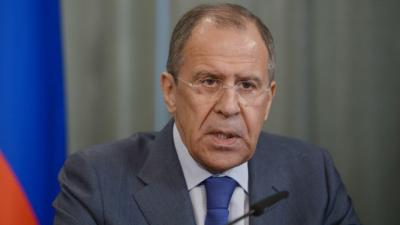
Less certain is whether or not Russia will actually support the agreement or agree simply to save face, but not act. Putin is an unpredictable leader and has shown that he has no qualms about bending the rules to ensure that he remains in control. Hopefully Russian Foreign Minister Lavrov’s assent to this agreement will hold true and the Russian government will remain committed to ending the conflict with the Ukraine, but there is no certainty in dealing with Vladimir Putin.
To understand this you need not look any further than the situation at hand. Three months ago no one would have believed that the protests in Maidan would lead to the toppling of the Ukrainian government, let alone the annexation of Crimea by Russia. We can only be certain that Russia, the EU, and the US will protect their own interests and hope that this does not come at the expense of the nation and people of Ukraine.
by Jake Keyel | Apr 17, 2014 | Global Cooperation, Peace & Disarmament
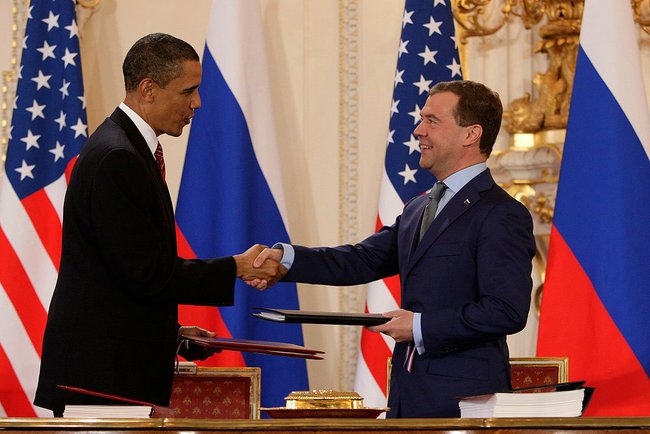
Last week, the US administration of Barack Obama announced that it would reduce the number of deployed US Intercontinental Ballistic Missiles (ICBMs) from 450 to 400. The silos that housed these nuclear weapons will be maintained, unfortunately, and the 50 weapons will be stored rather than dismantled. The reduction comes as part of the United States’ obligations under the 2010 New Strategic Arms Reduction Treaty (New START) with the Russian Federation.
The treaty requires both parties to limit their deployed strategic nuclear warheads to 1,550 and reduce their nuclear weapons delivery systems to 800 (700 deployed) by 2018. As of October, 2013, the Russian Federation had already accomplished this reduction with 473 reported deployed delivery systems. The US currently has 886 deployed and non-deployed delivery systems, still above the 2018 goal.
As I’ve written before, nuclear weapons are a grave threat to international peace and security. Near misses have devastating potential as do the testing and of course actual use of nuclear weapons. As the on-going consequences of the Chernobyl, and more recently Fukushima, nuclear reactor accidents show, even peaceful nuclear power can pose great risks. As a result, any and all reduction in total worldwide nuclear stockpiles is a step forward. But, bilateral agreements between the world’s two largest nuclear arms holders, while promising if they do actually further reduce nuclear stockpiles, should only be part of the equation.
Bilateral and unilateral actions, such as the 1981 Israeli attack on Iraq’s Osirak nuclear reactor, do not necessarily improve security and in fact often lead to more danger. This is particularly important to remember as the threat of sanctions and force against Iran by the United States and Israel continues even as negotiations over its nuclear program are on-going. Or consider the likely possibility of a new Indian government with a provocative stance towards nuclear first strikes. International cooperation is essential to reduce the perception that such actions and positions are necessary and it is multilateral, international arms treaties, such as the Nuclear Non-Proliferation Treaty (NPT), that can provide the framework for movement towards a nuclear free world.
The NPT entered into force in 1970, yet has not accomplished its goal of eliminating nuclear weapons. As a result, we can debate whether we need a new international non-proliferation treaty or if signatories simply need to fulfill their commitments under the existing international treaty. Clearly in either case new strategies for encouraging nations to fulfill their obligations are needed. The increasing number of regional Nuclear Weapon Free Zones could be a promising strategy towards the worldwide goal and we need to see a Nuclear Weapon Free Zone in North America, just as we do in the Middle East or East Asia.
The fact remains that the only way forward is to continue to pursue the elimination of nuclear weapons and the dismantling of all nuclear stockpiles. There is no doubt that while states may pursue nuclear weapons for the perceived deterrence capability they seem to provide, in the long run nuclear weapons do not make anyone safer. In fact, their continued existence keeps the world’s people on the razor’s edge of survival and destruction.
by Colleen Chiochetti | Apr 16, 2014 | Global Cooperation, Human Rights
The top headline on BBC News yesterday read “Ukraine begins ‘anti-terror action’.” “Terror” evokes a strong reaction from most Americans as they think of 9/11, leading some to call for US action in the region. However, despite the months of nonstop news coverage, many of the Americans making these demands do not know where the Ukraine is located, let alone what they are calling for action against. And the possible repercussions of US military intervention make this call to action an improbable option for the US.
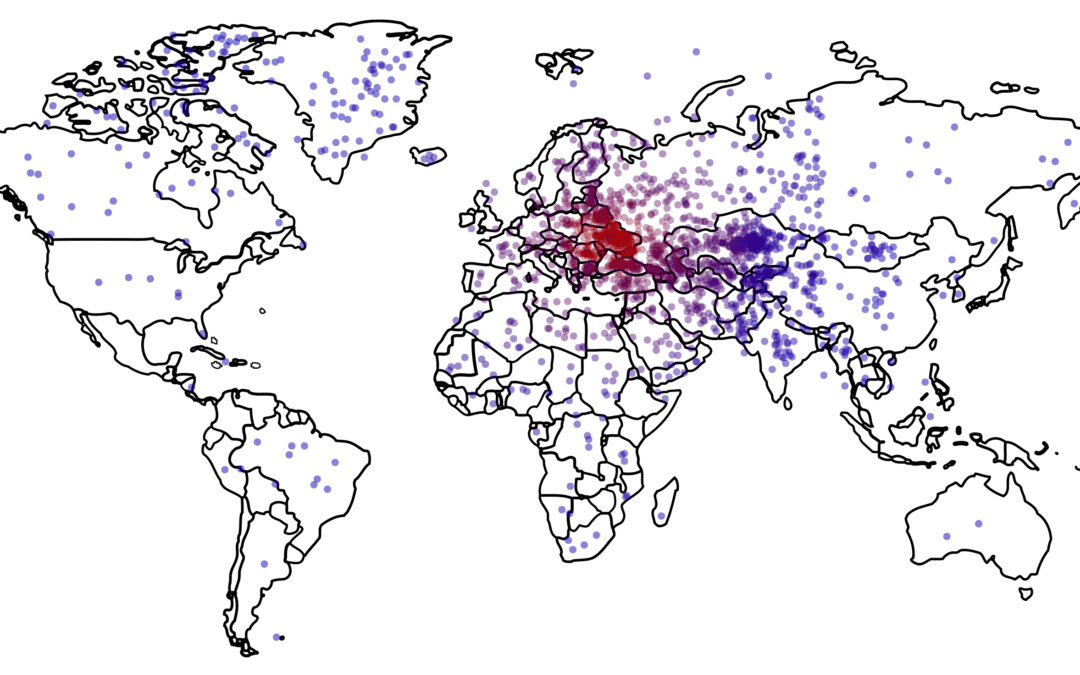
The limited knowledge on the Ukrainian situation was very apparent in an article posted in The Washington Post last week detailing a poll which asked Americans to locate Ukraine on a map and then asked them a few questions about the situation and possible moves for the United States. Some of the guesses were so far off as to put Ukraine in the middle of the US, in Australia, in the middle of the Pacific, and surprisingly often in Greenland. The survey showed that the further the guess was from the actual location of Ukraine, the more likely the person was to support US military intervention. Even controlling for demographic factors and general foreign policy stances, the surveyors concluded that “the less accurate [the] participants were, the more they wanted the U.S. to use force, the greater the threat they saw Russia as posing to U.S. interests, and the more they thought that using force would advance U.S. national security interests.”
This illustrates a large gap between public and professional opinion on this issue, as many foreign policy advisors and academics are stressing that US or NATO military intervention in Ukraine is not the way to deal with the situation. So far the US has acted against Russia through sanctions, not through military force. Without clear aggression from Russia and multilateral support, it is unlikely that the US will act on its own. NATO is also unlikely to respond with a show of force because Ukraine is not a member and most foreign policy officials are cautioning against NATO action at this stage.
So why are some Americans championing military action? Is it the invocation of the idea of terrorism? Is it a response to the legacy from the Cold War era that labels Russia as the enemy? Or is it just ignorance? If we want to stay out of military entanglement in Eastern Europe, let’s hope this idea, no matter what the motive, does not become the consensus of a largely uninformed American public.
by Don Kraus | Apr 14, 2014 | Climate Justice, Global Cooperation
Ben Franklin said it best—nothing is certain, “except death and taxes.”
Like most Americans, we submit our 1040s to maintain the health of our nation. However, we’d personally rather decrease our income tax and instead pay a fee that reduces carbon pollution and could preserve the planet.
The carbon-intensive oil, gas, and coal industries are stoking climate change. According to a new UN report, the threats to our civilization are enormous. Crop failures, the top concern in the UN’s report, will cause widespread starvation in all parts of the world. Countries will face a cascade of destabilizing events: severe water shortages, heat waves, floods, droughts, wildfires, intense storms, rising sea levels and other catastrophes on an unprecedented scale. Civil wars and conflicts between nations will increase as people compete for scarce natural resources.
The good news is that while it is too late to avoid climate change — it’s already happening — humanity can still temper its force. One of the simplest ways to slow the pace of climate change is by levying a fee on greenhouse gas emissions.
Putting a price on burning oil, gas, and coal that reflects the damage inflicted on the environment will make renewable energy alternatives (like solar, geothermal, and wind) and energy-reducing investments more competitive.
Our friend Alan Rushforth lives near Philadelphia and started a small solar-powered water-heating business a few years ago. Even with state and federal subsidies, it took Rushforth Solar’s customers five to seven years to break even compared with the cost of installing natural gas heaters, so it was a tough sell.
“If there were a 10 to 15 percent fee on carbon pollution, with a schedule of more increases to come, it would light a fire under all sorts of energy saving technologies and behaviors,” Alan said. “Not just hot water solar.”
Many of the biggest global corporations — including leading oil and gas companies — agree with our friend. They not only anticipate a price on carbon, but also have already alerted their shareholders about this possibility.
Carbon taxes are working in places like British Columbia. The Canadian province launched a revenue-neutral carbon tax in 2008, placing a fee on emissions generated from burning fuel. What happened?
The impact was huge. Fossil-fuel consumption dropped by almost 19 percent per capita compared with the rest of Canada. Meanwhile the province maintains strong employment and its economy is strong.
Climate change is at a tipping point, and decisions made during the next few years will determine how devastating it will really get. An upcoming UN climate summit and another global meeting in Paris in 2015 must produce a new pact on carbon pollution. Taxing carbon here in the United States would pave the way for a global agreement on the price of carbon that could cut emissions and spur all nations to adopt new ways to protect the environment.
Our leaders must do more to address climate change, but they can’t solve the problem alone. Secretary of State John Kerry drove the urgency home during a speech in Indonesia.
“Even if every single American got on a bicycle tomorrow and carpooled…used only solar panels to power their homes [and] planted a dozen trees…that still wouldn’t be enough to counter the carbon pollution coming from the rest of the world,” Kerry said. “We need a global solution.”
So while death and taxes are certain, what kind of taxes we pay and how secure they make us are not. It’s time to give carbon taxes a shot. Future generations will thank us for taking this step before it’s too late.
Coauthored by Mona Funiciello, an independent consultant who specializes in climate change policy and strategy.
Distributed via OtherWords.org
by Josh Spesaison | Apr 14, 2014 | Global Cooperation, United Nations
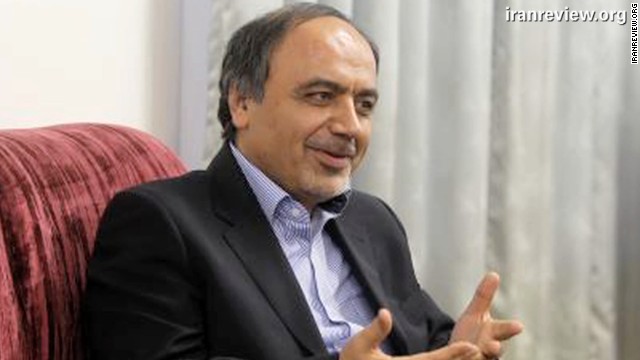
The recent move by the Obama administration to bar Hamid Aboutalebi, nominated to be the Iranian ambassador to the UN, from entering the U.S. weakens the United Nations. By denying Aboutalebi a visa to access UN Headquarters in New York City, the United States is effectively commandeering UN policy and forcing the world organization’s proceedings to bow before U.S. national security interests.
The denial ignores the 1947 U.S./UN agreement that the U.S. will not interfere with diplomatic rights, the only exception being if the diplomat’s visit raises national security concerns.
The administration and Congress has overreacted to Aboutalebi’s role as a translator in the 1978-61 Iran Hostage Crisis. Aboutalebi, 22 during the crisis, has since lived the life of a career diplomat. He’s been the ambassador to Italy, Australia, Belgium, and the European Union. If he were a “terrorist”, as Senator Cruz labels him, then these countries and the EU would certainly never had allowed him to enter their territory.
Our leadership, in favor of negotiating nuclear capabilities with Iran or not, is still trapped by the perception of Iran as the enemy. I do not believe Aboutalebi is an enemy of the United States. However, what’s more concerning is the willingness of the U.S. to use its position as host of the UN headquarters to unilaterally satisfy national interests. The United States has no right to interfere with Iran’s choice for UN ambassador. No other nation in the world has this unique power over UN member states, given the location of UN Headquarters. The U.S. must restrain its policy to allow the world organization operate naturally.