by Jake Keyel | Mar 27, 2014 | Climate Justice, Global Cooperation
Saturday, March 22nd, was World Water Day. Recognized by the United Nations since 1993, World Water Day aims to raise awareness of the issues surrounding the conservation and development of water resources as well as practical policy options to address those issues. Previous years have focused on issues such as “Water Quality” and “Water and Food Security.” The 2014 day was dedicated to the “nexus” of water and energy.
It is easy to forget just how interconnected these two issues are.
Of course it takes energy to extract, treat, and distribute water; “about 8% of the global energy generation is used for pumping, treating and transporting water to various consumers.” But it also takes great quantities of water to produce energy, particularly certain types such as hydroelectric, nuclear, and thermal. UN Water also estimates that a rising demand in biofuels could significantly increase the demand for water in energy production.
Overall, we will face an estimated 60% increase in demand for energy over the next three decades. Such a rise in demand puts extra pressure on an already strained world water system; as many as 763 million people already lack access to “improved water sources.” Clearly, the priority is to ensure that these three quarters of a billion people have access to better sources of water. And a lot of progress has been and continues to be made on this front in the last 25 years. In 2012, we reached the Millennium Development Goal of halving the number of people without access to safe water.
But there is a limited amount of water on the planet and only 3% of it is fresh water. As a result, conservation is an essential tool to address the growing need for access to clean and safe water. We in the United States can do much better in this regard; our per capita water usage is more than double that of the world average. And even in a country like the US there are those at risk of water shortages. Those of us who live in wealthy countries like the US must change our wasteful habits on a personal level as well as pressure our governments to enact policies that will conserve our limited water resources.
Conservation is also critically important to address the anticipated spike in energy demand. A huge portion of the energy produced and consumed currently is wasted. Again, the United States is the wrong kind of leader in this area. Not only is our per capita consumption well above the worldwide average, 61% of all energy produced in the United States is wasted. Lowering our current usage by reducing this wastage is critical to meeting worldwide energy needs in the decades to come. Again, this will come through personal conservation, efficiency standards such as eliminating incandescent light bulbs, and transitioning to new energy technologies.
Not only are the fossil fuels that we rely on polluting and consume a lot of water, they are extremely inefficient. Renewable energy sources such as solar and wind power consume much less water while at the same time producing cleaner energy. Despite this, worldwide investment in clean energy was only $254 billion in 2013, an 11% decrease from 2012. Worldwide military spending, on the other hand, was an unbelievable $1.7 trillion in 2012.
There is no doubt that the world’s water and energy needs will continue to increase as the population grows and developing countries become wealthier. As a result, water and energy conservation are not a choice; they are an absolute necessity. It is important to remember that it is a luxury to have what seems like unlimited water in our faucets and power in our outlets. But these resources are not unlimited and we cannot wait to start doing our part.
by Colleen Chiochetti | Mar 14, 2014 | Global Cooperation, Peace & Disarmament
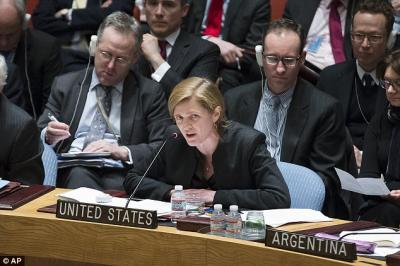
In the wake of continued threats of invasion into the Ukraine by Russia, Western diplomats are drafting Security Council resolutions to take action against Russia that would effectively isolate Moscow. While this is a noble effort in a string of attempts to punish Russia for its threatened military aggression, the Russian veto automatically makes any resolution dead in the water. The proposed Security Council resolution would urge respect for Ukraine’s sovereignty and territorial integrity, a fundamental principle under the UN Charter.
If any of these draft resolutions were to make it to voting with enough sponsors, Russia would automatically exercise their veto. This begs the question if the United Nations could actually effectively act to keep Russia from using military force. And if they cannot who will?
Yes there has been a lot of talk about sanctions and a whole array of Western leaders have condemned Putin’s actions. However there have been no moves as of yet. The West is essentially in a ‘Mexican stand-off’ with Russia seeing who will blink first when the referendum to make Crimea a part of Russia comes to a vote this Sunday.
An op-ed in The Guardian on Tuesday by Simon Jenkins said, “At least the west is agreed on the Ukraine crisis. It agrees that something must be done to stop Russia’s re-occupation of Crimea, and it agrees that nothing can be done to stop it.” Jenkins calls this the paradox of foreign policy when leaders know they must act to show strength to their constituents and other countries but for all their speeches and phone calls and think tanks, the bite rarely matches the bark.
This is exactly what is happening in the United Nations. The western powers must be seen moving against military aggression that threatens sovereignty, but realistically there is little hope of actual action when Russia holds the power of the veto.
by Kevin Burke | Mar 11, 2014 | Global Cooperation
Last week The Washington Post reported that an unusually large number of ambassador appointments are being held up by the U.S. Senate, threatening both American interests abroad and a variety of humanitarian interests around the world. This backlog is unacceptable, and the Senate needs to act immediately to ensure the United States embassies are fully staffed.
First, a quick recap: as of last week, 33 nominations to ambassadorships around the world have not been voted on by the U.S. Senate, along with several other key foreign service posts. These include ambassadors to Canada, Saudi Arabia, Yemen, Kuwait, Argentina, Cameroon, Switzerland, Bosnia, and New Zealand, among many others. They range from the U.S.’s most important allies to key players in crises in the Middle East and Africa to strategic partners in Europe, Latin America, and the Pacific. Half the ambassadorial nominations have been waiting for over six months, apparently held up by the use of the “nuclear option” to end the use of the filibuster on most presidential appointments. It seems a new, less formal filibuster has developed.
Why does this matter? After all, recent hearings have shown some nominees to be rather ill-prepared for their postings; many ambassadors traditionally have been celebrities or wealthy political donors, like the recently departed Shirley Temple Black. Do they make that big a difference?
Ambassadors are decision-makers and run the daily lives of embassy staff. They play an important role in relationships with foreign governments, helping to coordinate treaties and align policy goals. When key allies like Canada, Saudi Arabia, and Kuwait have no ambassador, how can we expect those allies to take our diplomatic entreaties seriously?
But it gets worse. Cameroon, for instance, is a key destination for refugees fleeing Central African Republic. Without an ambassador making decisions, guiding policy, and explaining that the lives of these refugees matter, it’s more difficult for the U.S. to ensure that the refugees are treated responsibly. Saudi Arabia is a key player in the Syrian crisis; without an ambassador in Riyadh, it is harder to make sure they fund rebels responsibly, help refugees, and stay out of conflicts with Iran. Most importantly, perhaps, diplomacy is about building coalitions and working with governments to get help on various international policy matters, such as war and peace, international trade, and many more. Ambassadors at each posting communicate with those governments to verify that each of these goals can be met.
And this is just the U.S. government side of the coin. Each foreign government expects to have a designated person to whom it can communicate its priorities. Each American abroad wants assurance she has someone who can protect her interests in that state. Businesses and NGOs must be able to coordinate their activities with an embassy that has a chief administrative officer.
Instead, the U.S. Senate dawdles, playing blame games about filibusters and nuclear options.
Diplomacy is the key principle to accomplishing goals in international relations. Sometimes this is accomplished using a Secretary of State or a Deputy Secretary of State, and occasionally Presidents contact Presidents to talk about the most serious issues.
Relationships with our allies abroad are maintained through our vast network of embassies and ambassadors. Diplomacy is preserved through the actual human beings on the ground doing the daily work of state dinners, one-on-one conversations, and just showing that the United States cares enough about these countries to have a senior diplomat in the country every day.
The U.S. Senate needs to start confirming these ambassadors immediately. Both the interests of the United States and the goals of the broader global community demand it.
by Andrew Hanauer | Mar 8, 2014 | Global Cooperation, Global Justice
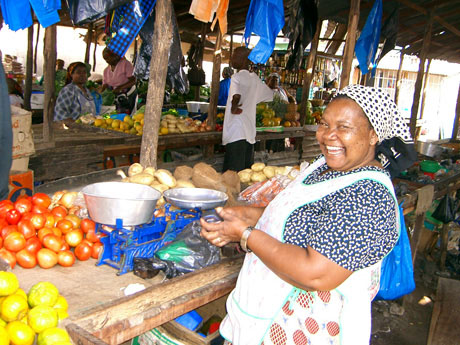
A company called Zambia Sugar, owned by a European corporation that operates in Zambia, has made an average profit of US$18 million a year over the past five years. During that same time, a Zambian woman named Caroline Muchanga has worked in a market in the same town in which the sugar company operates. Caroline sells drinks, sugar, and other assorted items, and works approximately 15 hours a day, seven days a week. On a good day, Caroline makes about $4 in income – about $1,400 a year. Her two daughters attend a volunteer-run school because the government schools are too costly and government subsidies inadequate.
The question that the non-profit Action Aid asked in its report on Zambia Sugar is simple yet astounding: who pays more in taxes to the Zambian government? Zambia Sugar or Caroline?
From 2008-2010, the answer was, resoundingly, Caroline. During that time, Zambia Sugar paid no taxes to the Zambian government. From 2011-2012, Zambia Sugar paid a tax rate of .5% of its income, roughly 90 times lower a rate than Caroline pays.
What is remarkable about this situation is that Zambia Sugar is doing nothing illegal.
Zambia Sugar routes its profits through a dizzying maze of international tax havens and subsidiary companies that includes stops in Ireland, Jersey, Mauritius, and South Africa. Doing so both reduces its taxable profits in Zambia and avoids taxes usually levied on the types of foreign transactions the company uses to avoid taxation in the first place. The details are complicated, the result is simple, and the impact on the world’s most vulnerable citizens is profound.
The British charity Christian Aid estimates that poor countries lose approximately $160 billion a year to corporate tax avoidance, while official development assistance (ODA) from the wealthiest governments in the world was just $125 billion in 2012. Those statistics are of particular relevance to some of the world’s poorest people who rely on tax revenues from their own countries to fund basic health and education services. In the very same district which Zambia Sugar operates, for example, patients wait hours to see a medical staff that is severely overtaxed and consistently short of medicines because the government cannot afford more. The clinic can’t reach people in the more rural areas as there is not enough funding to fuel medical vehicles. In this district, two children die every month of preventable malnutrition.
Meanwhile, corporations aren’t the only entities using tax havens to hide financial activity. Such havens also allow criminals, terrorists, and the perpetrators of financial fraud to launder money and avoid accountability. Shutting down these secrecy havens is a policy that cuts across ideological and political lines and works to usher in a global economic system that works better for the vast majority of the world’s people.
There are steps that the international community can take to tackle this issue. Last year’s G8 featured a historic declaration calling for such cooperation. The G20 in Russia several months later continued the momentum by calling for rules that would make it easier to force corporations to pay taxes in the county in which they are doing business. Automatic exchanges of information between G20 countries would improve transparency and communication. The Office of Economic Cooperation and Development (OECD) recently announced that the G20 had endorsed a plan to address tax avoidance schemes and would discuss implementation at the G20 meeting this September in Australia.
These are practical steps toward ensuring companies like Zambia Sugar contribute their fair share, so Carolina doesn’t have to make up the difference. These efforts deserve our support.
by Donna Park | Mar 3, 2014 | Global Cooperation, World Federation
Dear Jake,
Now you are 3 years old! It is a delight to watch you grow up and I admire the way you “keep an eye on” your twin sisters Annette and Clair. I’m so proud of the way you can put together your jigsaw puzzle map of the world all by yourself. I want to transform our world so that children everywhere can be healthy, happy, and caring towards others.
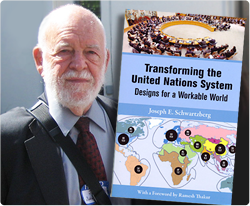
My last letter concluded with a sentence “There is much to be done to turn the United Nations into a strong, democratic, federation of nations.” I am reading a new book about this by a friend of mine, Professor Joe Schwartzberg, Professor Emeritus from the University of Minnesota. (Transforming the United Nations System: Designs for a Workable World.) Joe has done a lot of work creating a comprehensive plan to transform the United Nations so that it works better to solve the global problems facing planet earth. Joe shares my vision that we need systems in place to create and maintain world peace through world law with freedom and justice for all.
Joe’s first two suggestions involve what could be described as a legislative branch of a United Nations system. First he describes how the existing General Assembly (GA) should modify its voting so that the vote of each nation is weighted to take into account the size of its population, the amount of money it contributes to the United Nations budget, and the sovereign equality of nations. With weighted voting, Joe proposes that the GA could pass binding resolutions which are needed to move us towards the establishment of law for global issues like world peace and security.
Joe’s 2nd suggestion is to create a World Parliamentary Assembly (WPA) as part of the UN system in which the people of the world would be represented rather than the nations (as is the case in the GA). This would create a 2 house legislative branch for the UN similar to the way the United States has 2 Houses in our Congress. Joe has a very comprehensive plan for “baby stepping” our way towards a WPA. You’ll understand “baby steps” better when Clair & Annette start walking later this year!
Joe suggests that the number of seats in the WPA would be determined by a formula similar to the weighted voting described earlier for the GA. The number of seats for each nation would take into account the size of the population, the amount of money they contribute to the UN budget, and the sovereign equality of nations. Joe suggests that the seats be filled by representatives of political parties reflecting the parties in each country so that, for example, the USA would have both Republicans and Democrats seated in the WPA. In baby step 1 Joe suggests that the Nations appoint representatives to the WPA and they have only an advisory role. In step 2 there would be popular, fair, democratic elections within each nation and increasing legislative authority so that working together with the GA, the WPA would form binding global legislation in important matters of global concern. Joe has a vision for step 3 of a maximally democratic system in which national boundaries are often ignored and the number of people represented by each WPA member is relatively similar everywhere. This step might not happen even in your lifetime, if at all.
There are many exciting possibilities that could come out of these changes in the UN. It could lay the foundation for the establishment of global laws to help bring peace to our world. It also will help promote democracy in nations where it is lacking, by exposing all nations to democratic processes and elections.
Lots of good things for us to think about while you put together your jigsaw puzzle map of the world.
Love,
Gram
by Colleen Chiochetti | Feb 27, 2014 | Global Cooperation, Peace & Disarmament
The history of the Ukraine is one of East versus West, sitting as it is on the border between westernized Europe and a more easterly focused Russia. The root of the nation’s name, край (krai), meaning edge, reflects this duality. The Ukrainian people, especially in recent decades, have struggled to find their place in this precarious position on the edge between the Russian and European spheres of influence.
In November 2013 President Yanukovich signed a deal with the Russian government rather than with the European Union. The decision tightened ties with East at the expense of closer relations with the West. It did not sit very well with many Ukrainians who viewed closer ties with the EU as key to strengthening the country’s economy and reducing the influence of Russia.
The resulting protests and violence and the collapse of the Russian-backed government this week have dealt a blow to Putin’s aspirations in regard to the Russian-Ukrainian relations and the goal of renewing Russia as a leading power in both Europe and Asia. Since the fall of the Soviet Union, the Russian government has struggled to maintain their influence over the former Soviet territories, particularly the Ukraine, with which there is a deep political and cultural history. Russia has always been wary of Western pressure seeping into their sphere of influence and now Putin’s government is faced with an unevenly divided Ukraine with the majority embracing the West.
Finally addressing the upheaval, Russian Prime Minister Medvedev discredited the interim government that took over after Yanukovich fled the country, calling it “the result of an armed mutiny” that threatens the legitimacy of every branch of power. This “armed mutiny” however, only represents the western regions of the nation. Those regions have garnered the most media attention, while the Eastern areas favor ties with Russia over those with the EU.
These pro-Russian areas in the East and along the Crimean peninsula are majority ethnic Russian and the protests there have been against the ousting of Yanukovich. A citizen from the eastern city of Kharkiv called the Western protests a “total attack on the rights of the Russian-speaking population [and] that laws are being adopted that threaten all those who do not accept fascism and Nazism.” This unrest is raising fears that the Ukraine could split apart along this east-west divide. Interim President Turchynov has even issued a warning about the danger of possible separatism movements.
The continued uncertainty could also lead to a default of the Ukraine’s international debt as collapse of the Russian deal drives down the value of the country’s currency and questions about regional access to the oil pipelines running through the country go unanswered.
With so many issues resting on a country grappling with the East and West, the future of the Ukraine itself remains very uncertain.