
Originally published on the CGS blog on April 16, 2014.
The top headline on BBC News yesterday read “Ukraine begins ‘anti-terror action’.” “Terror” evokes a strong reaction from most Americans as they think of 9/11, leading some to call for US action in the region. However, despite the months of nonstop news coverage, many of the Americans making these demands do not know where the Ukraine is located, let alone what they are calling for action against. And the possible repercussions of US military intervention make this call to action an improbable option for the US.
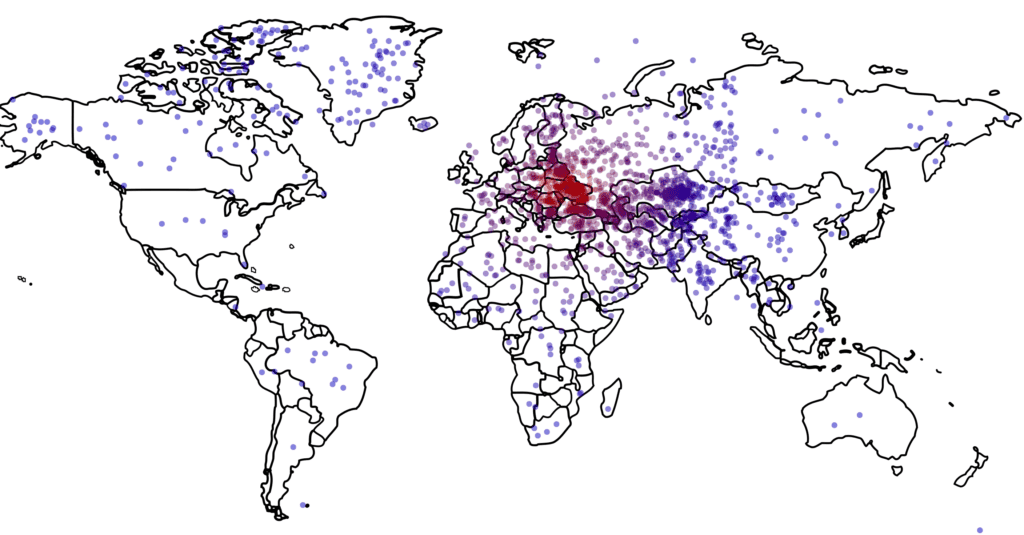
The limited knowledge on the Ukrainian situation was very apparent in an article posted in The Washington Post last week detailing a poll which asked Americans to locate Ukraine on a map and then asked them a few questions about the situation and possible moves for the United States. Some of the guesses were so far off as to put Ukraine in the middle of the US, in Australia, in the middle of the Pacific, and surprisingly often in Greenland. The survey showed that the further the guess was from the actual location of Ukraine, the more likely the person was to support US military intervention. Even controlling for demographic factors and general foreign policy stances, the surveyors concluded that “the less accurate [the] participants were, the more they wanted the U.S. to use force, the greater the threat they saw Russia as posing to U.S. interests, and the more they thought that using force would advance U.S. national security interests.”
This illustrates a large gap between public and professional opinion on this issue, as many foreign policy advisors and academics are stressing that US or NATO military intervention in Ukraine is not the way to deal with the situation. So far the US has acted against Russia through sanctions, not through military force. Without clear aggression from Russia and multilateral support, it is unlikely that the US will act on its own. NATO is also unlikely to respond with a show of force because Ukraine is not a member and most foreign policy officials are cautioning against NATO action at this stage.
So why are some Americans championing military action? Is it the invocation of the idea of terrorism? Is it a response to the legacy from the Cold War era that labels Russia as the enemy? Or is it just ignorance? If we want to stay out of military entanglement in Eastern Europe, let’s hope this idea, no matter what the motive, does not become the consensus of a largely uninformed American public.


