
by Benjamin Gross | Jun 13, 2014 | Global Cooperation, Human Rights
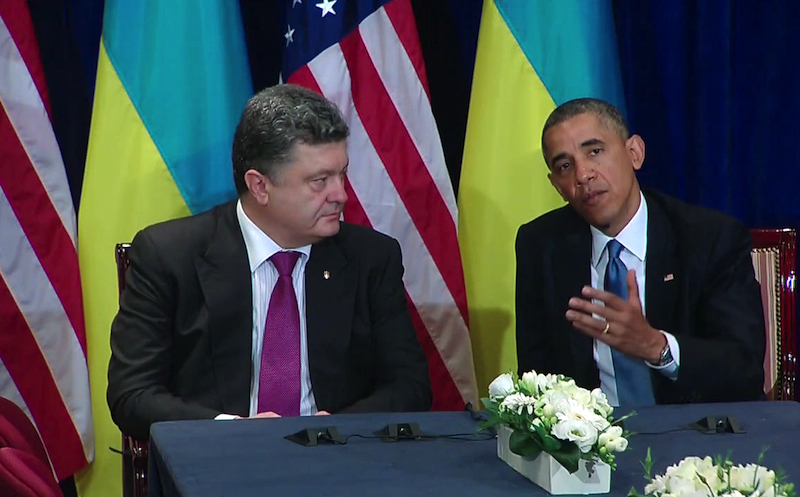
The inauguration of newly elected Ukrainian President Petro Poroshenko this past Saturday marked an important day for Ukraine, as the country officially transitioned from its interim government. In his inaugural speech, the newly elected president vowed not to seek revenge against Russia for its contributions to the ongoing crisis, declaring instead that he would look for a peaceful way to resolve the increasingly destructive conflict. He offered amnesty to pro-Russian separatists who do not already have “blood on their hands,” with the condition that they lay down their arms at once.
President Poroshenko did not shy away from sharing his beliefs towards Ukraine’s sovereignty, however. He emphatically stated that he would defend any and all challenges to its territorial integrity, meeting them with force if the situation deemed it necessary. He declared that “Crimea belongs to Ukraine,” a statement which the predominantly pro-Ukraine crowd responded to with vigorous applause. He denounced Russia’s proposal to federalize Ukraine, adding that Ukraine will continue to remain a single state with Ukrainian as the sole official language.
Indeed, it remains to be seen whether or not the newly elected president has the necessary strength and skill to maneuver Ukraine out of one of the worst crises it has seen in decades. The new president certainly has the backing of his country–he received nearly 56 percent of the vote, but it is still unclear whether he can truly convince the dwindling number of pro-Russian separatists to bow peacefully.
What the new president will most definitely receive is the support of the United States. Vice President Biden recently announced the US will be giving an additional $48 million in government assistance to Ukraine, which has already received $73 million in security and crisis-response aid this fiscal year.
It is important that the US continues to give further aid to help support Ukraine. As a member of the UN, the US shares a role in holding Russia responsible for violating the territorial integrity of Ukraine by supporting pro-Russian separatists and amassing tens of thousands of troops at the border, which is a clear violation of the Geneva Convention. Furthermore, by continuing to support Ukraine and give aid, the US can continue to assert itself as a global leader in following international law. We can continue to show that we are committed to cooperating with countries from around the world to find viable solutions to problems that ultimately affect all of us.
Electing President Poroshenko may not lead to the immediate resolution of the Ukrainian crisis. In fact, even with his promises, it wouldn’t be nonsensical to believe that the crisis may go on for many more months, or even years, before it is truly resolved. But the establishment of a new government through a legitimate election is undoubtedly an important step in the right direction. Indeed, it is a step that, if followed by a renewed effort by countries around the world to adhere to international law, could ultimately mean peace.
by Rene Wadlow | Jun 11, 2014 | Global Cooperation, Peace & Disarmament
8 June of each year has been proclaimed by the UN General Assembly as the Day of the Law of the Sea. However, according to my friend John Logue, who had participated with me as non-governmental organization representative in the long negotiations in New York and Geneva, it should be called “the Law of the Seize.”
What started out in November 1967 with a General Assembly presentation by Ambassador Arivid Pardo of Malta as a call to establish a new political and legal regime for the ocean space ended in August 1980 with a draft convention. It was a mixed bag of successes and disappointments, but that convention has now been ratified by 162 States.
For world citizens, the quality of the Law of the Sea Convention was of particular significance. The greater part of the oceans has been considered res communis, a global common beyond national ownership. Furthermore, the physical nature of the oceans suggests world rather than national solutions to the increasing need for management of marine resources and the marine environment.
World Citizen Thor Heyerdahl was one of those who called attention to the dangers of ocean pollution coming to Geneva to speak for world citizens during the Law of the Sea negotiations. The oceans and the seas remind us that the planet and not the State should be our focus. A holistic view of life arises from our interdependence as a species and our dependence on the life system of nature. World citizens have stressed that a balanced, sustainable eco-system will only emerge if our political, economic and ethical policies coincide in building a more stable and more peaceful—in short, a more human—planet.
Establishing rules for the management of the oceans was a real possibility in bringing about an increase in the awareness of the earth as our common home. However, the UN Law of the Sea Conference was first and foremost a political conference with over 160 States participating. From the outset of the conference, it was agreed that the convention had to be drafted by consensus in order to create a political and legal system for the oceans accepted to all — to manage what Arivid Pardo had called “the common heritage of mankind.”
During the negotiations, there were groupings that cut across the Cold War divisions of the times, especially within a group called “the landlocked and geographically disadvantaged countries.” There were also informal groups of persons who acted in a private capacity, a mixture of NGO representatives, legal scholars, and diplomats who prepared suggestions on many of the issues of the conference. These issues included the economic zones, the continental shelf, scientific research, marine pollution, and dispute settlement. Such propositions were taken seriously by the government negotiators, in part because few diplomats had the technical knowledge needed for making decisions as well as the creation of a new international organization, the Seabed Authority.
However, in practice, government negotiators are more used to working for the “national interest” and in defending the idea of “territory,” both on land and on the sea. Boundary-making is a primordial activity. Various theories have been advanced to explain why, many of them derived from our animal ancestors. However, ocean boundary problems are more difficult than building a wall on land. As Douglas Johnston and Mark Valencia write,
The forces of nationalism were too strong to be swayed by Pardo’s appeals to international cooperation and technocratic rationality. Instead the coastal states, developed and developing alike, saw in the newly available ocean areas an unexpected windfall, offering the prospect of a previously unimagined extension of their natural resource base. The economic goal of national autonomy had prevailed over the interest in global cooperation, setting in motion the processes of establishing vast national enclosures of offshore areas, especially those enclosures consonant with the new exclusive economic zone (EEZ) regime. International cooperation had yielded to national autonomy. 1
Conflicts over national sea boundaries are particularly strong in the Pacific Ocean among China, Vietnam, the Philippines, Japan, Taiwan, and Cambodia, with India and Indonesia watching closely. The disputes arise largely because of the claims of waters around small islands as national territory. Most of these islands are not inhabited, but are claimed as the starting point of “territorial waters.”
Originally, the disputes concerned exclusive fishing rights within national territorial zones. Now the issues have become stronger, as it is believed that there are oil and natural gas reserves in these areas.
Concerning China’s dispute with Japan (which is also largely true of China’s policy with other Asian countries), Krista Wiegand writes,
China’s current strategy to negotiate with Japan over joint development of natural gas and oil resources outside the disputed zone seems to be the most rational strategy it can take in the disputes. Rather than dropping its territorial claim, China continues to maintain its claim for sovereignty, while at the same time benefiting from joint development of natural gas resources. By maintaining the territorial claim, China also sustains its ability to confront Japan through diplomatic and militarized conflict when other disputed issues arise. 2
Territorial sea disputes can be heated up or cooled off at will or when other political issues require attention. We are currently in a “heating up” stage. Thus for 8 June, in honour of the Law of the Sea, we can consider how best to resolve territorial disputes by having a broader view of the common heritage of humanity.
Notes
1) Douglas M. Johnston and Mark J. Valencia. Pacific Ocean Boundary Problems (Dordrecht: Martinus Nighoff Publishers, 1991, 214pp.)
2) Krista E. Wiegand. Enduring Territorial Disputes (Athens, GA: University of Georgia Press, 2011, 340pp.)
by Josh Spesaison | Jun 6, 2014 | Climate Justice, Global Cooperation
Opinions on climate change have thundered across the media since President Obama’s announcement to set a national standard for power plants and the Carbon Dioxide (CO2) they emit. Opponents of action on climate change portray the plan as a tax on Americans, while supporters praise the action as a step forward, but also warn that more is needed.
Well, Obama aims to accomplish a lot more on the global stage.
On May 28 the President gave the commencement speech at West Point that acted as a comprehensive outline of his administration’s national security policy. One key message Obama conveyed was that “American influence is always stronger when we lead by example.” He continued to criticize political leaders that deny climate change.
The EPA initiative to reduce carbon pollution from power plants by 30% of 2005 levels is a momentous step for domestic policy. The justifications for this policy should not even need to mention climate change. The amounts of CO2 power plants currently emit are known to aggravate respiratory problems, including asthma and bronchitis, and increase the likelihood of severe weather storms, which ultimately costs hundreds of millions in tax payer money.
Though setting a standard for power plant air pollution is smart for American health, this action alone is not enough to control the threat of global warming. Climate change is a global issue that demands a global solution.
“For the world to overcome the enormous threat climate change poses, we need every country to do everything within its power to pursue cleaner and healthier energy sources.” Secretary Kerry emphasized how imperative a global effort is in his Financial Times Op-Ed. “We need to pursue the UN climate negotiations with vigor and determination toward an ambitious global agreement in Paris next year.”
This is how America will lead by example. The US domestic policy tells all other countries that climate change is a dangerous issue and America, the wealthiest and most influential country, is taking it seriously.
The Executive Secretary of the UN Framework Convention on Climate Change (UNFCCC) has noted the positive effect Obama’s action will have for the 2015 UN Climate Change Conference in Paris.
What’s more is that our leadership to set standards on power plant carbon pollution has already sparked a Chinese advisor on climate change to announce that may China cap its carbon emissions in 2016. The statement captures the influence American leadership can have.
China has been the largest CO2 emitter in the world since 2006 when it over-took the US. China’s air pollution has reached levels 20x worse than what the World Health Organization suggests. Chinese citizens have demanded government action against the terrible state of carbon pollution. This led to the Chinese Premier Li Keqiang declaring a “war on pollution.”
Even if China doesn’t carry out the suggested carbon cap, it wouldn’t mean their government isn’t committed to some form of proactive action against the negative effects of climate change. The Wilson Center’s China Environemnt Forum spread the word on several of China’s smaller steps to combat pollution.
With American and Chinese leaders tackling pollution and climate change aggressively, there could be strong hope for a global agreement to curb the disastrous consequences of climate change.
by Benjamin Gross | Jun 4, 2014 | Climate Justice, Global Cooperation
Monday marked a very significant day for environmentalists, with the EPA unveiling a sweeping new set of regulations designed to reduce carbon emissions nationwide. The proposal, which has yet to be implemented, lays out a formal plan for cutting carbon emission levels by 30% by 2030. It assigns target pollution goals for each state, while giving each state a variety of options to achieve them, including but not limited to shutting down some of its power plants, installing forms of efficient alternative energy, and joining cap-and-trade programs which would create a maximum cap on pollution and a market to buy and sell pollution permits.
The new proposal has not been without its share of criticism, however. Many who live in states where coal mining is a major industry have harshly criticized the regulations, calling them “job killers” that will inevitably lead to the economy’s demise. They claim that such regulations will prove harmful to the average person, as the regulations are predicted to raise the cost of electricity, albeit by less than a single percentage point.
Furthermore, some Republicans have become increasingly defiant, stating that they will simply not enforce the new regulations if they are passed. Gov. Mike Pence of Indiana has actively denounced the bill, claiming that he would oppose the proposed rules and instead look for more practical solutions that would not entail cutting any jobs. Gov. Rick Perry of Texas is expected to follow suit, which seems logical given his track record in Texas for refusing to put into place any pollution compliance laws related to climate change.
This backlash on the newly proposed regulations is truly disheartening and disgraceful in the minds of the majority of Americans, including myself. In an era where scientific research has revealed the vast effects that climate change is having on our planet, many continue to deny its importance as a major issue that ought to be dealt with immediately. These people continue to defend the coal industry with vigor, refusing to acknowledge the fact that the entire globe has seen a rapid increase in average temperature–in some areas as much as seven degrees–or that the ice in Antarctica is melting at unprecedented levels.
Looking ahead to the future, I sincerely hope that the US continues to take a lead role in the movement to help stop climate change. It is of the utmost importance that the proposed regulations by the EPA are carried out not only on a national level, but also internationally; our efforts must blossom into a much larger collective effort with other countries that are major polluters, such as India and China. At the upcoming international Climate Summit in New York this summer, I urge the US to present an international plan to address climate change that is capable of being adhered to by the various countries of the world. For if the great superpowers of our world fail to band together to confront this growing problem, we together will be forced to face the consequences of our inaction.
by Rene Wadlow | May 29, 2014 | Global Cooperation, Peace & Disarmament
How effective are UN peacekeeping operations in preventing and stopping violence? What about in addressing the root causes of conflicts? How does one measure this effectiveness? Are there alternatives to the ways that UN and regional organizations currently carry out peacekeeping operations?
29 May is the date that the UN General Assembly has designated as the day to honor the efforts of UN Military peacekeepers. Honor is due. The Nobel Peace Prize was awarded to the “Blue Helmets” in 1988 − a testimony to the respect and confidence placed in them.
However, we must also examine their effectiveness and question whether these military personnel should be complemented by other forms of peace-building.
There have been recent news stories of UN peace operations in the eastern part of the Democratic Republic of Congo that highlight the inability or unwillingness of UN troops to stop the systematic rape of local women. Rape has become standard practice in the area, on the part of both members of the armed insurgencies as well as by members of the regular Congolese Army. This is just one example of “failure” being a key word in evaluating UN forces.
One problem is that there are no permanent UN-trained and -motivated troops. There are only national units loaned by some national governments but paid for by all UN Member States. Each government trains its army in its own spirit and values, though there is still an original English ethos as many UN troops come from India, Pakistan, Bangladesh, Nepal, and Nigeria. Now China is starting to provide troops with a non-English tradition.
Moreover, there is no such thing as consistency and predictability in UN actions to preserve order. The world is too complex, and the UN Security Council resolutions are voted on the basis of national interest and political power considerations. UN “blue helmet” operations have grown both in numbers and in complexity. Even with the best planning, the situation in which one deploys troops will always be fluid, and the premises of the original plans may change.
To be successful, UN peacekeeping operations need to have clear objectives, but such objectives cannot be set by the force commanders themselves. Peacekeeping forces are temporary measures that should give time for political leaders to work out a political agreement. The conflicting parties need to have a sense of urgency about resolving the conflict. Without that sense of urgency, peacekeeping operations can become ongoing as they have in Cyprus and Lebanon.
UN forces are important, but they should represent only one element in a peacemaker’s tool kit. There must be concerted efforts by both diplomatic representatives and non-governmental organizations to resolve the conflicts where UN troops serve. Policemen, civilian political officers, human rights monitors, and refugee and humanitarian aid specialists all play important roles.
There have been a good number of suggestions put forth by governments and NGOs that there should be a permanent UN peace force that could respond quickly to emergency situations. Such a standing force has usually been refused by government as being too expensive (even if it only costs a fraction of what is currently spent on national armies).
An alternative proposal has been for the creation within national armies of special units designed and trained for UN service which could work smoothly with similar units from other countries. In light of the relatively small number of States which regularly provide forces for UN work, it should be possible to create such standby units augmented by persons trained for humanitarian action.
As we honor the “Blue Helmets,” we need to put more effort into preventing armed conflicts, improving techniques of mediation, and creating groups which cross the divides of class, religion, and ethnicity.
by Tony Fleming | May 28, 2014 | Global Cooperation, World Federation
Counting his birthdays by the number of friends, not years, friends and colleagues of Global Solutions’ “head cook and chief bottle washer” Don Kraus celebrated his 60th birthday and 20 years of service to the organization this past week.
The backyard patio at the national headquarters was filled with friends and supporters whom Don has worked with over the years. The event includes food, wine, music and great company.
Formerly a paper distribution business owner, Don came to Washington in the early 1990s after deciding he much preferred “selling peace to selling paper.” Over the last twenty years, his role with the organization changed and he has been quick to evolve right along with the opportunities presented.
He was the Partners Program director for Global Solutions’ predecessor organization the World Federalist Association, before moving sideways and up to take on the CEO mantle at its sister organization, the Campaign for UN Reform. He returned “home” in 2004 when the two organizations merged to form Citizens for Global Solutions, becoming the new organization’s first Executive Vice President. In the summer of 2008, he stepped up to his current role as President & CEO of Global Solutions.
Don shared his thoughts at being with Global Solutions for so long.
“I want to thank you for celebrating with me this wonderful milestone in my life. I’m deeply appreciative of those who have honored me by supporting the cause that is my passion. We really do need a better-governed world where nations work together to solve the global problems that they cannot solve on their own. It’s hard to believe that for the last 20 years, one-third of my life, I have been blessed by the opportunity to work for a world where the law of force is replaced by the force of law. And I feel so incredibly fortunate to have labored in the trenches with all of you who have also dedicated your lives to peace, human rights and a sustainable future. Thank you for all that you do.”
Don is well known to global policy leaders inside the Beltway and to our membership across the country. He has helped create and steer many continuing efforts to promote our global vision both on Capitol Hill and across the United States. These include the Partnership for Effective Peacekeeping, the CEDAW working group, the Washington Working Group on the ICC and most recently, the Treaty Principals working group pushing back against a dangerous war on international law.
From grassroots campaign manager to CEO, he has helped build coalitions and fought for women’s rights, peacekeeping reform, and support for the International Criminal Court. As friends and supporters noted in wishing him congratulations on his two decades of service, he’s a global citizen and activist par excellence.
In lieu of gifts, friends made tax-deductible donations to support the efforts to which Don has devoted his career. In addition, many who were unable to join us at the national office–former and current colleagues, chapter leaders and fellow activists–sent well-wishes and congratulations.
To view more photos from the event or to leave a comment for Don, visit our Facebook album.






 He was the Partners Program director for Global Solutions’ predecessor organization the World Federalist Association, before moving sideways and up to take on the CEO mantle at its sister organization, the Campaign for UN Reform. He returned “home” in 2004 when the two organizations merged to form Citizens for Global Solutions, becoming the new organization’s first Executive Vice President. In the summer of 2008, he stepped up to his current role as President & CEO of Global Solutions.
 From grassroots campaign manager to CEO, he has helped build coalitions and fought for women’s rights, peacekeeping reform, and support for the International Criminal Court. As friends and supporters noted in wishing him congratulations on his two decades of service, he’s a global citizen and activist par excellence.