by Jeanne Lynch | Jun 30, 2014 | Global Cooperation, Peace & Disarmament
The Islamic State in Iraq and Syria (ISIS) made a huge move yesterday by declaring a caliphate spanning large areas over Iraq and Syria. ISIS has been capturing Iraqi cities one by one for several weeks now. They have successfully overrun military forces, and in some cases made forces voluntarily retreat.
(ISIS has recognized their caliphate as crossing international boundaries and ridding the countries of lasting colonial-era borders and has therefore changed its name to only “The Islamic State”.)
Abu Muhammad al-Adani, ISIS spokesperson, made this announcement on Sunday, which was also the beginning of Ramadan. In it al-Adani declared ISIS leader Abu Bakr al-Baghdadi the imam and caliph (religious and political successor of the Prophet Muhammad) of “Muslims everywhere.”
Last week, ISIS had been suspected of overtaking an oil refinery in Baiji, Iraq that would give them control of 1/3 of Iraq’s oil output. Because of this development, President Obama approved 300 troops to be sent to Iraq. These troops are part of what is called an “assessment” mission.
“These teams will assess the cohesiveness and readiness of Iraqi security forces, higher headquarters in Baghdad, and examine the most effective and efficient way to introduce follow-on advisors,” said Rear Admiral John Kirby, Pentagon spokesperson. With the declaration of a caliphate, it will be interesting to see how this American mission evolves. President Obama promised no combat forces, though Secretary of State John Kerry did say that unmanned drones would be a possibility. Russia has also reportedly started sending fighter jets to aid the Iraq military in pushing back ISIS.
The declaration of this caliphate has significant implications for multiple groups. Iraq’s military is still struggling to regain control of its cities, most recently the battle over Tikrit, Saddam Hussein’s hometown. The caliphate introduces a political order that traditionally devout Sunni Muslims are obligated to follow. There are bound to be clashes with fellow Sunni-extremist group al-Qaeda, who has previously cut all ties with ISIS. The appointment of al-Baghdadi as caliph threatens al-Qaeda leader Ayman al-Zawahiri’s claim to supremacy over the global jihadist movement.
This will cause conflict within the jihadist community as Sunni-extremists will be obligated now to either support ISIS or openly oppose it and risk the consequences, which would most likely include death. The Washington Post predicts that al-Zawahiri will “bow to the authority of the proclaimed new caliph,” effectively dismantling al-Qaeda.
Without effective military opposition, this jihad movement will only continue to grow, posing a huge threat to the international community. ISIS has already begun committing huge human rights violations, proven with satellite imagery by Human Rights Watch. They claim to have executed 1,700 Iraqi soldiers during the battle over Tikrit. While only around 150 bodies have been shown in the images released, if the number they provided is true, it will be the largest execution in Iraq since 2003.
Iraqi army spokesman Qassim Atta stated that this caliphate will be a global threat, and that “all countries, once they read the declaration, will change their attitudes because it orders everybody to be loyal to it.”
So what kind of response does this development require? The US can’t necessarily do much more, though the Iraqi government is asking for additional support. Until a more concrete threat to national security arises, President Obama has no precedent for further intervention. Russia has already supplied military aircrafts, but what else can be done?
Some have suggested that the UN Security Council intervene, which is an option and would hopefully pass without a veto. However, is it possible that this caliphate will dismantle itself? The declaration could potentially isolate ISIS allies within Iraq and lead to infighting, similar to Syrian rebel groups. That could cause an entirely new humanitarian crisis.
Outcomes are almost impossible to predict at this point; the most important thing is securing Iraqi land back in the hands of Iraqi military forces.

by Rene Wadlow | Jun 28, 2014 | Global Cooperation, Peace & Disarmament
There is typically a sign in shops selling china and porcelain that reads, “Do not touch; If you break it, you buy it.” Rather than portraits of Saddam Hussein, a sign like this should have been hung at the entrance to Bagdad.
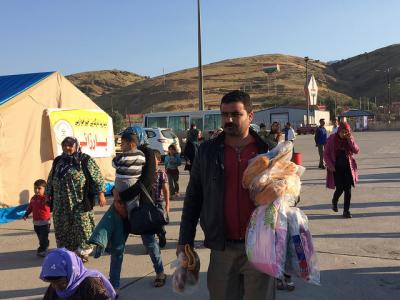
With Iraq in armed confusion as sectors of the country change sides and the Iraqi government seemingly incapable of an adequate response other than to call for military help, as concerned world citizens, we must ask ourselves: what can we do?
The forces of the Islamic State of Iraq and Syria (ISIS) have broken down a wall on the frontier between Iraq and Syria as a symbol of abolishing national frontiers to be replaced by a community of the Islamic faithful − the umma. In some ways, we are back to the early days of the post-World War I period when France and England tried to re-structure the part of the Ottoman Empire that is now Iraq, Syria, Lebanon, Israel-Palestine, Jordan, Turkey and an ill-defined Kurdistan.
During 1915, Sir Mark Sykes, a Tory M.P. and a specialist on Turkish affairs and Francois Picot, a French political figure with strong links to colonial factions in the French Senate negotiated how to re-structure the Ottoman Empire to the benefit of England and France. Although these were considered “secret negotiations,” Sykes reported to Lord Kitchener, the War Minister, and Picot had joined the French Foreign Ministry as war service.
However, both operated largely as “free agents”. Today Sykes and Picot are recalled for no other achievement than their talent in dividing. The agreement between them was signed in January 1916 but kept in a drawer until the war was over. In April 1920 at San Remo, France and England made the divisions official.
History has moved on, but dividing and re-structuring remains the order of the day. The political structures of Israel-Palestine as one state, two states, or one state and occupied territories have confounded the best of mediators − and less talented mediators as well. With the war in Syria continuing, there have been suggestions to divide − or federate −the state into three parts: an Alawite-Shi’ite area, a Sunni area, and a Kurdish area.
The same divisions had been suggested for Iraq earlier and are again being discussed in the light of the ISIS advances: a Shi’ite area in the south, Kurds in the north − already largely independent − and Sunnis in the Middle. Lebanon, although not a federal state, is largely structured on sectarian-geographic divisions.
Constitution-making under duress is not the best way of doing things. Forced federalism presents even more difficulties than creating a federal state when people are not fighting each other. We have seen the difficulties of proposing federal structures for Ukraine; federalism is seen by some as a prelude to the disintegration of the state. The difficulties in the wider Middle East are even greater, as we have three states directly involved: Iraq, Syria, and Turkey, with a well-organized and armed Kurdish community in Iraq and parts of Syria.
The Kurds had expected that Kurdistan would be recognized after World War I. The issue was raised at a conference to set Middle East frontiers held in June 1923 in Lausanne. The failure of the Kurds to achieve their goal for independence and the forced inclusion of their mountainous homeland within the then-newly created states of Iraq, Syria and Turkey caused resentment and unrest. All the Kurds received in 1923 was a pledge to respect minority rights. By 1924, the Turkish government had banned all Kurdish schools, organizations, publications, and religious Sufi brotherhoods. In 1925, there was the first of the Kurdish revolts in Turkey, which, off-and-on since then, continue today.
As outsiders, but as specialists in federal forms of government, is there anything we can do to help? Maps are deceptive, and what is drawn as Shi’ite, Sunni, and Kurdish area in Iraq and Syria actually have mixed populations. Religious-sectarian divisions also are not the only lines of fracture.
Nevertheless, discussions among Syrians, Iraqis, Turks, Iranians and outside specialists on forms of government may be of greater use than sending Special Forces as ‘intelligence’ specialists. Such discussions will not be easy to organize or to facilitate, but in a period of constitutional disorder and flux, such efforts are necessary.
by Logan Cotton | Jun 27, 2014 | Global Cooperation, World Federation
At the Citizens for Global Solutions Conference last week, there was no shortage of arguments that made the case for strong international norms and institutions. Clearly the planet benefits when we have a framework through which to peacefully resolve disputes, establish equitable access to resources, and prosecute crimes.
I spent the weekend thinking a bit about the approach we take toward achieving an “Earthling Peace” – pax terrana, perhaps? (I confess that I have never known Latin).
From the individuals present at the Conference last week, I consistently heard the argument for global government as a means to achieve world peace. When pressed on what constituted “world peace,” most articulated the removal of various obstacles to strife or calamity on earth. Examples might be the eradication of nuclear weapons or the adoption of sustainable lifestyles around the world.
These ideas, like this organization, were birthed at a particular historical moment. That moment, the aftermath of WWII, capitalized on the citizens’ disgust with the consequences of world war and their belief in the power of democracy to provide the most equitable conditions for the greatest number of people on the planet. Regrettably, the Cold War quickly tore into these optimistic perspectives, though many individuals – some of whom led the push for World Federalism and eventually established GlobalSolutions.org – held on to the ideal of global governance as humankind’s salvation.
I wondered if perhaps the route toward global governance would be the inverse of what these trailblazers initially advocated. Perhaps instead of global government facilitating denuclearization, the end of poverty, expansion of trade and so forth — perhaps countries will denuclearize, work against poverty, and expand trade before a “United Government of Earth” is formally established.
As wrong as it may seem, multilateralism is still very sexy, very “in,” around the world.
Mercosur is one example. The South American trade bloc, while certainly not without its problems, is the fifth-largest economy in the world and the fourth-largest trade bloc. Combined with the other South American trading bloc, the Andean Community of Nations (CAN), the prospect of full South American integration seems like a tangible goal. Cooperation within Mercosur and between Mercosur and the CAN countries has enhanced trade, movement of people, and coordination on education policy. And, if anything, countries seem to be committed to working through their problems in Mercosur and CAN as opposed to withdrawing their membership from either.
Another example is the Proliferation Security Initiative (PSI). The PSI’s purpose is to interdict and seize nuclear contraband as it travels the high seas. The PSI currently boasts the endorsement of 103 nations around the world – including the US, UK, Russia, and South Korea. The PSI, as a cooperative effort, has been successful at keeping nuclear materials from reaching Myanmar, Yemen, and Libya, among others. While in no way perfect, the PSI is providing added teeth to the disarmament norms that have continued among the nuclear powers.
As much as observers, myself included, thought we were witnessing the end of the European Union, the EU has held strong. Spending and austerity continue to frustrate the leadership of respective EU member states. However, the European community seems committed to further tying their fortunes together. The UK and France are sharing aircraft carriers and the Spanish, Italians, Portuguese, and Greeks still spend the Euro. International banking certainly deserves some credit (or “blame” depending on whom you ask) for keeping the EU tied together, but the role of banks doesn’t negate the fact that European continental identity is strengthened by the existence of the European Union.
So the landscape from my vantage point seems to be moving toward global governance without the need for global government as a pre-requisite. Regional blocs exist on every continent, and they are only increasing the pace of integration; states see opportunities abound as barriers to trade and movement are reduced. Flexible and innovative military accords are providing order to the global commons – most notably the seaways – as governments seek to monitor the activities of rogue actors. And perhaps we could even be so bold as to assert that if not for the irresponsible do-nothingness of this Congress, that US climate legislation would be far more progressive than it has been at Kyoto or Durban.
I’m not arguing against the utility of international law or global governance, only considering the possibility that we are on our way. There seem to be more trade blocs, regional cooperative agreements, and interest in regulating shared resources. Maybe the internal mechanisms of global governance will be birthed well before any decision is made about the name, title, and electoral processes of a global government.
I’m no expert — just someone fortunate enough to have the opportunity to muse on different ideas.
by Levi Leatherberry | Jun 25, 2014 | Global Cooperation
For decades the IMF and the World Bank have been the sole institutions capable of producing international financial assistance to countries as a whole. This dominance has been recently called into question with the rise of BRICS countries (Brazil, Russia, India, China and South Africa) and their united ambition to create a countervailing force in the international assistance.
To advocates, this is a fresh opportunity to generate collaboration between the World Bank, IMF and the new BRICS Bank. While critics have hailed this development as a potential challenge to world order, which has for a century seen western dominance in the field of international debt.
(The video in this post is no longer available.)
For critics, this challenge is welcomed, particularly in the developing world. According to Al Jazeera, “to economists in the developing world, who have long criticized the World Bank and IMF as anathema to the countries they purport to help, the New Development Bank holds tremendous promise.”
Despite the obvious global north/south divide that this issue brings up, many have chosen to focus on the pragmatic approach by addressing the systematic imbalances these developments hope to address.
One is the lack of representation at the IMF and World Bank. As South Africa’s former Finance Minister explains, “The roots of the World Bank and IMF still lie in the post-World War II environment.” Despite the increase in funding and participation from developing countries, there has been little to no increase in their official role in these global institutions – particularly in regard to voting.
The most contested area of the IMF or World Bank policies for lending, however, comes not from their internal structure but from the structural adjustment policies (SAPs) of the recipient countries. SAPs have long been criticized for what some call harsh measures, such as ending subsidies, lowering wages and limiting domestic spending – which some say favors the west and is a key ingredient in modern neo-colonialism.
It is proposed within this BRICS alternative that money should be given without SAPs or strings otherwise attached so that nations can choose freely how to deal with their moments of socio-economic crisis. Chief Executive Officer for Frontier Advisory in Johannesburg Martyn Davies states to this end, “the deepest rationale for the BRICS is almost certainly the creation of new Bretton Woods-type institutions that are inclined toward the developing world.”
In order for these alternative structures to the IMF and World Bank to succeed, they will need significant financial and social support. Fortunately for the BRICS nations, they have a combined foreign-currency reserve of $4.4 trillion and account for 43 percent of the world’s population, according to Bloomberg.
“The sheer frustration at lack of reforms on other fronts seems to be binding these countries together,” economist Eswar Prasad of Cornell University says of the driving force behind this BRICS plan.
Despite accusations of neo-colonialism and a global lending system tailored to the benefit of western developed nations, the IMF and World Bank themselves are not entirely opposed to the idea. “We welcome the announcement of the establishment of a BRICS development bank and stand ready to work closely with the new bank to end poverty and build shared prosperity throughout the developing world,” the World Bank reportedly said in a statement.
World Bank President Dr. Jim Kim explains, “Every single one of the BRICS countries has an enormous infrastructure deficit that simply can’t be met by a single institution, certainly not the World Bank in and of itself. So, for us the BRICS bank is quite a natural extension of the need for more investment in infrastructure.”
In short, the World Bank recognizes that poverty and sustainable development are simply too large of an issue for any one nation or institution – and that there is a global need for greater collaboration and innovation between organizations with similar goals to achieve better results for all.
by Don Kraus | Jun 24, 2014 | Global Cooperation, World Federation
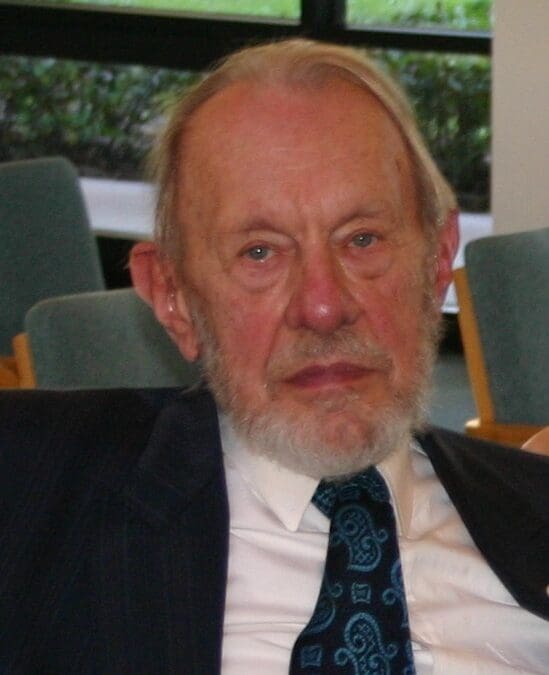
Earlier this month we lost a great friend and leader, Kermit Rohde. He passed away on June 2 in Austin, Texas, where he had been living with his daughter and son-in-law. Kermit was a dedicated World Federalist and a key supporter of GlobalSolutions.org.
Serving in the navy during WWII led Kermit to believe that international peace must be achieved through international law, and he became actively involved in organizations dedicated to this mission. He served as chapter chair in Lincoln, Nebraska; in Columbus, Ohio; and in the state of Oregon for the World Federalist Organization. He was a board member for Citizens for Global Solutions and the national president for the Federalist Caucus and the Campaign for United Nations Reform. Kermit was also a chair and active supporter of the Global Solutions Political Action Committee. He understood that if we wanted members of Congress to seriously engage in solving global challenges, then we needed to get serious about electing lawmakers who shared our values.
Kermit earned a doctoral degree in psychology from Northwestern University. In 1956, he moved to Corvallis, Oregon to teach in the psychology department at OSU, and taught there until his retirement in 1984. While there he served as president of the Oregon Psychological Association and as chair of the Oregon Board of Psychologist Examiners.
Kermit, along with his wife Barbara, raised four children in Corvallis and was well known for his activism on behalf of many political issues and candidates. Along with serving on the national board of Citizens for Global Solutions, he served on the board for the Wayne Morse Historical Park. The Rohdes also supported many arts and civic organizations and were active in their church. Kermit was a devoted husband and father, and he was delighted to have been able to celebrate his 50th anniversary with his wife Barbara before her death in 2001.
Kermit is survived by his daughter Kate Rohde and son-in-law David Cohen of Austin, Texas; by his daughter Gale Rohde of St. Paul, Minnesota; by his son Scott Rohde and daughter-in-law Sybelle Timberlake of Urbana, Illinois; by his son Rory Rohde and daughter-in-law Marianne Bernhard of Hamilton, Virginia; and by his three grandchildren, Zak, Alex, and Sarah Rohde.
A gathering in Corvallis for a service honoring Kermit will be held on August 16 (time and location to be announced). In lieu of flowers, the family suggests donations to a charity, including GlobalSolutions.org.
by Brandon Hooks | Jun 23, 2014 | Global Cooperation, United Nations
At a recent event held at the Brookings Institute, Under-Secretary General of Peacekeeping Missions for the United Nations Hervé Ladsous led a discussion on the future of peacekeeping operations around the world. He highlighted the need for greater innovation and international cooperation in both current and future peacekeeping missions in order for increased success.
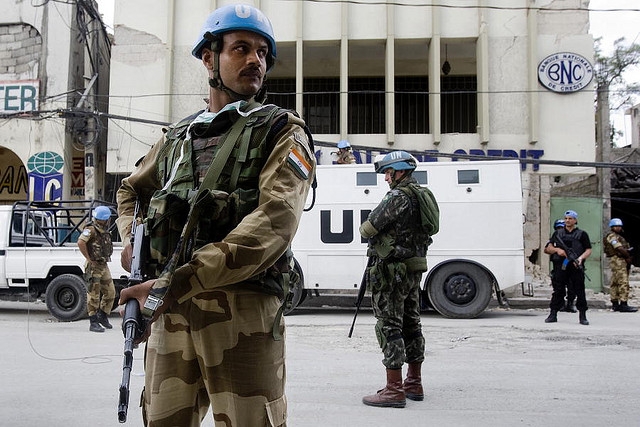
As of today there are sixteen ongoing missions through the Department of Peacekeeping Operations as well as a special political mission–the United Nations Assistance Mission in Afghanistan (UNAMA.) An estimated nine out of every ten peacekeepers are currently stationed in Africa, with missions such as those in the Central African Republic and South Sudan being the most volatile. These dispatched peacekeepers handle a myriad of problems within conflict areas and help to restore stability and peace to those displaced and injured by civil or international violence.
Mr. Ladsous commented on the success of peacekeeping missions in recent years, highlighting the fact that the number of conflicts around the world has decreased dramatically within recent decades. However, the severity of the conflicts we face today make them far more intractable and difficult to handle than in the past. The issue of weakened political frameworks stands as the greatest problem in many conflict areas and often times “cripples the missions.”
In looking towards the future of peacekeeping operations, Mr. Ladsous stressed the need for greater innovation in regards to the tools used by peacekeeping forces. The need for newer technologies is essential for the success of missions, for “we must handle the conflicts of today with the tools of today.” He also mentioned that the Department of Peacekeeping Operations is continually researching ways to ensure its practices promote environmental sustainability within the regions in which its missions are housed.
The need for more regional and international cooperation is also key to future peacekeeping missions around the world. Mr. Ladsous stressed how member states must be “of the same mind” in approaching peacekeeping efforts to ensure their goals are achieved in the long run. He invited all countries, both those that have invested resources into peacekeeping and those that have not, to take a larger role in peacekeeping missions in the future.
During the Q&A session following his speech, many of the audience members presented Mr. Ladsous with controversial questions in regards to current peacekeeping missions–most notable were those regarding the UN’s role in introducing a cholera outbreak in Haiti and the sexual misconduct of Sri Lankan peacekeepers. It was clear, however, that Mr. Ladsous was not inclined to answer the more contentious issues of peacekeeping operations, attempting instead to keep the peace in the discussion.
It is clear from the event that the current approach to peacekeeping operations must be reformed when looking at future endeavors. The need for greater global cooperation and a more solid Security Council are essential in ensuring all efforts put forth prove to be worthwhile. Changes in current policies are needed in order for peacekeeping missions to achieve their goal of establishing order and stability in countries around the world.