by CGS Blog Archive | Jul 14, 2014 | Global Cooperation
It would be much easier to move the US southern border further south to where it is only about five hundred miles wide rather than continuing the argument over the two-thousand-mile-wide US-Mexican border. Or, since we are pouring so much money and resources into assisting Central American States with their problems, maybe we should just move the effective border to the Panama Canal and get it over with. After all, the canal is only forty-eight miles long and would be much easier (and cheaper) to secure and manage as a border. So we need a North American Federal States system that stretches from the Panama Canal to the North Pole. But how does China influence this idea?
If Mexico, Canada, and the Central American States can be brought into a larger federal system, and can give their citizens representation in that federal union like the rest of us and tax them like the rest of us, it would give us a bigger voice in their States than we have now. And since we are already asssisting them with numerous financial aid packages and programs and giving them effective US citizenship rights anyway, then we should make the North American Federal States official. At least we would get something back for the influx of a large Latin diaspora wanting so desperately to be in the US, to be safe, secure, and contributing US citizens: NAFS citizens.
Then, with a larger federal system, we could more easily prevent China from becoming the next all-powerful global hegemonic state. As it stands today, the US will lose out to China in the global economy as China matures economically and politically. We simply do not have the numbers to be competitive against a mature Chinese economy, nor against a stronger European Union, nor a Eurasian Economic Confederation, nor a strong African Union—all are or will be larger than the US today.
The rise of a hegemonic China—a nearly inevitable event because of its massive and growing number of consumers and producers—is more than sufficient reason to increase rather than decrease, or limit, population sizes of strong regional federal unions globally. The only way to compete with a large, mature Chinese economy is for states to join in larger, more intertwined regional or global federal unions of states so that they may have a comparative competitive advantage.
It is for this reason that the EU was formed: to compete economically against the US and China and a potential Sino-Russian alliance. Again, size and numbers matter. It is also why there is now a weak African Union (but they will change to be more like the US, only bigger, as they too mature—another potential competitor in the near future). It is also why the Gulf States attempted to create a federal union of States in that region of the world. These regions and States know from history and experience the power of unity and strength of numbers, whether the people understand it or not. That is why North and Central America must do the same if those States are to stay relevant on the world stage into the future.
As economies mature and achieve relative parity with the US economy, then the burden is on the US to keep up and compete, but we cannot do it alone; it requires that North and Central America follow the example of Europe and Africa and create a North American Federal States system. The US border issue can be used to our combined advantage against other regional federations around the globe.
by Jennifer Welden | Jul 9, 2014 | Global Cooperation
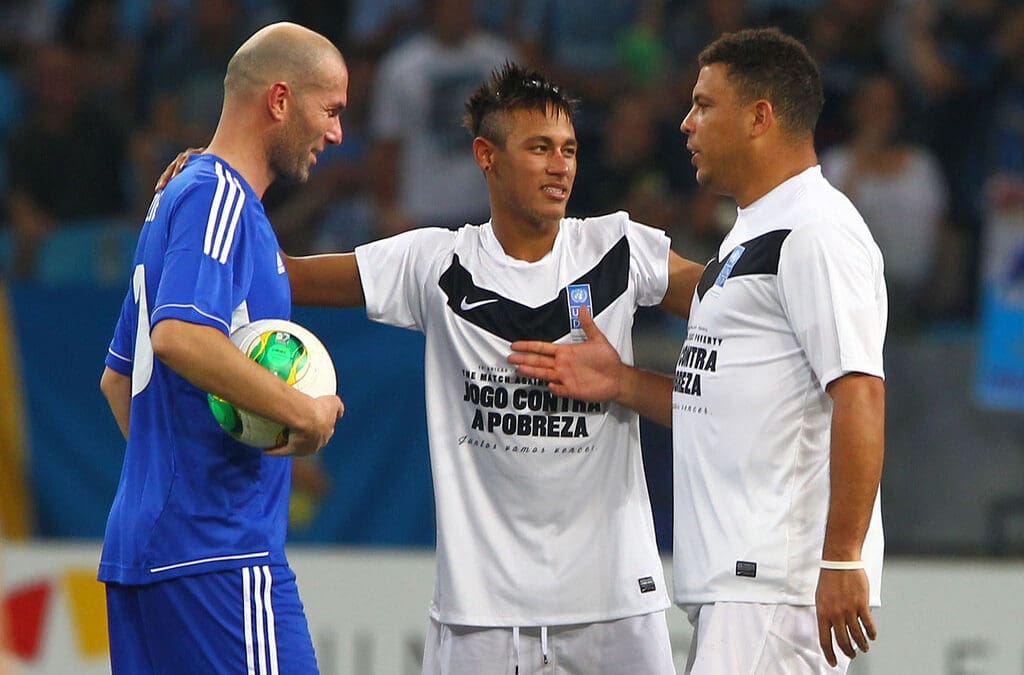
FIFA, and subsequently the World Cup, has received criticism from many for its corruption, human rights violations, and the problems it has caused for many residents of host countries. After writing about this last week, I admit that I was left with some deep-seated resentment of FIFA, and the World Cup by association. Having never been much of a soccer fan, I had no problem boycotting the games, taking what I felt to be some sort of moral high ground.
But then I heard about how women in Iran were openly watching the Iran-Argentina game in public alongside men, not only to show support for their country but also to protest a law banning women from entering most sporting events. As a woman of Persian descent, I was instantly filled with pride; I was also struck by the role the World Cup had played in this small but significant event.
Soccer brings the world together; there is no doubt about that. And since it is the “UN of Football,” FIFA has the power and influence to make incredible, important changes. In what ways has it already done this, and in what ways can it improve?
Just recently, FIFA announced that it “will compensate 331,000 tonnes of CO2 (251,000 of its own emissions and 80,000 from the fans who participated in [a] free contest) through four certified low-carbon development projects spread across Brazil.” This is just one of the many steps FIFA and Brazil have taken to reduce the carbon footprint of the World Cup, which include:
- Achieving LEED certification for green buildings for stadiums
- Installing solar panels on stadiums to generate renewable energy
- Ensuring that waste management in stadiums and other venues will be dealt with according to the new waste law and will promote recycling in collaboration with local cooperatives
This falls in line with the organization’s commitment to the environment, which it showed back in 2006 by moving its headquarters to a zero-emission facility.
And yet there are still areas in which FIFA falls short. While it will be investigating the use of black-face by German fans at the Germany-Ghana game, reassuring the world that it has “zero tolerance of any form of discrimination,” FIFA has failed to step up in other instances of bigotry. Most significant of these is Mexico and Brazil fans’ use of a homophobic chant, which FIFA declared was “not considered insulting in this specific context,” garnering much criticism. (Right after these incidents however, I did hear about FIFA broadcasting “#stopracism” on the stadium monitors. It isn’t exactly discipline, but it’s a step in the right direction.)
But FIFA’s inability to discipline is not for lack of power. During the 2010 World Cup in South Africa, “The FIFA World Cup Courts” were formed, and began dispensing justice at a rapid pace; the most well known example of this is the case of two Zimbabweans who “robbed some foreign journalists on a Wednesday, were arrested on the Thursday, and began 15-year jail sentences on the Friday.” The extensive cost to South Africa to run these courts, the harsh sentences for petty offenses, and the literal changing of the South African constitution are concerning enough; the ease with which a private entity did all this is downright alarming. And yet, just think of how the world would look if war tribunals had this much power.
FIFA clearly has the potential to make significant changes, but, at the end of the day, its own self-interest prevents it from doing any real good. In preparation for the current World Cup, FIFA successfully lobbied the Brazilian government to reverse a law that banned the sale of beer at football games. The bill, which lays out rules for the World Cup, is not ironclad, as it merely “does not mention any restriction on the sale of alcohol.” Nonetheless, it represents the immense power of FIFA to alter host countries’ laws when it serves its financial interests (Budweiser is a major sponsor of FIFA).
It’s incredible to think of how this power could be used to positively shape the world. Climate change regulations? Improving, but not dramatically changing, the court systems of less democratic countries? Earmarking World Cup profits for public assistance programs? Or (more realistically) leaving current laws, such as banning beer at football stadiums, untouched in order to support public safety?
A part of me will always remain critical and cynical when it comes to FIFA, as the organization has a long way to go before fulfilling its mission statement of “caring about society and the environment.” And yet, I remain hopeful that there will continue to be small victories on the way to institutional reform. In the end, it’s simply a question of which team FIFA wants to play for: itself or the world?

by Benjamin Gross | Jul 4, 2014 | Climate Justice, Global Cooperation
“Plastic is everywhere in the ocean.”
“87% of the world’s marine fish stocks are fully exploited, overexploited or depleted.”
These are just two of a number of very troubling statements concerning our world’s oceans, as outlined in a report released last Tuesday by the Global Ocean Commission. The report, which comprehensively details the issues that pose a threat to the health of our oceans, asks that countries cease turning a blind eye to the immeasurable harm that they inflict regularly. It demands that countries make the rectification of our oceans’ health an immediate priority, or else face the risk of causing irreversible damage.
The report cites a rising demand for resources, new technological advances, the depletion of fish stocks, climate change, and weak high seas governance as the most prominent reasons for the decline in the health of our oceans. It explains that the world’s immense growth in population– reaching 7 billion people in November 2011– has driven the demand for the ocean’s treasure trove of resources to naturally unsustainable levels. It warns that a failure to address climate change would have a calamitous effect on the world’s oceans, potentially wiping out as much as 60% of ocean species by 2050.
The report goes further than simply identifying the root causes of the ocean’s demise; it offers up a series of important steps, most notably Proposals 1 and 2, which would help remedy many of the ocean’s issues.
Proposal 1 advocates for the creation of a UN Sustainable Development Goal (SDG) as a means to help put the issue of our ocean’s health at the forefront of the post-2015 UN Development agenda. This action is vital to helping fix the ocean’s issues, as it would not only increase visibility and trigger resources to act, but also help the world to recognize that the “global ocean is an Earth system that needs to be addressed and managed as a single entity.”
Proposal 2 urges the strengthening of global governance in order to sufficiently protect the biological diversity of the high seas and to ensure sustainable usage of marine living resources. The proposal advocates the universal ratification of international treaties like the UN Convention on Law of the Sea (UNCLOS), which helps to define the rights and responsibilities of nations in their use of the world’s oceans and helps to protect the conservation of marine natural resources.
As a staunch supporter of using international cooperation to solve issues that affect the global community, I fully support and agree with the Global Ocean Commission’s report and its recommendations for the future. Nations must implement the commission’s proposals as they are able–particularly Proposals 1 and 2.
For if the world fails to address the rapid decline of the ocean’s health, the consequences of our inaction will be felt not only in the present, but for many years to come.
by Logan Cotton | Jul 3, 2014 | Global Cooperation, Human Rights
The World Cup is moving into the knockout stages and, rightly so, the tournament has garnered immense attention internationally. I myself have been cheering for the US Men’s National Team, though I think that Die Mannschaft (Germany) will ultimately emerge victorious in the tournament. The World Cup never fails to disappoint and this year has certainly been thrilling.
The World Cup is also a moment in which football’s governing body, FIFA, is most scrutinized — and this is for good reason.
Brazil’s opportunity to host the World Cup has been a moment of pride for the Brazilian government and is almost too fitting a scene. A country that evokes images of beach parties, carnivale, and joyful people is coupled with a deep appreciation for the rich history of Brazilian soccer — players like Pele, Ronaldo, Ronaldinho, Marta, and more come to mind.
Starkly contrasting the glee and celebrity of the World Cup is the stark inequality that exists between those who live in the urbanized and modernized districts of Brazil’s major cities and the 11 million Brazilians who live in its favelas (slums). There is the fact that construction of Brazil’s facilities to host the World Cup matches have displaced hundreds of thousands of indigenous communities and the poor. Consequently, these communities have clashed with Brazil’s police forces in public protests. The sheer cost of hosting the World Cup has been estimated between $15 and $20 billion. FIFA, as it turns out, pockets the revenue from ticket sales, marketing, corporate sponsorships, and TV rights. All of that money, Brazilian citizens have argued, should have gone toward social services like health care, public transit, and housing. More than one million people took to the streets to protest this inversion of priorities; schools, the posit very reasonably, are more important than stadiums.
FIFA drew attention earlier this year when two Palestinian soccer players were shot in the feet by Israeli soldiers. Border police claimed that the boys were preparing to throw a bomb and were swiftly neutralized. The young men dispute the claim, saying that they were lighting a cigarette on their way home from training, as reported by Haaretz. The incident underscores significant frustration among countries, activists, and individuals who support Palestinian freedoms– in this incident, specifically the freedom to participate in sports.
Organizations like the Palestine Association for Children’s Encouragement of Sports (PACES) and the Palestine Football Association, which is a full member of FIFA, recognize the capacity of sport in therapy, healthful competition, and cooperation. Having positive outlets for one’s creativity, energy, and aspirations is healthy for young people and therefore is healthy for a society. FIFA knows this and uses the same logic to promote the game globally. Therefore, one must ask why the organization has not done more to pressure Israel to loosen restrictions on the equipping and movement of the Palestine Football Association’s players, trainers, and coaches. This would be in the best interests of all parties involved and FIFA is in a unique position of influence here.
Then of course there is the World Cup for 2022, which will be hosted by the Gulf state of Qatar. Last year, 184 migrant workers died from cardiac arrest constructing Qatar’s first stadium for the 2022 World Cup. There are 12 more stadiums that must be constructed, leaving ESPN to project that more than 4,000 workers will die constructing Qatar’s stadiums.
This June, The Economist published an article titled “Beautiful Game, Ugly Business,” that detailed many of FIFA’s shortfalls. The article’s second paragraph began to expound upon the dirty money surrounding Qatar’s opportunity to host the 2022 World Cup:
So it is sad that the tournament begins under a cloud as big as the Maracanã stadium. Documents obtained by Britain’s Sunday Times have allegedly revealed secret payments that helped Qatar win the hosting rights to the World Cup in 2022 [see article]. If that competition was fixed, it has company. A report by FIFA, football’s governing body, is said to have found that several exhibition matches were rigged ahead of the World Cup in 2010. And as usual, no one has been punished.
There is more to be said about FIFA, of course. This year’s World Cup matches have been marred with instances of black face, homo-antagonism, and racial taunting. This should not be a surprise, as so many of the world’s cultures converge upon a single arena where different histories and meanings are forced to co-exist. Nonetheless, one could imagine that FIFA has the ability to bar attendees from attending World Cup matches if they wear black face or levy identity-based attacks. It would be difficult, but it would be worth the effort.
I only pose these questions because I love the World Cup, love watching the athletes, love seeing the raw emotion that exists among the fans. FIFA, in charge of what is such a treasure to so many, has to do better.
by Rene Wadlow | Jul 2, 2014 | Global Cooperation, World Federation
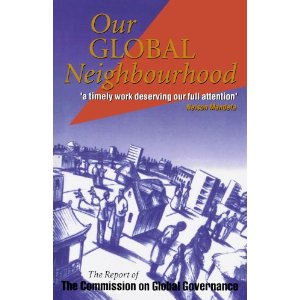
2014 marks the anniversary of the presentation in Geneva of the report of the Commission on Global Governance to an audience of UN Secretariat, diplomats, NGO representatives and academics. The secretariat for the Commission had been in Geneva just across the street from the Graduate Institute of Development Studies where I used to teach. I knew some of the secretariat, and we would discuss how the report was being drafted as the 28 Commission members were all busy with their professional tasks and spread out over the world.
In a pre-email world, the commissioners met four times in Geneva for several days; worked on drafts prepared by the secretariat led by a senior Swedish diplomat, Hans Dallgren; and then made additional suggestions. The report was published as a book in 1995.1
The Commission followed the footsteps of earlier commissions, often known by the name of its chairman: Willy Brandt on development, Olof Palme on disarmament and arms control, Gro Brundtland on the environment, Julius Nyrarre on North-South relations, and Sadruddin Aga Khan on humanitarian issues. The book’s name comes from one of the hopes of the UN Charter: “And for These Ends…to practice tolerance and live together in peace with one another as good neighbours.” It is unlikely that many of the Charter drafters or the Commission members ever lived in neighbourhoods in which people hate their neighbours and try to avoid them as much as possible.
Our global neighbourhood may not be that different!
As non-governmental organizations have been most active in the follow-up to the different reports of commissions − much more so than most governments − the Commission on Global Governance was the most open to receiving suggestions from NGO representatives, academics and government officials. I was part of a Geneva-based group of NGO representatives to the UN that prepared a joint statement for the Commission. I am not convinced that group efforts are more productive than a single individual writing on the same issue, but group proposals have the advantage of “balance” and geographic range that a single author does not.2
The book was written during an optimistic time period. The Cold War had ended formally in 1990, and the impact of local conflicts related to the breakup of Yugoslavia and the USSR had not yet sunk into broad consciousness.
Although the report makes no mention of “the end of history,” it is colored by the forces of democratic institutions, a market economy, and a strong trans-national civil society.
The Commission put forward a number of useful suggestions for restructuring UN bodies, especially to coordinate better economic and social policies and programs.
One of the innovations of Our Global Neighbourhood in contrast to the reports of other independent commissions was the emphasis on values and attitudes. The Report of the Commission concluded, “We also believe that the world’s arrangements for the conduct of its affairs must be underpinned by certain common values. Ultimately no organization will work and no law will be upheld unless they rest on a foundation made strong by shared values. These values must be informed by a sense of common responsibility for both present and future generations.”
Since relatively little has been done in terms of follow-up on the recommendations of the Commission, the book is worth re-reading today in the spirit of “Can it be done now, and if not, why not?”
Notes
1Our Global Neighbourhood (New York: Oxford University Press, 1995)
2 Ramesh Thakur, Andrew Cooper, John English (Eds.) International Commissions and the Power of Ideas (Tokyo: United Nations University Press, 2005)
by Brandon Hooks | Jun 30, 2014 | Global Cooperation
Lazy, selfish, and unmotivated: these are the characteristics commonly attributed to members of Generation Y. Generation Y, or the Millennial Generation, is considered to be all individuals born between 1980 and the early 2000s. Older generations often regard “millennials” as the future leaders of the world who just don’t know what they’re doing. Public opinion polls have shown that many regard the generation as lacking a strong work ethic and overall feeling of purpose in life.
While such accusations are levied against Generation Y, I have seen firsthand how my generation defies these stereotypes on a daily basis. Just recently at the “Global Solutions: Raise Your Global Voice” annual conference held in DC, multiple college students, including myself, took part in the events hosted by the organization over the course of two days. During the conference, millennials proved that the world’s issues are their issues, and that only by taking an active role in the solution-making process can we fix the global problems we face.
The first day of the conference involved members of both GlobalSolutions.org and the American Bar Association taking to Capitol Hill to lobby for the ratification of international treaties. Despite the fact that older members of the organizations had been familiar with the issues for decades, it was the millennials that took the lead in many of the meetings. Other college students and I showed to the congressional staffers on the Hill that the international issues we inherited from past generations can only be solved if we take action and if our elected representatives do their part in passing legislation.
The remainder of the conference consisted of various discussions on how Global Solutions can achieve its goals and expand its member base across the country. Once again, millennials showed their might and stood out as the leaders of innovation in all discussions. A push for a greater social media presence in today’s technology-driven world was the main suggestion, with many urging local chapters to create their own Facebook pages in order to garner greater community support.
Expanding campus outreach efforts was another idea proposed by the college students in attendance. Approaching student organizations such as international relations clubs and model United Nations programs is a way to spread awareness on the issues Global Solutions takes up and to garner a greater youth member base. This could greatly benefit the organization in its future endeavors, as student groups such as these are some of the fasting growing in the US.
Despite the negative stereotypes, millenials will always rise above the labels society puts on us. Confident, connected, and open to change – these are the characteristics that truly depict who we are. We are the generation that has inherited the world’s problems, and we are the generation that intends to fix them. Only through continued innovation and youth engagement within organizations can the world progress to a state of peace and stability.