by Don Kraus | Oct 1, 2013 | Global Justice, United Nations
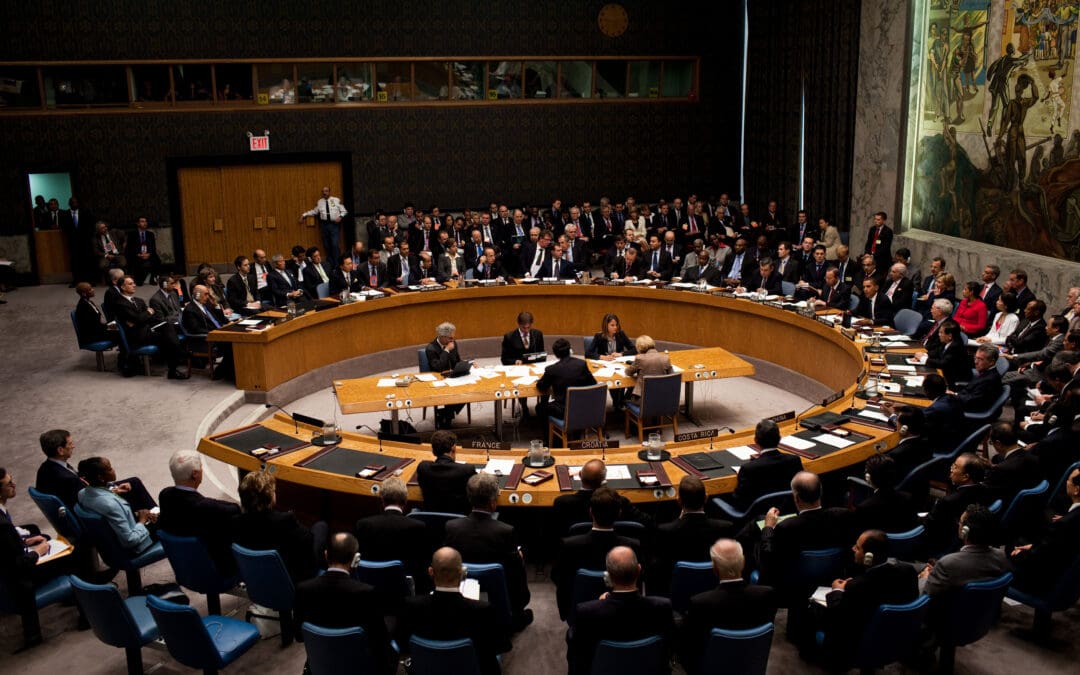
Following a dramatic month of bluster and diplomatic turmoil, the Security Council unanimously passed a resolution demanding the destruction of Syrian chemical weapons. But it still has done nothing to halt the traumatic civil war that has so far killed over 100,000 and displaced over 7 million Syrians.
During the lead up to the agreement, US Ambassador Samantha Power complained, “The Security Council the world needs to deal with this urgent crisis is not the Security Council we have.” Her words are too true. Since 2011, Russia and China have vetoed three different Security Council resolutions condemning the Syrian regime’s violence or promoting a solution. This year Russia has blocked at least three statements calling for humanitarian access to besieged cities and four resolutions or statements condemning or expressing concern over the use of chemical weapons. Prior to the current resolution, the Security Council could not even agree to put out a press statement expressing its disapproval over the use of chemical weapons.
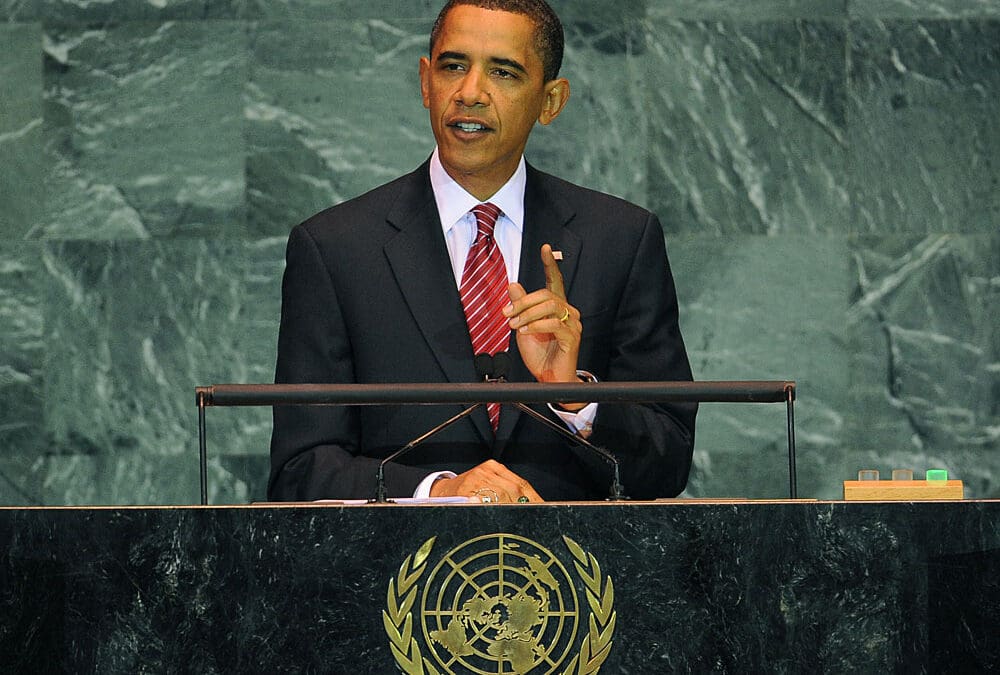
I had hoped that President Obama would use his General Assembly speech to begin a dialogue with the permanent five members of the UN Security Council (P5) encouraging them to agree not to use their veto power to block action in response to genocide and mass atrocities that would otherwise pass by a majority. He came close, but I believe civil society has much more work to do to create the political cover for any P5 leader to initiate a public conversation on what we call the Responsibility Not to Veto (RN2V).
A few readers have asked me for some more background information and history on this concept. So here goes:
History:
The RN2V concept was first discussed at high level at a roundtable in 2001 by French Minister of Foreign Affairs Hubert Védrine. He suggested that the P5 should agree not to apply their veto power to block humanitarian action where their own national interests were not involved. The Canadian-sponsored International Commission on Intervention and State Sovereignty then issued a report later that year affirming this recommendation.
Limiting the use of the veto has been discussed and proposed periodically ever since: by the Kofi Annan’s High-level Panel on Threats, Challenges and Change in 2004; by former U.S. Secretaries of State and Defense Madeline Albright and William Cohen in the Genocide Prevention Task Force in 2008, and Secretary-General Ban Ki-moon and the General Assembly in 2009.
In 2010, GlobalSolutions.org coined the phrase “Responsibility Not to Veto” and published a white paper, The Responsibility Not To Veto: A Way Forwardlaying out a detailed history, rationale and recommendations on how to move forward on limiting the veto in mass atrocity situations. In 2011, a more scholarly article by former GlobalSolutions.org staffer Ariela Blätter and George Washington University’s Paul Williams was published in the Global Responsibility to Protect journal.
Though RN2V has made some headway within P5 states and the UN Secretariat, it has not made any discernible progress with the Security Council. Even senior figures in the Obama administration who are self-proclaimed supporters of the Responsibility to Protect doctrine have made no public mention of RN2V.
The Small States (S5) Setback:
Most recently, in 2012 the a group of small states (Costa Rica, Jordan, Liechtenstein, Singapore and Switzerland) called the S5 drafted a resolution that called on the P5 to reassess their use of the veto: by requiring them to explain why a veto is employed or even considered; and by refraining from employing a veto when Council actions are intended to prevent mass atrocities. Passage seemed very likely until the P5 interfered.
According to an August 2013 FES report, the P5 took action behind closed doors to prevent member states from voting for the proposal. China put pressure on many African nations. While the debate over Syria was underway, the Western P3 (The U.S., the UK and France) pressured Patricia O’Brien, the UN Under-Secretary-General for Legal Affairs and UN Legal Counsel to require a two-thirds majority in the General Assembly for passage. Even this higher bar was not enough to tilt enough member states against the proposal until the Uniting for Consensus group tactically reversed their support, taking along enough member states to prevent a successful vote.
The U.S., Israel and RN2V
Within the U.S., there could be opposition to any discussion of limiting the use of the veto because of how it protects Israel. However, the kinds of mass atrocities that such a proposition would address-helicopter gunships and artillery firing unarmed civilians, chemical weapons, genocide-are not the kinds of crimes against humanity a reasonable observer would anticipate Israel committing. Crimes of this horrendous magnitude are the ones that the Security Council should consider when deliberating limiting the use of the veto. One suggestion to address this concern is to include in any informal agreement on the veto a clear description of the crimes, similar to the elements of crimes, which was written into the Rome Statute of the International Criminal Court at the U.S.’s insistence.
Of course, the Responsibility Not to Veto will only be implemented when enough opinion leaders and activists insist upon it. That’s where you come in – So speak up and take action.
by Matt Woodford | Sep 29, 2013 | Peace & Disarmament, United Nations
Good news and bad news came out the UN this week: the rumored meeting between Presidents Obama and Rouhani did not come to fruition but the Security Council did come to a consensus on Syrian Chemical Weapons but the resolution did not mention consequences. Earlier this week Obama and Rouhani had exchanged letters and the language used suggested that they believed a meeting would be beneficial. Compared to the rhetoric of his predecessor, Rouhani appears to be much more moderate and reasonable. He does not deny the Holocaust nor is openly belligerent and obstinate. Obama is also more moderate that his predecessors who refused to deal with Iran in any way and seemed to want war with the country. The meeting, unfortunately, did not take place; Iranian officials explained that they were worried about the political climate in Tehran and how such a meeting would be received. Secretary Kerry and Iranian Foreign Minister Zarif did meet and had a constructive discussion. They agreed to a Security Council hearing on the Iranian Nuclear program in Geneva in October. Progress was made in improving US-Iranian relations but a meeting between Obama and Rouhani would have been more meaningful and significant and would have indicated a commitment to rapprochement.
There was finally progress from the Security Council concerning Syria on Thursday. The Security Council agreed on a resolution on disarming Syria of its chemical weapons. The resolution condemns the use of chemical weapons and the killing of civilians and states that the use of chemical weapons violates international law. The resolution does not threaten the use of force if Syria does not comply. This resolution is a huge step forward after years of Russia vetoing any resolution about Syria. This is also a huge victory in stopping the proliferation of chemical weapons. Scrutiny will probably be placed on countries that have not signed the Chemical Weapons Convention and are known to have large stores of chemical weapons, like Israel. After weeks and years of stalemate and roadblocks, particularly in the Security Council, substantial progress was made at the UN this week, hopefully more will follow.
by Kevin Burke | Sep 24, 2013 | Global Cooperation, United Nations
As delegates have been meeting for the 68th plenary sessions and General Debate (“UN Week”) at the UN General Assembly this week, September 23rd to October 1st, at UN Headquarters in New York City, it’s worth taking a moment to focus on the General Assembly as an institution and not just as an annual headline-generating device. It’s a great reminder of how far humanity has come these past 68 years in improving diplomacy, collaboration, and peace-building, and yet we still have far to go.
The UN General Assembly is the main deliberative, policymaking, and representative body of the United Nations; it is a deliberative body but not a legislative body in that it has the ability to offer non-binding resolutions to its member states, but it does not make laws. It makes policies for itself and the UN system but does not have the power to compel its member states. Its representation is equal among states: each state has one vote regardless of population, land area, or GDP. The General Assembly does have the power of the purse, as it passes the annual budget for the United Nations and determines how much each member state owes; it also elects the UN Secretary General, the non-permanent (and non-veto-bearing) members of the UN Security Council, the fifteen judges of the International Court of Justice, the fifty-four members of the Economic and Social Council, and new members of the United Nations itself.
What good does this deliberative body do?
Quite a bit.
At the moment, the General Assembly is the only true forum for world opinion – it calls itself the “parliament of nations,” and with 193 members as of September 2013, it admits more opportunities for input than any other international organization: people from every corner of the planet have at least a small voice at the General Assembly. It may not seem like much, but providing marginalized states and people a permanent, institutionalized forum to explain how global problems – or the actions of other states – are affecting them can be an invaluable tool for working out better solutions to those problems.
Furthermore, the General Assembly is a major source of knowledge for policymakers and non-governmental organizations around the world when it commissions reports and gathers conferences on a variety of topics. Subjects discussed this year include progress on HIV/AIDS, road safety, peace and security, human rights, macroeconomic policy, climate change, globalization, poverty, the advancement of women, and much, much more. Just a glance at the agenda for this year’s General Assembly showcases the vast amounts of knowledge manufactured at the request or through the funding of the General Assembly.
And despite the much more involved bureaucracy of the UN Secretariat and the Economic and Social Council, the UN General Assembly has some important bureaucratic roles of its own. The UN Human Rights Council, the UN Disarmament Commission, and the UN Peacebuilding Commission are just a few of the subsidiary organs within the UNGA that work to keep member states informed, cooperating, and actively working toward the lofty goals of the San Francisco conference of 1945. Of course, these councils and commissions are not without controversy – mere membership on the Human Rights Council comes with great responsibility – but the day-to-day work of diplomacy on these issues is an important end in itself.
Criticism of the UN General Assembly (including that of former UN Secretary General Kofi Annan) has focused on its tendency to seek consensus resolutions that meet the approval of all members rather than to try to pass stronger, more meaningful resolutions. The General Assembly also has a reputation for being excessively tedious with resolutions that are not only ineffective but often repetitive in nature. And these are non-binding resolutions!
It’s also worth noting that the UNGA is not a truly representative body. Each member state gets equal representation at the General Assembly, but India and Mauritius are treated equally: India has 1,000 times as many people and 1,600 times as much land area, as one example. States are an important part of how people solve political problems, but global problems may require that individuals get more input into how they are affected by global phenomena. Potential solutions may include weighted voting (cf. The Schwartzberg System of GlobalSolutions.org member Dr. Joseph Schwartzberg) or a parliamentary assembly (a UNPA, so to speak) of elected representatives.
Don’t forget, though, that while the UN General Assembly is a flawed organization that both succeeds and fails in supporting the aims set forth in the UN Charter, it’s also a daily, ongoing diplomatic process. The UNGA today isn’t the UNGA of a year ago, ten years ago, 68 years ago, or the one envisioned by its founders, and it will change tomorrow, next year, and decades into the future – it may have a different name or even be replaced by a different organization altogether. This process of change is good: as we get better at working together on global problems, we change our institutions to better suit our needs. So as you read another news story about a meeting or a speech from the UN this week, remember that the strengths and weaknesses of the UN, and its General Assembly, are ours to use for the good and to change the future.
by Don Kraus | Sep 24, 2013 | Peace & Disarmament, United Nations
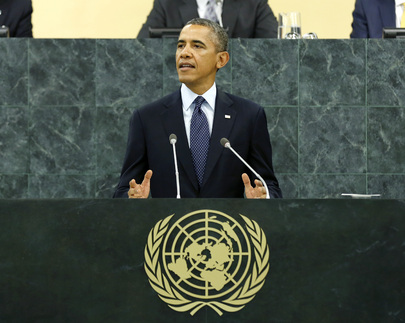
Presidents almost never say most of what you want them to. President Obama’s speech at the UN General Assembly was no exception. In its bottom-third, he says:
“…there will be times when the breakdown of societies is so great, and the violence against civilians so substantial, that the international community will be called upon to act….While the U.N. was designed to prevent wars between states, increasingly we face the challenge of preventing slaughter within states. And these challenges will grow more pronounced as we are confronted with states that are fragile or failing – places where horrendous violence can put innocent men, women and children at risk, with no hope of protection from national institutions.”
“I have made it clear that even when America’s core interests are not directly threatened, we stand ready to do our part to prevent mass atrocities and protect human rights. Yet we cannot and should not bear that burden alone.”
Now here is what he did not say but I wish he had:
“That is why today I want to initiate a dialogue with the other permanent members of the Security Council to discuss limiting the use of the veto when responding to mass atrocities. How can we as a body allow unarmed civilians; men, women and children to be slaughtered, time and time again? Can we sit by and watch unarmed protestors mowed down by helicopter gunships or artillery? Will the Security Council, the body charged with maintaining peace and security, stand idle when chemical weapons or worse are deployed on the homes of those whose only crime was to be in the wrong place at wrong time?
In 2005, here in the General Assembly, the United States, along with every other UN member state agreed that “we are prepared to take collective action, in a timely and decisive manner, through the Security Council … should peaceful means be inadequate and national authorities manifestly fail to protect their populations from genocide, war crimes, ethnic cleansing and crimes against humanity.”
In the months ahead, I will reach out to my counterparts in Great Britain, France, Russia and China to begin a conversation on how we can use this paramount responsibility which we share, the veto, in a more responsible manner that can protect those who most need the United Nations to act, while preserving our national sovereignty.”
How I wish Obama had taken a lead on the use of the veto. Actually, he came pretty close to it, if you read between the lines. I now return you to more of the speech the President did give (long but worth reading):
We live in a world of imperfect choices. Different nations will not agree on the need for action in every instance, and the principle of sovereignty is at the center of our international order. But sovereignty cannot be a shield for tyrants to commit wanton murder, or an excuse for the international community to turn a blind eye to slaughter. While we need to be modest in our belief that we can remedy every evil, and we need to be mindful that the world is full of unintended consequences, should we really accept the notion that the world is powerless in the face of a Rwanda or Srebrenica? If that’s the world that people want to live in, then they should say so, and reckon with the cold logic of mass graves.
I believe we can embrace a different future. If we don’t want to choose between inaction and war, we must get better – all of us – at the policies that prevent the breakdown of basic order. Through respect for the responsibilities of nations and the rights of individuals. Through meaningful sanctions for those who break the rules. Through dogged diplomacy that resolves the root causes of conflict, and not merely its aftermath. Through development assistance that brings hope to the marginalized. And yes, sometimes, all this will not be enough – and in such moments, the international community will need to acknowledge that the multilateral use of military force may be required to prevent the very worst from occuring.
Ultimately, this is the international community that America seeks – one where nations do not covet the land or resources of other nations, but one in which we carry out the founding purpose of this institution. A world in which the rules established out of the horrors of war can help us resolve conflicts peacefully, and prevent the kind of wars that our forefathers fought. A world where human beings can live with dignity and meet their basic needs, whether they live in New York or Nairobi; in Peshawar or Damascus.
These are extraordinary times, with extraordinary opportunities. Thanks to human progress, a child born anywhere on Earth can do things today that 60 years ago would have been out of reach for the mass of humanity. I saw this in Africa, where nations moving beyond conflict are now poised to take off. America is with them: partnering to feed the hungry, care for the sick, and to bring power to places off the grid.
I see it across the Pacific, where hundreds of millions have been lifted out of poverty in a single generation. I see it in the faces of young people everywhere who can access the entire world with the click of a button, and who are eager to join the cause of eradicating extreme poverty, combating climate change, starting businesses, expanding freedom, and leaving behind the old ideological battles of the past. That’s what’s happening in Asia and Africa; in Europe and the Americas. That’s the future that the people of the Middle East and North Africa deserve – one where they can focus on opportunity, instead of whether they’ll be killed or repressed because of who they are or what they believe.
Time and again, nations and people have shown our capacity to change – to live up to humanity’s highest ideals, to choose our better history. Last month, I stood where fifty years ago Martin Luther King Jr. told America about his dream, at a time when many people of my race could not even vote for President. Earlier this year, I stood in the small cell where Nelson Mandela endured decades cut off from his own people and the world. Who are we to believe that today’s challenges cannot be overcome, when we have seen what changes the human spirit can bring? Who in this hall can argue that the future belongs to those who seek to repress that spirit, rather than those who seek to liberate it?
I know what side of history I want to the United States of America to be on. We are ready to meet tomorrow’s challenges with you – firm in the belief that all men and women are in fact created equal, each individual possessed with a dignity that cannot be denied. That is why we look to the future not with fear, but with hope. That’s why we remain convinced that this community of nations can deliver a more peaceful, prosperous, and just world to the next generation.
What do you think? Is it time to limit the use of the veto? Is the president thinking about it? Let me know.
by Lucy Webster | Sep 3, 2013 | Global Justice, United Nations
The United Nations has been moderately successful at ending the scourge of war between its member states. It has also shown creative support for human rights by developing norms such as the Responsibility to Protect to assert that people are more important than states—that no member state is to commit gross abuses and violence against its people.
However, action to effectively ensure observance of the R2P norm has been blocked repeatedly by the veto possibility in the UN Security Council. The veto power and the status of Permanent Members of the Council given to the 5 victorious powers from World War II was seen as the only way to get agreement to the San Francisco Charter in 1945, but many scholars believe this was not intended as a permanent arrangement. In fact, the Charter provides that “A General Conference of the Members of the United Nations for the purpose of reviewing the present Charter may be held at a date and place to be fixed by a two-thirds vote of the members of the General Assembly and by a vote of any seven (later nine after the membership of the Council was increased from 11 to 15) members of the Security Council” . . . . “Any alteration of the present Charter recommended by a two-thirds vote of the conference shall take effect when ratified . . . . by two thirds of the Members of the United Nations including all the permanent members of the Security Council.”
Because it was not possible for the Security Council to negotiate effectively to prevent the bombing of Kosovo in the 1990s, a coalition of the willing was formed to take action bypassing the veto. Now in Syria, some UN member states have been looking for a way to protect the insurgent groups in Syria against the bombing and the evident use of poison gas by Syrian President Bashar al-Assad.
The US public knows this is a dangerous approach that could lead to a further escalation of conflict between the sectarian parties in Syria and spill over into the neighboring countries that support either Assad or the opposition factions. The UK public is also very wary of any such military action. The aim should not be to teach states, but to serve people.
The UN needs to develop a more nuanced approach that would work to protect PEOPLE, not just try to teach governments to honor international norms such as the prohibition on the use of chemical weapons. The UN needs to start a process to work for establishing a standing emergency UN Peace Force to take action to protect. A directly recruited UN Peace Force consisting of individuals with military and peacekeeping skills needs to be established and given authority by the UN General Assembly and Security Council to move into areas where there is gross violation of human rights (as now in Syria)—to see exactly what is happening, and to deter further violence.
by Tiffany Tse | Feb 11, 2013 | Global Cooperation, United Nations
On February 11th, the United Nations Foundation organized a panel on the United Nation’s Post- 2015 Development Agenda, featuring Mr. Will Davis, director of Washington’s United Nations Development Programme and Mr. John Norris, executive director of the Center of American Progress.
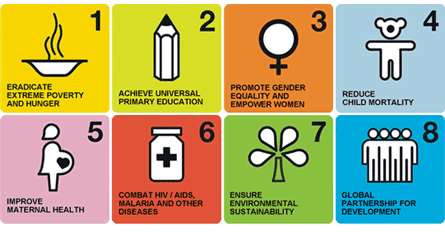
The United Nation’s Millennium Development Goals (MDGs) were created “to establish peace and a healthy global economy” by highlighting major issues such as children’s health, female empowerment sustainable environment, poverty, disease and development. These goals were created in 2000 and were set to be achieved by 2015. The year 2015 is approaching and the United Nations has so far been doing a successful job in achieving these goals- but what happens after 2015?
Davis and Norris both emphasized the continuing need for developmental goals after 2015 and how as a society, we must continue to not only achieve these existing goals but also create goals that are both realistic and broad. There is a strong need for educating people on the existing MDGs. Only 8% of the world is fully aware of the MDGs and we need to increase that percentage in order to make these goals more realistic and successful. This can be accomplished in several ways, such as educating the youth early on in school systems, involving non-government and non-profit organizations, creating alliances with United States agencies and engaging the private sector.
Overall, the United Nations Foundation hosted an excellent panel discussion pertaining to the future of the United Nation’s Millennium Development Goals. I invite you to read more about their findings on WorldWeWant2015.org.