Originally published on the CGS blog on September 24, 2013.
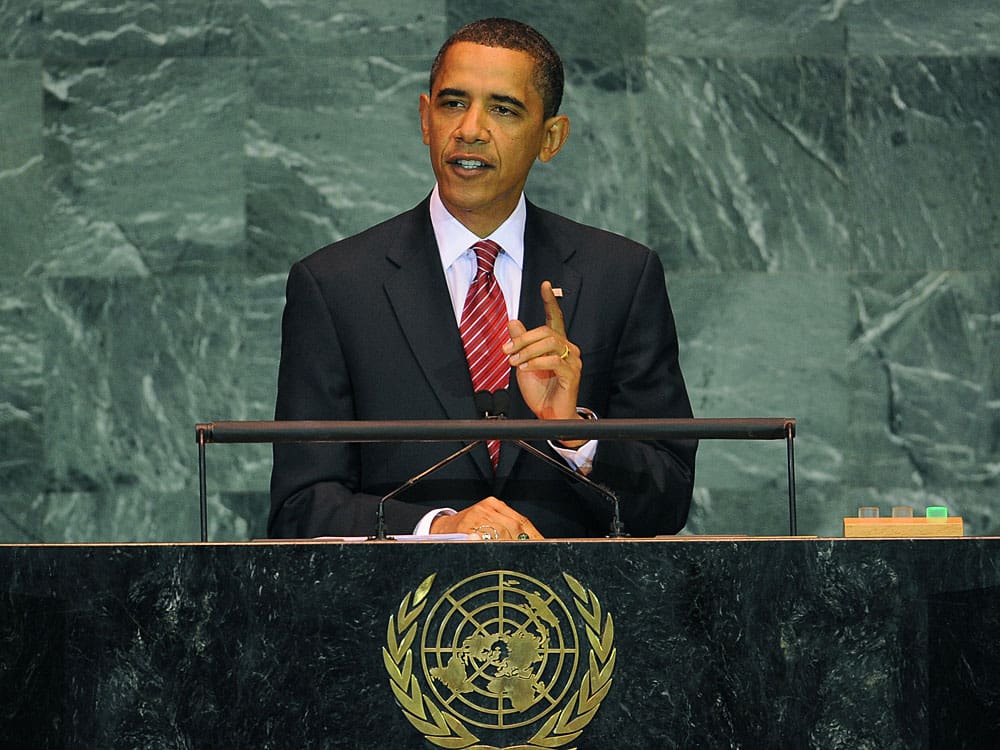
Presidents almost never say most of what you want them to. President Obama’s speech at the UN General Assembly was no exception. In its bottom-third, he says:
“…there will be times when the breakdown of societies is so great, and the violence against civilians so substantial, that the international community will be called upon to act….While the U.N. was designed to prevent wars between states, increasingly we face the challenge of preventing slaughter within states. And these challenges will grow more pronounced as we are confronted with states that are fragile or failing – places where horrendous violence can put innocent men, women and children at risk, with no hope of protection from national institutions.”
“I have made it clear that even when America’s core interests are not directly threatened, we stand ready to do our part to prevent mass atrocities and protect human rights. Yet we cannot and should not bear that burden alone.”
Now here is what he did not say but I wish he had:
“That is why today I want to initiate a dialogue with the other permanent members of the Security Council to discuss limiting the use of the veto when responding to mass atrocities. How can we as a body allow unarmed civilians; men, women and children to be slaughtered, time and time again? Can we sit by and watch unarmed protestors mowed down by helicopter gunships or artillery? Will the Security Council, the body charged with maintaining peace and security, stand idle when chemical weapons or worse are deployed on the homes of those whose only crime was to be in the wrong place at wrong time?
In 2005, here in the General Assembly, the United States, along with every other UN member state agreed that “we are prepared to take collective action, in a timely and decisive manner, through the Security Council … should peaceful means be inadequate and national authorities manifestly fail to protect their populations from genocide, war crimes, ethnic cleansing and crimes against humanity.”
In the months ahead, I will reach out to my counterparts in Great Britain, France, Russia and China to begin a conversation on how we can use this paramount responsibility which we share, the veto, in a more responsible manner that can protect those who most need the United Nations to act, while preserving our national sovereignty.”
How I wish Obama had taken a lead on the use of the veto. Actually, he came pretty close to it, if you read between the lines. I now return you to more of the speech the President did give (long but worth reading):
We live in a world of imperfect choices. Different nations will not agree on the need for action in every instance, and the principle of sovereignty is at the center of our international order. But sovereignty cannot be a shield for tyrants to commit wanton murder, or an excuse for the international community to turn a blind eye to slaughter. While we need to be modest in our belief that we can remedy every evil, and we need to be mindful that the world is full of unintended consequences, should we really accept the notion that the world is powerless in the face of a Rwanda or Srebrenica? If that’s the world that people want to live in, then they should say so, and reckon with the cold logic of mass graves.
I believe we can embrace a different future. If we don’t want to choose between inaction and war, we must get better – all of us – at the policies that prevent the breakdown of basic order. Through respect for the responsibilities of nations and the rights of individuals. Through meaningful sanctions for those who break the rules. Through dogged diplomacy that resolves the root causes of conflict, and not merely its aftermath. Through development assistance that brings hope to the marginalized. And yes, sometimes, all this will not be enough – and in such moments, the international community will need to acknowledge that the multilateral use of military force may be required to prevent the very worst from occuring.
Ultimately, this is the international community that America seeks – one where nations do not covet the land or resources of other nations, but one in which we carry out the founding purpose of this institution. A world in which the rules established out of the horrors of war can help us resolve conflicts peacefully, and prevent the kind of wars that our forefathers fought. A world where human beings can live with dignity and meet their basic needs, whether they live in New York or Nairobi; in Peshawar or Damascus.
These are extraordinary times, with extraordinary opportunities. Thanks to human progress, a child born anywhere on Earth can do things today that 60 years ago would have been out of reach for the mass of humanity. I saw this in Africa, where nations moving beyond conflict are now poised to take off. America is with them: partnering to feed the hungry, care for the sick, and to bring power to places off the grid.
I see it across the Pacific, where hundreds of millions have been lifted out of poverty in a single generation. I see it in the faces of young people everywhere who can access the entire world with the click of a button, and who are eager to join the cause of eradicating extreme poverty, combating climate change, starting businesses, expanding freedom, and leaving behind the old ideological battles of the past. That’s what’s happening in Asia and Africa; in Europe and the Americas. That’s the future that the people of the Middle East and North Africa deserve – one where they can focus on opportunity, instead of whether they’ll be killed or repressed because of who they are or what they believe.
Time and again, nations and people have shown our capacity to change – to live up to humanity’s highest ideals, to choose our better history. Last month, I stood where fifty years ago Martin Luther King Jr. told America about his dream, at a time when many people of my race could not even vote for President. Earlier this year, I stood in the small cell where Nelson Mandela endured decades cut off from his own people and the world. Who are we to believe that today’s challenges cannot be overcome, when we have seen what changes the human spirit can bring? Who in this hall can argue that the future belongs to those who seek to repress that spirit, rather than those who seek to liberate it?
I know what side of history I want to the United States of America to be on. We are ready to meet tomorrow’s challenges with you – firm in the belief that all men and women are in fact created equal, each individual possessed with a dignity that cannot be denied. That is why we look to the future not with fear, but with hope. That’s why we remain convinced that this community of nations can deliver a more peaceful, prosperous, and just world to the next generation.
What do you think? Is it time to limit the use of the veto? Is the president thinking about it? Let me know.