by Stefanie Cook | Jan 17, 2013 | Global Cooperation, United Nations
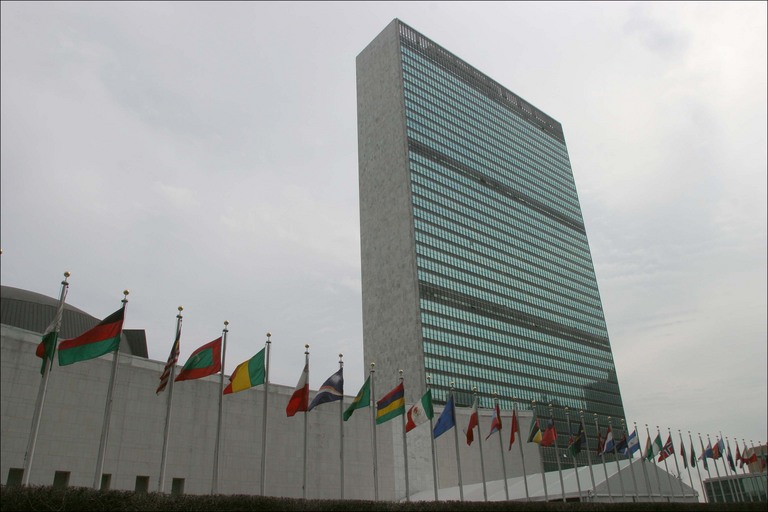
As crises continue in Mali and Syria, Better World Campaign (BWC) released the latest bipartisan poll of American perceptions of the United Nations.
According to BWC’s findings, “Eight in 10 voters say it is important for the U.S. to maintain an active role in the United Nations, and further that it is in America’s best interest to continue to actively support the UN.”
In addition, 93 percent of Americans believe it is important that the U.S. be a member of the World Health Organization (WHO). WHO is the global health authority for the United Nations providing leadership on setting health standards, research, monitoring health situations and preventing disease outbreak. The United States’ funding for the WHO is in danger. The U.S. is legally required to cut funds to any UN agency that recognizes a Palestinian state and Palestine is expected to bid for membership in May at the World Health Assembly in Geneva. “While the Obama Administration has no flexibility to waive the law, Congress has the power to grant the President waiver authority,” says BWC.
Both Democrats and Independents strongly believe that the United Nations is supportive of America’s objectives around the world. The poll showed that Republicans are evenly split on the issue. Forty-eight percent believe that the UN is supportive of America’s objectives and 48 percent believe that it is not.
Knowledge of American favorability towards international cooperation is especially important as Congress considers cuts to spending on foreign aid this session.
by Arielle Weaver | Oct 24, 2012 | Global Cooperation, United Nations
“We are living through a period of profound turmoil, transition and transformation. Insecurity, inequality and intolerance are spreading. Global and national institutions are being put to the test. With so much at stake, the United Nations must keep pace across the spectrum of its activities – peace, development, human rights, the rule of law, the empowerment of the world’s women and youth.”
Secretary-General Ban Ki-moon
Today, 67 years ago, the United Nations Charter was ratified and, with this document, the United Nations was born. There is no doubt how significant this establishment has been and today we should take a minute to reflect on this accomplishment.
As Secretary-General Ban Ki-moon stated, the United Nations is the entity in which we as Americans can help in the global fight for human rights, women’s advancement, and peace. It is the one place in the world where all nations can come together and work together. In the final U.S. Presidential Debate, both candidates expressed support for international cooperation. Governor Romney noted: “We need to have strong allies. Our association and connection with our allies is essential to America’s strength.” President Obama stated that working with other nations was essential so that; “We do have to make sure that we’re protecting religious minorities and women because these countries can’t develop unless all the population, not just half of it, is developing. These countries can’t develop if young women are not given the kind of education that they need.”
Showing support for global institutions is (and should be) a bi-partisan issue. We all believe in universal human rights, in working against gender based violence, rule of law, and ensuring peace around the world. Having the United Nations as an entity to fight for these truths has helped us tackle the issues together and cooperatively.
Today let us all celebrate the together the men and women of the world who make the United Nations possible.

by Sean Langberg | Jun 7, 2012 | Global Justice, United Nations
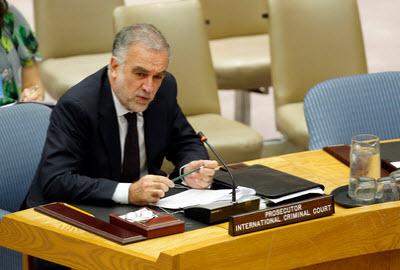
Outgoing International Criminal Court Prosecutor Luis Moreno-Ocampo called on the United Nations Security Council to expedite the arrest of Sudanese president Omar al-Bashir yesterday. The United Nations does not have an independent body capable of making the arrest, but they can pressure neighboring states to arrest Bashir if given the opportunity. Bashir currently faces two arrest warrants for crimes against humanity, war crimes, and genocide in the Darfur conflict that killed an estimated 300,000 people. His role in the conflict is nearly undeniable, but ICC member states are reluctant to make an arrest because of economic and military geopolitics.
The chief prosecutor’s call to action obviously did not sit well with the Sudan’s representative to the United Nations Daffa-Alla Elhag Ali Osman. He claims that Moreno-Ocampo is “ignoring the U.N. Charter” by pursuing the arrest warrant against Bashir and other Sudanese officials. At the end of the Security Council session, he went further by calling the chief prosecutor’s plea the “statement of a terrorist.” However, Moreno-Ocampo countered by saying that the representative’s unwillingness to cooperate could implicate him in the crimes as well.
The recent attention by Moreno-Ocampo is most likely fueled by three primary factors. First, the court convicted ex-Liberian leader Charles Taylor last month, the first major conviction of a national leader since the Nuremberg trials. It was a landmark decision that is widely seen as a victory for international justice despite more than nine years between the issuance of a warrant and the conviction. Second, Moreno-Ocampo’s term that began in 2003 expires on June 16th. He could be pressuring the Security Council in a last-ditch effort to arrest Bashir who remains the only person charged with genocide and the first head of state to be indicted by the ICC. Third, is Sudan’s worsening situation on the ground in South Kordofan particularly in the Nuba Mountains. For months, Bashir’s forces have carried out bombing campaigns and denied access to humanitarian relief groups along the southern border. While Bashir’s ICC charges are related to crimes in the Darfur conflict, his capture would also impact current violence.
There is a precedent for ICC member states not arresting Bashir when given the opportunity. Kenya, Chad, and Djibouti all failed to arrest him after the warrant’s issuance, but the most well-known case is Malawi’s hosting of Bashir at a 2011 regional trade summit because of a “brotherly coexistence.” However, Joyce Banda, the current president, announced this week that Bashir would be arrested if he attends next month’s African Union summit. Kenya also reversed their decision over a year after the Bashir visit. This marks an important policy shift and eliminates two of Bashir’s partners in a major trade network called the Common Market for Eastern and Southern Africa.
Moreno-Ocampo’s plea comes as the tenth anniversary of the Rome Statute, which created the ICC, approaches on July 1. The UN Security Council should heed the prosecutor’s remarks and urge regional partners to arrest Bashir if given the opportunity. The recent convictions of Thomas Lubanga and Charles Taylor gave the ICC needed attention and confidence. The United Nations Security Council can follow-up on these successes by highlighting Malawi’s reversal and pressuring other African states to have the same commitment to international justice.
by Melissa Kaplan | May 17, 2012 | Global Justice, United Nations
It was not unexpected, but the news was still dispiriting and depressing. Yesterday, the United Nation’s Secretary General’s top lawyer effectively put the brakes on a resolution which would have, among other things, urged the five permanent members of the Security Council (known as the P-5) to refrain from using their veto power to prevent U.N. action in situations where genocide or mass atrocities are threatening civilian lives.
The resolution had been proposed by a group of nations termed the “S-5”, or small five, in contrast to the veto-wielding P-5 countries. The S-5 group–Costa Rica, Liechtenstein, Jordan, Singapore and Switzerland–had called for a vote on a resolution to urge the Council to reform the way it works, allow more scrutiny of its actions, and, most significantly for those civilians suffering from oppression by regimes such as Syria and Bahrain, hold off on using their veto when atrocities are being committed and the lives of innocent people are at stake.
But the P-5-the United Kingdom, France, Russia, China, and the United States-worked actively to thwart the small countries’ resolution, pressing its sponsors to abandon it. Top U.N. lawyer Patricia O’Brien recommended that the resolution require a two-thirds majority vote in the General Assembly, rather than the usual simple majority. This set the threshold too high for a vote on the resolution to succeed, and allows the P-5 to continue conducting business as usual. I guess the P-5 finally found something they can all agree on: they don’t want to be held accountable for their actions.
As a citizen of a P-5 nation, this decision is highly upsetting to me. But my reaction pales in comparison to the real price that will be paid for this decision by those men, women and children living in countries around the globe where governments attack their own citizens and violate their rights with impunity. As long as one vote in the Security Council can hold up U.N. action in places like Syria, none of this will change. I can only hope that one day the tide will turn on the kind of thinking that protects Security Council privilege rather than the lives of innocent civilians.
by Amanda Bowen | Apr 26, 2012 | Global Justice, News, United Nations
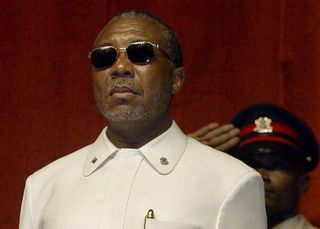
Former Liberian President Charles Taylor was found guilty of war crimes and crimes against humanity in the last trial of a major figure for the Special Court for Sierra Leone. Taylor was convicted of aiding rebels in the Revolutionary United Front in neighboring Sierra Leone in exchange for blood diamonds, but was found innocent of having direct control over forces.
It is a landmark victory, as it is the first conviction of a former national leader for grave crimes since Karl Doenitz, who briefly ruled Nazi Germany after Hitler, was convicted at Nuremberg. This verdict lays the groundwork for holding fair trials of other heads of state accused of atrocities, such as Sudan’s Omar Al-Bashir and Syria’s Bashar Al-Assad.
As international law has developed over time, there has been a dramatic increase in the world community’s acceptance of the prosecution of tyrannical leaders. From the U.N.’s request for an investigation into the Libyan conflict to Syrian protesters calling for Assad to stand trial at the International Criminal Court, it is encouraging that international courts are now regarded as a major tool to end the impunity of war criminals and to provide justice for their victims.
Taylor will be sentenced on May 30th to prison in Great Britain.
by Citizens for Global Solutions | Mar 23, 2012 | Global Cooperation, United Nations
Guest Post by Nicole Helmers, University of Indianapolis, freshman majoring in Psychology and Occupational Therapy.
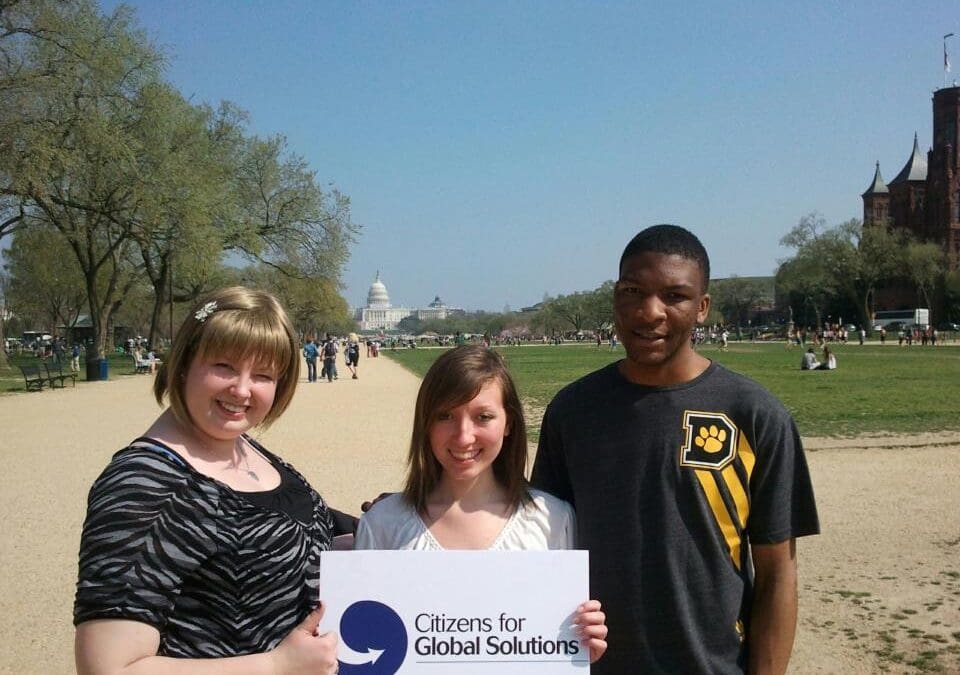
While all my wild friends were getting spray-on tans and neon bikinis for Panama City Beach for Spring Break 2012, myself and a couple of my classmates from the University of Indianapolis met up with other students from other Indiana Universities and headed to Washington, D.C. in dress pants and heels. After an eleven-hour bus ride, we arrived in this beautiful city, with the cherry blossoms in full bloom, eager to attend the GlobalSolutions.org’ 2012 Annual Conference early the next morning.
After maneuvering through D.C.’s stressful traffic, we arrived and discovered that the conference was filled with people of every age, race, and religion, not just college students. It was refreshing and empowering to be part of such a great group!
After a long day of traveling and spending a few hours out on the town the day before, we were now on Capitol Hill ready to kick off the conference and start our day of lobbying. As a Cincinnati resident and Ohio voter, I split off from my Indiana friends and headed to the Russell Office Senate building to meet with Senator Rob Portman’s office.
Though Senator Portman was not available, we met with Brent Bombach, the senator’s military legislative assistant. Though a bit nervous, the three of us from Ohio walked into the senator’s office and soon started our conversation with Mr. Bombach.
We had spent part of that morning training for these visits and had three main points that we wanted to discuss with the senator’s office.
- We wanted the senator to support full funding for the International affair’s budget, especially as it relates to the United Nations and peacekeeping missions. The International affairs budget is only 1% of the total federal budget and for every $1 we invest in the United Nations, we receive about $1.66 back. Not only is the International Affairs budget a good investment; it is critical for national security and our nation’s interests.
- We also had deep concerns about the situation in Iran. While no one wants to see an Iran with nuclear weapons, we were asking the senator not to rush to war. No option should be taken off the table, we stated, but diplomacy and work through International institutions like the IAEA should be completely exhausted before military options are considered.
- With the breaking news that the International Criminal Court (ICC) had just convicted Congolese warlord Thomas Lubanga, the Court’s first conviction in its ten-year history, we asked the senator’s office to seek a closer relationship with the ICC. The conviction of Lubanga was a clear message to the world against the use of child soldiers. We felt that it was in the U.S.’s best interest and in the interest of global cooperation and peace to support the work of the ICC.
Overall, we were received extremely well in Senator Portman’s office, and Mr. Bombach answered our questions in a clear and polite manner. The moment we stepped out of the conference room, I let out a sigh, letting go of all the nervousness and uncertainty that was bottled up inside me. I realized just how much of an impact one individual can have upon a senator and important decisions.
The next day, our group of 16 from Indiana quickly navigated the Metro system and the busy D.C. streets in order to reach the security station of the White House. I couldn’t believe that we, as college students, were going to be able to tour the East Wing of the actual White House! Seeing the inside of a building that I have been familiar with since I was a child was absolutely breath taking, life altering, and humbling. Not only was GlobalSolutions.org specially invited to join, but we also had the chance to speak with some important members of the government and introduce our issues.
The last day of the conference was specially geared toward the nuts and bolts of GlobalSolutions.org. Not only were we excited to hear about changes at CGS, but we also had the chance to speak our minds about the way the organization was structured. My friends and I all stood behind the important point that college students and young professionals were the future of this organization and were needed to keep it running and expanding. I have taken it as my own responsibility to form a small chapter of CGS at the University of Indianapolis, and I cannot wait to put the plan in place of getting more students involved in action.
This conference has opened my eyes to the realization that I can personally do something to persuade government leaders and put my college courses in Government to work. The future of CGS is bright, and I cannot wait to attend the conference next year!