by Daniel Borman | Jun 20, 2011 | Global Cooperation, United Nations
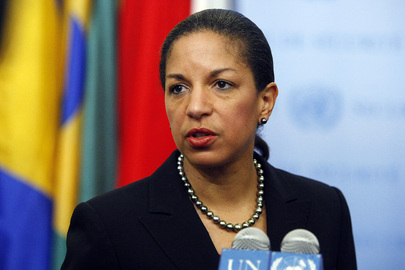
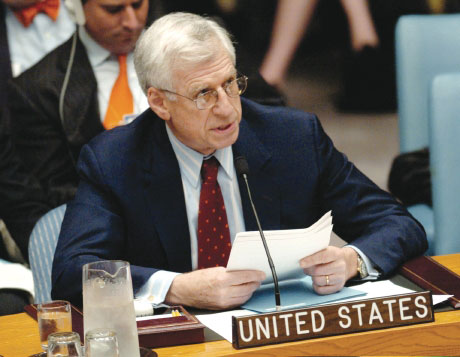
Susan Rice, U.S. ambassador to the UN, and Esther Brimmer, Assistant Secretary of State for International Organization Affairs, both made remarks recently highlighting the importance of the UN and noting the progress that the institution has made.
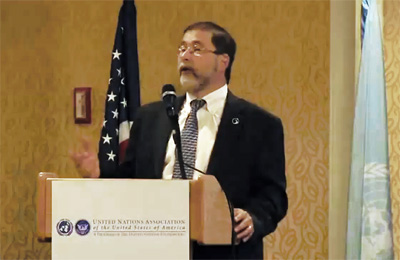
Rice spoke at the annual meeting of the United Nations Association of the United States. Below are some highlights. Check out Rice’s full speech here.
Rice spoke about the need to engage with the UN to solve global problems:
“Now more than ever, Americans’ security and wellbeing are inextricably linked to those of people everywhere. Now more than ever, we need common responses to global problems. And that is why the U.S. is so much better off-so much stronger, so much safer and more secure-in a world with the United Nations than we would be in a world without it.”
Rice also spoke to the various accomplishments of the UN:
“The UN helps halt the proliferation of nuclear weapons. UN humanitarian agencies go where nobody else will to provide desperately needed food, shelter, and medicine. The UN helps countries combat poverty. The UN fosters democracy by helping strengthen fragile state institutions and supporting elections worldwide, as we’ve seen recently in the run up to the elections in Tunisia and the elections in Guinea. Finally, the UN can bring countries together to advance universal human rights and condemn the world’s worst indignities.”
Lastly, Rice emphasized how critical it is that the U.S. not fall back on its commitment and continues to pay its dues to the UN:
“Some in Congress are again calling for the United States to withhold payment of our legally mandated dues. But, as you well know well, the UN can’t deliver the results we want, if we starve it of the resources it needs.
Meanwhile, Esther Brimmer focused on the change that the U.S. has been able to enact in the Human Rights Council simply by reforming the body from within:
“U.N. bodies, including the Human Rights Council, have improved as the result of direct U.S. engagement.”
She went on to say:
“The Council’s improvement through U.S. engagement is undeniable.”
Lastly, Brimmer also stressed how important it is for the U.S. to pay its dues to the UN:
“The United States must maintain the strongest position it can at the U.N., and that means paying its bills on time and in full…How could we have won tough Security Council sanctions on Iran or North Korea if we were continuing to incur arrears?”
These remarks by both speakers show how vital the UN is and the ability of the institution to undergo meaningful change. They also show that withholding our dues from the U.N. is not only hurtful to the institution, but is also hurtful to American interests.
Take action now to support UN funding and the International Affairs Budget
by Tony Fleming | Jun 7, 2011 | Global Cooperation, News, United Nations
Cross-posted from Global Memo.
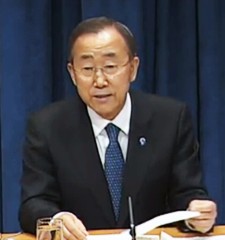
Ban Ki-Moon formally announced his bid for a second term this morning. The Secretary General told a gathering of congratulatory reporters at the United Nations that he had sent letters to members of the Security Council and the General Assembly to “offer, humbly, myself in consideration for a second term as secretary general of the United Nations.”
His announcement certainly comes only with his having secured commitments from the P5 members of the Security Council – United States, United Kingdom, China, Russia and France. Public statements from officials from China the U.S. and France support this, and the Security Council began a discussion of relevant procedures only a few hours later. With no challenger in sight, and no invitation for other candidates to come forward, he is expected to be easily confirmed by the General Assembly as early as June 21 if not sooner.
His re-nomination was not alway as certain. Ban risked vetoes from several permanent members during his first few years. He annoyed Russia in 2008 with comments supportive of Kosovo’s independence. He treaded lightly against China, avoiding even criticism of the government’s human rights violations against Nobel laureates. Both governments were unhappy with his criticism of actions by government forces in Sri Lanka against Tamil separatists and his support for protestors in Egypt against Hosni Mubarrak. Failure to substantively reform the UN management led to general overall dissatisfaction by U.S. officials. As late as mid-March of this year, Deputy Secretary of State Suzanne Nossel expressed the U.S.’s continued concern about the slow pace of management reform. In addition, Ban was the subject of harshly critical leaked memos, criticizing his performance and accusing him of corruption and “reprehensible” intervention in internal oversight matters. In addition, he lost more than one vote of confidence conducted by the UN Staff Union.
But he has apparently been “bland and conciliatory enough” in responding to P5 concerns that by the end of April, Ban felt comfortably alluding to his desire to serve a second term. Last week, he met with the Chinese vice president and had breakfast with Asian Group leaders this morning prior to the announcement. Though it is the five permanent member votes that really at this stage, Ban is also considered widely supported by middle and smaller pow ers.
Egypt’s U.N. Ambassador Maged Abdelaziz, whose country heads the 120-member Nonaligned Movement of mainly developing countries and China, said last month that he knew of no opposition to Ban. “And my feeling is among the countries of the Nonaligned (Movement) that all of us are in support of his election,” he told The Associated Press.
Ban took a number of questions during this morning’s press conference, many challenging him to speak out against ongoing human rights violations, his earlier commitments to reform and goals he set for his office in 2006. On the question of human rights, Ban highlighted progress made to date across the Arab world, but deflected criticism by insisting that he had done all he could by calling on national leaders in Syria, Yemen and elsewhere to respect human rights. He stressed accountability reforms he had put in place within the Secretariat, including financial reporting requirements and promotion of women to senior positions.
Bill Varner with Bloomberg News, asked Ban about his two top priorities when elected in 2006, ending the atrocities in Darfur and addressing the threat of climate change.
Now neither has been achieved. Now, you might say, nobody can blame you necessarily for those, but don’t you think you should be held accountable for the fact that both of those goals haven’t been achieved?
Ban did his best to avoid answering the question directly, rambling a bit about ongoing efforts on both issues, the places he has been and people he has met with, and what has still to be done, but eventually had to just settle for stating that both priorities are major challenges and are works “in progress.”
Matthew Lee with Inner City Press pressed Ban on the lack of challengers for the UN’s top post. In the context of UN reform and the call for democracy across the Arab world, Lee asked
Do you think there should be another candidate?…Do you think the UN should have a process almost like the IMF has now, in which they have a time for the solicitation of other candidates, a process of interviews, and then a vote, or do you think that is not necessary here?
Ban stated that whether other candidates were nominated was up to member states and that reforming the selection process had been discussed at length in the context of revitalizing the role of the General Assembly. While far from perfect, the 2006 selection was unprecedentedly accountable in the use of such formal procedures as Lee noted the IMF are following; I covered these in my blog on the selection that year and in a graduate program study on improving global leadership selection more generally. In contrast, and despite his protests to the contrary, Ban’s reappointment this year is being taken for granted by most observers. No other candidates are even being suggested nor is there is any apparent interest in inviting other nominations or setting a deadline by which they might be accepted. (Compare this to the several names mentioned as potential candidates for IMF chief within days of Dominique Strauss-Kahn’s arrest.)
Ban seems in fact to be experiencing a renewed honeymoon with the media. He cautioned the several reporters who preemptively congratulated on him on his second term, asking for due respect to member states’ role in weighing his candidacy. He plans to meet with representatives of all 192 member states and, he said, to “humbly seek their support as members of the United Nations. They have the prerogative to make the decision.”
The timeline for when members might rubberstamp Ban’s re-appointment is frighteningly short. Colum Lynch with Turtle Bay suggested that the Security Council and the General Assembly would meet later this month and likely approve Ban’s nomination and appointment by June 21. However, Ban himself suggested this morning that the Council and the General Assembly could reach a decision on his candidacy by the end of this week.
Not only is this timeline so short as to prevent any genuine and public discussion on Ban’s candidacy, let alone allow other candidates to be put forward, it would be the earliest renewal of a Secretary-General’s mandate in UN history. Kofi Annan’s reappointment in 2001, was approved in the Security Council on June 27, at the time several months earlier than such decisions had been adopted in the past.
Prior to this morning’s presser, Ian William wrote that “It would imply a tremendous loss of face for Ban, South Korea and even to some extent Asia, if he had overtly indicated interest without being sure that that he had all the ducks in a row.” Apparently, he has indeed lined up his ducks and is happily and quickly walking them to a second-term nomination.
by Don Kraus | Jun 6, 2011 | United Nations
John Danforth, a former U.S. Ambassador to the UN (2004-05), and a Republican U.S. senator from Missouri (1976-94) just published an excellent article in USA Today laying out why it is in the United States’ interest to stay engaged in the UN.
He says that while Congress has been debating whether to limit contribution to the UN, the real debate is:
“how we can best influence the institution to accelerate the adoption of reforms while not shutting down the organization’s work, decreasing U.S. influence, and costing American taxpayers more money.”
His bottom line is this:
“Cutting or limiting our funding, particularly at a time when the world is facing a number of global challenges, can only handicap U.S. diplomacy and give our adversaries a stronger hand.”
I hope his former colleagues on the Hill are listening to this Republican icon from the “Show Me” state. Click here to send a message to your representatives supporting U.N. funding.
by Don Kraus | Apr 18, 2011 | Peace & Disarmament, United Nations
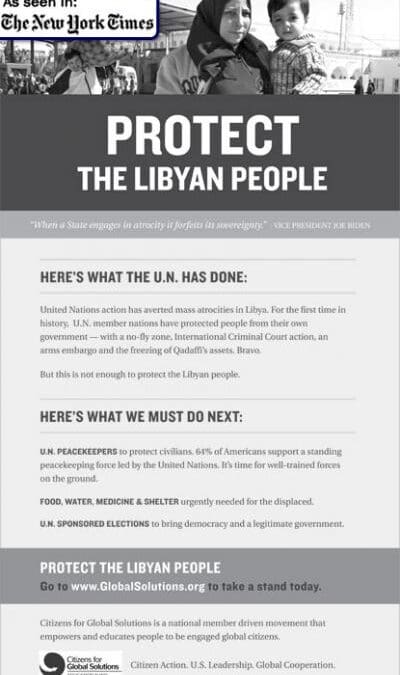
On Monday, April 18, GlobalSolutions.org ran a full page advertisement in the New York Times that calls for three essential actions for the U.N. to take in Libya. We are reaching out to Americans because we now live in a new age where the international community has accepted its responsibility to protect. But you can’t protect babies from 30,000 feet nor should this be the job of the U.S. and its allies alone. The United Nations must have the support and tools that it needs to get these jobs done:
- Deployment of U.N. Peacekeepers On the Ground to Protect Libyan Civilians;
- Provision of Food, Water, Medicine and Shelter for Displaced People in Libya;
- U.N. Sponsored Elections to Bring Democracy and a Legitimate Government.
Take action now – sign the petition
These goals are in line with the Opinion Editorial written by President Obama, UK Prime Minister Cameron, and French President Sarkozy. In a joint editorial published in the Times, they declared:
“The United Nations and its members should help the Libyan people as they rebuild where Qaddafi has destroyed — to repair homes and hospitals, to restore basic utilities, and to assist Libyans as they develop the institutions to underpin a prosperous and open society.”
U.N. Peacekeeping:
Today 64% of Americans supports a standing peacekeeping force led by the United Nations. Such a force would have the strength and legitimacy to halt the fighting in Libya without having to rely on NATO ground forces. While a standing U.N. peacekeeping force does not yet exist, this is the moment for the international community to establish it. This force could integrate within its ranks all those Libyans who desire peace, the protections of civilians and a legitimate government within their nation.
Sixteen U.N. peacekeeping operations are currently deployed worldwide, involving nearly 100,000 troops and police from about 120 countries. Peacekeeping has proven to be one of the most effective tools available to the U.N. to assist countries navigating the difficult path from conflict to peace. U.N. peacekeepers provide security and the political and peace building support to help countries make the difficult, early transition from conflict to peace.
Historically, peacekeeping missions have done vital work in helping countries torn by conflict create conditions for lasting peace. For example, the U.N. mission to East Timor in the early 2000s helped the country recover from a bloody Civil War and transition successfully to a relatively stable democracy. In Côte D’Ivoire, the U.N. peacekeeping mission has done similar work, helping to remove the brutal dictator, Laurent Gbagbo, put an end to the 2nd Ivorian Civil War in the past decade, and facilitate the peaceful transition to democracy.
In Haiti, U.N. peacekeepers helped in the recovery following the 2010 earthquake by restoring a secure and stable environment and by facilitating a legitimate election, the results of which are soon to be officially released. Now U.N. peacekeepers are looking to continue aiding people as Haiti looks to rebuild its economy and transition to democracy.
In Sudan, U.N. peacekeepers have worked to enforce the 2005 Comprehensive Peace Agreement signed by the government of Sudan and the Sudan People’s Liberation Movement/Army. U.N. peacekeepers there have provided much needed humanitarian aid to the Sudanese people and helped oversee the election on the referendum to make Southern Sudan an independent state.
Humanitarian Assistance:
The United Nations refugee agency has warned that a lack of funding could undermine its ongoing efforts to provide humanitarian assistance to tens of thousands of people displaced by the unrest in Libya, saying it has so far received slightly over half of the funding it requested for the operation.
On April 1, U.N. High Commissioner António Guterres said it was “essential that humanitarian access is provided to all people in need throughout Libya.” Speaking specifically on the coastal city of the coastal city Misrata , Guterres said, “This is a situation where life-saving humanitarian access should be guaranteed.” According to the Office of the United Nations High Commissioner for Refugees (UNHCR), since mid-February more than 320,000 Libyans have fled to neighboring countries to escape the violence in Libya.
The UNHCR, along with the World Food Programme, UNICEF and other U.N. entities, have been able to supply some aid to the Libyan people, but the work is difficult. In late March a World Food Programme convoy delivered 5,000 blankets and 5,000 sleeping mats to the people of Benghazi, the Libyan opposition’s stronghold. However, the UNHCR reported “shortages of medical supplies and basic commodities” in the city.
In the cities of Tobruk and Benghazi in eastern Libya local authorities have identified at least 35,000 displaced people, mostly from Ajdabiyya and Brega. U.N. sources believe the actual number is likely to be around 100,000, since the population of Ajdabiyya is 120,000 and most people are thought to have left. While a few thousand have crossed into Egypt, the majority are displaced in Benghazi and Tobruk.
The U.N.’s Office for the Coordination of Humanitarian Affairs (OCHA) released a fact sheet on April 15 reporting that at least 250 people including 20 children have been killed since hostilities began in Misrata. The report also stated that “Humanitarian needs are increasing amidst the ongoing heavy fighting inside the city of Misurata [Misrata]”; “There are reports of shortages of medical supplies, food and water”; and “the water supply to Misrata City has been cut off.” International medical organizations including the World Health Organization and Doctors without Borders have provided some medical assistance to the people of Misrata, as have other U.N. entities such as the World Food Programme and UNICEF. However, additional aid is desperately needed. A more concerted effort by the U.N. in coordination with individual nations and NGOs is essential to adequately address the humanitarian needs in Libya.
Elections:
In their editorial, Obama, Cameron, and Sarkozy stated, “it will be the people of Libya, not the U.N., who choose their new constitution, elect their new leaders, and write the next chapter in their history. “ They are exactly right, but without the United Nations the people of Libya will never get the chance. The end result in Libya, as demanded by the Libyan people, must be a democracy with free and fair elections, government accountability, and rule of law. We ask the U.N. to take it upon itself to call for such elections and oversee the election process when fighting lessens and Muammar Gaddafi has been dethroned.
On April 14, the U.N. called on Somalia’s transitional government to hold democratic elections before the end of its term in August. A U.N. sponsored conference of Somali officials, the European Union, and the African Union has agreed that elections must take place within the next four months. Somalia has not had a legitimate, stable government in over 20 years. Thanks to the efforts of the U.N., E.U., and A.U., upcoming elections could help with Somalia’s transition to peaceful, stable democracy. And this is just one of many examples of successful U.N. sponsored elections.
Once democratic elections are held in Libya, the nation can finally move forward and look to a future where leaders are accountable to the people and human rights atrocities, like those committed by the Gaddafi regime, no longer have a place in Libyan society.
GlobalSolutions.org believes that these three actions are necessary to ensure that we are living up to our ideals as Americans, as citizens of the world, and as human beings. The world has already shown the commitment to the responsibility to protect – the responsibility the global community has to step in when the government of a nation cannot or will not protect its people. If the three actions outlined above are taken, we believe that Libyan lives will be saved and the future of the country hopeful.
Take action now – sign the petition
by Karel Bryukhanov | Apr 4, 2011 | Peace & Disarmament, United Nations
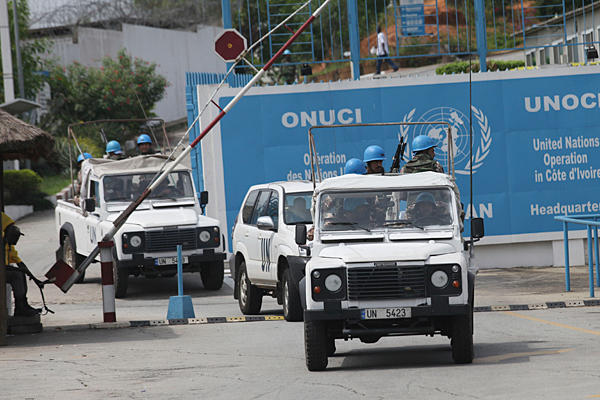
Last week we talked the growing humanitarian crisis that is occurring in the Ivory Coast. Over the weekend it has gotten worse to the point where the UN has had to relocate 200 civilian staff members. The UN peacekeeping mission in the Ivory Coast known as UNOCI, is 9,000 strong, but is increasingly unable to quell violence. Violence erupted after the November 2010 elections when incumbent President Laurent Gbagbo refused to step down after losing the election to Alassane Outtara. The UN increased its forces in January to 9,000, but this has not been enough.
In January I wrote about need for a United Nations Emergency Peace Service (UNEPS) in the Ivory Coast, and the current situation provides more evidence for the creation of UNEPS. 9,000 UN peacekeepers have not been able to protect civilians; even with the French stepping in. The UN is still not able to adequately protect civilians or UN staff. UNEPS would be a rapid-deployment peacekeeping force that would be able to enter conflict zones and protect civilians. It would be compromised of 15,000 – 18,000 civilian police, military, judicial, and relief professionals, employed by the UN that could deploy within 48 hours of a Security Council authorization. With a force this large, the UN would be to protect civilians in conflict zones and provide humanitarian aid to those in need. Rebel forces would not be able to stand in the way of a highly-skilled UN force.