by Jacob Montgomery | Mar 29, 2011 | Global Cooperation, United Nations
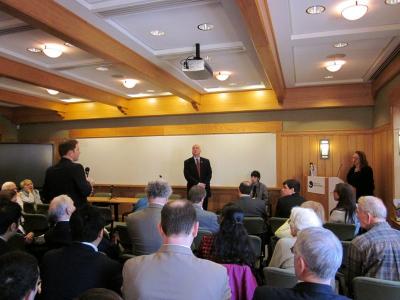
GlobalSolutions.org’ 2011 Conference, Global Challenges: Global Solutions, was a major success thanks to the plethora of distinguished speakers and the energy and passion of those who attended. The conference took place in the cozy Carriage House near Dupont Circle where people listened to speakers, asked questions, and debated various important issues of international relations, the role of the U.S. and the UN in the world, and an assortment of other topics. Members came from 24 different states including as far as Maine, California, Arizona, Minnesota, and Mississippi.
The conference kicked off with a presentation by Suzanne Nossel, Deputy Assistant Secretary of State. Ms. Nossel spoke about the importance of U.S. engagement with the United Nations in solving the many difficult problems we face in the world today. As a member of the State Department, she was able to offer CGS members insight into how her department operates and works with international organizations.
Following Ms. Nossel and a report by CGS Chief Executive Officer, Don Kraus, on the state of the organization (it’s doing well), people scattered to various rooms for different breakout sessions including Lobby Training, The UN and You, and Congress 101. Lobby Training provided a solid foundation for those new to lobbying on Capitol Hill with background on the two lobby day issues, Genocide Prevention and UN Funding, and tips on how to lobby most effectively.
I was fortunate enough to attend the Congress 101 presentation given by Darcy Burner, from Progressive Congress. Ms. Burner broke down the members of Congress into tangible numbers to work with so that we, as internationalists who care deeply about continued, responsible U.S. engagement in the world, can most effectively advocate and influence Congress. Ms. Burner was both informative and refreshingly friendly and funny in her presentation. She made the point that our perceived enemies are only our adversaries on issues where we disagree. But there are some issues where we can work with those with whom we usually disagree, and we should look at each issue individually so that we can accomplish our goals.
During lunch, a panel moderated by incoming CGS Board Chair, Jim Riker, spoke about the evolving roles of the G8, the G20, and the United Nations and fielded a variety of insightful questions from the audience.
Following lunch, there was a panel on UN Treaties including the UN Convention on the Right of Persons with Disabilities, the UN Convention on the Elimination of Discrimination Against Women (CEDAW), the Law of the Sea Treaty, and the Comprehensive Test Ban Treaty (CTBT). Many at the conference, including myself, had a basic understanding of at least one or two of the treaties, but the panel of experts allowed for a deeper understanding of these important treaties being considered by our government today.
In the third breakout session, U.S. in the World Co-Director Priscilla Lewis gave a presentation on how best to talk to other Americans about the importance of responsible U.S. engagement in international affairs. Those who listened to her speak learned about the common perceptions and assumptions of average Americans regarding international relations and the United Nations and the best strategies to try to influence those who disagree with us.
Following a day listening and talking, learning and teaching, Thursday evening provided a relaxing atmosphere to talk about topics brought up during the day while sipping on wine and enjoying Georgetown Cupcakes beautifully decorated with the CGS logo. To cap off the soiree, longtime CGS and World Federalist Society member Myron Kronisch received the Edward Rawson Global Citizen Award for his dedicated service to our vision and mission.
Watch the recordings from the conference on the 2011 CGS Conference event page.
To donate to CGS click here. Your contributions make it possible for us to continue to promote internationalism and responsible U.S. engagement in international affairs.
by Jacob Montgomery | Mar 29, 2011 | Global Justice, United Nations
On Friday, the second day of Citizens for Global Solutions’ 2011 Conference, members took action and went to Capitol Hill to lobby their Congress people to protect funding for the United Nations and stand up against genocide by passing a comprehensive genocide prevention bill. The general feeling was that visits were successful, as the Congressional staffers were for the most part receptive and sympathetic to our cause. Some members found their Congress people whole heartedly supportive of our initiatives while others ran into cautious staff intent on avoiding commitments.
My personal experience was enhanced as I was able to lobby with CGS Board member Jordan Bankhead. Besides getting along well, Jordan and I proved to be a good team in our lobby visits, with the offices of my Senator, Robert Menendez (D-NJ) and Jordan’s Senator, Roger Wicker (R-MS). It was the first time lobbying for both of us, as was the case with many who participated in lobby day. Lobbying is a little nerve wrecking the first time, but Jordan and I were able to communicate all of our points, answer the necessary questions, and have a pleasant conversation during our first visit with a staffer in Senator Menendez’s office. Senator Menendez is very good on most of our issues, so the meeting went well. The staffer did make clear that although Senator Menendez supports our issues, it is important that we keep telling him that he’s doing a good job and showing our support for his actions so that he keeps making the right decisions.
The second visit, with Senator Wicker’s office was not nearly as easy as the Menendez meeting. Senator Wicker is a Republican, and one of the points his staffer made was that most Mississippians want the UN defunded. She did, however, know that the foreign affairs budget is only 1% of the total current federal budget while most Americans think it is 25% and that the foreign affairs budget is essential for American interests and security, which was encouraging. However, we left the meeting with no guarantees and little hope that the Senator will vote the way we want him to. But we also left inspired to continue pursuing our goals in spite of or should I say because of the resistance we felt. We realized how important it is to educate people so that they know the facts of the United Nations and the foreign aid budget and can make educated, informed decisions. It was also quite comforting to know that, in the words of his staffer, Senator Wicker “is against genocide.”
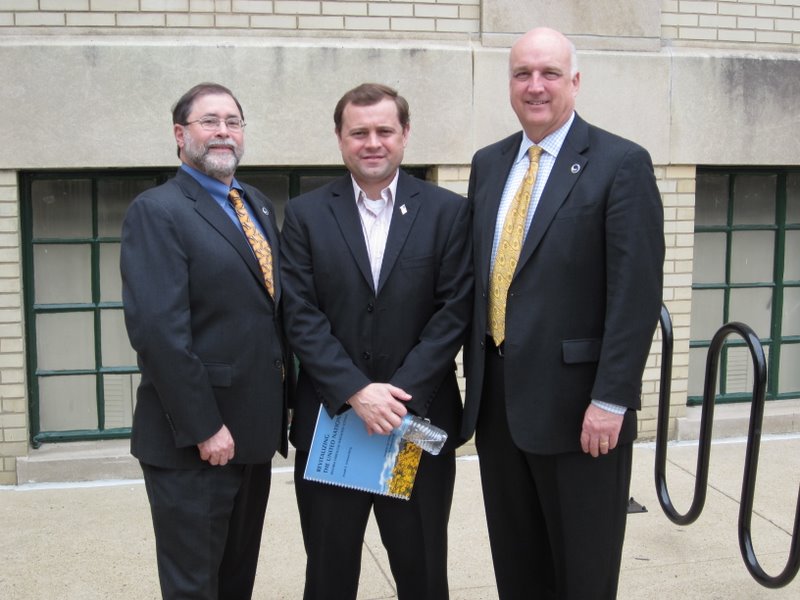
In the afternoon, former Representative from Virginia, Tom Perriello, gave an impressive speech on the importance of engagement in the world, the responsibility to protect, the importance of the ICC, and the failures of our government and press in dealing with international relations issues.
Overall, lobby day was a great success, as everyone involved seemed energized by the advocacy they had taken part in, proud to have made their voices heard and fully aware of the work that still needs to be done.
by CGS Blog Archive | Mar 29, 2011 | Global Justice, United Nations
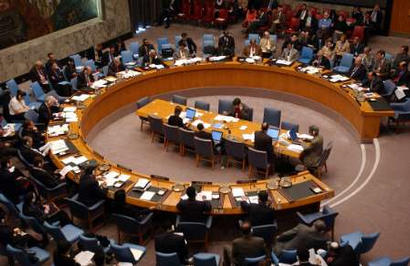
Resolution 1973 adopted last week by the United Nations Security Council authorizing a multinational intervention into Libya has created a new precedent for the enforcement of international law. Resolution 1973 incorporates principles that the international community has been hopeful to see come to life. These include the “responsibility to protect,” jurisdiction of the International Criminal Court, the loss of sovereignty for governments that commit mass atrocities, and the principle of “human security.” These principles were expressed when the Resolution provided that the international community was “to take all necessary measures … to protect civilians and civilian populated areas under threat of attack….” This is a momentous statement, especially with regard to traditional U.S. military action. The driving force of the strategy enunciated by the Security Council is civilian protection, not regime change. Civilian causalities represent a failure in mission objective, rather than merely collateral damage. The world is finally recognizing, and with haste I might add, the responsibility to protect world citizens from imminent danger.
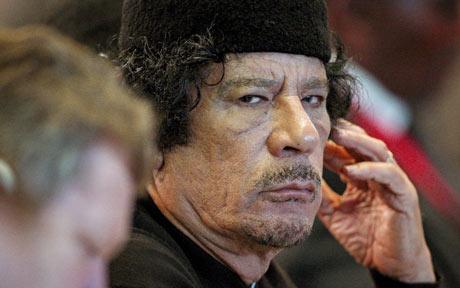
The Resolution is a display of ‘teeth’ by the United Nations Security Council. In the face of criticism that the United Nations has no ability to back-up its resolutions or treaties, a multilateral force has come together and offered real military power to support the Security Council. The time when tyrants and rogue states could commit atrocities with no accountability has come to an end. The actions that are being taken against Muammar Gaddafi will resonate in the thoughts of all of those who conceive of committing human rights violations in the future.
Resolution 1973 employs several measures to ensure the human security of civilians being targeted by the Libyan authorities. These include condemnation, threats of future accountability, an arms embargo, financial sanctions, and deployment of military and humanitarian task forces. The array of measures employed provides extensive means for pressuring the Gaddafi regime to halt violent actions against its civilians. Many of the orders also satisfy the need for humanitarian assistance to be provided to the civilians facing the crisis. For instance, the no-fly zone establishes a ban on all unauthorized flights in Libya. The establishment of a no-fly zone provides increased security for the civilians under attack, ensures the full implementation of the embargo against the Gaddafi regime, and it provides the space and security for humanitarian aid to be distributed to those in need.
The Resolution reiterates the Security Council’s decision a few days earlier, in Resolution 1970, to refer the situation in the Libyan Arab Jamahiriya to the Prosecutor of the International Criminal Court for investigation and possible prosecution. This ensures that all individuals who are responsible for attacks against the civilian population in Libya will be held accountable and will face prosecution.
The Resolution also requests that the Secretary-General create a Panel of Experts to monitor the actions of the Libyan authorities. The Panel is given the duty to review the measures imposed by Resolution 1973 and 1970, and to decide to strengthen, suspend, or lift those measures.
The legitimacy for multilateral action that was created by the adoption of Resolution 1973 is unprecedented. The multilateral cooperation that will ensue, and the relief felt by the Libyan civilians will be a testament to the accomplishment that was achieved on March 17, 2011. The perceived effectiveness of the United Nations and the willingness for global powers to work multilaterally on humanitarian issues in the future will be greatly determined by the success of Resolution 1973.
by Jacob Montgomery | Mar 24, 2011 | Global Justice, United Nations
This week, an array of analysts, Congress people, and talk show hosts from the usual suspects on the right to Rep. Dennis Kucinich (D-OH) and John Stewart on the left, have aggressively attacked President Obama on his course of action in Libya. The three most common criticisms are: 1) The President did not allow Congress to authorize force in Libya; 2) The President has not defined the mission in Libya to the American people and 3) that we can’t pick and choose to intervene in Libya, but not Yemen or Bahrain. Such criticisms have led some to call the mission in Libya a pre-determined failure and comparisons have been made to the Iraq War of President George W. Bush. These concerns are misplaced and untimely as the current action being taken in Libya represents a crucial precedent in civilian protection, responsible international cooperation and the responsibility to protect.
Many in Congress, including Rep. Rob Andrews (D-NJ), Speaker of the House Rep. John Boehner (R-OH) and others, have complained that President Obama did not let Congress vote to authorize “war” with Libya and therefore, military action in Libya is unconstitutional and flawed to the point of being a huge mistake. What’s unfortunately being overlooked is that the decision to institute a no-fly zone and take military action to protect Libyan civilians was made by the United Nations Security Council – a governing body in which we, the American people, are represented. As one of the five permanent members of the Security Council, we also have the power to veto and kill any resolution before the Council.
Do members of Congress think we should have vetoed the resolution authorizing military action in Libya? Should we have tried to postpone the vote another few weeks so that Congress could debate the resolution and vote on it? No. Libyan civilians were dying, Moammar Gaddafi’s troops were gaining crucial ground, and immediate action was needed. The President used his Executive authority to vote in favor of the Security Council Resolution and support a multi-lateral mission with European and Arab countries to protect Libyan civilians. Yes, members of Congress are power hungry and feel slighted that they weren’t the ones who authorized force, but really, it couldn’t have gone down any other way. They know that, and they should stop whining about how they didn’t get to vote and start praising the expeditiousness and effectiveness of the United Nations Security Council in this case.
Think about what this means for the future. We know we have a responsibility to protect innocent civilians in danger of being slaughtered. But we’ve also learned the lessons of Iraq, one of which is: We can’t go on unilateral military missions and not expect multiple negative consequences. With the precedent set by Resolution 1973 on Libya, we now know that the Security Council is capable of taking actions which allow us to work with our allies rather than by ourselves to protect civilians.
Another complaint circulating Capitol Hill right now is that the President does not have a clear plan for the Libyan operation, at least not one that he’s made public. But again, we must keep in mind that this is not a U.S. operation. It is a UN Security Council-sanctioned mission which the U.S. is part of along with many other nations. While all of the decisions made by the united force are indubitably affected and approved by our military officials, we are not calling all the shots in this operation. And that’s something we have to accept. In addition, President Obama and other world leaders cannot possibly know the effects that their initial attack will have on the Libyan Civil War. Therefore, instituting a no-fly zone and targeted bombings with the express purpose of protecting civilians is enough of a plan of action for now.
In his show on Tuesday, John Stewart, referring to a quote by President Obama, said, “Stop the violence against civilians. I kind of like that. But see there are other civilians in other countries protesting and they’re being killed too and for them we’re enforcing a not-even-gonna-try zone.” A liberal on the other side of the spectrum, Dennis Kucinich said “We’re sending a message that says that the U.S. is ready to pursue aggression against anybody we don’t agree with in the region. That’s a very dangerous message to send.”
These two comments, on opposite extremes, are both severely flawed, and it’s disturbing that people I believe to be well-informed are saying such things. Stewart implies we shouldn’t help the people of Libya in their struggle for survival because we aren’t simultaneously helping civilians under oppressive regimes in other countries. Essentially, doing nothing and letting everyone suffer and die is better than helping save the civilians of one country. This obviously makes no sense. Engagement and protecting endangered civilians is a process that takes one step at a time. We don’t have the adequate resources to protect every single civilian in the world, but when we can help some, we must take action.
Rep. Kucinich doesn’t seem to understand the situation in Libya at all. We aren’t attacking Libya because we “don’t agree” with Moammar Gaddafi. We’re attacking because Mr. Gaddafi is attempting to murder millions of innocent civilians in his country. We’re taking action in Libya, because when a government starts firing on its citizens, it forfeits its sovereignty and the international community has a responsibility to protect the endangered civilians.
What it comes down to is a combination of ignorance and antipathy toward the United Nations among the American people and lawmakers alike. We need to let go of our unfounded distrust of international bodies so that we can use the United Nations to its fullest capacity in situations like Libya, where protecting civilians and our national security should come before our politicians’ egos and our own skepticism. If we can accept that the UN must play a vital role in maintaining American security and prosperity, we’ll see that, in fact, President Obama has handled this situation pretty damn well so far and that an active, decisive Security Council can only be a good thing moving forward.
by Jacob Montgomery | Mar 4, 2011 | Global Cooperation, United Nations
In a surprising speech during a meeting of the House Foreign Affairs Committee (HFAC) yesterday, Representative Dana Rohrbacher (R-CA) stated that the United States should completely withdraw from the United Nations. Rep. Rohrbacher said that it is “flawed that we look for a global policy when half the members [of the UN] are gangsters, thugs, and lunatics…” No, I’m not making that up. Those were the exact words spoken by a member of Congress, one of the few people who represent us before the diplomats and leaders of the world. And frankly, it’s embarrassing.
To suggest America doesn’t need the United Nations is like suggesting that Michael Jordan, even in his prime, didn’t need any teammates. No one, regardless of talent can win a basketball game alone, one-on-five. And no nation, no matter how powerful can solve the kinds of problems we face today alone. On a number of issues such as peacekeeping, nuclear non-proliferation, and humanitarian aid to third world countries, the UN allows us to do things we would want or need to do anyway but at a much lower cost in money and people.
While the UN does occasionally have problems with mismanagement and corruption, Rep. Rohrbacher’s statement about UN members is, at best, shamefully naïve. Yes, many member states are not democratic, but does that make them “gangsters” or “thugs” or “lunatics”? Of course not! Even if we think some of them don’t practice good governance and don’t offer as many freedoms to their people as we’d like to see, we still have to engage them in debate and use the resources they can provide through the UN to solve problems. In a speech on February 11, U.S. Permanent Ambassador to the United Nations, Susan E. Rice said:
“Now more than ever we need common responses to global problems. And that is why America is so much better off—so much stronger, so much safer and more secure—in a world with the United Nations than we would be in a world without it.”
Click here to read Ambassador Rice’s entire speech, Facing 21st Century Threats: Why America Needs the UN.
Later in Rep. Rohrbacher’s rant, he spoke even more combatively, stating that the UN is “an organization dominated by crooks, gangsters, and dictators.” Again, the stupidity and folly behind this statement is baffling. How can we get other nations to work with us to achieve our goals if we insult them like this? We must be wary of the ignorant, bigoted members of our government whose extreme isolationist rhetoric is dangerous not to mention sometimes inappropriate. Now is the time to work harder than ever to ensure that they stay on the fringe of the political spectrum and never garner mainstream support.
If you care about the United Nations and continued U.S. support for the UN and foreign aid and wish to receive important updates on Congressional activities, please join the 112th Congress Watchlist.
by Don Kraus | Mar 3, 2011 | Global Justice, News, United Nations
FOR IMMEDIATE RELEASE: GlobalSolutions.org applauds the passage of Resolution 1970 by the United Nations Security Council (UNSC), which condemns the recent attacks on civilians by the Libyan regime, and the unanimous vote to refer the situation in Libya to the International Criminal Court (ICC) for investigation into potential war crimes.
Don Kraus, CEO of GlobalSolutions.org, praised the vote, saying “The unanimous Security Council vote to refer Libya to the ICC highlights the growing importance of the Court in bringing the world’s worst criminals to justice. The positive vote by the United States is very welcomed and shows how the U.S. relationship with the Court has matured.”
GlobalSolutions.org supports upholding human rights and acting through multilateral organizations such as the U.N. and the ICC. CGS convenes the Washington Working Group on the ICC (WICC), a group of the Washington legislative and governmental affairs offices of American NGOs committed to the cause of the Court. Don Kraus serves as co-convenor of the WICC. CGS encourages further U.S. engagement with the ICC as a non-state party, and support eventual U.S. ratification of the Rome Statute. For more information on CGS’s perspective on the Court, visit http://globalsolutions.org/law-justice/international-criminal-court.
Resolution 1970, passed by the UNSC on February 26th, also includes an arms embargo, a travel ban and freezing of all assets for Libyan leaders. Additionally, it calls for the use of “all measures necessary” to ensure that humanitarian aid from the world community reaches Libya. The UNSC said it will continue to monitor the situation in the country, and strengthen or reduce the resolution’s measures as appropriate in the future. As a non-state party to the ICC, Libya is not obligated to cooperate with the ICC in its investigation, but the Security Council urged it to do so.