by Karel Bryukhanov | Feb 25, 2011 | Global Justice, United Nations
As the United Nations Security Council and Human Rights council meet today, Mommar Gaddafi continues to defy calls for him to step down. Innocent civilians are being fired upon by Gaddafi’s security forces and there is no end in sight. It is the responsibility of Gaddafi and the Libyan government to protect its civilians. When this does not happen swift action must be taken. The UN Human Right Council and Security Council must do more than just condemn Gaddafi, it must take active steps. Libyan officials abroad have already taken action. In today’s UN Human Rights Council meeting, the Libyan delegation announced it would resign and side with the people. I’m shocked! This almost never happens on the global stage. Libyan’s have already taken the difficult actions that are necessary, now it is our turn address this heinous dictator. Of course it would help if the international community could decide how to spell the guys name. Is it Gadhafi, Gaddafi or Qaddafi? More on that later.
The UN Human Rights Council, which Libya is a member of, held a special session today where they voted unanimously to remove Libya from the council. This was the right thing to do. Under the current circumstances, Libya cannot be a member of the Human Rights Council. At the special session today, European members drafted a resolution, which, “strongly condemns the recent gross and systematic human rights violations committed in Libya . . . some of which may also amount to crimes against humanity,” and “strongly calls upon the government of Libya to meet its responsibility to protect its population” and “immediately put an end to all human rights violations.” The resolutions also called for an “independent international commission” to investigate possible human rights violations.
Today the UN Security Council is also meeting to discuss Libya and what to do with Gaddafi. In closed consultations yesterday, diplomats urged Security Council members to begin to look at further options in dealing with Gaddafi. The Security Council is also considering sanctions on Libya. This may include freezing all assets of Gaddafi and high-level government officials, travel bans, an arms embargo against Libya, and enforcing a no-fly zone over Libya.The draft resolution also includes possible prosecution by the International Criminal Court (ICC). I believe these sanctions will help, but with continuing attacks on civilians more needs to be done to protect these innocent people.
I support a multi-lateral approach to resolving the situation in Libya. Through UN sanctions and actions, stability and the removal of Gaddafi can be achieved. Proposed budget cuts threaten to weaken the UN Situations like this require a strong UN, and withholding U.S. dues will only weaken the UN and make it ineffective when it is needed most. I’m for quick and decisive UN action regarding Libya, a peaceful resolution, and spelling his name as Gaddafi.

by Melissa Kaplan | Feb 15, 2011 | Global Cooperation, News, United Nations
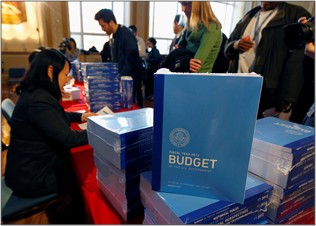
President Obama released his budget proposal for Fiscal Year 2012 yesterday, launching the annual budgetary process in which the White House and Congress struggle to come to terms on spending legislation acceptable to both branches of government. The outlook for international affairs funding in the President’s budget is not overly encouraging, particularly regarding funding for the United Nations and peacekeeping missions–but all things considered, it could be worse.
The President’s budget proposal provides $47 billion in discretionary spending for the Departments of State and the U.S. Agency for International Development (USAID). This represents a 1 percent increase from Fiscal Year 2010 (the last time the government successfully enacted a budget, as the FY 2011 budget has not yet been completed). Unfortunately, funding for international organizations and peacekeeping would be reduced under the President’s budget proposal, to $3.539 billion from the $3.8 billion total allocated in FY 2010. $75 million is proposed for the Complex Crises Fund (CCF). The President’s budget also recommends creating a new Global Security Contingency Fund, a “funding mechanism to facilitate greater joint Department of Defense-State planning, funding, and execution of security sector and stabilization assistance programs worldwide.”
CGS is concerned that any cuts to the Contributions to International Organizations (CIO) account–which funds America’s dues to the United Nations and other multilateral organizations–and the Contributions to International Peacekeeping Activities (CIPA) account-which funds UN peacekeeping missions-will have a harmful effect on our relationships with the international community and will hurt peacekeeping efforts around the globe. However, we are pleased to see an increase, however slight, in overall international affairs funding levels from FY10.
The President’s budget is a document released every year in February by the Administration to kick off the annual appropriations process. It lays out the President’s vision for the federal budget he would like to see enacted in the upcoming fiscal year. However, the House of Representatives and the Senate must ultimately craft their own versions of appropriations bills for all the federal agencies, which are then reconciled and sent to the President for his signature.
Meanwhile, House Republicans have introduced their own budget plan to fund the government for the remainder of FY 2011, which ends in September. This plan would cut funding for the CIO account by $166 million from FY10 levels, and CIPA by $226 million. It would also terminate the Complex Crises Fund.
CGS urges both the White House and Congress to balance the need for fiscal restraint and cost-cutting with the importance of providing adequate funding for the International Affairs budget which affects our relationships with the world outside our borders. With so many complex problems today requiring multilateral solutions, it is imperative that the United States not lose sight of the need to remain a good global citizen. In the words of UN Ambassador Susan Rice, “Like it or not, we live in a new era of challenges that cross borders as freely as a storm-challenges that even the world’s most powerful country often cannot tackle alone. In the 21st century, indifference is not an option. It’s not just immoral. It’s dangerous.” We agree.
by Melissa Kaplan | Feb 9, 2011 | News, Peace & Disarmament, United Nations
CGS is happy to report that the House of Representatives voted on February 9th to defeat H.R. 519, the ‘‘United Nations Tax Equalization Refund Act of 2011.’’ This bill, introduced by House Foreign Affairs Committee chair Rep. Ileana Ros-Lehtinen (R-FL), would have asked the U.N. to return $180 million in U.S. dues which had been earmarked by the U.S. government to provide security for the U.N. building in New York City, and to fund peacekeeping missions around the globe.
The bill purported to save taxpayers money by returning approximately $180 million in credits that have accumulated in the Tax Equalization Fund (TEF) since 2000. The TEF is a fund used to ensure that U.S. citizens working at the UN are not disadvantaged in their salary compared to those from other countries, since the United States, unlike other nations, decided not to exempt their citizens from paying taxes on UN compensation. However, according to Esther Brimmer, Assistant Secretary of State for International Organizations, the $180 million in overpayments in the TEF are in the form of credits, not cash, and thus cannot be refunded. Furthermore, the U.S. government had already planned to use the $180 million in credits to harden security around the U.N. building in New York, and to help fund peacekeeping missions around the globe.
The legislation failed by a vote of 259 to 169. By the rules under which it was considered, it required a two-thirds vote in order to pass, and it did not reach that threshold. The vote was largely party line, with Republicans supporting the bill and Democrats voting against it. However, Representative Peter King (R-NY), spoke out in opposition to H.R. 519, saying that it would endanger security at the United Nations building. “We’re talking about human life here. If someone is killed in an attack on the U.N., I don’t think we will be able to go back and say, well, the money was in the wrong account,” Rep. King stated.
Citizens for Global Solutions, as supporters of robust funding for the U.N. and its peacekeeping missions around the world, strongly opposed H.R. 519 and we are pleased that it was defeated by the House of Representatives. We thank all members of Congress who voted against the bill for their support.
by Don Kraus | Jan 28, 2011 | United Nations
As posted on the Huffington Post
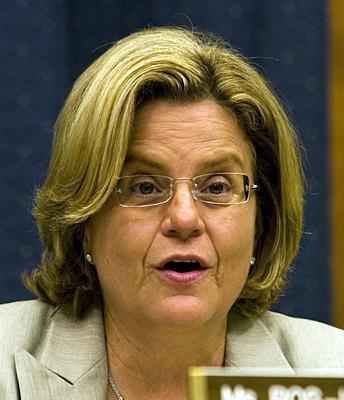
U.S. Rep. Ileana Ros-Lehtinen (R-FL), the new Chair of the House Foreign Affairs Committee, has thrown down her gauntlet. In her first briefing as chairwoman, she had the opportunity to focus on any number of timely issues like the referendum in Sudan, human rights in China or reconstruction in Haiti. Instead she chose “The United Nations: Urgent Problems that Need Congressional Action,” to launch an attack against the U.N.She plans to introduce legislation that conditions U.S. contributions to the U.N. “on real, sweeping reform, including moving the U.N. regular budget to a voluntary funding basis.”
This is a very bad idea. Didn’t the U.S. suffer though enough loss of prestige and influence during the bad old days of massive U.N. arrears in the 1990’s? Unfortunately, powerful House members are once again going after the U.N. Rep. Dana Rohrabacher (R-CA) declared that the “U.N. should be a prime target” for deficit reduction efforts. Ridiculous! Fiscally this would have the same impact as withholding my daughter’s allowance to pay down our family’s mortgage. The U.S. deficit and contributions to the U.N. are not in the same league. But for Rohrabacher and too many of his colleagues, the U.N. is a convenient target they can try to bully while scoring political points.
I anticipate attempts to dramatically slash funding for the U.N. and international affairs in Congress, despite the reality that the world needs the U.S. to play a key role in meeting some of the most important global problems we all face. The total international affairs budget, which accounts for only 1.4 percent of total government spending, supports programs to meet challenges like the HIV/AIDS pandemic, genocide prevention, fragile states, extreme hunger and poverty, and environmental degradation, among many others. Our nation cannot afford to shortchange these vital programs.
In fact, the international affairs budget is a great bargain. Our investments in peacekeeping, poverty eradication, disease prevention and international organizations help boost international security, reduce the need for U.S. military intervention and make America safer in the long run.
However, too many Americans continue to vastly overestimate the amount that we pay for these benefits. According to a new WorldPublicOpinion.org poll, Americans believe that 25% of the federal budget is spent on foreign aid. When asked what would be a reasonable amount to spend, the median response is 10%. In fact only a little over 1% of our budget goes to foreign assistance.
So how do we turn the coming tide of anti-U.N. sentiments? The answer is in your hands. This is the moment when we must pull together to send a clear message to lawmakers that the U.S. must stay constructively engage in the U.N. and the world. You can help by taking three simple steps:
- Help us build a solid network of global citizens by connecting us with friends and family, particularly those who live in parts of our nation where there lawmakers are educationally challenged regarding the U.N. Just send their contact information to [email protected].
- Join our GlobalSolutions.org’ Partners for Global Change program. This is an engaging, easy way for you to make a difference on the global issues that matter to you. By becoming a Partner, you will join a network of activists (of all ages and all levels of experience) who take action in their communities. The goal is to build national political will for positive U.S. global engagement.
- Come to Washington, D.C. on March 17 and 18 and join me at GlobalSolutions.org’ Annual Conference and lobby day, Global Challenges: Global Solutions. Get engaged and learn more.
Together, we can pick up Rep. Ros-Lehtinen’s gauntlet and let her know that this challenge will be answered by engaged global citizens. I look forward to working with you.
by Karel Bryukhanov | Jan 27, 2011 | Global Cooperation, United Nations
The first full committee meeting of the House Foreign Affairs Committee (HFAC) was titled “The United Nations: Urgent Problems that Need Congressional Action.” Rep. Ileana Ros-Lehtinen has made it known that she plans to launch an attack on the U.N., and this first briefing got straight to the point. Since the full committee has not been set up yet this was a briefing rather than a hearing, and Rep. Ros-Lehtinen was unable to be at the briefing due to a family emergency, so Rep. Schmit presided over the briefing.
Rep. Ros-Lehtinen, in a statement read by Rep. Schmidt, called for withholding U.N. dues, and making the contribution to the U.N. budget voluntary. While ranking chair member Rep. Berman called for U.N. change through working together with the U.S. and its allies.
Rep. Ros-Lehtinen hoped that “U.N. efforts will be strongly bipartisan,” but there does not seem to be much bipartisanship going on when one side is calling for withholding U.N. dues while the other wants to work to improve the U.N. through engagement in order to make it a more effective organization.
The briefers included two speakers who wanted to use the power of the purse to facilitate U.N. reform, and two speakers who wanted U.N. change through engagement. Mr. Brett Schaefer and Ms. Claudia Rosett called for using the threat of withholding U.S. dues to the U.N. to force reform. Mr. Peter Yeo and Mr. Mark Quarterman also called for more U.N. transparency and accountability, but through U.S. engagement with the U.N. and its allies.
Mark Quarterman stated that, “Peacekeeping has often referred to as a “force multiplier” for the U.S., but I believe that in a broader sense. The UN is an “influence multiplier” for the U.S. as well.” The U.S. is able to spread its influence through the U.N. without sending in American troops; this can only be a good thing. Withholding funds as Rep. Ros-Lehtinen suggested would not do much.
Peter Yeo stated that the U.N. has been able to make improvements on its own and operate without U.S. funds. He also stated that, “for every $1 invested by the United States into the United Nations, American firms receive approximately $1.50 in contracts.” How does withholding funds help the U.S. when it takes away American jobs?
Both Peter Yeo and Mark Quarterman advocated for paying our dues on time and in the full amount. According to Peter Yeo, “When we act otherwise, we send a strong and provocative signal that we are more interested in tearing down the UN than making it better…”
While there are issues with the U.N., there are many different ways to fix these issues. We cannot ignore the work of the U.N. in Haiti, the Sudan referendum, Afghanistan, the work of WHO and UNICEF, and in Cote d’Ivoire. Withholding U.S. dues would make it difficult for these projects to continue, which help millions of people every day. Through my work at Citizens for Global Solutions, I support active engagement with the U.N. and its members as way to facilitate a more effective and empowered U.N.
by Ariela Blätter | Dec 7, 2010 | Global Justice, United Nations
It seems like only yesterday that I was in Kampala watching representatives from nations around the world leading the International Criminal Court (ICC) on the path to becoming the first permanent court to try individuals for the crime of aggression. But that was back in July, and a lot has happened in the last five months.
Today I am in New York tracking the conversations at the United Nations at the ninth Assembly of State Parties for the International Criminal Court to see whether States such as Japan, United States , U.K. and France will use these proceedings to try to roll back the decision on the crime of aggression.
The crime of aggression, the act of one state waging unlawful war against another, has been a central concern for the United States for decades. In 1974, the U.S. joined in the U.N. General Assembly decision to ban the planning for or executing an unlawful war. The United Nations Security Council, which will remain the primary authority over determining when states have undertaken unlawful war, will likely one day work in tandem with the ICC, to determine who is legally responsible for making that fateful decision.
This decision on aggression came after two weeks of intense meetings in Kampala capping eight years of negotiations by parties to the ICC. The United States was voluntarily absent from the earlier negotiations. Despite having decided not to become a member of the ICC, the United States participated fully in the negotiations in Kampala and are here in New York at the ASP. The American delegation continues to be led by Ambassador-at-Large for War Crimes Issues Stephen J. Rapp and State Department Legal Adviser Harold H. Koh. The Obama administration should be applauded for its policy of constructive engagement with the Court. The deal they struck in Kampala and their presence in New York this week will serve U.S. national security interests and will help prevent aggressive war and foster peace in the future.
The decision on aggression formed by consensus in Kampala was a historic agreement by state parties, observers, and civil society alike. For the first time we had a clear definition of aggression and a process to move forward to ensure that this crime can be prosecuted in the future. I will keep you posted on how this critical amendment fares this week.