
Originally published on the CGS blog on March 24, 2011.
This week, an array of analysts, Congress people, and talk show hosts from the usual suspects on the right to Rep. Dennis Kucinich (D-OH) and John Stewart on the left, have aggressively attacked President Obama on his course of action in Libya. The three most common criticisms are: 1) The President did not allow Congress to authorize force in Libya; 2) The President has not defined the mission in Libya to the American people and 3) that we can’t pick and choose to intervene in Libya, but not Yemen or Bahrain. Such criticisms have led some to call the mission in Libya a pre-determined failure and comparisons have been made to the Iraq War of President George W. Bush. These concerns are misplaced and untimely as the current action being taken in Libya represents a crucial precedent in civilian protection, responsible international cooperation and the responsibility to protect.
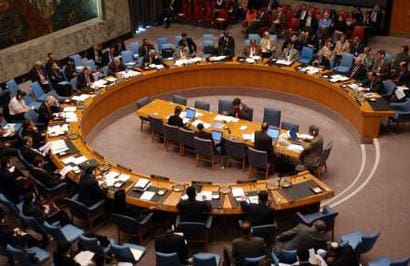
Many in Congress, including Rep. Rob Andrews (D-NJ), Speaker of the House Rep. John Boehner (R-OH) and others, have complained that President Obama did not let Congress vote to authorize “war” with Libya and therefore, military action in Libya is unconstitutional and flawed to the point of being a huge mistake. What’s unfortunately being overlooked is that the decision to institute a no-fly zone and take military action to protect Libyan civilians was made by the United Nations Security Council – a governing body in which we, the American people, are represented. As one of the five permanent members of the Security Council, we also have the power to veto and kill any resolution before the Council.
Do members of Congress think we should have vetoed the resolution authorizing military action in Libya? Should we have tried to postpone the vote another few weeks so that Congress could debate the resolution and vote on it? No. Libyan civilians were dying, Moammar Gaddafi’s troops were gaining crucial ground, and immediate action was needed. The President used his Executive authority to vote in favor of the Security Council Resolution and support a multi-lateral mission with European and Arab countries to protect Libyan civilians. Yes, members of Congress are power hungry and feel slighted that they weren’t the ones who authorized force, but really, it couldn’t have gone down any other way. They know that, and they should stop whining about how they didn’t get to vote and start praising the expeditiousness and effectiveness of the United Nations Security Council in this case.
Think about what this means for the future. We know we have a responsibility to protect innocent civilians in danger of being slaughtered. But we’ve also learned the lessons of Iraq, one of which is: We can’t go on unilateral military missions and not expect multiple negative consequences. With the precedent set by Resolution 1973 on Libya, we now know that the Security Council is capable of taking actions which allow us to work with our allies rather than by ourselves to protect civilians.
Another complaint circulating Capitol Hill right now is that the President does not have a clear plan for the Libyan operation, at least not one that he’s made public. But again, we must keep in mind that this is not a U.S. operation. It is a UN Security Council-sanctioned mission which the U.S. is part of along with many other nations. While all of the decisions made by the united force are indubitably affected and approved by our military officials, we are not calling all the shots in this operation. And that’s something we have to accept. In addition, President Obama and other world leaders cannot possibly know the effects that their initial attack will have on the Libyan Civil War. Therefore, instituting a no-fly zone and targeted bombings with the express purpose of protecting civilians is enough of a plan of action for now.
In his show on Tuesday, John Stewart, referring to a quote by President Obama, said, “Stop the violence against civilians. I kind of like that. But see there are other civilians in other countries protesting and they’re being killed too and for them we’re enforcing a not-even-gonna-try zone.” A liberal on the other side of the spectrum, Dennis Kucinich said “We’re sending a message that says that the U.S. is ready to pursue aggression against anybody we don’t agree with in the region. That’s a very dangerous message to send.”
These two comments, on opposite extremes, are both severely flawed, and it’s disturbing that people I believe to be well-informed are saying such things. Stewart implies we shouldn’t help the people of Libya in their struggle for survival because we aren’t simultaneously helping civilians under oppressive regimes in other countries. Essentially, doing nothing and letting everyone suffer and die is better than helping save the civilians of one country. This obviously makes no sense. Engagement and protecting endangered civilians is a process that takes one step at a time. We don’t have the adequate resources to protect every single civilian in the world, but when we can help some, we must take action.
Rep. Kucinich doesn’t seem to understand the situation in Libya at all. We aren’t attacking Libya because we “don’t agree” with Moammar Gaddafi. We’re attacking because Mr. Gaddafi is attempting to murder millions of innocent civilians in his country. We’re taking action in Libya, because when a government starts firing on its citizens, it forfeits its sovereignty and the international community has a responsibility to protect the endangered civilians.
What it comes down to is a combination of ignorance and antipathy toward the United Nations among the American people and lawmakers alike. We need to let go of our unfounded distrust of international bodies so that we can use the United Nations to its fullest capacity in situations like Libya, where protecting civilians and our national security should come before our politicians’ egos and our own skepticism. If we can accept that the UN must play a vital role in maintaining American security and prosperity, we’ll see that, in fact, President Obama has handled this situation pretty damn well so far and that an active, decisive Security Council can only be a good thing moving forward.


