by Don Kraus | Aug 19, 2011 | Global Justice, News, United Nations
The U.N. Human Rights Council has agreed to hold an emergency session on Syria, after United Nations Watch, along with a coalition of 43 NGOs including Citizens for Global Solutions, sent a letter to the U.N.’s Human Rights Council President Laura Dupuy calling for an emergency session of the Human Rights Council, creating a Special Rappateur, and conducting public hearings where Syrian vicitms of the Assad regime’s brutality can share their testimony.
Yesterday, I posted an op-ed on what action the U.N. Security Council should take on Syria on the Care 2 website.
President Obama’s strong statement telling Assad to step out of the way of a democratic tranisition and ordering the toughest economic sanctions yet, as well as the cacophony of nations calling for Assad to step down, are hopeful signals that Assad’s days as Syria’s ruler may be numbered.
by Don Kraus | Jul 29, 2011 | Global Cooperation, United Nations
Great nations should pay their bills. But in the last two weeks, House Republicans on two important panels voted on party lines to sharply decrease funding for international organizations, peacekeeping missions, and human rights, putting the United States back on the world community’s “dead beat” list. In a climate of an increased national debt and a laundry list of transnational problems facing our nation, it is irresponsible to play politics and gamble with our foreign policy.
It’s important to put costs into perspective. These members who voted to hold U.N. funding hostage say that we need to reduce spending across the board. Don’t let their rhetoric fool you – we aren’t dramatically cutting spending by reducing our U.N. contributions and funds for peacekeeping missions. The foreign aid budget consists of 1% of overall federal budget, and the U.N. budget is a small sliver of this amount. These cuts make as much sense as cutting my daughters allowance to pay down my mortgage.
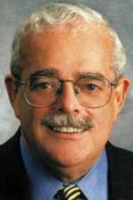
In fact, working through the U.N. is quite a bargain for the U.S. According to Representative Gerry Connolly (D_VA), “For every dollar we give to the U.N. secretariat, we get $1.50 back. The United States won all but two contracts for the renovation of U.N. headquarters, as well as obtaining the second-most contracts of all bidding nations for goods and services rendered in peacekeeping operations.” By withholding its dues, the United States may get overlooked for additional contract bids.
While reaping huge savings by cutting funds from the U.N. is a fairytale, let me outline the harsh realities of what will happen if these dollar amounts aren’t increased:
- International organization funds will be cut by $300 million, which will affect the U.N., NATO, and the IAEA, where we have used our influence and leadership to pass tough sanctions on Iran’s nuclear program, freeze Qaddafi’s assets, and stop the spread of pandemics like SARS and swine flu.
- U.N. missions in Afghanistan and Iraq will be in jeopardy. These missions organize elections, create civil society programs, and oversee development projects, which helps speed the return of our troops.
- Peacekeeping missions in Sudan, Haiti, and elsewhere will be cut by $450 million. We should pay our fair share, which supports 110 other nations’ troop contributions to maintain security and protect civilians in these conflict zones .
- The United Nations Populations Fund, which works to decrease maternal mortality, reduce incidences of HIV/AIDS, and eradicate female genital mutilation, will receive no funding.The Human Rights Council, where we have been a leading member for two years, will receive no funding. At the Council, we have used our influence to defend Israel, bring attention to human rights violations in Burma, and brought about world recognition of human rights abuses faced in the gay, lesbian, and transgender community.
Another tactic used by House Republicans is tying our treaty obligated contributions to unilateral conditions for paying what we owe. Everyone agrees that the U.N. should continue its reform efforts. Like many complex and large organizations, the U.N. requires a constant need for vigilance and oversight to ensure that funds are spent efficiently and effectively, and that it successfully fulfills its mandated tasks. But blackmail doesn’t accomplish our goals of achieving real reform. Experience has taught us that it is brought about through leadership, stewardship, and partnership.
These representatives are taking an ill-advised gamble by slashing funds for the U.N. and peacekeeping missions. Our leadership, influence, and standing in the international community all hang in the balance. With a weakened foreign policy and less bargaining chips at our disposal, they will be at fault for the highest stake loss: the United States’ position in the world.
Fortunately, this bad policy is not a done deal. Although it will most likely be approved by the Republican majority in the House, the Senate has not yet weighed in. My organization, GlobalSolutions.org, is calling on Americans to let their lawmakers know that investing international cooperation is essential to resolve global challenges, building a safer, more secure world.
by Amanda Bowen | Jul 27, 2011 | Global Cooperation, United Nations
Today in The Hill, Rep. Gerry Connolly (D-VA) wrote about the importance of fully funding our dues to the United Nations and peacekeeping missions and paying them on time. He astutely writes that our yearly contributions to the U.N. totaling around $2.7 billion, pays for immunizing children from diseases, 15 peacekeeping missions around the world, and protecting the world from pandemics, a great value especially when icompared to the $100 billion spent this year in Afghanstian.
Connolly points out,
“Our contributions to the U.N. enhance our national security and our foreign policy priorities, save dollars while growing jobs and our economy and strengthen our leadership in the international community.”
Not only do we get a great value for our dollars, but we get great returns for our investment. In our slowly recovering economy, our good standing with the U.N. has gotten all but two contracts awarded to the United States to renovate U.N. headquarters and the second-most contracts for goods and services for peacekeeping operations.
Citizens for Global Solutions applauds Rep. Connolly’s courage to take a stand for U.N. funding in a difficult poltiical climate that is promoting deep cuts to vital programs for the sake of fiscal austerity and is oftentimes unfriendly to the U.N.
To read the full editorial: click here.
by Amanda Bowen | Jul 19, 2011 | Global Cooperation, United Nations
Today, the House Foreign Affairs Committee will be in the first stages of determining our contribution to the United Nations and to peacekeeping missions when it holds its markup of the Fiscal Year 2012 State Authorization bill.
If the bill passes in its current form, the UN will not receive sufficient funds for the Contributions to International Organizations (CIO) and the Contributions to International Peacekeeping Activites (CIPA). It will also extend an arbitrary cap on peacekeeping operations. If this bill is not modified, it will have alarming consequences here at home and abroad. Citizens for Global Solutions CEO Don Kraus said,
“The United States is facing challenges that are beyond the power and financial means of any nation to handle alone. Our contributions to the United Nations allow us to advance our foreign policy and national security interests, while sharing financial burdens with global partners. If passed in its current state, this legislation would lead to a decline in our influence on the world stage, harming our strategic interests.”
In these times of economic austerity, it is important to know where our dollars are going. The CIO account funds our dues to international organizations, such as the UN, NATO, and the IAEA. It provides for the immunization of children against infectious diseases, stops the spread of pandemics like SARS and swine flu, enforces arms embargos against nations that threaten our national security, like Iran and North Korea, and freezes assets of Libya’s Qaddafi. The UN regular budget also funds political missions in Iraq and Afghanistan, which are critical to ensuring stability and peace as our troops come home. Kraus stated,
“These foreign assistance dollars are crucial for the United Nations to tackle the most critical issues facing humanity. International cooperation is essential to resolve global challenges, building a safer, more secure world.”
As a permanent veto-wielding member of the UN Security Council, the U.S. must approve every peacekeeping mission before it is funded. The CIPA account pays for 15 peacekeeping missions around the globe, protecting civilians, stopping the outbreak of conflict, providing stability for political reconciliation, and preventing failed states. As we bring our mlitary engagements in Iraq and Afghanistsan to a close, it’s important to remember that these missions allow the United States to shape and influence foreign policy around the world, with troop and financial commitment dispersed among partners. According to a study by the Government Accountablity Office, UN peacekeeping missions are eight times cheaper than funding U.S. military operations.
Every three years, the United States and the UN renegotiate the assessment rates for our peacekeeping contribution. But for the last 17 years, Congress has circumvented the process, by placing its own arbitrary cap on peacekeeping and then waiving it every year, so that our financial obligations are met. It’s time for Congress to end this unnecessary process, and eliminate the cap on our peacekeeping contributions.
Citizens for Global Solutions urges members of the House Foreign Affairs Committee to fund the UN and peacekeeping missions in full and on time. Anything less will descrease our influence and leadership in the world, hurting our strategic foreign policy and national security interests.
by Citizens for Global Solutions | Jun 23, 2011 | Global Cooperation, United Nations
Earlier today, GlobalSolutions.org delivered a petition containing 29,000 signatures to the White House calling for the Obama Administration to “work through the United Nations to continue protecting the people of Libya from atrocities committed by their own government.”
The petition launched in April with a full page ad in the New York Times, in which GlobalSolutions.org called on the United Nations to take three important actions:
- Deploy U.N. peacekeepers on the ground to protect Libyan civilians
- Provide food, water, medicine, and shelter for the displaced people of Libya
- Sponsor elections to bring democracy and a legitimate government
Don Kraus, GlobalSolutions.org’ CEO stated,
“We believe these three actions offer the best chance to save Libyan lives and to create the conditions necessary for the Libyan’s to build a more stable and human rights abiding nation. They speak to our most basic values – the shared human desire to live in a world where common human dignity and hope for the future prevail.”
Today’s delivery came during a week of continued debate in Congress on the U.S.’s role in the Libyan conflict. Just two days ago, Senator Kerry (D-MA) and Senator McCain (R-AZ) introduced a resolution on the Senate floor that would authorize continued limited U.S. military engagement in Libya. In response to the resolution, Kraus said, “Is playing a supportive role in a bombing campaign the best we can do to protect the Libyan people?” Meanwhile, in the House, an odd coalition of left-wing Democrats and conservative Republicans are joining forces to tie the president’s hands in the actions he can take to protect Libyan civilians. While I don’t agree with the proposed actions in Congress, I do agree with the sentiment that it’s not up to the United States or its allies to solve the world’s problems alone. International cooperation is essential to resolve global challenges, building a safer and more secure world.
by Don Kraus | Jun 22, 2011 | United Nations
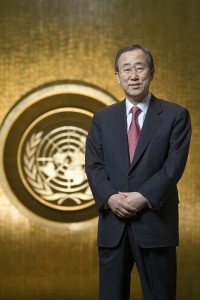
Yesterday, the United Nations General Assembly unanimously reelected Secretary General Ban Ki-moon to a second term. The Secretary General certainly deserved reelection, but the election process itself was appalling. I talked about this on the BBC radio show, The World Today.
Listen to the broadcast.
Secretary General Ban Ki-moon certainly deserved to be reelected. His quiet leadership style has advanced the effectiveness and the capacity of the UN in many ways. From his work on climate change, his efforts to advance the role of women in the UN system, and his efforts to protect the populations in Coite D’voire and Libya from mass atrocities, he has excelled.
Ambassador Rice also praised the work of General Ban Ki-moon:
“Secretary-General Ban is a leader who listens to the voices of the voiceless-of the refugees sheltered beneath UN tents, of the children vaccinated through UN programs, of the innocent civilians whose lives have been saved by effective UN action.”
However, his election was a backroom, non-transparent affair and the process should not be repeated. The UN should look towards the World Health Organization for a better model on how to pick a leader.
The World Health Organization has a much more transparent process than the UN, with a call for nominations and multiple candidates who are interviewed by the delegates.
Compared to the IMF process (18-day nomination period, formal interviews with multiple candidates, and a week-long deliberative process), Ban announced his campaign, was re-nominated and was confirmed within 15 days!
Citizens for Global Solutions’ board member, Tony Fleming, has written a blog, Global Memo, I highly recommend following this blog if you want an inside perspective in UN electoral politics. Tony says:
“Appointment to the post of UN Secretary General deserves due and deliberative debate, and failure to give it such minimizes and disrespects the office and its occupant both.”
Elections do not exist for show; they are in place to prevent corruption and to include their members in the election process so that all who have a voice are heard.