by Shelby Hettenbach | Apr 22, 2016 | Human Rights, Peace & Disarmament
Every year, thousands of women and children are sold into sexual slavery, also known as human trafficking. When people think of human trafficking they often think that it’s like the movie Taken; there is a mistaken assumption that sexual slavery only happens overseas and that the victims are snached off of the street from their families. This is not the case. A majority of sexual slaves are prostitutes.
The reality is that every prostitute on the street is a sex slave. They have been manipulated and coerced into selling their bodies, often for the profit of their pimp. Predators use methods such as “minimization and denial of physical violence, economic exploitation, social isolation, verbal abuse, threats and intimidation, physical violence, sexual assault, and captivity” to manipulate women and children into sexual slavery. Those who are not under the control of a pimp are often backed into prostitution by economic necessity, drug addiction, or mental health issues. These women have been forced into sexual slavery not necessarily by another human being, but by both internal and external circumstances out of their control.
I can’t count the number of times I have heard the phrases “they like it” or “they choose to do it” in reference to prostitution, and it never fails to infuriate me. No little girl grows up saying she wants to be a prostitute someday. No one aspires to sexual slavery. So where do these ideas stem from?
It is my belief that these ideas come from mass denial of a problem due to a pattern of sexualization of women in the media. Americans have become so accustomed to the idea that women exist to be sexualized. It can be seen on TV, in magazines, and even on the street as women are catcalled day in and day out.
According to a study published in Psychiatric Times,
Acceptance of prostitution is one of a cluster of harmful attitudes that encourage and justify violence against women. Violent behaviors against women have been associated with attitudes that promote men’s beliefs that they are entitled to sexual access to women, that they are superior to women and that they are licensed as sexual aggressors.”
The fight to end human trafficking is a fight to bring awareness. To save these women and children, we must recognize as a country that they are all victims. Instead of criminalizing prostitutes, locking them up, and throwing them back out onto the street, we must provide help. We must stop denying that prostitution is a problem. We need to begin calling it what it is: sexual slavery.
Look out for CGS’s Webinar registration coming soon. Stay tuned to hear from some very influential women and learn more about human trafficking.
by Emily Ervin | Mar 31, 2016 | Global Justice, Human Rights
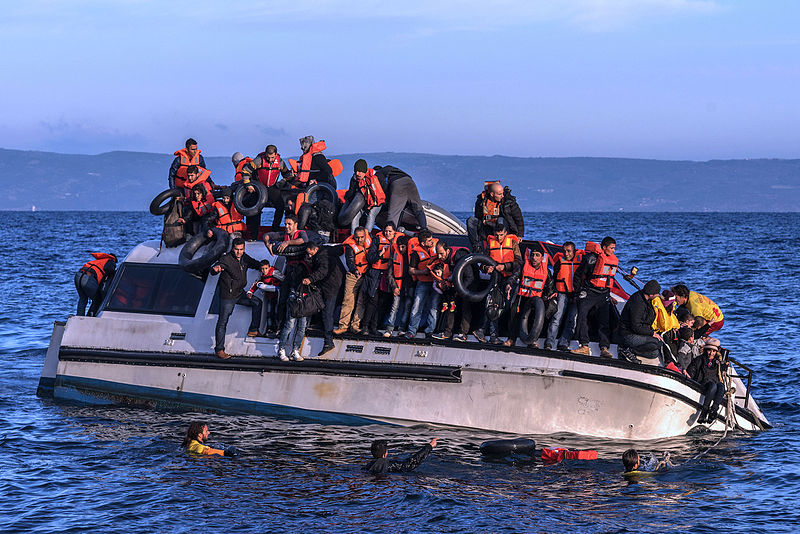
Over the past few weeks, the European Union (EU) has been itching to sign a deal with Turkey in order to move towards resolving Europe’s refugee crisis. Turkey has recently agreed to a deal, promising to take any refugees who arrive in Greece starting on March 20th, 2016. The deal was made with the hope that the Aegean Sea smuggling route into Europe will close as refugees are being relocated to Turkey.
The European Union promised Turkey funding, an estimated €3 billion, as well as visa-free travel into Europe in return for claiming the influx of refugees.
While the EU is thrilled to slow down the amount of illegal migration occurring at its borders, human rights organizations are rejecting the deal. Amnesty International referred to it as a “historic blow to human rights,” claiming the European Union is determined to turn its back on the growing global refugee crisis. While Greece has been instructed to individually assess each refugee crossing from Turkey into Greece, Amnesty fears that Greece lacks the capacity to do so and instead will send massive numbers of refugees to Turkey.
Medical charities such as Doctors Without Borders join Amnesty International and the UN refugee agency in criticizing the deal on ethical grounds. Doctors Without Borders has withdrawn some assistance, stating they “will not allow assistance to be instrumentalized for a mass expulsion operation and refuse to be a part of the system which has no regard for humanitarian protection needs of asylum seekers and migrants.”
These organizations are skeptical of the safety of the 2.7 million Syrian refugees now stuck on Turkish soil. Turkey has previously broken international law by sending refugees back to Syria; with an increasing number of refugees soon to be pouring in from Europe, there is concern for their security within the country. Turkey fails to provide the political will and capacity necessary to protect the human rights of refugees. Most refugees will be left in poverty, as access to employment is restricted to illegal work, which is far below the minimum wage. Without the ability to seek employment, the refugees will become a permanent burden on Turkey for securing all basic needs, such as shelter, food and water. This dependency may only prolong the crisis for years to come.
The deal is intended to reduce the incentive for Syrians to cross the Aegean Sea into Greece, encouraging the refugees to instead stay in Turkish refugee camps. Under the deal, the European Union has agreed to resettle one Syrian refugee for every Syrian sent back.
However, it is unlikely that this deal will cut off all migration into Europe. In 2016 alone, nearly half a million refugees have arrived at the EU’s southern border. At least 3,000 refugees have died in the Aegean Sea while attempting to reach Europe. As the route through the Aegean Sea closes, even more dangerous routes will open, potentially between Turkey and Bulgaria, Morocco and Spain, or Libya and Italy. This past weekend a large group of refugees attempted to reach Europe through the Strait of Sicily. The routes across the Mediterranean Sea are extremely risky and may claim ever more lives. Refugees are desperate for a better life, and the closure of one route will almost certainly lead to the opening of another.
Over the next several months, the effects of the EU’s deal with Turkey will become clear. Until then, human rights groups will be monitoring the consequences of new migration routes into Europe, as well as the efficiency of Greece’s process of evaluating each refugee and Turkey’s capacity to accept refugee flows. As the deal pushes the crisis away from Europe, it is possible that it will only make the refugee situation even more dire than before.
by Citizens for Global Solutions | Mar 30, 2016 | Human Rights
As his last term comes to an end, supporters and critics alike have asked, what will President Barack Obama’s legacy be? While President Obama has given the United States a renewed respect in the international scene, by far the most lasting action Obama can take is to allow us to finally ratify the Convention on the Rights of the Child (CRC).
The CRC is by far the most widely accepted human rights instrument in history. But anti-treaty groups have succeeded in politicizing even this one—an international agreement that would protect children everywhere. By not ratifying it, the U.S. is embarrassingly removed from legitimate stances we take on the rights of children.
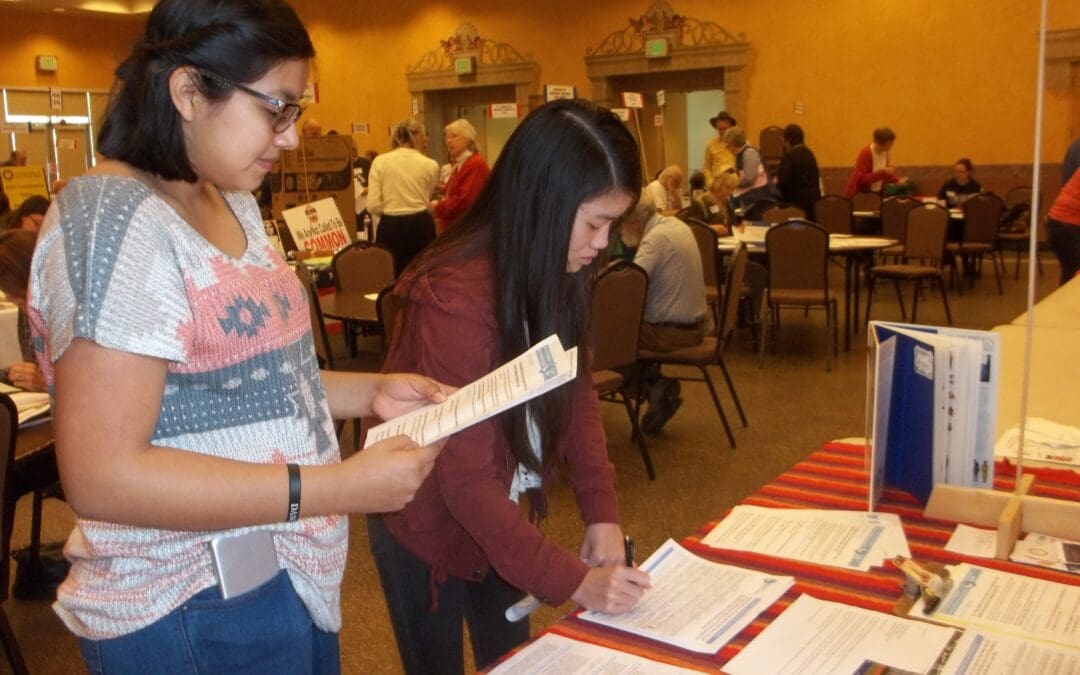
Earlier this month, the South Orange County Chapter of CGS joined an event to raise awareness of this treaty and collect signatures to petition President Obama to support this treaty and give the United States international credibility to defend children’s rights.
Karen Stone organized a table at the Great American Write-In, which allowed visitors to attend and write to their representatives about issues important to them. The chapter board funded their table, while the CGS chapter provided information about the CRC as well as some sample writings that could inspire others to write to the White House in support of the treaty. As Karen explains,
I always like to have a petition, because it’s easy to ask people if they would like to sign our petition…and then very simply say what it is about. It gets people to stop, look and sign! Theyare more likely to pick up our literature and engage in conversation.
Engaging the attendees can be difficult at some events, but as Karen explains, this is a good way to catch the attention of others and draw them in.
It is always good to have information on how one can join at the national level (included in the brochure) and also a sheet for them to sign their name if they would like to attend a chapter meeting. I also like to have available a short list of the other topics which CGS is working on and a little information on the history of CGS. All of this is included in the brochure.
Plugging CGS and our mission can seem like too much, but having literature provided by the staff is an easy way to help others learn more about us–it’s reaching out to groups that may not otherwise hear about our cause.
Asking others to sign our petition on the CRC is a great way to raise awareness on this issue and educate others about CGS’s mission as a whole. As Karen commented, many people they talked to at their event didn’t even know that the United States is the only country that hasn’t adopted the CRC–even Somalia and South Sudan have ratified it. The main question was, why hasn’t the United States ratified the treaty yet?
Hopefully with their support, we soon will.
by Emily Ervin | Mar 17, 2016 | Global Justice, Human Rights
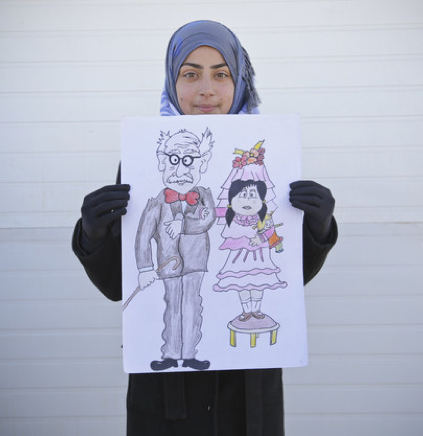
Child marriage is a global problem that spans across countries, cultures, religions, and ethnicities. Today, 1 in every 3 girls worldwide is said to be married before the age of 18, which can lead to physical, emotional, and psychological abuse. In order to end the practice of child marriages, the international community must work hand in hand within the various societies to provide the policies and programs necessary to achieve this goal.
The causes of child marriage often stem from tradition and gender norms within the community. However, child marriages can also be a result of severe poverty; the dowry, or “price of the bride,” may be needed for a family’s survival. Even security plays a role in the decision, as parents may believe their daughter will be safer in a marriage than unwed.
For example, five years into a conflict, child marriage has become an ever-growing problem for the girls in Syria, as well as Syrian refugees in Jordan, Lebanon, Iraq, and Egypt. In a conflict as devastating as Syria’s, families often must resort to the desperate response of marrying off their daughters to older men. In Jordan’s refugee communities, child marriage rates have risen 20% from 2012 to 2014.
The impacts of child marriages can be detrimental to the development of girls. Child brides are less likely to have access to education and healthcare, are in danger of physical and sexual abuse by their spouse, and have a greater risk of experiencing life-threatening complications during childbirth.
Plenty of international organizations are trying to end child marriage. The organization Girls Not Brides has an extensive role in leading this movement by bringing over 500 civil society organizations worldwide together for change. The United Nations For Population Activities (UNFPA) sponsors a program called Safe Spaces. Their goal is to empower girls through education on sexual and reproductive health, self-esteem, and their rights as young women. According to UNFPA, when girls leave school they are more at-risk for becoming child brides, and marriage often ends their chance of continuing an education. This leaves girls who are poor, uneducated, and who live in rural areas most vulnerable to marrying before reaching the age of 18.
Currently, the Sustainable Development Goals (SDGs) aim for universal education, sexual and reproductive health rights, and reduction of poverty and hunger. However, these goals are all unreachable without obtaining SDG 5.3, which aims for gender equality by “eliminating all harmful practices, such as child, early and forced marriages.” Child brides often miss out on the educational and economic opportunities SDGs seek to provide and therefore remain in the cycle of poverty. Without eliminating child marriages, girls will continue to fall behind boys in equal access to education and other services.
In order to reach the goal of ending child marriages, the international community needs to push further in combatting its root causes. International and local organizations should focus on expanding Safe Space programs in order to help young girls educate themselves and become leaders of change in their own communities. Communities must recognize that child marriages bring many dangers to young girls and should be discouraged. Finally, policies protecting women’s rights–such as granting women the right to an education or the right to choose when and whom they marry–must be enforced.
There is no time to lose in combatting child marriage. If current trends continue, there will be 142 million girls married in the next decade. The United States can begin by ratifying the Convention on the Rights of the Child and joining the global community in defending children’s rights.
by Jennifer Welden | Mar 15, 2016 | Global Justice, Human Rights
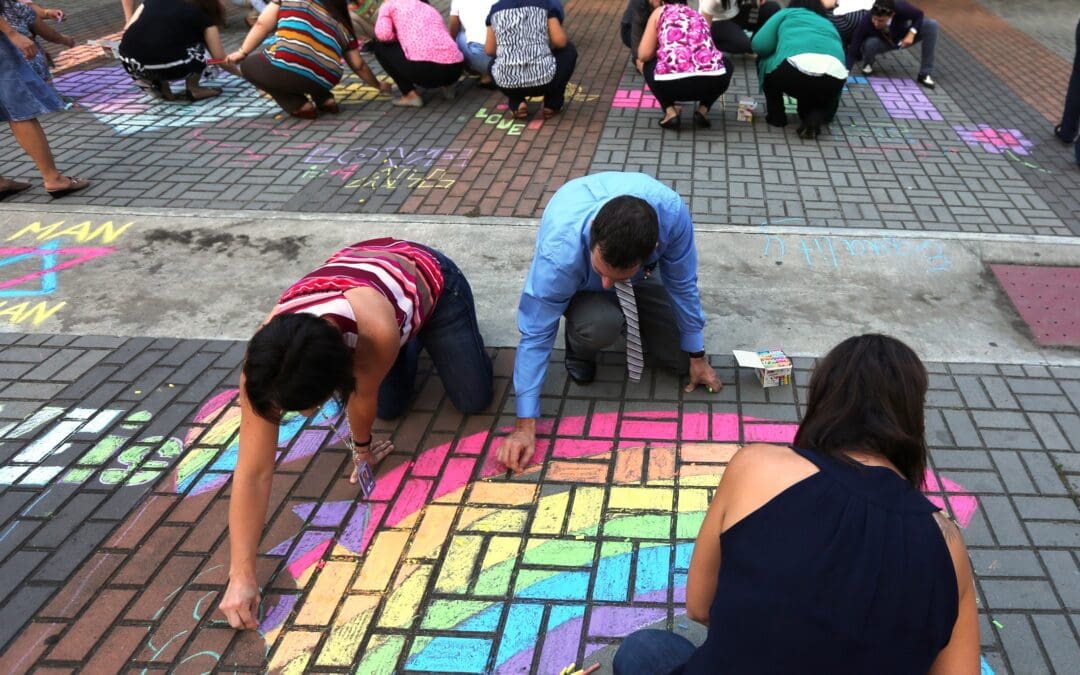
Last week, the Chinese government “banned all depictions of gay people on television, as part of a cultural crackdown on ‘vulgar, immoral and unhealthy content,’” one of many recent acts of censorship following the election of Xi Jinping in 2012.
Unfortunately, this is just one of many recent examples of cultural censorship by East Asian governments. In Indonesia, the government ordered “instant messaging providers…[to] remove gay emoji and stickers from their apps”; in Singapore, President Obama’s positive remarks about the LGBT community on Ellen were censored from public view.
Yet homosexuality is no longer illegal in China, nor in many of these other countries where this kind of discrimination and censorship is occurring. It is clear, then, that while the world may be trending toward legal equality, there is still much progress to be made culturally. So much of acceptance, particularly for children, comes not only from freedom, but also from representation. As one article notes:
Censoring certain content in the media presents major problems for Chinese youth and is an ultimately misguided attempt at influencing behavior. For example, the media can serve to help non-heterosexual young adults better understand their own bodies and know that what they’re experiencing is normal instead of having little to no instruction in this area.
Television also serves educational purposes and can provide a healthy template on which young gay couples can model their own relationships…What is healthier for a society: Forbidding the portrayal of activities that leaves adolescents and young adults ashamed and directionless or giving them an easily accessible way to understand both themselves and different lifestyles?
Often these countries try to justify their actions as being “sensitive to community values,” but which community are they serving? In the same article on Singapore, the author notes that when it came to hosting “openly gay American performer Adam Lambert,” the country was greatly divided:
Two fiercely competing petitions were put up online. The first accused Lambert of promoting a ‘highly sexualised lifestyle and LGBT rights,’ threatening ‘mainstream Singaporean values.’ The other, a reaction to the first, called for more ‘diverse inclusive points of view.’ Both petitions racked up tens of thousands of signatures in days. Lambert’s concert in Singapore went ahead all the same, without a hitch.
We see this same divide over “community values” even in more progressive countries like the U.S. A few months ago, ABC rejected a promo for Carol (a movie about a lesbian relationship), requesting that the trailer—which features “non-explicit nudity and the suggestion of sexual intercourse”—provide “more coverage” on the main characters. Considering the vast number of trailers portraying heteronormative couples that feature “non-explicit nudity” and implications of sexual intercourse, it is curious (let alone frustrating) to think whom these acts of censorship really benefit.
Ultimately, there is still much progress to be made around the world when it comes to just giving LGBTQ individuals basic legal rights; but these cases of censorship show that laws can become meaningless in the face of cultural exclusion. Achieving true equality is both political and cultural, something that takes time, support, but also exposure: how can the world change when the imaginings of it remain the same? We all have the right to feel that our experiences are not just allowed, but also shared. I hope one day to live in a world where that right is fully reached.
by Shelby Hettenbach | Mar 8, 2016 | Global Justice, Human Rights
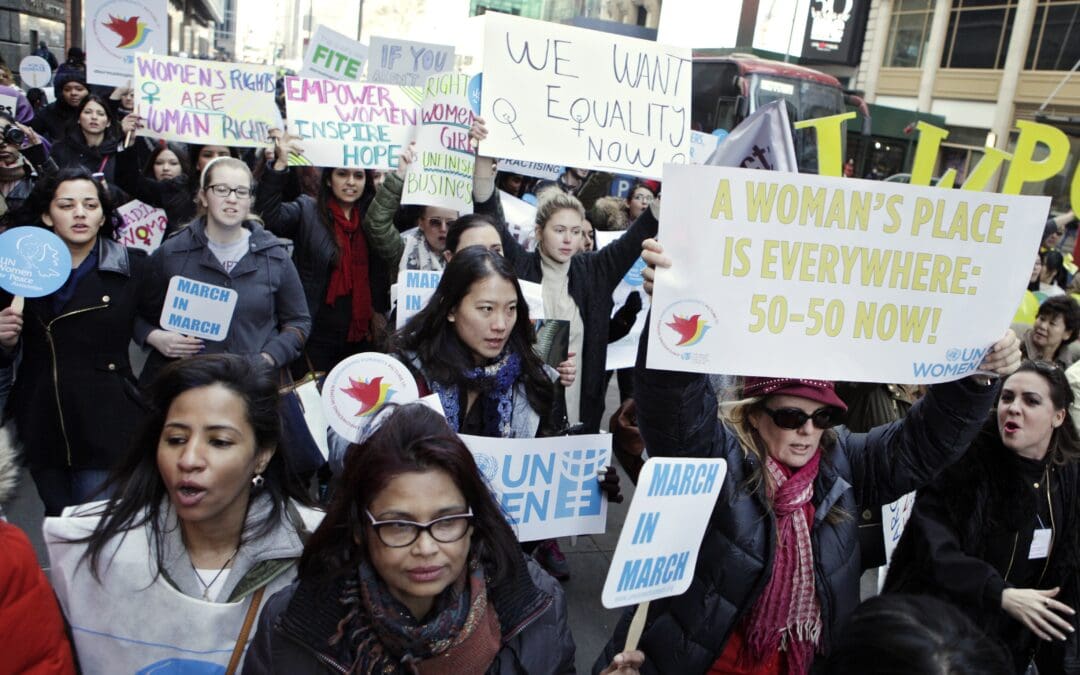
Today is International Women’s Day (IWD), the day to celebrate the social, economic, cultural, and political achievements of women around the world. In honor of the day I think it is important not only to recognize the historical influence of women, but to also look forward and promote a gender equal future.
International Women’s Day was first organized by the German socialist and theorist Clara Zetkin along with 100 delegates from 17 countries in March 1911. It was instituted in response to the numerous movements worldwide advocating for women’s right to vote, hold office and be given equal employment rights as men. It began as a massive protest by strong, brave, independent women when it was not “progressive” or “cool” to be a strong, brave, independent woman.
Since then, the holiday has evolved into a day of awareness on women’s progress in the ongoing fight for gender equality and a day to address issues across the globe that directly affect women. It has also expanded from one day to encompass the entire month of March, recognized as Women’s History month by President Obama in 2011. It has gained support in the media and across the internet; every year Google posts a doodle on its homepage in support for women around the world.
Each year carries with it a different theme typically focused on the progression of women’s rights through a specific action; this year’s theme is #PledgeforParity. Very similar to the #HeforShe campaign, #PledgeforParity encourages everyone, both men and women, to pledge to take a concrete step to help achieve gender parity more quickly. International Women’s day encourages people worldwide to take the pledge for gender equality and to act to become a leader for gender equality within our own communities.
We have come a long way since the inception of IWD, but we still have a long way to go in our journey for a gender equal world. Women are predicted to face another 118-year wait for the gender pay gap to close; currently only 55 of the 500 richest people in the world are women. Still only half of the world’s working-age women are in the labor force, compared to 77 percent of working-age men. 4 out of 5 victims of human trafficking are girls. According to the UN Foundation, “At least 250,000 maternal deaths and as many as 1.7 million newborn deaths would be averted if the need for both family planning and maternal and newborn health services were met.”
We still need International Women’s Day. As UN Secretary-General Ban Ki-moon said,
“We have shattered so many glass ceilings we created a carpet of shards. Now we are sweeping away the assumptions and bias of the past so women can advance across new frontiers.”