by Rene Wadlow | Mar 8, 2016 | Human Rights
Be ever watchful, wanderer, for the eyes that gaze into yours at the bend of the road may be those of the goddess herself.” —Oracle at Delphi
March 8 is the International Day of Women and is placed under the sign of the goddess of the month of March—Minerva. Minerva derives her name from the Latin mens (mind), and so she has a special relation to teachers and artists. Tradition has it that Minerva is a transformation of an earlier Etruscan and Sabine goddess taken over when Rome was established. She has also taken symbols and meanings from the Greek Athena, especially the owl as a sign of seeing in the dark, or seeing what is usually hidden or instinctive. Minerva is she who brings ideas from the darkness into the light.
Minerva symbolized Rome as Athena symbolizes Athens. Minerva’s face was put on Roman coins and as such, she travelled to the Roman provinces, becoming Britannia in England. She has come down through the centuries as the goddess of learning. In the US Library of Congress’s Great Hall, she holds a scroll on which is inscribed “Agriculture, Education, Commerce, Government, Economy”—all these are gifts from Wisdom’s store.
Minerva’s essential gift is understanding the relation between mind and matter. Minerva’s owl, creature of the night and symbol of the goddess’s dark and underworld power which see can see at night is also related to the reasonableness of day.
It is this ability to bridge the dark and the light that is so frightening to men. In the Middle East and the Westernized world, they have banished the goddesses to be replaced by a less multi-form male god. This is the thesis of Johann Jakob Bachofen, a 19th century Swiss scholar from Basle, working largely alone and drawing on Greek and Roman mythology. He held that the myths showed clearly that there had been an earlier period of social organization that was a matriarchy—a time when society was founded on family, equality and peace whose defining characteristic was love of the mother. The most heinous crime was matricide.
Then came patriarchy, which found the earlier system so intolerable that it was repressed to the subconscious, where, Bachofen thought, the memories live on in myth and dreams.
C.J. Jung knew of the work of Bachofen and used some of Bachofen’s reproductions of symbols in his own writing on the feminine—the anima. For Jung, the life energy takes on a myriad of feminine forms: now young, now old, now mother, now maiden, now a good fairy, now a witch, now a saint, now a whore. She draws man into life with her Maya (power of illusion in Hinduism), and as Sophia, she “leads the way to God and assures immortality. She is the archetype of life itself.”
It is this “saving role” of the feminine which makes uneasy the religions whose prophets are all men. In the current fundamentalist form of Islam, the woman must be covered, isolated, accompanied by a male relative. Women are not the symbol of learning. In fact, they should not go to school at all. These reactions, which can take the extreme forms of “honor killings” and the closing of schools for women, are a rising tide among the Taliban and others who share the same fears.
These fears have deep causes and are not limited to the Islamic world. To transform fears into rational knowledge is not an easy task, but in some early representations, Minerva had thunderbolts in her hand (a symbol usually associated with Jupiter or Zeus). Thus transformation will not come without conflict. The aims of the International Day of Women were well set out by Bella Abzug, then a member of the US Congress and political feminist, in her talk to the UN World Conference on Women (1995):
Change is not about simply mainstreaming women. It’s not about women joining the polluted stream. It’s about cleaning the stream, changing stagnant pools into fresh, flowing waters.”
“Our struggle is about resisting the slide into a morass of anarchy, violence, intolerance, inequality and injustice.”
“Our struggle is about reversing the trends of social, economic and ecological crisis. For women in the struggle for equality, there are many paths to the mountain top. Our struggle is about creating sustainable lives and attainable dreams. Our violence is about creating violence-free families. And then, violence-free streets. Then, violence-free borders.”
“For us to realize our dreams, we must keep our heads in the clouds and our feet on the ground.”
by Shelby Hettenbach | Mar 4, 2016 | Global Justice, Human Rights
#ThankYouMexico for finally joining the #HeforShe campaign fighting for gender equality!
#HeforShe was created by UN Women,whichwas established to accelerate progress on meeting the needs of women and girls worldwide. The campaign has been famously supported by Emma Watson, who made an extraordinary speech at the UN in support of this global movement. The goal is not only to discuss positive change, but to make it happen with real action.
The campaign’s main focus has been on encouraging men and boys to take action against inequalities faced by women and girls. Unlike most social media movements, the #HeforShe campaign has existed for a few years, but its momentum has not come to a halt. The campaign continues to grow, reaching hundreds of thousands of men and women worldwide. Currently the countries leading in participation and support include the United States, the United Kingdom, Ecuador, Mexico and Canada. In Iceland, 1 in 18 men have made the #HeForShe commitment, the highest percentage in the world.
And finally, Mexico has officially joined the campaign. At the launch event, Mexican Interior Minister Miguel Angel Osorio Chong said, “Women’s cause should always be our cause–the cause of men, this initiative calls us to deepen our reflection on our roles, attitudes and beliefs, and take down those practices that, without realizing it, distance us from our ideal of equality.” Perhaps the most influential part of Mexico’s campaign launch was the release of the video showing both men and women in their daily lives reversing conventional gender roles and performances:
Nos unimos a la campaña internacional Nosotros por Ellas #HeForShe de ONU Mujeres, la cual tiene como objetivo impulsar la igualdad de género y promocionar los DerechosHumanos de las #Mujeres.
Posted by gobmx on Tuesday, February 23, 2016
For all of their progress, Mexico still has a long way to go when it comes to gender equality and women’s rights. According to a Thompson Reuters Foundation survey, Mexico was ranked as one of the worst countries among industrialized nations in which to be a woman. Two-thirds of women in Mexico are victims of domestic violence. This number is unfathomable and unacceptable.
The UN Women Representative for Mexico, Ana Güezmes, said,
Despite the progress achieved in the last century, the hopes for real equality, substantive equality, in fact, are far from being realized.”
The campaign has not come close to achieving worldwide gender equality. However, with growing support, country by country, there may be hope for a gender equal world in the future.
by Emily Ervin | Mar 3, 2016 | Human Rights, Peace & Disarmament
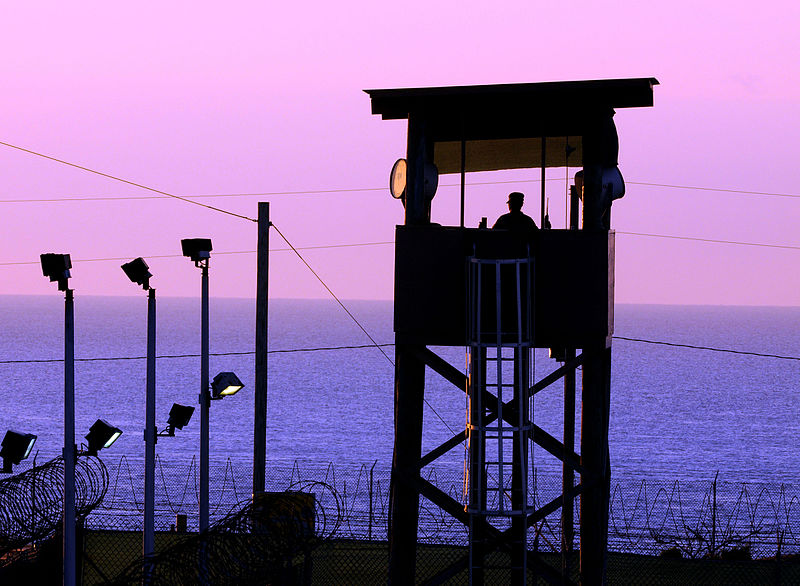
President Obama has once again called for the closure of the Guantanamo Bay detention facility, delivering a new plan to Congress last Tuesday.
Immediately, national attention shifted to logistical concerns of where the current detainees will be transferred to upon the closure. The salience of relocation is undeniable and must be taken seriously. However, as President Obama stated, this plan is not only about closing Guantanamo Bay’s detention center, it is about closing “a chapter in our history.” A chapter which reads almost exclusively as a laundry list of human rights and humanitarian abuses committed under the reign of the “War on Terror.”
President Obama went on to call the detention center “a stain on our broader record of upholding the highest standards of the law.” A stain consisting of interrogation tactics recognized by Amnesty International as prolonged isolation, 20-hour interrogations, force-feeding, and sensory deprivation. These tactics have been criticized by the medical community for having a series of long-term physical and psychological effects on the victims, including depression, delusions, and thoughts of suicide. Consequentially, the treatment of detainees has sparked international concern.
Upon President Obama’s announcement, United Nations human rights experts urged “proper investigation and full accountability for human rights violations” in his plans to close the facility. The UN insists that “those who are responsible must be brought to justice.”
The international community is making it clear that the United States’ actions of holding detainees without due process and proper judicial protection is inexcusable and violates the Geneva Convention Against Torture. The indefinite holding of detainees is also a violation of the United States Constitution. In 2008, the Supreme Court upheld the right of the detainee to habeas corpus, yet has never allowed any appeals to prevail.
A democracy like that of the United States should face consequences when it commits both international and domestic human rights violations such as indefinite detention and physical and psychological torture.
The mere closure of Guantanamo Bay’s detention center has been a long time coming. However, despite this political stride, there must still be accountability for human rights abuses. Crimes such as torture should not be hidden in the shadows of U.S. foreign policy any longer. Promoting transparency brings hope that there will be institutional changes regarding the treatment of detainees in the future. Taking responsibility for its actions at Guantanamo Bay could be a crucial step for the United States in legitimizing its claim to being a human rights leader for the rest of the world.
by Jennifer Keck | Mar 2, 2016 | Global Justice, Human Rights
Apple’s refusal to help the FBI unlock the iPhone of one of the San Bernardino shooters has reignited the debate over how much privacy we can expect in the information age. This week, the company is facing a U.S. House of Representatives committee to defend its decision to seemingly put personal privacy above national security. But the final outcome may put more on line for many—by threatening their personal security. Around the world, human rights activists, journalists, and even victims of domestic violence rely on encryption to protect them from harm.
Security experts have been warning about the dangers of giving governments the keys to back doors of electronic devices. Not only could security breaches result in sensitive information falling into the hands of hackers and criminals, but China and governments in other foreign markets will likely demand a similar workaround.
While you may not be thrilled that the NSA is reading your texts, the threat of surveillance tends to be far more pervasive in the developing world. Technologies in the global south are often “more sophisticated, pervasive and abusive than those revealed by Edward Snowden in Western countries,” Human Rights lawyer Renata Avila told The Bertha Foundation.
Human Rights Activists and Lawyers
From Argentina to South Africa, governments are ramping up their efforts to track and identify dissenters in real-time, anywhere. Encryption and anonymity offer a zone of privacy to allow activists to exercise their right to free expression online. As UN Special Rapporteur David Kaye highlighted in his Report on encryption, anonymity, and the human rights framework, freedom of opinion in the digital space is the most relevant freedom for lawyers and human rights activists.
Journalists and Sources
Journalists—and their sources—also depend on encryption to ensure their security. When the French government wanted to restrict the use of encryption in 2002, Reporters without Borders countered their request, writing,
In some countries such as China, Vietnam and Tunisia, using encryption is the only option for dissidents and journalists who want to protect the content of their emails and above all to protect their lives.”
Today, the Committee to Protect Journalists recommends reporters in Syria use PGP encryption to keep their sources safe.
Victims of Domestic Violence
But personal security issues aren’t limited to journalist, activists, and their attorneys. Those seeking to escape domestic violence are often threatened by cyberstalking and phone-tracking malware. To protect victims’ privacy, Tech Safety offers a range of resources for domestic violence programs, sexual assault crisis centers, and victim service agencies. Weakening encryption could allow perpetrators to further exploit digital security flaws.
A Dangerous Precedent
If Apple is forced to design an encryption backdoor, it could set a dangerous precedent in which governments around the world can demand that other tech firms do the same. The final decision could jeopardize the personal security of millions in the name of national—or global—security.
by Shelby Hettenbach | Feb 19, 2016 | Global Justice, Human Rights
Last week, I attended the Tom Lantos Human Rights Commission briefing titled, “Seeking Justice for Atrocities: How the International Criminal Court Could Advance Accountability in Iraq and Syria.” The panel was made up of four highly qualified people in the field of international justice. I personally was very happy to see that three out of the four were women.
The panel included Minerva Mirabal, President of Parliamentarians for Global Action; Jane Stromseth, Professor of Law at Georgetown University; and James Stewart, Deputy Prosecutor of the International Criminal Court. Susana SaCouto, the Professorial Lecturer in Residence at American University, acted as mediator.
The event began, as most do, with each panelist giving an introductory speech. I was fully prepared for boredom to set in as I leaned back with my notepad in hand. However, I was quickley shocked back into full attention when Mirabal began to speak; her voice was filled with such intense passion, it was difficult to ignore.
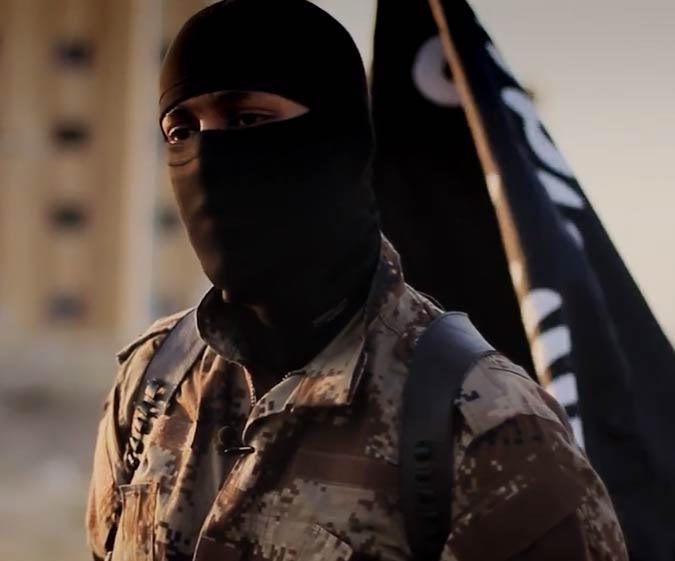
She began by stating very clearly that “it is a mistake to classify ISIS as terrorism,” explaining that ISIS is not only terrorising groups of people; they are also conquering territory and creating “systematic enslavement.” This makes them a far greater threat than a simple terrorist group. After her speech, I saw myself thinking about ISIS as more closely related to the Nazi regime than I ever had before. She ended her speech saying,
ISIS is the scourge of the 21st century.”
By this point, I was completely ready for the very intense hour ahead of me, and I was not disappointed as Stromseth took the floor. She took a very different approach than Mirabal: rather than passion, she captured me with logic. She began by asking and answering the “Why?” “What?” and “How?” questions in pursuing justice:
Why is it important to pursue justice and accountability now?
She answered this very simply, saying, “To stand in solidarity with the victims” of crimes committed by ISIS, as they deserve justice. On a larger scale she recognized that it is of the utmost importance to begin to build a strong system of international justice and to make it clear that mass atrocities will not be tolerated by the global community.
What realistic options exist today?
Stromseth began by recognizing that it is important first to allow domestic and national governments to take the lead. However, she further went on discuss the importance of an international system of support that is there to lend a hand when domestic and national governments fail. “So what can be done?” she asked. Perhaps the only currently available option is the potential for the ICC to prosecute ISIS criminals.
How can the US government in the face of the current constraints help lay the groundwork for justice and accountability now?
Evidentiary documentation, she stated, is key; there is a great need to gather evidence to document crimes committed by ISIS if there is any hope of pursuing justice. The other key point made by Stromseth was the importance of giving direct support to the survivors of atrocities–something that currently the United States is severely lacking.
Finally the panel came to Deputy Prosecutor Stewart, the only panelist directly serving the ICC. Stewart chose to speak less about ISIS specifically and more about the general powers and efforts of the ICC, saying,
We are the court of last resort. We are not the first responders.”
What stood out to me most about Stewart’s speech were his statements asking for help from the United States. He spoke about the difficulties the ICC has faced due to funding shortages; if the US were there to help, the ICC would be able to focus more clearly, as the lack of funding is a “huge distraction.”
It was very clear to me after this event that the world needs the United States to support the International Criminal Court. It is no longer up for debate. We must step into the world of global justice and provide both financial and governmental support to those attempting to bring justice to victims of mass atrocities.
by Jaira Burke | Feb 15, 2016 | Global Justice, Human Rights
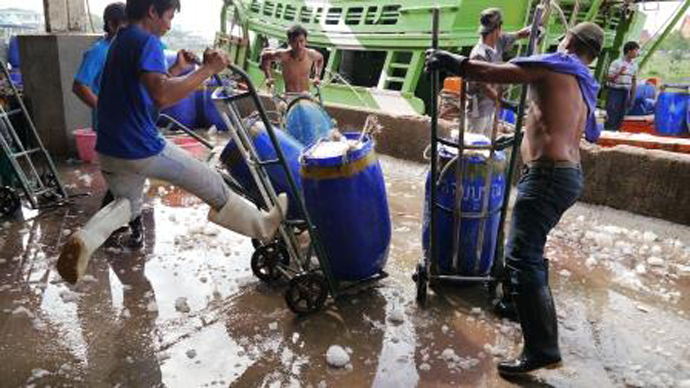
Nestlé’s report on harmful labor practices in Thailand’s seafood industry has recently gained public attention. While many may admire the company’s transparency regarding this, it’s worth noting that Nestle is also fighting a U.S. Supreme Court lawsuit for its alleged use of child slaves in the Ivory Coast. This is all taking place as the European Union drafts legislation requiring multinationals to disclose profits and taxes paid in member countries as an attempt to combat corporate tax avoidance.
Representing a large portion of global trade and an even larger portion of the world’s GDP, multinational corporations (MNCs) are the ideal depiction of globalization and free trade. And while we may all agree these things are great, supply-chain slavery, aggressive tax planning, and other harmful corporate practices continue to be a despicable reality in the global economy.
The capitalist economic model is built on the notion of free markets unregulated by states. Often idolized as the vehicle for economic fluidity, capitalism is so geared toward business retention and expansion that it avoids market regulation at all costs. The essential permanence of labor and human rights abuses at the hands of multinationals, as well as practices such as profit shifting and transfer pricing, desperately call for intervention. While it is understandable that too much regulation may hurt business growth, the total lack of market regulation leaves millions vulnerable to the often arbitrary and destructive corporate practices that have become a venomous norm.
The time has come to establish a fair global financial system, not just a functioning one
The International Criminal Court addresses individuals, and the International Court of Justice addresses states; yet multinational corporations seemingly run rampant in the global market, free from regulation and accountability. MNCs aren’t just harming individuals in vulnerable communities, but the governments and economies of states as well. A 2013 Congressional Research Service report found that the annual revenue loss for the United States alone as a result of aggressive tax planning ranged from $30 to $90 million. One can only imagine the damage tax avoidance can cause for smaller, developing economies, reinforcing inequality as multinationals run off toward the sunset with billions in tote.
There is a blatant lack of authority and accountability surrounding MNCs. Yet the endless worship of economic growth and free trade deter state actors from addressing the evident need for structural reform in the global market.
Multinationals must not only operate within the law, but with a sense of accountability regarding the critical role they play in the face of labor and human rights and developing economies globally. With the Trans-Pacific Partnership currently securing itself into reality despite inherent inequities built into the agreement such as the death clause, which threatens to worsen the already soaring prices of pharmaceuticals, and the overall avoidance of prioritizing climate change and improving labor conditions globally–it is evident that economic gain continues to take priority over basic human rights and economic justice.
As a global community we can no longer turn a blind eye to the obvious need for conceptual, practical, and sustainable approaches to addressing corporate lawlessness. This is something that requires a collaborative approach on behalf of states, intergovernmental organizations, and nongovernmental organizations for the sake of humanity, the environment, and developing economies globally. We can no longer allow the autonomy of multinationals to shape the terms of engagement in international trade. From both a human rights and an economic perspective, structural reform can no longer be avoided.