by Jennifer Welden | May 28, 2016 | Global Cooperation, Human Rights
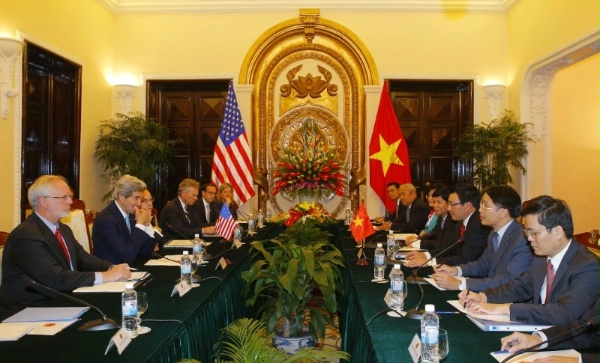
Recently, President Obama announced the end of the arms embargo against Vietnam, “ensur[ing] that Vietnam has access to the equipment it needs to defend itself and…underscoring the commitment of the United States to a fully normalized relationship with Vietnam.” While the Obama Administration has maintained that this is not being done as a response to China’s growing military, and hold over the disputed South China Sea, others see it as strategic decision to balance a rising China.
But some, like John Sifton of Human Rights Watch, have criticized the move as being “undeserved at this time.” With Obama too noting that “there are still areas of significant concern in terms of freedom of speech, freedom of assembly, [and] accountability with respect to government,” many argue that Vietnam’s current treatment of human rights does not merit closer ties with the U.S. For example, an activist was grabbed and held until after Obama had left the country.
Moreover, Amnesty International’s John Coughlan suggested Obama’s visit was a potential opportunity to stand in “solidarity” with the people of Vietnam:
People in the country see America as representing certain values like freedom of speech and freedom of assembly. These are rights in Vietnam that are very tightly restricted. So, if Obama was to call on the government to relax restrictions, people will not be thinking, “how dare he.” It would be seen as an act of solidarity. I think when Obama comes, most Vietnamese people will feel extremely proud. The problem is that human rights do not seem to be central to the visit.
Yet one could also argue that security – both that of the U.S. as well as its allies – is key to U.S. being able to continue to influence and protect human rights around the world. Particularly in the South China Sea, where “failure to respond to Chinese coercion or use of force could damage U.S. credibility,” it is arguably important for the U.S. to remain strong, either through its own actions or the actions of its allies. Expanding Vietnam’s options to defend itself not only helps deter further conflict with China, but also allows the U.S. to better exert its influence and prove its commitment to its allies. It may even have a positive impact on human rights, if sales are in fact held to the strict requirements Obama mentioned in his announcement.
It is hard to know how to weigh human rights versus security – what is the right balance between the two? For those on either side of the issue it is black and white: actions that will benefit one to the detriment of the other must be avoided. It begs the question: is there a policy in which both can win?
by Rene Wadlow | May 23, 2016 | Global Justice, Human Rights
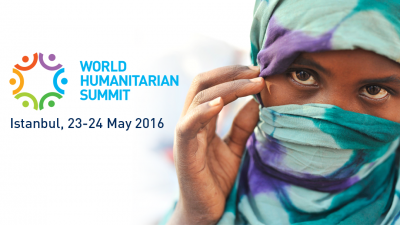
The World Humanitarian Summit organized by the United Nations will open on 23 May 2016 in Istanbul, Turkey. The aim of the conference in the words of the UN Secretary-General Ban Ki moon is to see what should be done “to end conflict, alleviate suffering and reduce risk and vulnerability.” Turkey is on the front lines of the consequences of armed conflict with nearly three million refugees from Syria and Iraq as well as its own attacks against Kurds. Turkey has entered into agreements with the States of the European Union concerning the flow of refugees through Turkey to Europe − agreements that have raised controversy and concern from human rights organizations.
Given the policies of the Turkish government, some non-governmental organizations have refused to participate in protest. Doctors Without Borders − one of the best-known of the relief organizations − has pulled out. However, the Association of World Citizens will participate while working for a settlement of Kurdish issues at the same time.
As with all UN conferences, there has been a good deal of earlier discussion. These discussions within UN agencies, national governments, and non-governmental organizations (NGOs) have led to a synthesis document which sets out the agenda and the main lines for discussion in Istanbul. It is the Secretary-General’s report for the World Humanitarian Summit One humanity: shared responsibility. (A70/709). There is a useful overview of the current world situation of refugees, internally-displaced people and of people on the move to escape persistent poverty. There are also warnings about future displacement of people due to the consequences of climate change.
As the report highlights “The effort necessary to prevent and resolve conflict will be massive but can be broken down into sets of core actions. They include demonstrating courageous leadership, acting early, investing in stability and ensuring broad participation by affected people and other stakeholders.”
As with so many UN reports, there is a call for courageous political leadership and a mobilization of political will. If there were more courageous political leadership, we might not have the scope and intensity of the problems we now face. There is a limited amount that we can do to provide courageous political leadership at the national level. Rather we have to ask what can we do within non-governmental organizations in which we are active to resolve conflicts and deal with some of the consequences of the conflicts such as refugee flows.
I see three areas, outlined in the UN report as agenda items, that we can develop on a non-governmental level. The UN report sets out the values that also guide our NGO actions. “To prevent and alleviate human suffering, to protect life and health and to ensure respect for the human person − these are the most important humanitarian principles.
The first issue for NGO action is to strengthen respect for the laws of war − now more commonly called Humanitarian Law. The recent and wide-spread attacks against medical facilities and medical personnel indicate an erosion of the laws of war. There is an urgent need to strengthen respect for the laws of war. This is an issue on which NGOs and the media can focus. Much humanitarian law has already been codified into the Geneva Conventions and other treaties. States which have not ratified should be encouraged to do so, but States must also be encouraged to live up to their word.
The second area is risk analysis and the publication of findings. All governments do a certain amount of risk analysis and contingency planning, especially the military. However, they make their findings public only when it serves their interests and States give little information as to how the analysis was made. NGOs along with academic institutions can provide analysis from open sources and indicate growing tension areas − what I have called “storm warnings”. For storm warnings to be effective, they need to reach as many people as possible and especially those in the path of the storm. International support for conflict resolution efforts must be made early and in a continuing way. If a storm does not break out quickly, it does not mean that the “storm-creating factors” have gone away and that attention can be put on other possible conflict areas. There need to be constant awareness of the way that tensions may form.
The third issue is training and preparation. There are a relatively large number of people working for (or having worked for) relief operations. They are able to set up tents, field kitchens, field clinics and water supplies. There may be need for more but there is not much room for innovation. However, teaching in refugee camps, dealing with longer-range psychological damage are areas where there is less experience and also less agreement as to what is to be done.
We can wish creative energies for the participants in the World Humanitarian Summit. Hopefully, the broad outline of actions necessary will be set, but the real work of all international conferences comes in the follow up.
by Rene Wadlow | May 21, 2016 | Global Cooperation, Human Rights
The Global Citizenship Commission (GCC) under the leadership of the former UK Prime Minister Gordon Brown presented its report The Universal Declaration of Human Rights in the 21st Century (free PDF download) to the United Nations on 18 April 2016.
The Global Citizenship Commission was created “to illuminate the ideal of global citizenship. What does it mean for each of us to be members of the global society?” The principal aim of the 1948 Universal Declaration of Human Rights (UDHR) was to create a framework for a world society that was in need of universal codes based on mutual consent in order to function. This universality was clearly reaffirmed in the 1993 Vienna Declaration of the World Conference on Human Rights in which nearly all UN Member States took part.
In 1948, the members of the UN Commission on Human Rights saw the human rights process as a three-step effort. First was the proclamation of the general principles which was the UDHR. The second step was to be the codification of these principles into laws both at the world and at national levels. The third step was to be some form of implementation through reports and observation, possible complaints procedures and ultimately some form of enforcement or sanctions. In 1948, it was not clear how the second and third steps should be carried out.
Largely through the efforts of NGO representatives, there has been progress made both on issues and on bringing attention to vulnerable people. The Global Citizenship Commission highlights these advances. Much of the report is devoted to the analysis of the way the UN has met past challenges and is a good overview for those who have not participated directly. The report calls in a general way for improvements. “The international community needs a toolkit of governmental and multilateral responses to rights violations that is more legitimate and sophisticated than what we have today and which relies on mechanisms other than the use of force.”
The report highlights two new challenges:
- Discrimination due to sexual orientation;
- Migration-refugee flows due to both short-term armed conflict and longer-term consequences of climate change.
On the first issue of discrimination due to sexual orientation, representatives of NGOs have already been active. There has been real progress from the mid-1980s when the issue had been first raised and then “swept under the rug” due to strong opposition from a number of States. Now, UN Secretariat members have taken the lead. There is still much to be done, especially in changing attitudes at the individual and local levels, but I think that the direction toward inclusiveness has been set.
Issues of migration and refugees go beyond what NGOs can do alone, although NGOs have been active on both refugee and climate change questions. On 19 September, at the start of the UN General Assembly, there will be a one-day Summit on migration issues at the UN in New York. NGOs should be able to make migration-policy suggestions in advance and to raise the issue of “statelessness” which is increasingly a result of migration.
The Global Citizenship Commission with its secretariat at New York University Global Institute for Advanced Study has set out a clear overview of the past and has highlighted some of the new challenges − a useful alert for those of us working on global issues and a call for an increased number of contributors to this work.
by Jennifer Keck | May 5, 2016 | Global Justice, Human Rights
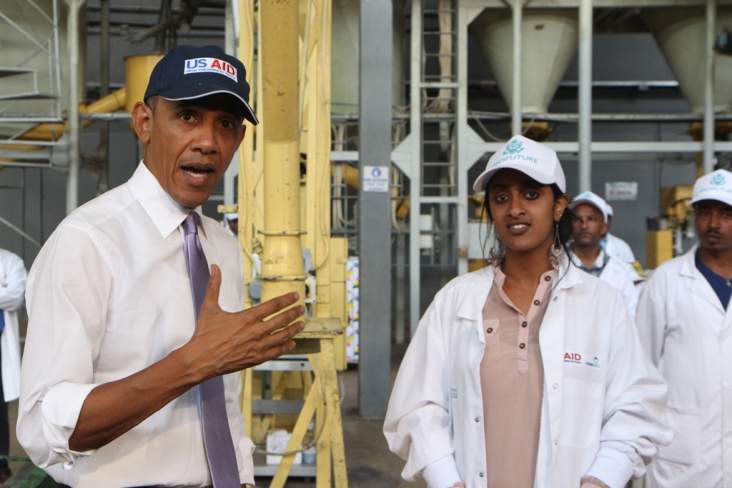
When you think of Ethiopia, images of starving children probably come to mind. But the East African nation has come a long way since the 1984-1985 famine, which claimed over one million lives. Economic growth has increased around 10 percent annually for the past decade, putting it in line with the government’s goal of becoming a “middle-income” nation by 2025.
The country’s “pro-poor” polices are transforming the nation and creating a path to prosperity and stability. Western governments—including the United States and Canada—consider Ethiopia an “island of stability” surrounded by the struggling states of Sudan, Somalia, South Sudan, and Eritrea.
Yet for all its economic success, the Ethiopian government casts a long shadow on human rights.
Last year, a violent crackdown on protesters in Oromia resulted in upwards of 200 deaths, according to Human Rights Watch. The anti-government demonstrations, which were set off by plans to expand the capital Addis Ababa into the region, have been fueled by frustrations over political and economic marginalization. Protesters say the military and police responded with public beatings, unlawful arrests, and even killings.
Eyewitness testimonies, mostly reported via social media and by activists, have been difficult to verify. Restrictions on travel have made independent investigations next to impossible. Journalists can’t travel without permission and are typically assigned a government minder when they do.
Ethiopia’s devastating drought has only pushed human rights concerns further to the margins as the country pleads for foreign aid. And even that narrative is tightly controlled by the government.
CBC Foreign Correspondent Margaret Evans writes of her visit, “Local officials assigned to accompany us on our recent trip were reluctant to allow us to see any real signs of suffering in the face of the drought.”
Restricting access may be due in part to the government’s desire to project an image of strength after decades of being portrayed as a charity case.
“There appears to be a tendency by some in the international humanitarian system to change the message in such a way that what the rest of the world hears from Ethiopia is a shrill cry of an SOS for immediate intervention,” Ethiopia’s communications minister, Getachew Reda, told CBC.
But government control of the national media is far more problematic. Today, Ethiopia is “one of the leading jailers of journalists on the continent,” according to Human Rights Watch.
Ethiopia deserves to be lauded for its economic progress, but unless it begins protecting human rights, millions will be locked out of participating in its development. It will take more than a steady growth rate for the nation to truly become the shining star of East Africa.
by Emily Ervin | Apr 28, 2016 | Human Rights, Peace & Disarmament
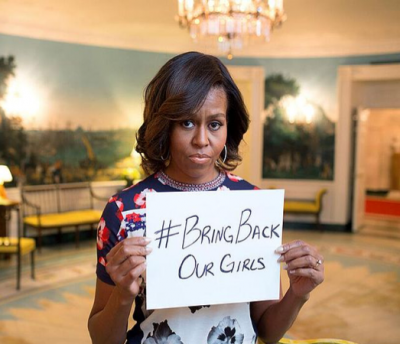
It has been two years since the abduction of 267 schoolgirls in Chibok, Nigeria. The tragedy initially shocked the world. Since 2014, the coverage of continuing kidnappings has dwindled, and the international community has seemed to remove itself from immediate concern.
However, the relative ease at which Boko Haram was able to carry out the kidnapping in Chibok has only led to an increase in abductions over the past two years. In order to educate the international community on the tragedies occurring in Nigeria, the female victims of Boko Haram deserve the ability to share their stories with the public both through peace negotiations and the media.
Beginning in 2012, schools became Boko Haram’s central target for abductions, which only worsened the already drastic education indices in northeastern Nigeria. The group has since destroyed almost 1,000 schools and targeted thousands of teachers and students.
The tragedies endured by the Chibok schoolgirls, which sparked the #BringBackOurGirls campaign, has been endured by thousands of young women in northeastern Nigeria over the past six years. Unfortunately, many of the victims continue to remain invisible to the world’s eye. According to the International Organization for Migration, the number of displaced people, or IDPs, in northeastern Nigeria has skyrocketed to 2.6 million, along with 17,000 people killed due to the six-year insurgency by Boko Haram.
Boko Haram continues to rampantly oppress women and children as a tool of misogyny and degradation. Young girls are subjected to psychological abuse, forced labor, forced participation in suicide bombings and military operations, and forced marriages to their capturers–on top of sexual abuse and rape.
As UN Secretary General Ban Ki-moon asserted in 2015, rape is not a byproduct of the chaos of war in Nigeria, but a “calculated tactic of terror,” which is part of a larger strategy of domination and self-perpetuation led by Boko Haram. As part of an initiative to create a generation of their own, Boko Haram has waged a full-out war on women’s physical, sexual, and reproductive rights.
After months of being held captive by “one of the world’s deadliest terror groups,” young women emerge into Nigerian communities and realize that they are now suspects of terror.
Unlike most refugee camps, which are administered by the United Nations, many of the surviving women and children of Boko Haram are held in camps monitored by the Nigerian military. The women are often referred to as “Boko Haram wives,” and are deemed to be untrustworthy by the Nigerian government. The suspicion is due to the fact that 39 of the 89 Boko Haram suicide bombings over the last year have been carried out by women, in mosques, markets, and displacement camps. As for the children, top Nigerian military official Maj. Gen. Lucky Irabor believes they have been “more or less brainwashed” and have “become a useful tool” for Boko Haram.
To date, the Chibok schoolgirls is the extent at which the international community is aware of Boko Haram’s deadly actions in Nigeria. As a whole, the Nigerian government and the international community should be doing more to ensure that the widespread violence against women is not only recognized, but also combatted in an appropriate manner.
To begin with, NGOs should be pursuing additional medical and psychological treatment for the victims of Boko Haram kidnappings held in government-controlled areas. Secondly, the Nigerian government should be encouraged to include female victims in national and international efforts to promote security. The failure of the Nigerian government to include women in its delegation to the Paris Summit on Security in Nigeria in 2013 and again to the London Ministerial on Security in 2014 was disgraceful.
Truly combatting violence against women can only be accomplished with the involvement of women who have lived through such tragedies. International organizations such as Human Rights Watch urge Nigeria to include women in any negotiations for peace.
The neglect from the international community and the mistreatment of the victims by the Nigerian government is only exacerbating the horrendous crimes committed by Boko Haram. It’s time to shine a light on the everyday realities occurring in Nigeria, beginning with the incorporation of victims stories’ into the peacemaking process for the international community to hear.
by CGS Blog Archive | Apr 26, 2016 | Global Justice, Human Rights
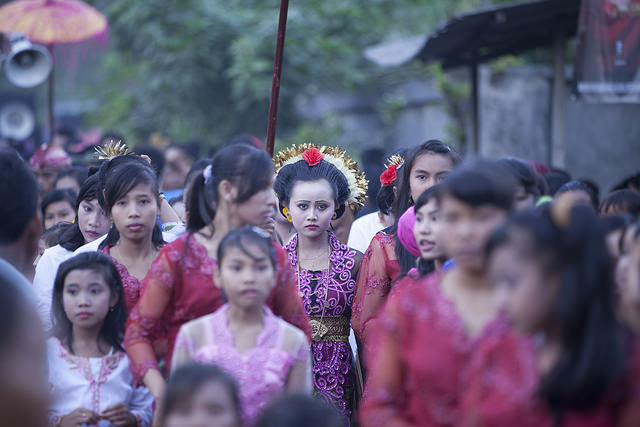
For privileged children in the United States, their biggest worries are getting their homework done in time to watch TV and being able to play outside with their friends. However, for young girls in Ethiopia, they are worried about getting a proper education and hoping their parents don’t force them into marriage.
According to Girls Not Brides, two in every five girls are married before their 18th birthday and one in five girls marry before the age of 15. For these young girls, forced marriage brings their childhood to an abrupt halt.
In Ethiopian culture, some believe that a woman’s main job is to be a wife and mother. Patriarchal ideals such as these contribute to the issue of female genital mutilation: 80% of women in Ethiopia become victims of this practice before the age of one.
Many of the girls who are married off at a young age will be unable to complete their education, either because their families cannot afford it or because their husbands refuse to allow them to attend school. It is common for girls not to even find out they are getting married until a week or a few days prior to the wedding. They are forced to marry men they do not know and who are eight or more years older than they are.
These forced marriages can lead to domestic violence, and the brides encounter many health problems because of early pregnancies and childbirth. The young girls feel helpless because they have no control over household decisions; they are unable to leave their homes because they have little to no education and ultimately nowhere to go. Most parents refuse to take their daughters back because it would tarnish their families’ respect. These young girls are being punished simply because they are born girls.
Many factors contribute to the increase in childhood marriage in Ethiopia such as poverty, lack of proper education and the lack of economic opportunities (common throughout third-world countries.) Child marriages are prevalent in many countries, and it is time to educate the people and protect the youth of these girls.
The International Center for Research on Women (ICRW), in partnership with CARE-Ethiopia and the Nike Foundation educates young girls on having control of their lives so one day they can stand up for their own daughters and promise them a bright future. ICRW is also working to help girls that are already married by empowering them and educating them with the system they are living in.
Young girls deserve to play with others their age and to have a proper education. All these girls are capable of greatness if provided with the right opportunities. Imagine if your daughter, sister, or friend were forced into marriage and denied a childhood, an education. It is our job to raise awareness of this issue because these young girls deserve the same rights as our own loved ones.