by Chuck Woolery | Jan 11, 2017 | Global Justice, Human Rights
January 11, 2017 is a special day. Not because of the numeric coincidence of 1-11-17. But because of the large number of human beings who remain victims of human trafficking, one of the most degrading, harmful and illegal injustices known on earth, and we have to be reminded of it.
In 2007, the U.S. Senate designated January 11 as the National Human Trafficking Awareness Day — making it the 10th year the world has virtually ignored it. If we knew the real costs of this global injustice we would not need to be reminded. This crime is not just costly. It has deadly and potentially catastrophic consequences for us all.
The Senate marked this day not just to generate awareness, but to generate action. Now they need to take it. Remind them with a phone call, email, tweet, hand written letter, or personal visit. Why? Because the only thing that remains missing is the political will to end it. The political will to create a global structure and system with the means to dismantle trafficking networks and assist survivors in rebuilding their lives, and sometimes their nation.
There are three fundamental ‘self-evident truths’ that will persist in our new ‘post-truth’ era when dealing with nearly any global problem.
- A comprehensive approach is required – no nation alone can effectively address the underlying conditions of global poverty, war, injustice, discrimination, and ignorance that drive most problems.
- A new source of adequate funding is required.
- Sufficient ‘political will’ to do both of these requires more than compassionate motivation. It will require our knowledge that protecting our own national security and fundamental freedoms requires global justice.
Why? Because international human trafficking is often linked to ‘networks’ trafficking in drugs (growing globally), arms (think WMD proliferation and terrorism), and money laundering (involving kleptocrats, banks, offshore accounts and protected entities even within the US). Some gangs are involved in all of these. Some specialize and avoid expanding into the specialty of other criminal groups or institutions. A few violently compete with or eliminate them. Innocent lives are rarely protected.
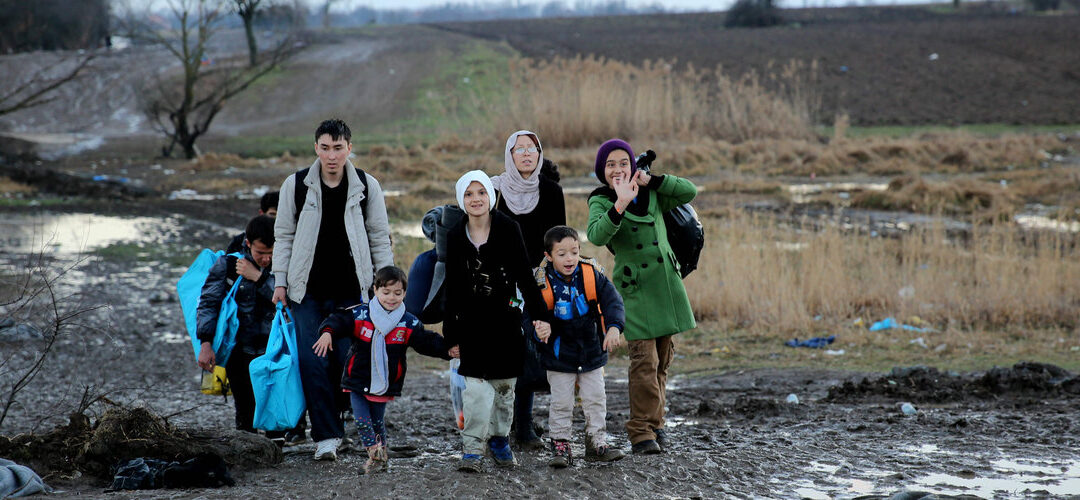
Basically, there are three sources of people being trafficked globally today. The first is refugees fleeing armed conflicts. The second is “economic refugees” (people migrating from often lethal economic conditions, ethnic/racial tensions, and/or gender-based discrimination within their home country. A third category – or a subcategory of economic migration – is the sex trade. Usually women, but also innocent children.
With ever-tighter immigration policies in many countries, would-be migrants seek “passers” – individuals or groups that offer services’ into other countries, facilitating cross border travel by assisting migrants in avoiding both legal and physical barriers. These passers are rarely nice people like those assisting black American slaves using the underground rail road crossing state border lines in the 1860s.
Modern human trafficking is lucrative and will continue to grow without strong globally enforced counter measures instituted everywhere. Non-governmental organizations can help many but are virtually powerless to stop the flow, without joining with all of us in creating the political will here and abroad for concrete action.
There is another important need — psychological healing. Too often women and children who have been trafficked into the sex trade have a disrupted or violent family life. And often have a poor image of their self-worth. This is where non-governmental, non-profit institutions can best serve those in need.
But aside from human suffering there is another vital reason to shut down this transmission belt of migrants, drugs, weapons and illicit money. Our national security. Walls won’t stop the damaging and potentially lethal consequences of illegal drugs, infectious diseases, or the proliferation of WMD taking the same pathways as trafficked people.
This takes us back to ‘self-evident truths’. U.S. citizens must advocate for sufficient economic investment in prevention of the conditions that fuel migration. That means funding and achieving the globally agreed upon 17 Sustainable Development Goals for the year 2030. Together, these goals represent the most comprehensive means of preventing most the problems we face.
The single greatest barrier to overcome is funding. More accurately, the ‘political will’ needed to find the financial resources and then most effectively apply them. Most governments are in dire debt and unlikely to cut their own domestic programs to fund improvements in desperate global living standards. Those of us who advocate for global justice need to get creative. We don’t have to look far.
The very problems driving migration often generate trillions of dollars for a powerful few. The powerful few who aquire their ill-gotten gains and bank them in off shore accounts and/or shaded investments in more protected nations, including the United States. Researchers at the Hudson Institute’s Kleptocracy Initiative, Natalie Duffy and Nate Sibley, quote the International Monetary Fund which calculates “as much as 5 percent of the world’s gross domestic product is laundered money, and only 1 percent of it is ever spotted.” These moneys could be preventing the unjust factors that drive migration and human trafficking across borders. Instead they fuel “Illicit cross-border financial flows estimated at $1 trillion to $1.6 trillion per year. A 2012 study put the total private wealth held offshore at up to $32 trillion and suggested that, since the 1970s, elites from 139 low-to-middle-income countries had parked as much as $9.3 trillion in offshore accounts.” The Hudson Institute researchers claim “Some of the money is hidden right here.” That the US has been a “driving force behind global economic reform for the past three decades” but has also “played an important role in the rise of the globalized kleptocrat” and “become one of the leading secrecy jurisdictions.” They state that “Delaware, South Dakota, Wyoming and other states do not require disclosure of corporate ownership, meaning that kleptocrats aren’t parking their assets just in exotic locations like the Cayman Islands or the British Virgin Islands anymore.”
Our own government’s resistance to effectively addressing these global problems urgently and comprehensively is a serious threat to nearly every aspect of our nation’s security. Waiting for problems to reach our cities, or trying to stop them at the border is reactionary and expensive – ultimately depleting finite and precious tax dollars away from vital domestic needs like health care, critical infrastructure, and our national economic solvency (all vital to US national security).
We urge U.S. citizens to use the crime of human trafficking to understand how our whole world is irreversibly interconnected and dependent on the ‘self-evident truths’ referenced in our Declaration of Independence. To fully grasp that the fundamental human right to “life, liberty and the pursuit of happiness” is universal, and, that the Universal Declaration of Human Rights acknowledges this ‘self-evident truth’ by detailing the essential precursors to stability and sustainability. Our nation is not going to outright institutionalize global justice putting human rights above states’ rights — as we agreed to do after the Civil War within our own nation. So, for now, the least we can do to prevent most threats to our national security is achieve the Sustainable Development Goals before 2030.
And time is NOT on our side. The acceleration of change, largely driven by unprecedented and barely imaginable advancements in powerful dual-use technologies (cyber, bio, nano, robotics…), These ubiquitous and affordable technologies capable of advancing grandiose objectives or monstrously horrific destruction, is NOT being matched by changes in national or global institutions or effective systems governance.
Whenever systems and structures are not designed using fundamental principles — expect catastrophic consequences. Before 2010 Haitians built most of their structures using cement without re bar. That fundamental flaw costs more lives in 15 minutes than the both bombs dropped on Hiroshima and Nagasaki combined. Those who built the US Constitution failed to incorporate the fundamental principle of ‘inalienable human rights’ into that foundation document. That costs more US lives than both World War I and II combined.
‘We the people’ of the US, and the world cannot, cannot continue making this same fatal error. 11117 (Jan.11, 2017) is our ZIP code for speeding the global delivery of ‘life, liberty and justice for all’. It’s that, or prepare for the lethal, expensive, and sometimes catastrophic consequences of failing to incorporate this self evident truth.
Finally. Remember that most of our global problems from the threat of infectious diseases, war, genocide, climate change, species extinction… can be prevented, or more quickly responded to if we globally apply these fundamental principles. They won’t change. We must.
***********************************************
A grand Thank You! to Rene Wadlow, a Global Justice Corps participant, who alerted our ‘435 Campaign’ to this important issue and offered a first draft for inspiration.
by Rene Wadlow | Dec 17, 2016 | Global Justice, Human Rights
If I were another on the road, I wouldn’t have looked back. I’d have said what one traveler says to another: Hello stranger, wake up your guitar! Let’s postpone our tomorrow to lengthen our road and widen our space, so that we may be rescued from our story together.
— Mahmoud Darwish, Palestinian poet.
By creating special observance days, the United Nations tries to promote international awareness and action on specific issues. Thus 6 February is International Day of Zero Tolerance to Female Genital Mutilation and 20 March is International Day of Happiness. 2 May highlights an issue we do not think about often: World Tuna Day. 18 December has been designated as the International Migrants Day, but even without a special day, migrants and refugees have become world-wide issues leading to political debate, especially in Europe and the USA.
Asylum seekers and immigrants with low level of education are often seen as a “burden”, not only for “Fortress Europe” but also for first reception countries. Thus, today’s borders function as a filter, separating the “wanted” – that is, migrants who can be used – from the “unwanted”. The filter serves to separate those that get in from those who are pushed back.
The filter serves to distort refugee flows. Because unaccompanied minors are more protected by law or policy and are often not deported, there are an increasing number of unaccompanied minors separated from the rest of the family and facing very uncertain futures, especially as concerns education.
There have been some efforts to provide for educational facilities, but most often for students already at the university level. In September 2014, the German Foreign Minister, Frank-Walter Steinmeier announced the establishment of a special scholarship program for refugees from Syria saying “We cannot allow the Syrian conflict to engerder a lost generation. It is particularly young Syrians who will play a crucial role in rebuilding their country and deciding the future as soon as this terrible conflict is over. We want to help give this young generation a future perspective.” Since then there are many signs of a lost Syrian generation, especially for those in the neighboring countries of Jordan, Turkey and Lebanon.
A filter also increases the trafficking of people by organized bands who quickly learn the ways of going around a filter. The trafficking of women and children for the sexual industries occurs in all parts of the world, but increases in areas with armed conflicts. Women in war zones are forced into sex slavery by combatant forces or sold to international gangs. Even without commercial trafficking, there has been a sharp increase in early marriage among Syrian refugee girls in Jordan, marriage being one of the few ways to cope economically and socially.
The systemic failures and bureaucratic delays that characterize government reception systems have left many migrants and refugees in a legal “limbo” in which migrants remain trapped, contributing to processes of alienation. There is obviously a need for co-operation and some co-ordination among States of origin, transit and destination – more easily said than done.
Fortunately, non-governmental organizations (NGOs) have tried to meet the challenges of migrant and refugee flows, often being able to draw upon the spontaneous good will of people. However, there are real limits to what NGOs can do, especially on longer-term issues. There is an obvious need to resolve the different armed conflicts through negotiations in good faith. There is also an obvious need to increase development efforts in those countries from which economic migration is a strong motivation. There is also a need to reverse environmental damage with ecologically-sound development programs.
18 December should serve as a time when we look with compassion at the fate of migrants, refugees and the internally displaced. It is especially a time when we must plan and increase resources for creative action.
******************************
Rene Wadlow, President, Association of World Citizens
by Jennifer Keck | Sep 23, 2016 | Global Cooperation, Human Rights, News
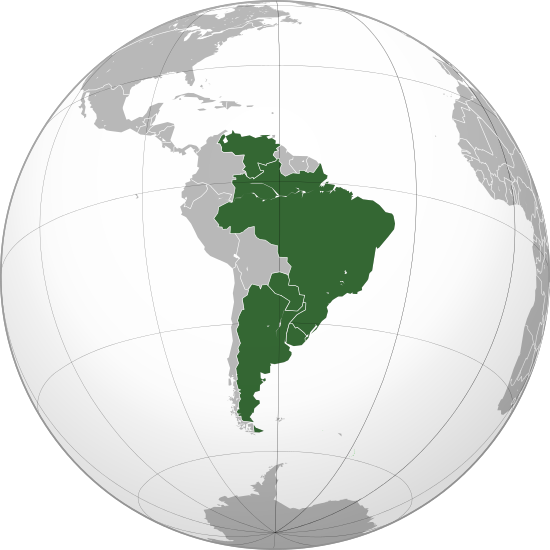
Japanese novelist Haruki Murakami famously wrote, “Hell has no true bottom.” And Venezuela may be proof. As the country continues its downward economic spiral, it now faces pressure from Mercosur to meet the organization’s human rights and immigration standards. The South American trade bloc warned that Venezuela’s membership will be suspended if it fails to meet the December 1st deadline to improve conditions, Bloomberg reported. (Upon joining in 2012, the country agreed to the four-year timeline to meet all the requirements.)
In June, Caracas was set to assume the bloc’s rotating presidency, but leading members Argentina, Brazil, Paraguay, and Uruguay filled the role using an interim team from other states in order to “preserve and strengthen Mercosur,” the ministers said. It was an early warning sign that Venezuela was on shaky ground with its trading partners.
The decline in global commodity prices has led Mercosur to seek out new ties with other trade blocs—including the European Union, which evaluates the human rights records of potential partners. Given Venezuela’s increasing political turmoil, the oil-rich nation is quickly becoming a liability.
“The European Union has condemned Venezuela for human rights violations. So (Venezuelan President Nicolas) Maduro isn’t exactly the best face for Mercosur to have right now,” Roberto Moritan, a former deputy foreign minister in Argentina, told The Wallstreet Journal.
But lack of E.U. support isn’t the only roadblock. As Latin America shifts right, the left-leaning nation is gaining more critics than allies. Argentine President Mauricio Macri has publically called out Venezuela’s human rights record, while Chile and Brazil have voiced concern about the county’s lack of due process and increase of arbitrary detentions.
Inside Venezuela, citizens have taken to the streets to protest triple digit inflation and shortages of basic goods. And President Maduro’s approval rating hovers around 20 percent, signaling that the end of his presidency may be near. In August, he accused the right-wing opposition of planning a coup under the guise of a protest.
Meanwhile, the country continues strengthening some of its controversial ties. Venezuela hosted delegates from Cuba, Iran, North Korea, and Syria, among others during the 17th summit of the Non-Aligned Movement, a group of states that are not formally aligned with any major power bloc. It was an odd move for an increasingly isolated country that wants Mercosur’s approval.
“Having that Mercosur membership is seen as important by the Venezuelan regime to show its population that it is integrated in the region,” said Oliver Stuenkel, professor of international relations at Sao Paulo-based think tank FGV. “This will certainly add pressure, but is unlikely to change things in Venezuela,” he told Deutsche Welle.
With the December deadline fast approaching, Venezuela may not be able comply in time. According to Brazil, it has only met 30 percent of the requirements. Yet founding Mercosur members haven’t specified what steps the country must take to meet them.
It’s unclear whether Mercosur will stand by its promise to suspend Venezuela’s membership if it doesn’t comply. However, it’s a powerful threat to a country that is in the midst of economic collapse. In that sense, anything that nudges Venezuela toward a better human rights record is a step in the right direction.
by Rene Wadlow | Jul 20, 2016 | Global Justice, Human Rights
The UN-mediated peace negotiations for Yemen led by Ismail Ould Cheikh in Kuwait move ahead slowly. The 13-month war was at first between Hauthis tribal forces loyal to the former president Ali Abdallah Saleh and those supporting the current president Abd-Rabbu Mansour Hadi who had been Saleh’s vice-president for many years. The war is a struggle for power but is not an ideological-religious-tribal conflict.
Into this conflict has come a Saudi Arabian-led military coalition using bombs and sophisticated weapons. As a result, some 2.5 million people have been displaced within the country. Yemen was already a poor country which needed to import much of its agricultural and food supplies. As a result of the Saudi bombing raids, the underdeveloped socio-economic infrastructure has been largely destroyed.
Thus, there is a serious need first for post-war planning to be followed by international aid for development. “Reconstruction” would be the wrong term since there was little that had been “constructed”. Rather, we need to look to a post-war socio-economic construction developed on a basic needs approach.
The Basic Needs Approach to Development with its emphasis on people as central to the development process is embodied in the June 1976 World Employment Conference Declaration of Principles and Programme of action.[1] The Declaration underlines the importance of the individual and the central role of the family and household as the basic unit around which to work for development.
Although the Basic Needs Approach builds on the development thinking of the United Nations and national governments of the 1950s and 1960s such as rural development, urban poverty alleviation, employment creation through small-scale industries, the Declaration of Principles is a major shift in development strategies with its focus on the family with the objective of providing the opportunities for the full physical, mental, and social development of the human personality. The Programme of Action defines a two-part approach: “First, Basic Needs includes certain minimum requirements of a family for private consumption: adequate food, shelter and clothing, as well as certain household equipment and furniture. Second, Basic Needs includes essential services provided by and for the community at large, such as safe drinking water, sanitation, public transport, health, education and cultural facilities.”
The Programme added a basic element to the actions: “A Basic Needs-oriented policy implies the participation of the people in making the decisions which affect them through organizations of their own choice.”
The Basic Needs Approach concentrates on the nature of what is provided rather than on income − income having often been used as the criteria for drawing a ‘poverty line’ . The Basic Needs Approach is concerned not only with the underemployed but also with the unemployable: the aged, the sick, the disabled, orphaned children and others. Such groups have often been neglected by the incomes and productivity approach to poverty alleviation and employment creation.
For Yemen which is largely structured on the basis of clan- extended family institutions, the Basic Needs Approach is most appropriate. In practice, there are few institutions or associations beyond the clan level, although tribal and religious identities are often mentioned. Tribes and religious identity are “shorthand” terms as it is impossible to mention the multitude of clans. However, a family welfare – meeting basic needs is the most appropriate strategy on which to base post-war planning. Although the fighting continues sporadically and agreement on a possible “unity government” seems far away, Basic Needs Planning must start now.
Rene Wadlow is President and a Representative to the United Nations, Geneva of the Association of World Citizens.
by Michael Curtin | Jul 16, 2016 | Global Justice, Human Rights
One of the unintended consequences of people fleeing their homelands as a result of conflict, terrorism, famine, and political and religious persecution has been an increase in right-wing nationalism and an anti-immigrant populist uprising as witnessed by the recent “Brexit” vote in Great Britain.
From France to Germany, Italy and Austria; from the Netherlands to Hungary and Greece, a wave of nationalistic leaders has taken center stage across the continent of Europe seeking to capitalize on the anti-refugee bias.
We in the United States have witnessed political rhetoric that feeds on the fears of the populace – real or imagined. Despite passage of the American SAFE Act in response to the terrorist attacks in Paris, some seek to completely bar Syrian refugees from entering the U.S., fearing that refugees are posing as terrorists. The vetting process is extremely stringent, as it should be, but it is wrong to assume all refugees mean us harm.
Each year on June 20th the world comes together to mark World Refugee Day. Beginning in 2001 it is a time to commemorate the strength, courage, and resilience of millions of refugees. The U.N. estimates that 65 million people have been displaced as a consequence of ongoing regional hostilities. This is the largest number ever to be reported by the U.N.
To place this figure into some perspective, consider this: one in every 113 people is now a refugee, asylum-seeker or internally displaced. Furthermore, in 2015 24 people had to flee their homeland every minute due to conflict or persecution, according to the U.N.’s Global Trends 2015 report submitted by the Office of the U.N. High Commissioner for Refugees (UNHCR).
Countries with the largest proportion of refugees occurs in Syria, Afghanistan and Somalia, with Colombia producing the greatest number of internally displaced people (IDPs). Despite the rhetoric spewing from Europe and the U.S., the report highlights the fact that a majority of refugees have been centered in the developing world. The UNHCR Filippo Grandi emphasized this point by stating that, “90% of the displaced are not in the rich world – contrary to the perception of most people in the rich world.”
What is particularly disturbing from the report’s findings, and has escaped the extremist’s argument, is that more than half of the world’s refugees are children. They are the innocent victims caught between conflict and persecution and are most often separated from their families. It is the children who need the strong support from the international community.
Organizations like UNHCR and the United Nations Association have stepped up to help these children. When children are displaced and uprooted from their homes, they may not be in school and are being deprived of an education, although some camps have set up makeshift schools.
Through its work, UNA has begun a program titled: Adopt-A-Future. (http://www.unausa.org/component/content/article/17/487-adopt-a-future) UNA has identified more than 60 schools in 9 countries to be matched with American communities to build schools and provide school supplies. The program also includes support for refugees in U.S. communities.
Adopt-A-Future will go a long way in providing opportunities for refugee children, and the Northern New Jersey Chapter will participate.
UNA has taken an active role in helping to assist these children in need. World leaders need to do the same. They should ignore the nationalistic fervor sweeping the U.S. and Europe and take the necessary action to help the most vulnerable amongst us: our children. They deserve our very best efforts.
by Jennifer Keck | Jul 7, 2016 | Human Rights, Peace & Disarmament
Ready or not, Rio de Janeiro will host the 2016 Summer Olympics in August. The Brazilian city, which is set to receive one million visitors, has long been plagued by violent crime and police brutality—a security risk for both athletes and tourists. In order to combat these fears, Brazil loaned $895 million to the city to keep the peace. But there is another, often neglected group, that also deserves protection: Rio de Janeiro’s residents.
Combined with the numbers on police violence, Brazil’s security policy gives NGOs and observers reason to pause. Police in the state of Rio de Janeiro were responsible for 436 killings in 2014 alone, according to Human Rights Watch. And no fewer than 85,000 security officers will be deployed throughout the games. (Forces include civilian and military police, National Public Security Force soldiers, members of the armed forces, and privately funded brigades.)
Police Brutality
Brazil’s extreme security measures might make visitors feel more at home, but the same can’t be said for millions of residents who face high rates of homicides committed by police. These security operations to reduce crime before events such as the World Cup or the Olympics often threaten the local population, according to Amnesty International.
Since 2009 (when Brazil was awarded the 2016 Games), “2,500 people have been killed by the police in the city of Rio alone, and justice has only been served in a negligible number of cases,” said Atila Roque, executive director of Amnesty Brazil, in the NGO’s latest report. Over the past 10 years, police have killed nearly two people per day, on average.
Social Cleansing
In addition to violence, the police are known for unlawfully detaining homeless people as well as black youth and poor people heading to the beach. They even evict residents in the name of what the United Nations calls “social cleansing.”
Authorities have been driving a culture of fear among these groups, according to São Paulo-based Human Rights lawyer, Karina Quintanilha. “We have been witnessing heightened repression since the mass protests of June 2013, not only on the part of the police but also the political and judicial authorities,” she told Equal Times.
New Justice Minister Alexandre de Moraes follows this hard line. He invested heavily in anti-riot equipment, developed new tactics for restoring order, and reinforced the criminalization of protesters’ actions in his previous post as Secretary for Public Security in the state of São Paulo.
“It’s as if the state of São Paulo has been his testing ground. And no one knows what he could do on the scale of Brazil,” said Quintanilha.
Loss of Freedom
An anti-terrorism law, approved in March, gives judges a wide margin for interpretation when it comes to protesters and could curtain freedom of expression and assembly. Denouncements of abuses tied to preparation for the Games may now fall under this law.
Likewise, emergency legislation requested by the International Olympics Committee (IOC), the General Law of the Olympic Games, will restrict freedom of movement and assembly in specific areas and includes penalties of up to one year in prison for anyone using or misusing the “Olympic brand” for critical ends.
The possibility of taking a more critical look at the intersection of human rights and security may have passed this time around, but Brazil must be a lesson for both the Olympic host and the IOC. The Olympic Games should be a celebration of athletic performance and national pride—not an excuse to curtain freedom.


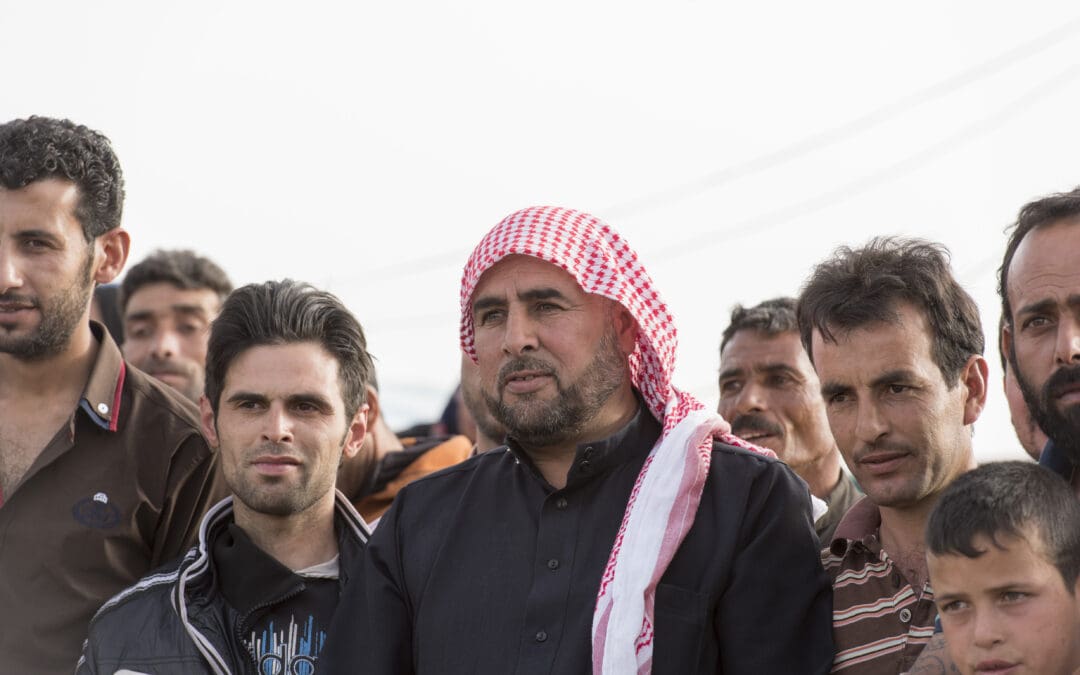
 Asylum seekers and immigrants with low level of education are often seen as a “burden”, not only for “Fortress Europe” but also for first reception countries. Thus, today’s borders function as a filter, separating the “wanted” – that is, migrants who can be used – from the “unwanted”. The filter serves to separate those that get in from those who are pushed back.
 Fortunately, non-governmental organizations (NGOs) have tried to meet the challenges of migrant and refugee flows, often being able to draw upon the spontaneous good will of people. However, there are real limits to what NGOs can do, especially on longer-term issues. There is an obvious need to resolve the different armed conflicts through negotiations in good faith. There is also an obvious need to increase development efforts in those countries from which economic migration is a strong motivation. There is also a need to reverse environmental damage with ecologically-sound development programs.