by Jennifer Keck | Dec 3, 2017 | Human Rights, Peace & Disarmament
Picture this: Gorgeous women dressed in sequin gowns line up on stage. One by one, they step up to the microphone and introduce themselves.
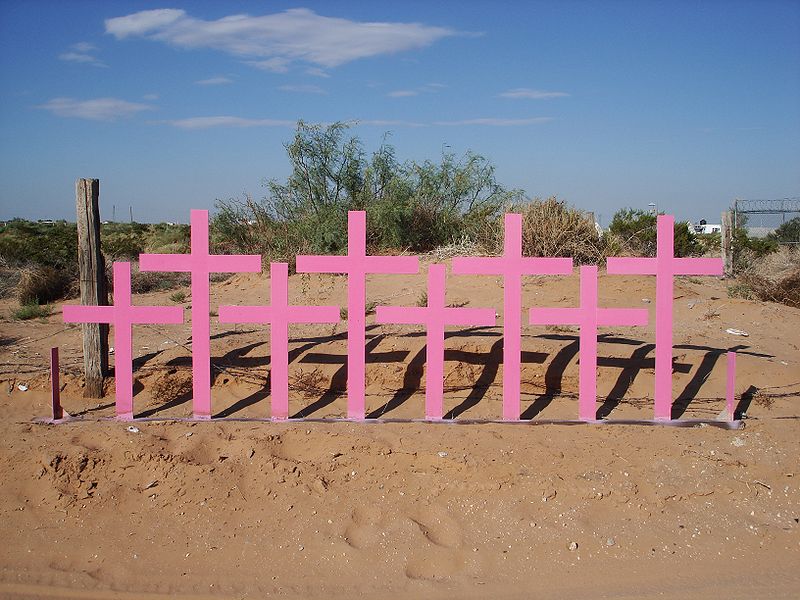
“My name is Camila Canicoba, and I represent the department of Lima. My measurements are: 2,202 cases of femicide reported in the last nine years in my country,” says the first.
“My name is Karen Cueto, and I represent Lima and my measurements are 82 femicides and 156 attempted femicides so far this year,” says the second.
No, this isn’t a UN Women gala. It’s the 2017 Miss Peru pageant. In a surprising twist, the 23 contestants broke the tradition of revealing their measurements (bust, waist, and hip) to announce far more important numbers: the statistics on violence against women in their homeland.
The numbers are easy to gloss over. (How many more women die in car crashes each year, you might ask.) True, statistics can come across as meaningless without the stories behind them, which is why the faces of battered women flashed behind the contestants as they spoke. But they didn’t end there. Each woman finished by answering the following: which law would they change to end violence against women?
Latin America’s ‘Woman’ Problem
Pageant organizer Jessica Newton’s brilliant idea put women’s rights center stage and turned an old fashioned competition into a moment of solidarity. But why in Peru? And why now?
Violence against women occurs everywhere in world, but it’s especially prevelant in Latin America. Up to 40% of women in the region have been victims of violence, and in Peru, that number rises to 47 percent, according to a 2009 Economic Commission of Latin America (ECLAC) report. And these acts of violence sometimes end in murder. Of the 25 countries with the highest rates of femicide, 14 are in Latin American and the Caribbean.
While the Peruvian contestants are right to challenge the law, sometimes law enforcement itself is the problem. In Guatemala, for example, 2,920 femicides were reports over a five year period, but only 184 arrests were made, leaving 94 percent of the cases unsolved. Until violence against women is taken seriously –and is successfully prosecuted, new legislation will do little to protect women. Police, judges, and social services must learn to recognize the impact of violence on women, and how it can (and often does) escalate to femicide.
This isn’t to say Latin American legislatures have ignored the problem. Countries throughout the region have passed harsher sentences for those convicted of domestic violence and femicide, but it will require societies as a whole to make it unacceptable.
Uruguay’s Innovative Answer
Uruguay launched a successful program that allows judges to order the abuser to wear an electronic band connected to an electronic device that the woman at risk carries. If the abuser comes closer, it automatically alerts the police. Both the victim and the abuser receive counseling. As of February 2017, not a single woman in the program has been killed. If this program continues to succeed, and can be replicated, it can drastically improve the lives of women escaping abuse, and help reform men who’ve been charged with abuse. But it would still be only one small step toward solving a long-standing problem.
Ending Femicide
There’s no quick and easy way to end violence against women in Latin America (or worldwide). It will take a combination of criminal legislation, the expansion of women’s rights, and societies’ views on the role of women. However, the Miss Peru contestants did the seemingly impossible: they turned participating in a beauty pageant into a feminist act, and spoke up about what needs to change. And it’s indicatives like these that can help keep women’s issue in the spotlight.
by Rene Wadlow | Oct 18, 2017 | Global Justice, Human Rights
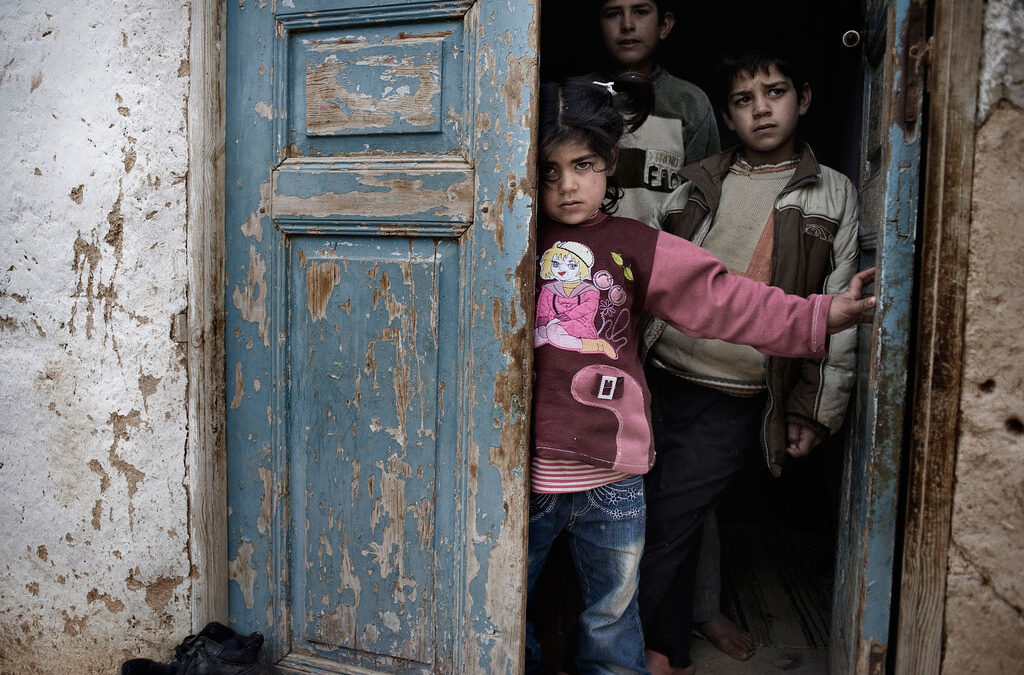
The United Nations together with the governments of Sweden and Switzerland which have often led humanitarian issues in the U.N. system held a high-level pledging conference in Geneva on 25 April 2017 to again draw attention to the deepening humanitarian crisis in war-torn Yemen, currently the largest food security emergency in the world. Some 60% of the population is in a food-insecure situation.
More than 3.5 million people have been displaced in the cycle of escalating violence. “We are witnessing the starving and the crippling of an entire generation. We must act now, to save lives” said Secretary-General Antonio Guterres who presided over the conference. Realistically, he stressed that funding and humanitarian aid alone will not reverse the fortunes of the millions of people impacted. Diplomatically, he called for a cessation of hostilities and a political settlement with talks facilitated by the Special Envoy of the Secretary General, the Mauritanian diplomat Ismail Ould Chekh Ahmed.
UN officials and most diplomats are reluctant to call the armed conflict by its real name: “a war of aggression”. The aggression of the Saudi Arabia-led coalition (Bahrain, Egypt, Jordan, Kuwait, Morocco, Qatar, Sudan, and the United Arab Emirates) against Yemen began on 24 March 2015. The Saudi-led coalition is helped with arms and “intelligence” by the USA and the UK which appreciate Saudi money for arms and do not want to antagonize a large segment of the Arab world when the conflicts of Syria-Iraq-Kurds-Turkey is still “on the table.”
However the aggression of the Saudi coalition is what has turned an internal Yemen struggle for power between the current and the former President of Yemen into a war with regional implications, now drawing Iran into the picture.
Intellectually, the “political solution” is clear. There needs to be an end to the Saudi bombing and a withdrawal of its coalition troops. Then, the different factions in Yemen can try to develop some sort of inclusive government. The Swiss Foreign Minister, a co-host of the conference, hinted to the issue in suggesting very briefly that, if asked, Switzerland could provide expertise on forms of decentralization and con-federal government.
The effort to create a centralized Yemen government has failed. The future lies in a very decentralized government with great autonomy for the regions, taking into consideration the diverse tribal configuration of the country. With intelligence and patience – always in short supply – a single, highly decentralized State might be developed.
The most difficult first-step is ending Saudi-led aggression, after which an effective humanitarian aid and development program can be put into effect. Now, “better late than never”, a resolution on the war in Yemen has been introduced into the US House of Representatives (H. Con. Res 81) by Representatives Rio Khanna (D.CA), Thomas Massie (R. KY), Mark Pocan (D. WI), Walter Jones (R.NC). Call your representative in the US House (202-224-3121) and ask them to support this bipartisan resolution.
by Citizens for Global Solutions | Aug 3, 2017 | Human Rights
In 2012, the Human Rights Council of the United Nations determined that a connection to the internet is a human right. Among other things, the resolution encourages nations without widespread internet coverage to improve access for all citizens. The resolution also condemns any attempt to impede free speech online. The resolution was updated and unanimously adopted again in 2014 and then again in 2016, demonstrating that all members of the Council recognize the importance of free access to information and the right to freedom of expression online.
Though the resolution doesn’t specifically address net neutrality, it does condemn the practice of disrupting or preventing internet access. Net neutrality is an important aspect of online communications and should also be considered a human right.
What is Net Neutrality?
The internet is a platform based on the free and open exchange of information. Net neutrality is the principle that internet service providers, governments and other entities providing or monitoring internet access must treat all data the same, without regard to the user, content, website, platform, application, type of attached equipment or mode of communication.
Without a guarantee of neutrality, service providers can restrict certain websites, slow streaming speed for video services and funnel customers to sites they control versus their competitor’s sites.
Threats to Net Neutrality
Just as there are efforts to block other forms of free speech, there are many financial and political incentives for governments and corporations around the world to restrict the freedom of the internet.
ISPs Selling Data
The President of the United States recently approved a resolution that allows internet service providers to collect and sell customer data without the customer’s permission. In this case, the government and internet service providers are working together to invade the privacy of internet users.
Government-Controlled Internet
In countries such as China and North Korea, the governments have strict control over much of what their citizens can access on the internet. Some reports indicate the governments of those countries must approve all content their citizens are allowed to access through their internet service providers.
Online Censorship
Pakistan has enacted several laws that were supposed to target libel and online harassment. In reality, those laws have been used to prosecute citizens who criticized the government on various online forums or social media accounts.
These are just a few examples of the many ongoing threats to net neutrality that exist around the world today.
Protecting Yourself
Net neutrality is not a given in most parts of the world, even in countries such as the United States, where freedom of expression is supposed to be protected. Depending on where you are in the world, your internet activity could be tracked and monitored by your service provider or even the government. Until such a time that net neutrality is recognized as an essential right, it’s important to know how to protect yourself. One easy way to protect yourself online is to use a proxy software service to access the internet. These services encrypt your data, making it more difficult for your online movements to be tracked or monitored.
Supporting Net Neutrality
Even though there are ever-evolving threats to a neutral and open internet, there is a growing movement of activists and corporations who support the idea of an open internet and are working to make net neutrality a reality. Companies such as Netflix, Etsy, Vimeo, Twitter, Reddit, Amazon, Google and Facebook all support net neutrality.
In addition to the corporations advocating for a free and open internet, there are many organizations that are supporting the fight for net neutrality around the world.
If you are passionate about net neutrality, you can get involved in the fight by supporting one or more of these organizations. They will keep you informed of any threats to net neutrality and offer ways to combat new and ongoing threats to an open internet.
Though a user might have internet access, if that person can’t use that access freely because of internet service provider or governmental restrictions, then an essential piece of his or her right to information access is missing. As the UN Human Rights Council has noted, access to the internet is a human right which should include unrestricted access without any third-party interference. And that’s what net neutrality is all about.
About the Author: Sandra O’Hare is a freelance writer. Her areas of expertise include internet security, politics, global governments and technology. She is a frequent contributor to The Right Side of Truth.
by Rene Wadlow | Apr 19, 2017 | Global Justice, Human Rights
The Association of World Citizens calls for the re-affirmation of humanitarian international law. It is a call to the soldiers and militia members in armed conflicts to refuse orders to violate humanitarian international law by refusing to use weapons outlawed by international treaties such as chemical weapons, land mines, cluster munitions or any weapon to attack civilians, especially children and women. We must defend all who use their individual conscience to refuse to follow orders to violate humanitarian international law.
At the heart of this growing phenomenon of mass violence and social disintegration is a crisis of values. Perhaps the most fundamental loss a society can suffer is the collapse of its own value system. Many societies exposed to protracted conflicts have seen their community values radically undermined if not shattered altogether. This has given rise to an ethical vacuum, a setting in which international standards are ignored with impunity and where local value systems have lost their sway. Olara Otunnu, then Special Representative of the U.N. Secretary-General for Children and Armed Conflict, Report to U.N. General Assembly, 1998
The attack on Khan Sheikhoon in Idib Province of Syria on 4 April 2017 raises at least two essential issues concerning humanitarian international law and the protection of children in times of armed conflict.
A major issue is the use of chemical weapons, probably sarin or a sarin-like substance in violation of the 1925 Geneva Protocol for the Prohibition of the Use in War of Asphyxiating, Poisonous or other Gases, and of Bacteriological Methods of Warfare of which Syria was a party, among the 135 governments which have signed. The attack was also a violation of the Convention on the Prohibition of the Development, Production, Stockpiling and Use of Chemical Weapons and on their Destruction which came into force in 1997. The Convention created The Hague-based Organization for the Prohibition of Chemical Weapons (OPCW). Syria signed the Convention in 2013 as part of a compromise decision to have its chemical-weapon stock destroyed.
The use of poison gas strikes deep, partly subconscious, reactions not provoked in the same way as seeing someone shot by a machine gun. The classic Greeks and Romans had a prohibition against the use of poison in war, especially poisoning a water well because everyone needs to drink. Likewise poison gas is abhorred because everyone needs to breath to live.
There is a real danger that the Geneva Protocol of 1925, one of the oldest norms of humanitarian international law, will be undermined and the use of chemical weapons “normalized”. The Organization for the Prohibition of Chemical Weapons is already investigating the use of chemical weapons in seven other locations in Syria.
Chemical weapons have been used in armed conflicts in the Middle East before. Although Egypt had signed the 1925 Geneva Protocol, Egyptian forces used chemical weapons widely in their support of the republican forces in the Yemen Civil War (1962-1967) with very few international outcries. As a result of the lack of any sanctions against Egypt, Syria requested Egyptian technical assistance in developing its own chemical weapons capabilities shortly after 1967 – well before the al-Assad dynasty came to power.
Humanitarian international law is largely based on self-imposed restraints. Although the International Criminal Court has a mandate to try crimes of war and crimes against humanity, its impact on the way armed conflicts are currently carried out is small. Thus, restraints need to rest on the refusal of soldiers and militia members to carry out actions that they know to be against both humanitarian international law and the local value system. This is especially true of the non-harming of children in times of armed conflict.
Humanitarian international law creates an obligation to maintain the protection of all non-combatants caught in the midst of violent conflicts as set out in the Geneva Conventions of 1949 and their Additional Protocols of 1977. Moreover, there is an urgent need to focus special attention on the plight of children. They are the least responsible for the conflict and yet are most vulnerable. They need special protection. The norms to protect children in armed conflicts are set out clearly in the Additional Protocols which has 25 articles specifically pertaining to children. The norms are also clearly stated in the Convention on the Rights of the Child, the most universally ratified international treaty. The Convention calls for the protection of the child’s right to life, education, health and other fundamental needs. These provisions apply equally in times of armed conflict and in times of peace.
As with the use of weapons prohibited by international treaty such as chemical weapons, land mines, and cluster munitions, the protection of children must be embodied in local values and practice. The classic Chinese philosopher Mencius, in maintaining that humans were basically good, used the example of a child about to fall into a well who would be saved by anyone regardless of status or education.
The Association of World Citizens has called for a United Nations-led conference on the re-affirmation of humanitarian, international law. There needs to be a world-wide effort on the part of governments and non-governmental organizations to re-affirm humanitarian values and the international treaties which make them governmental obligations. Such a conference would bring together into a coherent synthesis the four avenues of humanitarian international law:
1) The Geneva Conventions – Red Cross-mandated treaties;
2) The Hague Convention tradition dealing with prohibited weapons, highlighting recent treaties such as those on land mines and cluster munitions;
3) Human rights conventions and standards, valid at all times but especially violated in times of armed conflicts;
4) The protection of sites and monuments which have been designated by UNESCO as part of the cultural heritage of humanity, highlighting the August 2016 decision of the International Criminal Court on the destruction of Sufi shrines in northern Mali.
There is also a need to use whatever avenues of communication we have to stress to those living in Syria-Iraq-ISIS-Kurd-majority areas-and Turkey that they have a moral duty to disobey orders that violate humanitarian international law. We on the outside must do all we can to protect those who so act humanly in accord with their conscience.
Rene Wadlow, President, Association of World Citizens
by Tad Daley | Jan 30, 2017 | Human Rights, World Federation
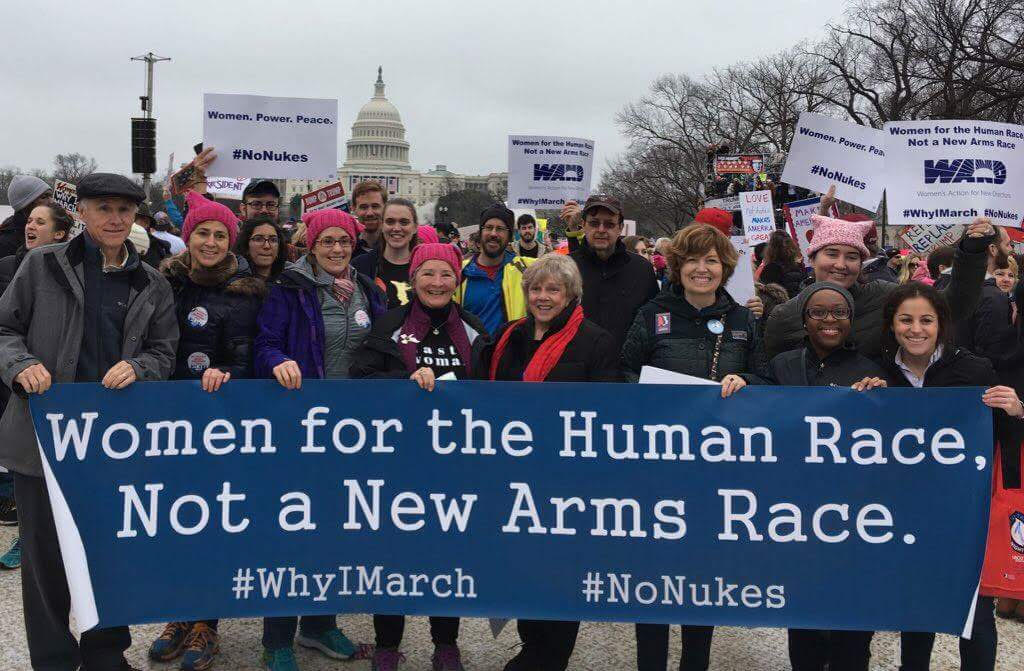
CGS was a robust participant in the historic Women’s March on Washington on January 21st, the day after the inauguration of Donald J. Trump as the 45th American president.
CGS, of course, is a nonpartisan organization. But as President-Elect, Mr. Trump indicated that he intended to increase the American nuclear arsenal “until the world comes to its senses,” and even tweeted the words, “Let it be an arms race.”
Few things could be more contrary to the CGS vision of enduring world peace through enforceable world law. In the short term, we know that a renewed nuclear arms race will diminish American national security and everyone else’s as well. In the long term, our goal of something like a world republic would bring an end forever to perpetual arms competition, the forever arms race, Thomas Hobbes’s permanent “war of all against all.” Our dream is that China and America will interact tomorrow, in a Federal Republic of Earth, in much the same way that California and Texas relate today within the political community that is the United States of America. Californians and Texans can be quite different! But California and Texas don’t fight wars. And they don’t spend billions of dollars on weapons of death, every single year, on and on into the dim mists of perpetuity, to “deter” the other from starting one.
So CGS joined a coalition at the Women’s March spearheaded by our friends at Women’s Action for New Directions. We helped to craft the slogan adopted by this coalition: “Women for the Human Race, Not a New Arms Race.” https://m.facebook.com/events/283920202010752/
That first clause is as important as the second. Because if there’s anything that CGS is about, it’s that our global citizenship must become for each one of us every bit as important as our national citizenship. Our American patriotism must be enhanced and guided by our planetary patriotism. Our loyalty to the country where we happen to have been born must, in this century, be fiercely accompanied by our loyalty to our planetary human community.
At CGS, we know that we must care for our Mother Earth, today and tomorrow, in order for our beloved America to thrive. We insist that American national security can only be achieved by promoting common human security and the global public good. And we believe that Americans will never live in peace and tranquility unless we pursue justice for all of humanity.
“Whether we wish it or not, we may soon have to make a clear choice between the special nation to which we pledge our allegiance and the broad humanity of which we are born a part.” So said in 1946 the great American writer E. B. White, author of CHARLOTTE’S WEB and (with William Strunk) THE ELEMENTS OF STYLE. “In the United Nations of the World there will be no foreigner, no outsider. A citizen must take pride in the whole world, and pledge allegiance not only to a national flag but to a universal banner.”
As we stand at the dawn of a new era of political movement and citizen action, CGS asks you to join us on the ramparts, as we endeavor to transform these ideals into widespread conviction, political meaning, and historical reality.
by Jennifer Keck | Jan 15, 2017 | Global Justice, Human Rights, News
Mercosur didn’t waste any time. The South American trade group warned that it would suspend Venezuela’s membership if it didn’t improve human rights and immigration conditions by December 1st. On December 2nd, Mercosur did in fact suspend Venezuela, according to the AP Press. The move came after the country failed to meet the standards it agreed to comply with upon joining in 2012.
However, despite the unanimous decision from Mercosur’s four founding members—Argentina, Brazil, Paraguay, and Uruguay—the Venezuela government plans to fight back. President Nicolas Maduro has already threatened to take the matter to international authorities, stating that the decision was “a coup d’état.” Yet the country is unlikely to receive much sympathy in a world that is quickly veering toward the right.
When Venezuela joined Mercosur, South America was dominated by left-wing governments. But much has changed since 2012—Argentina and Brazil elected centrist leaders, and the country’s regional influence has declined since it began cutting back on oil shipments. And without the support of its neighbors, Venezuela is vulnerable to further punitive action from other nations. The Organization of American States has already debated suspending the country from the hemispheric body due to its growing authoritarianism, and some U.S. Congress members have suggested imposing economic sanctions.
Venezuela crashes the party
Yet the country shows no sign of backing down. Venezuela’s Foreign Minister Delcy Rodriguez didn’t let lack of an invitation keep her from attending a Mercosur meeting in Buenos Aires on December 15th. When she arrived to find the meeting room empty, she accused the Argentina, Brazil, and Paraguay of colluding against her country. (The meeting of foreign ministers took place in a different, smaller room.)
Argentine Foreign Minister Susana Marcorra later told BBC News that the organization ultimately allowed Rodriguez to join the meeting “because we all agreed that we did not want the situation to escalate into something bigger.” She also said that the suspension would be overturned if Venezuela complied with Mercosur’s requirements. Venezuela claims it has incorporated all the regulations except ones that conflict with its domestic laws.
Running out of options
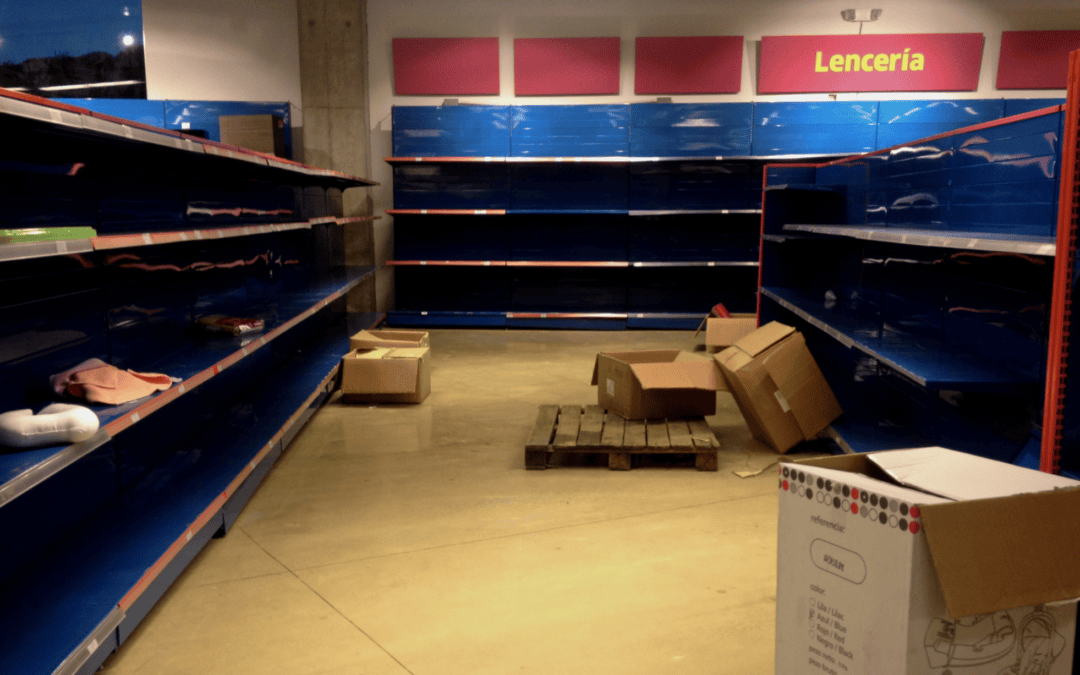
The country has obviously taken a bold stance given catastrophic its shortages of food, medicine, and other essentials. Meanwhile, protests and waning support for President Maduro have only led to more human rights violations. Authorities have jailed hundreds of activists in recent years and suppressed opposition media.
At present, Venezuela seems to be locked in a vicious cycle of shortages, protests, and government crack downs, and the loss of its closest trading partners will only exacerbate this. If the socialist nation is to recover, it must improve its human rights record and restore relations with its fellow South Americans.