by Vanita Singh | Mar 22, 2023 | Human Rights
Domestic violence is the most common form of violence against women and is reported globally to be experienced by one out of every three women. Women in low- to middle-income countries, including India, are disproportionately affected, owing to the predominant patriarchal culture in these countries. According to recent data from the National Family Health Survey (NFHS), close to 30% of Indian women have experienced some form of violence, whether physical, sexual, or emotional.
To combat this epidemic of violence, studies in this domain recommend various women’s empowerment initiatives, such as higher education, female labor force participation, and pay parity, among others. However, a recent study from India reports that lower levels of education, rural residence, lower family income, and higher earnings by women correlate with a higher incidence of physical abuse. The authors of one study (Singh & Babbar, 2022) argue that men in Indian society do not take kindly to their wives’ earning more money than they do. This prevalent attitude also correlates with Relative Resource Theory, which holds that a man is likely to be more abusive when he feels that his dominance is being challenged by a woman who earns more money than he does. In a patriarchal society the man is supposed to be the sole breadwinner and he controls his family through resource provision; if he fails to do so, he is mocked by the community. If a man lacks the resources to fulfill this role, he resorts to aggression and violence as a tool to control his family, especially his wife. Patriarchy is so deeply rooted in this socio-cultural context that any policy initiatives aiming to empower women are bound to fail, as women should not be seen as breadwinners. Several other studies in this same cultural context report the identical negative relationship between women’s economic empowerment and their risk of being abused. Incidences of domestic violence has increasingly been reported in high-income families as well.
This social prejudice thus raises the critical need for future research to disentangle this relationship. Among the sociological theories which explain domestic violence, the most popular is resource theory which postulates that domestic violence is more common among lower socio-economic groups due to lack of resources. However, the incidence of domestic violence has increasingly been reported in high-income families as well. A quick survey of the literature in this domain suggests that, except for a few, the existing studies do not explain the link between empowerment and the risk of abuse.
Women’s Role in Patriarchy
Patriarchy has been consistently reported to be the main cause of the violent victimization of women; however, the acceptance by women themselves of patriarchal norms tends to be neglected as a factor predicting violence against women. Research suggests that women who accept patriarchal norms are more likely to be physically abused by their husbands. According to data from NFHS-4 (2015–16), more women (25%) than men (15%) think that it is justified for a husband to beat his wife if she goes out without telling him, argues with him or neglects their children. Is this finding not shocking, given the discourse of gender equality so widespread in our society? Why would women themselves accept a subordinate position—the patriarchal norm—in an intimate relationship when she has the right to equality.
Patriarchy is the belief system which holds that men are justified in controlling women and have the right to exercise such control. The subjugation of women in and of itself is not the central theme in patriarchy but patriarchal culture is deeply misogynistic. In such a culture, women are seen as less capable, less trustworthy. Violence against women is justified by the choices and natures of individual men and women. Patriarchy is thus a social system and not a conscious conspiracy against women by men. Indeed, it is not always conscious and men too are victims, since in a patriarchal society men are supposed to be strong, to hide their emotions, to support their families through their work, etc., making men vulnerable to many mental health issues.
Women are often considered to be the principal victims of patriarchy, but in reality, they themselves are often enforcers of patriarchal norms. Patriarchy is considered to be the source of order in the family and many family members, including young boys and girls, are conditioned to believe that any failure to maintain this order may jeopardize the well-being of the whole family. Thus, the system continues to be passed on from generation to generation and women blindly carry this burden in the name of maintaining the harmony and dignity of the family.
Many tend to criticize men for promoting patriarchal norms, but children learn these cultural norms from their parents. Thus, it is “normal” for children to grow up thinking that male authority is the norm and that any deviation would bring disorder and disharmony. Thus, the education of women, especially the older generation, is needed to break this cycle. As per NFHS-4 data, it is women’s own acceptance of the patriarchal norms—for example, that wife-beating is justified—that is the most significant predictor of her own risk of abuse.
In my own ongoing research into the factors affecting women’s acceptance of patriarchal norms and the role of education, I found that, above and beyond other socio-economic factors, the media—specifically watching television—play a major role in shaping patriarchal norms among Indian women in the age group of 15 to 49 years. As per our data analysis in NFHS-4 (the domestic violence module) women who read newspapers daily are less likely to accept regressive gender norms, while women who watch television daily are more likely to accept patriarchal norms. This finding perhaps mirrors the arguments by feminists against TV soaps which tend to normalize patriarchy and male dominance and have the highest TRP (target rating points, the metric used by marketing agencies to measure the highest number of viewers of a given television program).
Gendered Content: The Role of Mass Media
In popular daily soaps broadcast on television, it is often seen that the woman who is submissive, who cares for everyone, and who gives preference to family rather than work, is considered “perfect” and is portrayed as a desirable “wife.” The most common theme among highly rated daily soaps is that of two women fighting to get the attention of a man. Lead actresses portray “superwoman”, who smoothly manages the household, the office, the children, her in-laws, even her husband’s business. Obviously, such content normalizes prevailing gender roles and the profound inequalities in the society.
The significance of the mass media in perpetuating patriarchal norms among women has serious implications for the content of daily soaps. There is no doubt that education has the potential to promote gender equality in society and that the media have the potential to play a crucial rule in reinforcing more progressive social and cultural norms. However, the question remains to be explored whether daily soaps are designed to serve the real needs of their consumers or whether they primarily promote regressive gendered norms.
The relationship between women’s empowerment initiatives and the risk of physical abuse is not linear. Unless and until there is an acceptance of women’s empowerment in a patriarchal society, these initiatives may not translate into a lower incidence of violence against women. Further research is needed to understand the factors predicting women’s acceptance of patriarchal norms, since research shows clearly that it remains a significant predictor of domestic violence against women.
by Lawrence Wittner | Jan 31, 2023 | Global Justice, Human Rights
The Ukraine War has provided a challenging time for the nations of the world and, particularly, for international law.
Since antiquity, far-sighted thinkers have worked on developing rules of behavior among nations in connection with war, diplomacy, economic relations, human rights, international crime, global communications, and the environment. Defined as international law, this “law of nations” is based on treaties or, in some cases, international custom. Some of the best-known of these international legal norms are outlined in the United Nations Charter, the Universal Declaration of Human Rights, and the Geneva Conventions.
International Law and Ukraine
The UN Charter is particularly relevant to the Russian invasion of Ukraine. Article 2, Section 4, perhaps the most important and widely-recognized item in the Charter, prohibits the “use of force against the territorial integrity or political independence of any state.” In Article 51, the Charter declares that “nothing in the present Charter shall impair the inherent right of individual or collective self-defense if an armed attack occurs against a member of the United Nations.”
Ukraine, of course, although partially or totally controlled by Russia or the Soviet Union during portions of its past, has been an independent, sovereign nation since 1991. That year, the Soviet Union, in the process of disintegration, authorized Ukraine to hold a referendum on whether to become part of the Russian Federation or to become independent. In a turnout by 84 percent of the Ukrainian public, some 90 percent of participants voted for independence. Accordingly, Ukraine was recognized as an independent nation. Three years later, in the Budapest Memorandum, Ukraine’s government officially agreed to turn over its large nuclear arsenal to Russia, while the Russian government officially pledged not only to “respect the independence and sovereignty and the existing borders of Ukraine,” but to “refrain from the threat or use of force” against that country. In 1997, Ukraine and Russia signed the Treaty on Friendship, Cooperation, and Partnership, in which they pledged to respect one another’s territorial integrity.
The Russian Military Assaults of 2014 and 2022
Despite these actions, which have the status of international law, the Russian government, in 2014, used its military might to seize and annex Crimea in southern Ukraine and to arm pro-Russian separatist groups in the nation’s eastern region, the Donbas. Although a Russian veto blocked a UN Security Council rebuke, the UN General Assembly, on March 27, 2014, passed a resolution (“Territorial Integrity of Ukraine”) by a vote of 100 nations to 11, with 58 nations abstaining, condemning the Russian military seizure and annexation of Crimea. Ignoring this condemnation of its behavior by the world organization, the Russian government incorporated Crimea into the Russian Federation and, in August, dispatched its military forces into the Donbas to bolster the beleaguered separatists. Over the following years, Russia’s armed forces played the major role in battling the Ukrainian government’s troops defending eastern Ukraine.
Then, on February 24, 2022, the Russian government, in the most massive military operation in Europe since World War II, launched a full-scale invasion of Ukraine. Although UN Security Council action was again blocked by a Russian veto, the UN General Assembly took up the issue. On March 2, by a vote of 141 countries to 5 (with 35 abstentions), it demanded the immediate and complete withdrawal of Russian military forces from Ukrainian territory. Asked for its opinion on the legality of the Russian invasion, the International Court of Justice, the world’s highest judicial authority, ruled on March 16, by a vote of 13 to 2 (with Russia’s judge casting one of the two negative votes) that Russia should “immediately suspend” its invasion of Ukraine.
The Illegality of Russia’s Annexation of Ukrainian Territory
In late September 2022, when the Kremlin announced that a ceremony would take place launching a process of Russia’s annexation of the Ukrainian regions of Donetsk, Luhansk, Kherson, and Zaporizhzhia, UN Secretary-General Antonio Guterres warned that “any annexation of a state’s territory by another state resulting from the threat or use of force is a violation of the principles of the UN Charter and international law.” Denouncing the proposed annexation, Guterres declared:
- It cannot be reconciled with the international legal framework.
- It stands against everything the international community is meant to stand for.
- It flouts the purposes and principles of the United Nations.
- It is a dangerous escalation.
- It has no place in the modern world.
Nevertheless, the following day, Russian President Vladimir Putin signed an accord to annex the regions, declaring that Russia would never give them up and would defend them by any means available.
In turn, the nations of the world weighed in on the Russian action. On October 12, 2022, the UN General Assembly, by a vote of 143 countries to 5 (with 35 abstentions), called on all nations to refuse to recognize Russia’s “attempted illegal annexation” of Ukrainian land.
Law Without Enforcement
What, then, after surveying this sorry record, are we to think about the value of international law? It is certainly useful for defining the rules of international behavior―rules that are essential to a civilized world. Addressing the UN Security Council recently, the UN Secretary General declared that “the rule of law is all that stands between peace and stability” and “a brutal struggle for power and resources.” Even so, although it is better to have agreed-upon rules rather than none at all, it would be better yet―indeed, much better―to have them enforced.
And therein lies the fundamental problem: Despite agreement among nations on the principles of international law, the major entities providing global governance―the United Nations and the International Court of Justice―lack the power to enforce them. Given this weakness at the global level, nations remain free to launch wars of aggression, including wars of territorial conquest.
Surely the Russian invasion of Ukraine should convince us of the need to strengthen global governance, thereby providing a firmer foundation for the enforcement of international law.
by David Gallup | Dec 19, 2022 | Human Rights
If we want a world where our human and environmental rights are elevated, we must place as much importance on our responsibilities to humanity and the planet as we put on our rights.
The Universal Declaration of Human Rights (UDHR) sets forth the fundamental rights belonging to every individual in the world. The UDHR celebrated its 74th anniversary on December 10, 2022.
This year also marks the 50th anniversary of the Declaration on the Human Environment and the 5th anniversary of the Declaration of Ethical Principles of Climate Change. These declarations call for the preservation, enhancement, and equitable use of the environment for present and future generations.
The UN Conference of Parties that occurs every year, the most recent being COP27 in Egypt last month, develops additional accords to enforce environmental rights, such as the Loss and Damage Fund intended to assist people in places most negatively affected by climate disasters.
Distressingly, humanity has yet to fulfill the duties that arise from these global meetings of national governments and from these rights declarations. Celebrating these declarations and international agreements builds an understanding of human and environmental rights. Rights awareness is the first step. The next step is to implement the goals of the declarations, especially for people living in the most vulnerable situations.
Refugees, the stateless, the indigenous, the economically disadvantaged, and those facing war, discrimination, and oppression suffer the most from deleterious human impacts on the environment. Close to 100 million internally/externally displaced and stateless persons in the world – one out of every 80 persons – have had to flee their homes to seek safe places to live. As environmental destruction worsens, climate refugees will multiply this number exponentially.
Civil society has been present during the development of human and environmental rights declarations, but individual humans do not yet have a vote in world affairs. As national citizens, individuals can vote on local issues, but we have limited or no say in how governments and corporations around the world treat the oceans, the forests, the land, the atmosphere, and other species.
In the nation-state system, governments and their leaders can violate human and environmental rights with impunity, because individual accountability for global violations does not yet exist in human and environmental rights law spheres at the world level.
But there are legal and societal measures that we can implement to realize the promise of human and environmental rights declarations.
Global institutions of world law, such as a universal rights court and a people’s world parliament, are tools that can help realign humanity’s priorities to be in sync with the needs of the Earth.
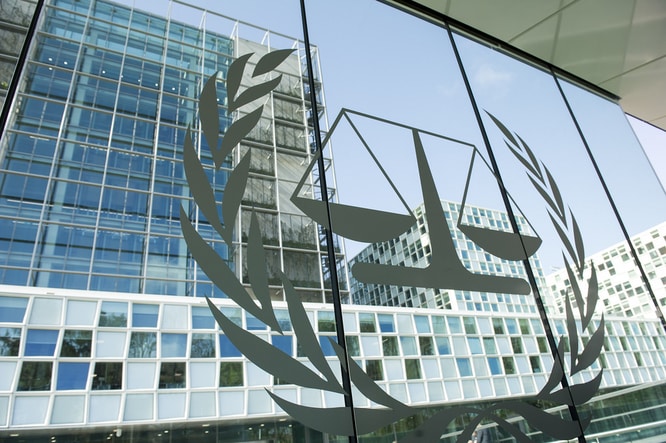
Attempts to address environmental rights judicially are in process. For example, ecocide – severe, widespread, or long-term damage to the environment – is under consideration as a crime within the jurisdiction of the existing International Criminal Court and a future International Court for the Environment. An environmental rights court would adjudicate ecocide, but not the human rights violations of people living in affected areas. A global judicial system that adjudicates violations of both human and environmental rights, a World Court of Human and Environmental Rights, would provide a holistic solution.
World law institutions are one component to realizing universal rights. The other component is empowering individual action by recognizing our legal status as world citizens. With the right to vote directly in world referenda or through world parliamentarians on issues that affect the entire world, we would increase our individual engagement and our personal responsibility.
Seeing the Earth as one, world citizens understand how our actions affect our fellow humans and the environment. Together, we can develop strategies for sustainable living based not just on human needs, but also on the needs of the Earth.
Human rights and environmental rights are intertwined. Without a safe and sustainable environment, our rights become meaningless. Without just and peaceful interactions among humans, the Earth becomes a victim of human violence, for war is one of the worst destroyers of nature.
As the brain and conscience for the planet, we world citizens have the duty to use our intelligence and empathy to harmonize the needs of humanity with the needs of the Earth.
by Citizens for Global Solutions | Dec 14, 2022 | Human Rights
Citizens for Global Solutions is honored to present Pope Francis with our Global Citizen Award for 2022. This award is presented once a year to an individual who is recognized as a Global Citizen by the general public for their commitment to one or more of the following areas:
- An end to war and violence in the resolution of international disputes
- The elimination of nuclear weapons
- Democratic global governance
- Protection of universal human rights and freedoms
- Care of the global environment
- Embracing loyalty to our world in addition to loyalty to any one nation
Pope Francis has demonstrated to the whole world his commitment to all these areas.
As the leader of the Catholic Church, he is truly catholic/universal in his concern for the entire human family and the planet we all share.
His work to protect the global environment is inspiring. “Laudato Si” was instrumental in helping the people and the leaders of the world recognize the seriousness of the environmental crisis facing our common home.
We are inspired by his teaching in “Fratelli Tutti” about a love capable of transcending borders so that the human family can live together in harmony and peace, without expecting everyone to be or look the same. We also agree with his advice in this document that we need new structures to solve global problems that affect us all. Indeed Pope Francis is a great world citizen and a model for all of us.
Citizens for Global Solutions promotes the ideal of “world peace through world law” and democratic world federation, which is consistent with the Catholic Church’s teachings on a public authority for the world community, subsidiarity, solidarity, and the protection of human rights.
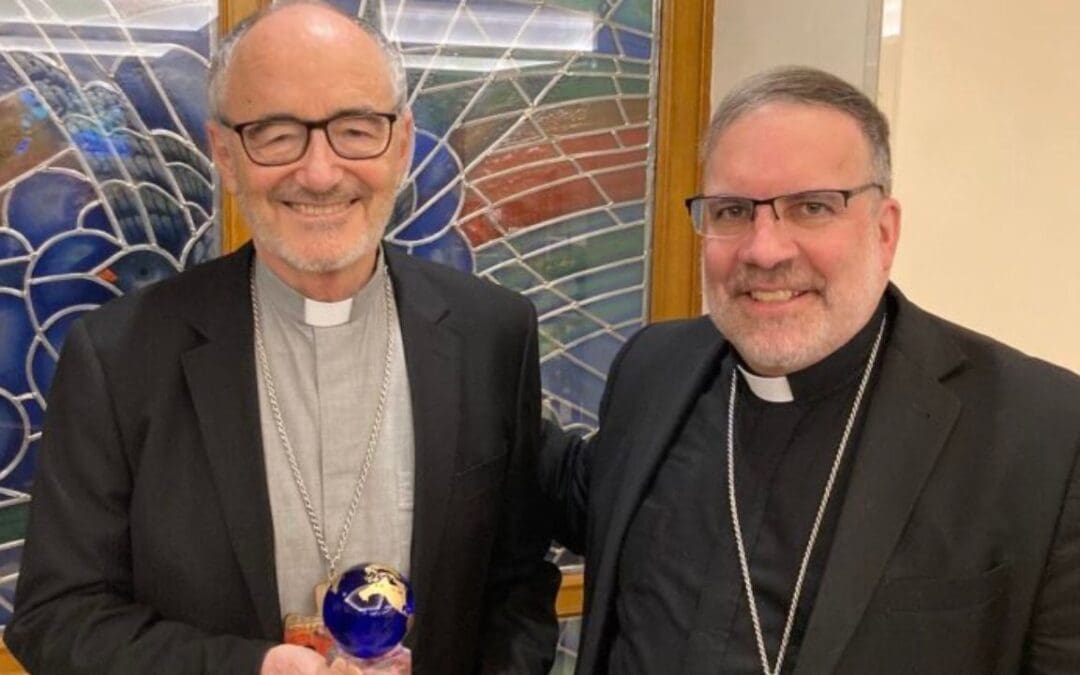
We are grateful to Bishop John Stowe, who is a member of the CGS National Advisory Council, who hand carried this award from the US to the Vatican for Pope Francis. Bishop Stowe presented the award to Cardinal Michael Czerny, SJ, Prefect of the Dicastery for Integral Human Development.
Thank you, Pope Francis, for all you do to make our world a better, safer, healthier, more loving place for all humanity.
by Rene Wadlow | Feb 26, 2018 | Human Rights, Peace & Disarmament
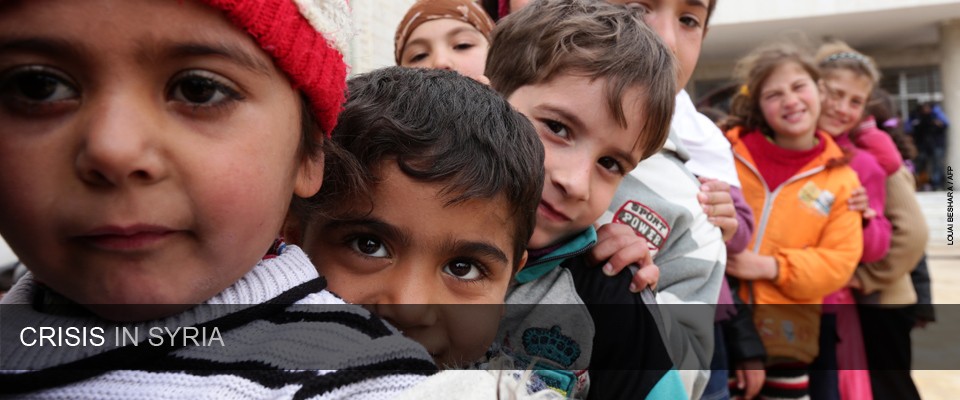
A recent wave of fighting in Syria, especially in the Eastern Ghouta zone near Damascus and in Afrin, a largely Kurdish area near the frontier with Turkey has highlighted the violations of humanitarian international law. After multiple delays to reach agreement with the Russian ambassador, the U.N. Security Council on Saturday 24 February adopted a resolution for a 30-day ceeasefire “without delay” in Syria. The truce would allow for the dellivery of emergency aid and the evacuation of the wounded, including from the besiaged Eastern Ghouta, home to some 350,000 people. We now need to work so that the ceasefire is honored.
However, the scale of the violations are such that they can be considered as a deliberate policy and not as events of “collateral damage” in the fog of war. These violations of long-established humanitarian international law are evidence that the laws of war are increasingly being undermined with few governmental reactions.
The Association of World Citizens again calls for respect of humanitarian international law and for a world-wide effort for the re-affirmation of humanitarian international law.(1)
Eastern Ghouta is near Damascus and has been a contested zone since early in the 2011 uprising. Ghouta is close enough to Damascus so that opposition mortars can be fired on districts in Damascus – close enough also so that rockets and barrel bombs from government helicopters can increasingly fall on the zone. Hospitals have been hit, probably deliberately. Eastern Ghouta is one of the de-escalation zones agreed to by Russia, Iran and Turkey. However not all the opposition groups are party to the de-escalation agreement which opens the door to ever-escalating violence.
Afrin is in the Aleppo Governorate and in an area with a large Kurdish population. The Turkish government suspects all organized Kurdish groups to be “terrorists” or potential terrorists. Moreover the demands for independence of the Kurdish Autonomous Administration in Iraq linking to a possible similar Kurdish zone in Syria is considered by the Turkish government as an active threat to be countered by force. Thus for the past month, Turkish troops in the mis-named “Operation Olive Branch” have been attacking Afrin and its surrounding area. As an element in complicated Kurdish politics and alliances, a pro-Syrian government Kurdish militia has joined the battle to defend Afrin. The dangers of escalation and greater loss of civilian life are very real. For the moment, negotiations on a resolution of the armed conflict within all of Syria seems to be at a dead point, at least in terms of public negotiations.
With the current impossibility to reach an overall resolution to the conflict, the best we can hope for is an honest application of humanitarian international law and a broader, world-wide re-affirmation of humanitarian international law.
Current armed conflicts in Afghanistan, Yemen, Syria-Iraq-ISIS-Turkey, Libya, Somalia and elsewhere have led to repeated and conscious violations of humanitarian international law such as attacks on medical facilities and personnel, killing of prisoners-of-war, the taking and killing of hostages, the use of civilians as “human shields” and the use of weapons which have been banned by treaties.
Thus, there is a pressing need for actions to be taken to implement humanitarian international law in response to increased challenges. Citizens of the World stress the need for a United Nations-led conference on the re-affirmation of humanitarian international law including its application by non-State parties. Non-State actors such as ISIS or the Afghan Taliban, are increasingly involved in armed conflicts but were largely not envisaged when humanitarian international law was being drawn up by governments Thus, the conference would highlight the need to apply humanitarian international law both to States and to non-State actors. (2)
Such a conference would bring together into a coherent synthesis the four avenues of humanitarian international law: (3)
1) The Geneva Conventions – Red Cross-mandated treaties;
2) The Hague Convention traditions dealing with prohibited weapons, highlighting recent treaties such as those on land mines and cluster munitions;
3) Human rights conventions and standards, valid at all times but especially violated in times of armed conflicts;
4) The protection of sites and monuments which have been designated by UNESCO as part of the cultural heritage of humanity, highlighting the August 2016 decision of the International Criminal Court on the destruction of Sufi shrines in northern Mali. (4)
Such a re-affirmation of humanitarian international law should be followed by efforts to influence public consciousness of the provisions and spirit of humanitarian international law. This can be done, in part, by the creation of teaching manuals for different audiences and action guides. (5)
Notes
1) Hilaire McCoubrey and Nigel D. White. International Law and Armed Conflict (Aldershot: Dartmouth, 1992)
2) see Andrew Clapham. Human Rights Obligations of Non-State Actors (Oxford: Oxford University Press, 2006)
3) see Sydney D. Bailey. Prohibitions and Restraints in War (Oxford: Oxford University Press, 1972)
4) see Rene Wadlow “Guilty Plea in Cultural Destruction Case” Peace Magazine (Canada) Oct-Dec 2016
5) see as a good example of an action guide Paul Bonard. Les Modes d’Action des Acteurs Humanitaires. Critères d’une Complémentarité Operationelle (Geneva, CICR, no date given)
*******************************
Rene Wadlow, President, Association of World Citizens
by CGS Blog Archive | Jan 19, 2018 | Human Rights, World Federation
In late October we lost our dear Ruth when she expired after a short illness.
Ruth’s parents emigrated from Russia and settled in Brooklyn, where Ruth was born and grew up. Like nearly everyone of her generation she was effected by the Great Depression and World War II. She supported the United World Federalists from its inception.
Ruth made her way through life as a pianist and music educator, gaining a PhD in musicology and retiring as a full professor of music at the City University of New York.
She was dedicated to public education and believed in community and strong public institutions including the community of the world, the UN, and world federation.
Married and mother to a son and daughter, Ruth enjoyed three grandchildren and 2 great grandchildren. She was dedicated to family, to her synagogue, to music education, and to CGS.
In her long years of retirement she voluntarily taught music to elementary school classes and played piano two hours per day right up until her final month when she fell seriously ill.
Ruth’s true essence shown through during her final visit to the emergency room. She was distressed, confused and speech-impared, likely the result of stroke. Nevertheless, she evoked her hero, Eleanor Roosevelt, as she implored her doctors to tell everyone she wished for a better world and for people to come together for the common good.
We will miss Ruth Zinar, a stalwart world federalist who participated creatively and with considerable energy and insight in CGS conference calls as late as the month before her death.