by Tony Fleming | Apr 2, 2016 | Global Cooperation, World Federation
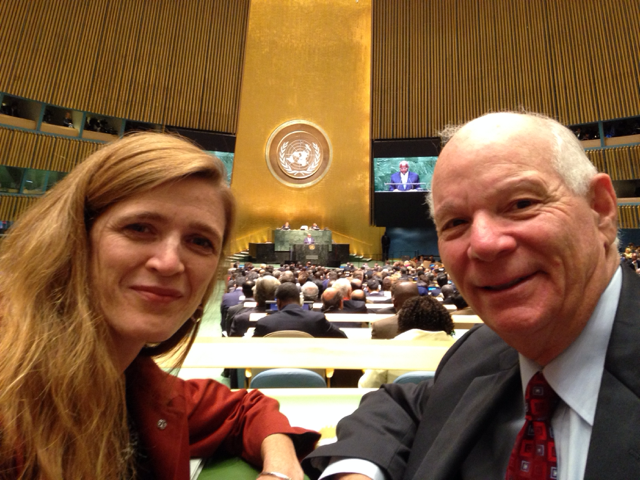
Next month, the international community will actively engage with the seven men and women who have put their names forward as candidates for UN Secretary-General. The manner of the engagement will be unprecedented. For the first time, member states of the UN General Assembly—representing all UN member states—will have the opportunity to hear from candidates and pose questions to them.
In the end, the selection will still be made by the General Assembly upon recommendation by the Security Council. The person they choose will guide the international community as it faces enormous challenges: implementing the new Sustainable Development Goals, ending the civil war and rebuilding devastated cities in Syria, and reducing carbon emissions to secure our climate.
These issues affect every man, woman and child on our planet. So they should have the opportunity to engage those who will hold the high office and lead this charge. In the organization’s 70-year history, the Council has always nominated a single candidate whom the Assembly has subsequently approved. Prior to the nomination, there was very little discussion outside Council chambers that would inform other member states, let alone the public, who was being considered. Since 2006, a number of countries and civil society groups have urged a more transparent process, one that would include periodic sharing of names by the Council with the Assembly and informal dialogues between candidates and other member states.
Those reforms were put into effect this year through a process spearheaded by the President of the General Assembly, Mr. Mogens Lykketoft, and agreed to by members of the Council. To many observers, they go even further than reform advocates could have hoped. The UN’s rules of procedure almost always require events of this type to take place in closed sessions. In contrast to regular practice, the informal dialogues between candidates and states in April will be webcast live to the entire world. Following, civil society groups and the media will be able to post questions to candidates during a media stakeout.
In advance of the public dialogues next month, citizens around the world have been invited to submit questions through an official UN website. This process is being managed by the UN’s Non-governmental Liaison Service (UN-NGLS), an inter-agency programme of the United Nations that works to develop constructive relations between the UN and civil society organizations.
These changes are remarkable in scope and hint at the role that a UN parliamentary assembly (UNPA) might play in future selections. The role being played by the UN-NGLS could be taken up by citizens’ own representative within the United Nations. The establishment of a such a body is supported by over 1,400 current and former Members of Parliament in over 140 countries. It was recently endorsed by former U.S. Secretary of State Madeleine Albright and other high ranking officials as part of the Commission on Global Security, Justice, and Governance.
As proposed, such a body would not alter the existing Charter-based provisions, but it could take on the active role that the civil society-focused UN-NGLS is playing this year to bring in the voices of citizens. Following their informal dialogue with governments in the General Assembly, candidates for Secretary-General could be invited to respond to questions that represent the concerns and interests of parliamentarians’ constituents. A UNPA that includes opposition or minority party members would also ensure that candidates hear views that may challenge official government positions in the Assembly and Council. It is highly unlikely that any candidates would avoid the opportunity to participate in such a democratic forum, webcast live before the global public.
As recently noted by the Albright-Gambari Commission, participation in such global decision-making by elected or appointed parliamentarians would contribute to a more accountable shaping of globalization and the development of a more transnational democratic culture. Though the Council and the General Assembly would not be bound by its views or recommendations, a formal role for parliamentarians could strongly contribute to the perceived credibility and legitimacy of the selection. It could also endow the office-holder with a democratic mandate to bring more transparency, oversight, and effective governance to the Secretariat.
The choice of the UN Secretary-General seems worthy of such accountability, engagement and democratic involvement.
This article was originally published on the international Campaign for a UNPA blog and has been cross-posted with the author’s permission.
by Citizens for Global Solutions | Mar 29, 2016 | Global Cooperation, World Federation
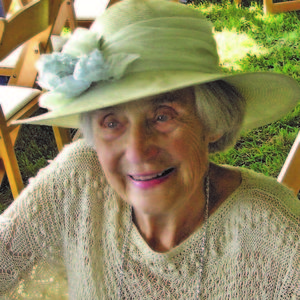
Barbara Martin Walker, one of the long-time and finest members of WFM, passed away on Friday, March 25. Barbara Walker and her husband Bob were “lifelong supporters” of world federalism and our peace movement. She served on the World Federalist Movement‘s Executive Committee for many years, as Treasurer and advisor. Barbara was 92 years old.
Barbara was tremendously dedicated to peace education. Amongst her contributions was the excellent reference book Uniting the Peoples and Nations. Compiled by Barbara, it is perhaps the closest text I know to an international Federalist Papers.
Hopefully, in celebrating Barbara’s life, WFM and others will reread this extraordinary collection of more than 100 writings, from Kant to Kennedy, Gorbachev to Boutros-Ghali, Hudson to Heinrich, Einstein to Falk. It remains one of the most important primers for peace and federalism.
Barbara also co-founded with Sally Swing Shelley an important United Nations non-governmental organization, the Committee on Teaching about the United Nations (CTAUN). The annual CTAUN conference at the UN for educators continues to gain in importance.
My wife Lydia Swart and I loved Barbara and Bob. Shortly after becoming WFM General Secretary/Executive Director in 1994, Lydia and I cherished house-sitting the Walkers’ beautiful home in Princeton, New Jersey while they vacationed at their island home in Menemsha, Massachusetts. Lydia and I will miss Barbara and celebrate the Walkers for the rest of our lives.
On behalf of WFM’s worldwide membership, we wish to send our deep condolences to Barbara’s children, grandchildren, and great-grandchildren as they honor her memory.
Written by William Pace
Convenor, Coalition for the International Criminal Court (CICC)
Steering Committee Member, International Coalition for the Responsibility to Protect (ICRtoP)
Executive Director, World Federalist Movement-Institute for Global Policy (WFM-IGP)
by CGS Blog Archive | Mar 9, 2016 | Climate Justice, Global Cooperation
What can we do to fight Zika?
Zika was first discovered in Uganda in 1947 and was seen as a mild illness. Current events, however, tell a different story. Zika is now one of the most feared diseases, potentially causing cases of microcephaly and Guillian-Barré syndrome. Microcephaly is a condition that causes a baby to be born with a small head and can lead to improper brain development, while Guillain-Barré syndrome can result in muscle weakness and breathing problems.
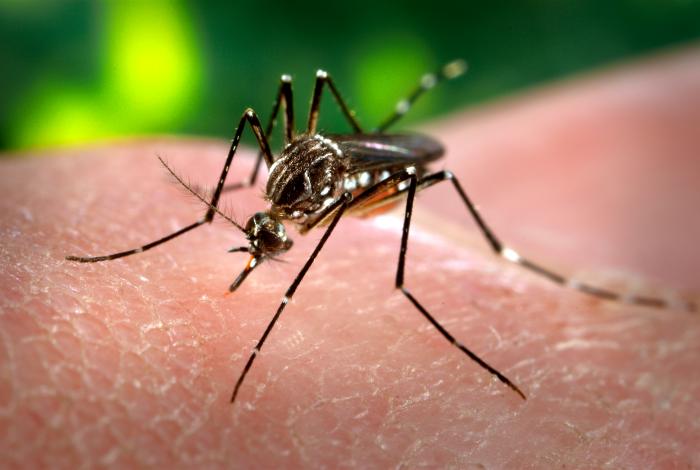
Zika started out in small areas, but now has spread to over 20 different countries. One of the reasons Zika has spread so much is climate change. Global temperatures have increased, and so has the amount of rain. This type of weather makes it easier for mosquito-borne illnesses to develop. Zika originates from a mosquito called the Aeded aegypti, which thrives in warm and wet climates. Further climate damage could play a future role in spreading the Zika virus.
Although there is no official cure for Zika, there are some ways you can protect yourself.
It is highly suggested for pregnant woman to refrain from travel at all costs. If you are planning to travel soon, it is important to wear long-sleeved shorts and long pants. Use insect repellants that contain DEET or picaridin. Keep doors and windows closed and use air conditioning. Basically, avoid getting mosquito bites as much as you can.
There are also ways of protecting yourself when at home. The researchers interviewed for this story said that people need to make their homes and neighborhoods less friendly to mosquitos. Since Zika is transmitted primarily through the bite of infected mosquitos, it is important to rid your home of any containers left with even a little standing water. Avoid letting water collect in trashcans or containers outside of your home.
However, these tips are only for short-term safety. In the long run, we need to make a global effort to address the root causes of the problem. The nations of the world must come together to curb climate change, thereby creating an environment less conducive to spreading diseases like Zika.
by Michael Curtin | Feb 26, 2016 | Global Cooperation, United Nations
This article was originally written for the Northern New Jersey Chapter of UNA-USA. It has been cross-posted with the author’s permission.
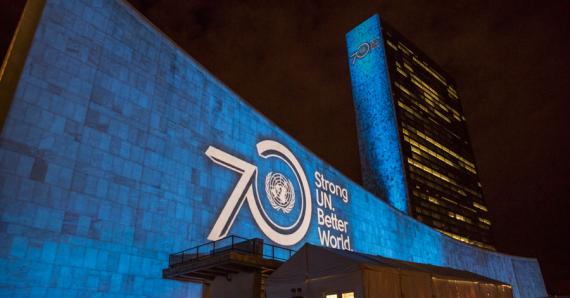
Last year marked a significant time in the history of the United Nations: It celebrated its 70th anniversary. This is no small accomplishment. There are many who over the years wished the global institution out of existence, yet here it is today, still standing and performing the work it was created to do.
2015 also saw the expiration of the Millennium Development Goals (MDGs) and the transition to the Sustainable Development Goals (SDGs). The SDGs are an ambitious agenda consisting of 17 goals with 169 targets that seek to tackle some of the world’s largest challenges, such as: poverty, hunger, clean water, climate change, education, health, and inequality, to name a few. It is a significant task that can only be undertaken by an institution like the UN.
To highlight a few of the MDG successes, those living in extreme poverty (characterized as living on $1.25 a day) was reduced to 836 million people in 2015 from 1.9 billion people in 1990. In addition, the enrollment for primary school-age children showed an increase. However, the number is not quite where officials wish it to be so there is more work to be done in this regard. A notable achievement was in the area of people garnering access to clean drinking water. There was a net increase of 2.6 billion people since 1990, which was met in 2010—five years ahead of schedule.
Moreover, last July the UN held a financing for development (FFD) conference in Addis Ababa, Ethiopia to discuss how the post-2015 sustainable development agenda would be funded. On the heels of this conference came the landmark climate change agreement in Paris where nearly 200 nations committed to reducing greenhouse gas emissions. This was no small achievement to get close to 200 nations to each agree on one single issue, yet through the leadership of the UN, they made it happen.
Though much work awaits, there is a hopeful anticipation for many around the world that as the implementation of the SDGs proceeds, the curve will continue on an upward trend.
2016 Brings Promise to the Global Body
For all that the UN was able to accomplish in 2015, 2016 promises to be equally successful. To begin, this year could be quite historic as well; Secretary-General Ban Ki-moon’s term expires at year’s end and elections will be held. The biggest question being asked is whether a woman take the helm and become the first to do so. There are a number of very notable names being circulated through the media, and each one certainly has the credentials to take over the leadership role. It is truly an exciting time to be an observer of the UN.
This year holds the possibility of each of us finally witnessing the eradication of polio* in our lifetime. The World Health Organization (WHO), the global health arm of the UN, reported that it has been able to contain the outbreaks in conflict-ridden states such as Syria, Iraq and Somalia through the process of immunizing children over the course of the last two years.
Christopher Maher, the point person on regional polio eradication, commented that there is a chance to “finish polio forever”in 2016. The disease is still prevalent in Pakistan and Afghanistan, but signs are encouraging as the number of cases are declining.
In speaking to delegates at the General Assembly in January, Secretary-General Ban Ki-moon stated that the world body needs to get its “priorities right”by performing its work in a better way.
The UN leader added that sustainable development and climate change are inextricably linked, and it is imperative that the Paris Agreement be enforced as quickly as possible. Furthermore, he added, the worldwide scourge of drugs, the refugee crisis and the problem of youth unemployment are issues that will be addressed this year through specific UN sessions and meetings. Furthermore, WHO will be working very hard to contain the Zika virus, which is most prevalent in Latin America, but also recently has spread elsewhere.
The UN was founded upon the bedrock principles of peace and security. These two important concepts have not gone unnoticed by the Secretary-General. Conflict continues to ravage many parts of the world today, which prevents many of the important UN programs from reaching the ground.
Mr. Ban Ki-moon was adamant that the international community must do more to protect those populations who cannot protect themselves. The UN leader referenced specific areas of the world such as the Middle East and Africa where conflict prevention is of paramount importance. North Korea’s continued missile launches and testing will require heightened attention this year.
As with any large institution, the UN is not without its share of concerns, as The New York Times editorialized last week. The issue of peacekeeping abuses is a serious matter, and should alarm everyone at the highest levels of the global body.
While this year holds promise, there are clearly a host of challenges awaiting—not unlike the last 70 or so years. However, as in the past, the UN will confront each one head on, seeking a solution that will benefit the broader global community.
*Author’s note: On a personal level, it is exciting to see that the scourge of polio may finally be eradicated. It is an issue close to my heart for my Dad, who passed away in April 2015. He contracted polio at the tender age of five. I know he would be happy to see the day it ends.
by Jennifer Keck | Feb 24, 2016 | Climate Justice, Global Cooperation, News
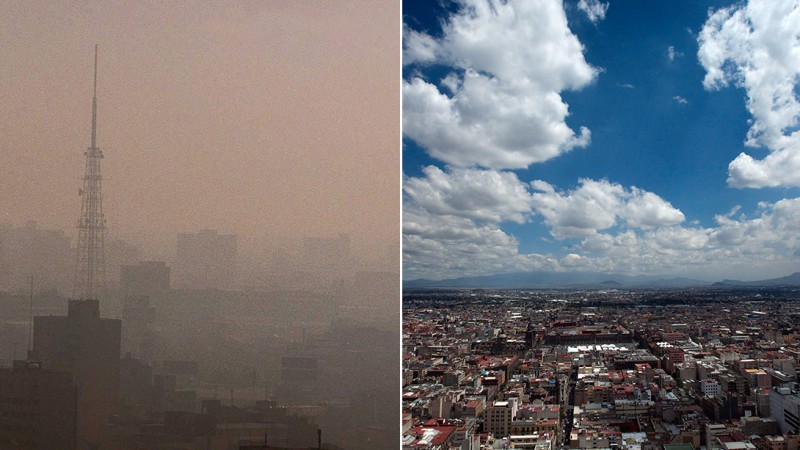
The smog-laden skyline of Mexico City may not be a poster child for air pollution much longer. Demand for clean energy is on the rise in Latin America, particularly in Mexico, Brazil, and Chile.
Clean-energy acquisitions nearly tripled in the region last year–the highest growth rate in the world, according to PricewaterhouseCoopers (PwC). An increasing demand for electricity coupled with stricter environmental policies has resulted in renewable energy deals valued at $7.6 billion, up from $2.7 billion in 2014, the consulting firm said in its annual Power & Renewables Deals report.
“There is increasing interest in the region,” Arthur Ramos, a partner at PwC’s strategic consulting unit Strategy& told BloombergBusiness. “Multinationals are taking stronger positions in Latin America where there is a perspective of lack of power supply in the long term. And many countries are offering low risk models of energy contracts for investors.”
In total, mergers and acquisitions in Latin America shot up 56 percent to $12.4 billion last year. Only the Asia Pacific region brokered more deals.
China has already jumped on the investment bandwagon. The Chinese power company Three Gorges Corp. bought the Jupia and Ilha Solteria hydropower plants in Brazil for $3.7 billion, the largest acquisition in the region. Sempra Energy, the San Diego-based natural gas company, came in second with its acquisition of the remaining stake in its Mexican joint venture Gasoductos de Chihuahua for $1.5 billion.
As energy sector reform opens the Mexican electricity sector to private investment, the country is attracting more international interest. Spain’s Iberdola has targeted Mexico as one of the four countries outside continental Europe (the others are the U.S., Brazil, and the U.K.) where it sees major growth opportunities. Mexico will also host its first long-term energy tender in March 2016, with an estimated 1.5 to 2.5 gigawatts to be awarded and further tenders to follow.
But Mexico and Brazil aren’t the only countries of interest. Chile remains a focus for companies such as Spain’s Gas Natural Fenosa, and China’s State Power Investment Corporation’s Pacific Hydro acquisition included around $1 billion worth of assets.
Steady returns from clean-energy assets make Latin America an appealing region for investment, despite its economic turmoil. “We expect this momentum to continue in 2016, despite the current challenging economic and political environment in many countries,” Ramos said.
Globally, energy deals fell 16% to $199 billion last year. However, renewable deals nearly doubled to $55.3 billion, up from $28.3 billion in 2014.
As the demand for affordable energy continues to rise in the developing world, the need for clean-energy alternatives will likely fuel investments for the foreseeable future.
by Jennifer Keck | Feb 17, 2016 | Global Cooperation, Peace & Disarmament
While the Netflix series Narcos makes for good entertainment, the war on drugs is still all too real in Colombia. The country overtook Peru as the largest producer of cocaine in 2014, despite the Colombian and U.S. governments’ attempts to thwart production.
Since 1999, the U.S. has quietly carried out “Plan Colombia,” a bi-partisan effort to end the narcotics trade and build state capacity in South America’s oldest democracy. Yet the results of the nearly $10 billion aid package—the largest in US-Latin America relations history—have been mixed. Colombia is simultaneously nearing peace agreements and growing more coca crops.
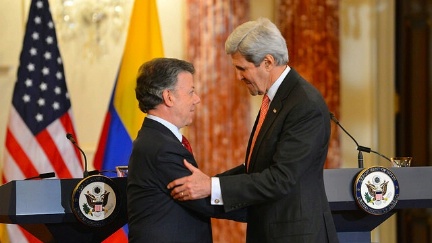
On Thursday, February 4th, President Obama announced that the 15-year-old-plan will become “Peace Colombia,” in name and in U.S. spending. The Administration wants to increase aid from $300 million in 2015 to more than $450 million to support peace agreements between rebel groups and the Colombian government.
When Plan Colombia was signed, the country was teetering on the brink of collapse. Violent attacks from leftists guerilla groups such as the FARC and ELN, right-wing paramilitary groups of the AUC, and powerful drug cartels had all converged, destabilizing civil society. Now, both guerilla groups have been weakened and are engaging in peace talks with the government, thanks to the U.S.-backed military offensive.
Obama, however, doesn’t want to end efforts to halt cocaine trafficking. To meet both goals, Congress will need to approve the revised plans with updated priorities, including:
-
Improving security and counternarcotics efforts while reintegrating the FARC into society.
-
Strengthening the rule of law and growing rural economies by expanding state presence and institutions, particularly in former conflict zones.
-
Promoting justice and providing essential services to conflict victims.
Several programs that support the new priorities are already part of Plan Colombia and can continue during peace time, says U.S. ambassador to Colombia Kevin Whitaker. “Our plan is to broaden these activities in the entire post-conflict process,” Whitaker told the local Bogota press.
Given that bilateral relations have strengthened over the past 100 years, Colombia generally views U.S. policies in a positive light. In a 2015 survey, Obama earned a 78% approval rating among Colombians. Despite this, the new plan will be a tough sell in Colombia because more than 90% of the population opposes amnesty for FARC combatants, a key element of the agreement.
As Colombian President Juan Manuel Santos noted in a forum co-sponsored by the U.S. Peace Institute, there is no perfect solution. Colombians will be asked to weigh the cost of re-integrating the FARC into society versus several more decades of guerilla war.
The FARC has promised not only to demilitarize but to abandon drug trafficking, which could result in a power vacuum among competing drug cartels. To combat this, “Peace Colombia” will likely take a new approach that extends beyond law enforcement. Public health campaigns geared toward reducing cocaine use along with regional or multilateral cooperation will be essential in reducing drug-related violence and reclaiming cartel-dominated territories.
Meanwhile, the international community could quietly broker an agreement that leads to peace with the ELN, Colombia’s second largest left-wing guerilla group. With new conservative leadership in Venezuela’s national assembly, the ELN is less likely to demand peace talks be hosted there. Removing this obstacle will help bring the group into the fold.
Finally, the Colombian government has agreed to a transitional justice system, which will require the international community’s help to provide justice and reparation to millions of victims. Yet this will be a necessary part of achieving and maintaining peace as the country rebuilds its civil society.