by Jack Pearce | Feb 11, 2016 | Climate Justice, Global Cooperation
The declining costs of renewable energy, emerging information technology-related capacities for better management of electricity supply and use, and the need to reduce greenhouse gas emissions are combining to drive major changes in electricity supply in the United States and worldwide. But the existing industry structure and government regulatory practices are impeding progress. Citizen action is needed.
A study by the National Oceanic and Atmospheric Administration (NOAA) and researchers from the University of Colorado recently demonstrated that a national direct current high-energy transmission web drawing primarily on solar and wind energy productioncould cut greenhouse gas emissions from electric power production by up to 78 percent from 1990 levels while meeting increasing electricity demand at costs similar to–if not lower than–current costs. This change could be started using existing technologies.
Congress has therefore been considering bipartisan energy legislation (S. 2012) that would include provisions to take the first steps of establishing of such a grid, as well as a considerable body of other initiatives to foster “smart grid” development.
Another major development is the rapid rise of rooftop and community solar electricity generation. This has resulted in a backlash from the power industry, which feels that its monopoly status is threatened.
A recent public utility commission decision in Nevada epitomizes some of the worst features of this widely spread utility industry attempt to stymie competitive incursions into revenues by claiming that the industry must shift costs to customers or eliminate subsidies in order to maintain revenue. This is a customary pattern in monopoly defense of privileged position.
The Nevada commission explicitly ignored national and state policies designed to foster renewable energy supplies, brushed aside available studies indicating that such supplies could be integrated with electricity distribution without raising costs significantly, ignored the availability of “general rate case” formats for exploring rearrangement of supply and distribution accommodating rooftop energy supplies, assumed obligations to largely fictitious demand levels by such homeowners, double-charged such homeowners for distribution costs, and ordered cost escalations on such homeowners over a period of years on claimed need for revenue assurance. The net effect was to cater to the Nevada utility’s demand for protection of its existing revenue arrangements and handicap a competitive challenge.
Some industry analysts and citizen action groups have pointed out that use of “smart meters” and associated technologies, coupled with “smart rate designs” for pricing the contributions of the alternative solar energy supply, could lead to “right-sizing” and “right-shaping” of electricity distribution systems, as well as generation and transmission systems. A recent Utility Dive publication lists some key battlegrounds and key issues in this critical national battle over the future of electricity supply. Several states, notably California and New York, are wrestling with how to foster the competitive potentials of distributed generation in ways that increase the flexibility and lower the costs of total electricity supply. The stakes are high, both for citizens and the incumbent utility systems.
There are long-term risks to investor-owned utilities from their attempt to protect traditional monopoly status as undertaken in Nevada. As solar generation and storage costs decrease, as many foresee, substantial loads may migrate off-grid, leaving the traditional utilities in a severely limited, if not declining, position. This partitioning of electricity supply could be wasteful for consumers as a whole. Also, at least one major municipal system, in San Antonio, Texas, has in effect taken over local solar installations in an apparent effort to generate more, not less, distributed solar generation (though there is a mixed reaction to this). If investor-owned utilities continue attempting to block rooftop solar generation, they may see a backlash at the local distribution level.
The Nevada utility monopoly position is under attack in other ways. Legislation has been introduced to provide for retail choice among electricity suppliers for Nevada residents. In addition, major commercial firms in Nevada have been seeking permission to decouple from NV Energy. In a grotesque perversion of standard market economics, the utility has prevailed upon the regulatory commission there to charge these entities hundreds of millions of dollars for the privilege of finding and using more economical energy supply arrangements.
What do I suggest for CGS members? Make some noise with your elected representatives–local, state and federal. There are at least two major initiatives to be addressed.
First, make clear that you want federal, state, and local action to foster an electricity transmission superhighway in the United States in order to foster a low-carbon, sustainable electricity supply. This is a major evolution, just as was the federal highway system. Lots of institutional arrangements need to be changed. But Congress appears to be laying the groundwork for such an evolution and it needs to get under way soon. A start by 2020 would not be too soon.
Second, pressure your representatives to reward rooftop solar generation for the contributions it can make to reducing central generation and distribution costs, by means of local connection and pricing systems that recognize the values of integrating such systems with the electricity grid. It appears that Congress may be starting to pave the way for such a development by mandating a national study of the net metering issue to identify possible ways to do this. This needs to be vigorously pursued.
Both developments work to your advantage as consumers and citizens. And they are a part of a necessary global energy supply transition. Let’s keep the lights on. Our grandchildren need them.
by Shelby Hettenbach | Feb 5, 2016 | Climate Justice, Global Cooperation
“Later that night, I held an atlas in my lap,
Ran my fingers across the whole world,
And whispered… where does it hurt?
It answered
Everywhere
Everywhere
Everywhere.”
–Warsan Shire
Last week I attended a United Nations Environment Programme event held in collaboration with George Washington University that invited speakers and organizations to discuss their plans to incorporate the goals set by the Paris Climate Agreement. There were two keynote speakers from the White House and three panels consisting of 10 high-ranking members of various organizations known for their efforts to curb climate change.
Christy Goldfuss of the White House Council on Environmental Equality began the event by speaking on the policies of the Obama Administration. She explained the White House plan to transition to a clean energy economy, a big step being President Obama’s recent ban on coal leasing on public lands. Most interestingly to me, Goldfuss heavily stressed the importance not only of stopping deterioration, but also of restoring already damaged areas and preventing further damage by strengthening existing ecosystems. This plan led me to realize that the world is already too deep in the effects of climate change to prevent it altogether. We are now at the stage where we simply have to adapt rather than fight.
The first panel spoke on the United States’ implementation of the Sustainable Development Goals (SDGs) laid out in the Paris Agreement in both the public and private sectors. A large topic of discussion stemmed from the idea that while the SDGs are global, they must be implemented in the context of each specific country. A third-world country cannot stop development completely, and the United States cannot turn off all of the electricity. Each country has different cultural, historical, and financial challenges to overcome. Each panelist also agreed that our free market economy will help to stimulate the participation of the private sector and allow the private sector to contribute crucial political support by translating its work into the public sector.
This topic was reiterated during the third panel more directly relating to the agricultural sector. The argument here was if the agricultural sector could be changed in order to benefit the farmers who use sustainable agricultural techniques, the politics of climate change could be altered. The same argument applied to the technology sector: if companies benefit from using sustainable techniques, they will put more pressure on politicians to enact change.
Each panel emphasized the importance of grassroots efforts to prevent the effects of climate change. Manish Bapna (Executive Vice President and Managing Director, World Resources Institute) stated that the largest positive change he has noticed over the years is the “shift from a top-down approach to a voluntary bottom-up.” He went on to say that this change is crucial in the effort to prevent climate change; if the people make it clear that they want to effect change, the politicians will be forced to follow suit. Goldfuss simply stated, “We all must work together.”
But perhaps the most impactful quote of the day came from the mouth of Norine Kennedy (VP, Strategic International Engagement, Energy and Environment, United States Council for International Business):
“We’ve been talking a lot about leadership but we must also talk about followership.”
After all, what is a leader without anyone to follow them?
by Rene Wadlow | Feb 1, 2016 | Global Cooperation, Human Rights
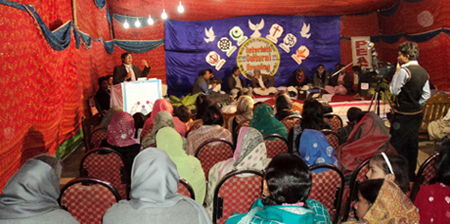
The Association of World Citizens, a non-governmental organization in consultative status with the United Nations, cooperates fully with the World Interfaith Harmony Week, which takes place February 1-7. The UN General Assembly designates the first week of every February as a time for cooperation for a common purpose among all religions, faiths and beliefs.
The General Assembly, building on its efforts for a culture of peace and non-violence in which World Citizens have played an active part, wishes to highlight the importance of mutual understanding and inter-religious dialogue in developing a creative culture of peace and non-violence. The General Assembly recognizes “the imperative need for dialogue among different faiths and religions in enhancing mutual understanding, harmony and cooperation among people.” The week has a potential to promote the healing of religion-based tensions in the world.
As Secretary-General Ban Ki-moon wrote,
At a time when the world is faced with many simultaneous problems—security, environmental, humanitarian, and economic—enhanced tolerance and understanding are fundamental for a resilient and vibrant international society. There is an imperative need, therefore, to further reaffirm and develop harmonious cooperation between the world’s different faiths and religions.
Global citizens have stressed that peace comes from cooperation beyond the boundaries of ethnicity, religion and nationality, and have called for a cultural renaissance based on the concept of harmony. Rather than concentrating primarily on conflicts, struggles, and suffering, they have suggested focusing on cooperation, coexistence, and visions of a better future. Harmony includes tolerance, acceptance, equality, and forgiveness of past pains and conflicts. Harmony leads to gentleness, patience, kindness, and thus to inner peace and outward relations based on respect.
World Citizens maintain that harmony is a universal common value. In harmony, we can find true values that transcend all cultures and religions. The meaning of life is to seek harmony within our inner self. Humans are born with a spiritual soul that develops to seek self-fulfilment. Our soul has a conscience that elevates us. As our soul grows to maturity, we achieve our own harmony.
However, harmony is not only a personal goal of inner peace, but a guideline for political, social and world affairs. Citizens of the World believe that our actions should enhance peace, reduce conflict, and activate a culture of harmony. The 21st century is the beginning of a Harmony Renaissance. Our world mission is to be ready for humanity’s next creative wave to lead us to a higher level of common accomplishment. The World Harmony Renaissance will bring the whole world into action for this new millennium of peace and prosperity with unfettered collective energy.
World Citizens have underlined the strong contribution that Chinese culture could play in the creation of this harmonious culture. In an earlier period of Chinese thought during the Song Dynasty, there was an important conscious effort to create a Harmony Renaissance. This was a period of interest in science —“the extension of knowledge through the investigation of things.” It was a time when there was a conscious effort to bring together into a harmonious framework what often existed as separate and sometimes hostile schools of thought: Confucianism, Buddhism, philosophical Daoism and religious Daoism. These efforts were called Tao hsuch, the Study of the Tao, an effort Western scholars later termed “Neo-Confucianism.”
Zhou Dunyi, often better known as the Master of Lien-his, was a leading figure in this effort. He developed a philosophy based on the alternation of the Yin and Yang, each becoming the source of the other.
Today, after decades of conflict when the emphasis of nations both in policy and practice was upon competition, conflict, and individual enrichment, we need to emphasize harmony, cooperation, mutual respect, and working for the welfare of the community with a respect for nature. When one aspect, either Yin or Yang, becomes too dominant, equilibrium needs to be restored.
Obviously it takes time to put into place a harmonious society at home and a harmonious world abroad. The cultivation of harmony must become the operational goal for many. As Mencius, a follower of Confucius said,
A trail through the mountains, if used, becomes a path in a short time, but, if unused, becomes blocked by grass in an equally short time.
The World Interfaith Harmony Week is an opportunity to open new paths. As global citizens, we must find a new guiding image for our culture, one that unifies the aspirations of humanity with the needs of the planet and the individual. We hold that peace can be achieved through opening our hearts and minds to a broader perspective. We are one human race, and we inhabit one world. Therefore we must see the world with global eyes, understand the world with a global mind, and love the world with a global heart.
by Rene Wadlow | Jan 22, 2016 | Global Cooperation, World Federation
Much of our current work for a more just and peaceful world builds on the thinking and efforts of earlier foundations. The work of Robert M. Hutchins, long-time president of the University of Chicago, played a leading role.
In 1929, at age 30, Hutchins–already the dean of the Yale Law School–was tapped by the University of Chicago to become the youngest university president in the United States. But it was his creation and leadership of the Committee to Frame a World Constitution in 1945 that made him one of the intellectual founders of the movement for world federation and world citizenship.
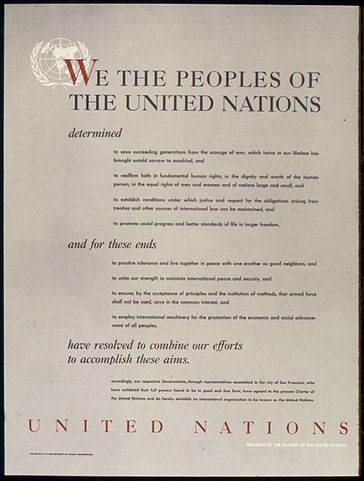
The University of Chicago had been one of the centers of research for atomic weaponry in the U.S., and while Hutchins was not directly involved, he saw that the world would never return to a pre-atomic condition and that new forms of world organization were needed. On August 12, 1945, less than a week after the U.S. detonated two atomic weapons over Japan, Hutchins made a radio address called “Atomic Force: Its Meaning for Mankind.” He said that the recently adopted United Nations Charter was not strong enough for a world where such destructive power had been unleashed.
Within three months, a 12-person Committee to Frame a World Constitution was created under Hutchins’s chairmanship. The committee included University of Chicago luminaries such as law school dean Wilber Katz and political scientist Rexford Tugwell, who had been President Franklin Roosevelt’s key idea man. Harvard’s Charles McIlwain, a specialist on constitutions, and Stanford’s Albert Guerard, a French refugee who was concerned about the structure of post-war Europe, were other key committee members.
From 1947 to 1951, the Committee published a monthly journal, Common Cause. Many of the publication’s articles on such fundamental questions as the philosophical basis of government, human rights, distribution of power, and the role of regions are still relevant today. The committee’s Preliminary Draft of a World Constitution was published in 1948 and reprinted in The Saturday Review of Literature and in The Bulletin of the Atomic Scientists.
Two ideas from The Preliminary Draft are still part of intellectual and political life for those concerned with a stronger UN. The first is the strong role of regional organizations. When The Preliminary Draft was written, the European Union was still just an idea, and most of the future members of the African Union had yet to achieve independence. The Preliminary Draft saw that regional groups were institutions of the future and should be integrated as such in the world institution. While today, the representatives of EU and AU member states work together at the UN in search of common positions, such regional groups are not yet part of the official UN structure.
The other lasting aspect of The Preliminary Draft is the crucial role that non-governmental organizations (NGOs) should play. The then-recently drafted UN Charter had created a “consultative status” for NGOs, but most of its drafters did not see the important role that NGOs would play as the UN developed. The Preliminary Draft had envisaged a “Syndical Senate” to represent occupational associations on the lines of the International Labour Organization where trade unions and employer associations have equal standing with government delegates. Such a formal body never came to be, but NGOs now represent an important part of the UN process.
Hutchins retired from the University of Chicago in 1951 to create the Center for the Study of Democratic Institutions at the Ford Foundation. But it was the effort Hutchins led to envisage the structures and processes among the different structures that was his innovative contribution to global institution building, and many of the debates he started are still crucial for today.
by CGS Blog Archive | Jan 20, 2016 | Global Cooperation, World Federation
The following is the introduction to an updated paper by Dr. Maja Brauer and Mr. Andreas Bummel with the German-based Committee for a Democratic UN (KDUN). The full paper is available on KDUN’s website here.
On June 18, 2015, Pope Francis published his second encyclical titled Laudato Si (Praise be to you). On behalf of Christianity, the Pope urged responsibility in dealing with humanity’s “common home,” the earth.
The statement elaborates in detail on critical economic, social, and ecological grievances in the world. In view of these, the Pope calls on all human beings–Christians as well as followers of other religions and disbelievers–to “bring the whole human family together to seek a sustainable and integral development.” This is supposed to lead to a more humane world society that ensures a dignified existence not only of all alive today, but also of future generations, as well as of “Sister Earth” itself.
In addition to discussing ethical norms and possible political measures, the Pope also addresses the underlying conditions of the global political system. Referencing his predecessor Benedict XVI, he calls for the creation of a “true political world authority” that is able to cope with global challenges. To explain this more fully, Francis quotes a passage from Benedict XVI’s 2009 encyclical Caritas in Veritate (Charity in Truth):
To manage the global economy; to revive economies hit by the crisis; to avoid any deterioration of the present crisis and the greater imbalances that would result; to bring about integral and timely disarmament, food security and peace; to guarantee the protection of the environment and to regulate migration: for all this, there is urgent need of a true world political authority, as my predecessor Blessed John XXIII indicated some years ago.
Since the Second World War, this perspective of political unification was continuously endorsed and developed in the tradition of papal teaching. It is more than merely a conclusion that the globalized and interdependent hazards of the technological age require common world institutions that ensure peace and implement supra-nationally coordinated actions and strategies.
Rather, this aspiration is deeply rooted in the societal model of Catholic social doctrine itself, which is cosmopolitan in principle. In a systematic context, it can be used to derive the decisive normative guidelines on which a future political world order would have to be based on from the perspective of the Catholic Church.
In the full version of the paper, a closer look at this notion of world political order will show that its general outline is identical with the model of a world federation based on the rule of law and subsidiarity that has long been advocated by the world federalist movement.
In this context we will also look into the question of how the goal of democratic global structures–and the possible creation of a world parliament in particular–would have to be judged from the perspective of papal teaching.
Read the full publication here.
by Shelby Hettenbach | Jan 15, 2016 | Global Cooperation, Peace & Disarmament
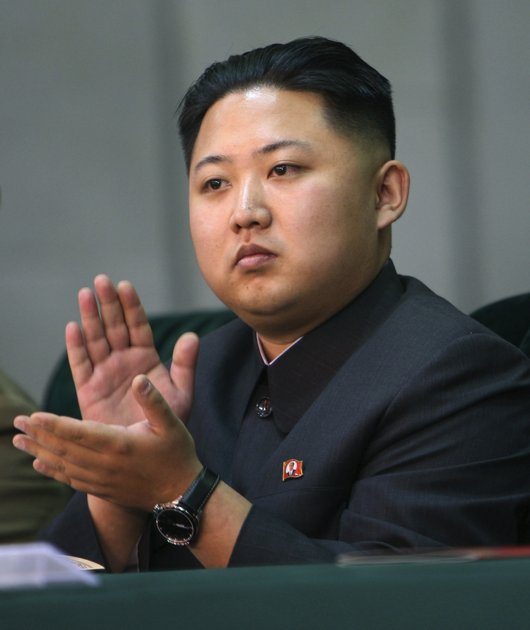
North Korea claims to have completed a successful test of a hydrogen bomb on Wednesday, January 6th. This test (North Korea’s first in three years) carries the potential for nuclear war. Whether successful or not, the test has allowed North Korea to move yet another step closer to the possibility of propelling a nuclear missile toward the United States or any other country in the World.
Not only has North Korea’s test caused tension between itself and the rest of the world, it has also caused tension between the United States and China. Since the test, the US and China have been entrenched in arguments regarding China’s continuing support for North Korea. Fortunately however, US Secretary of State John Kerry and Chinese Foreign Minister Wang Yi agreed to work closely together to address their shared concerns about North Korea’s nuclear capabilities. The US has put pressure on China to tighten its control over North Korea.
China has some important choices to make in the immediate future if it wants North Korea to remain stable. One option is to cut aid to North Korea, but doing this would mean an even worse quality of life for the innocent citizens there who are already living in severe poverty. By running a nuclear test, North Korea has essentially shouted to the world that they are aggressive, active, and ready to go to war. The UN Security Council was quick to condemn this test as a “clear threat to international peace and security.”
In response to the test, South Korea resumed broadcasting propaganda across the Demilitarized Zone. This broadcasting has been a large point of contention between South Korea and the US. There is a large possibility that the broadcast will spark a reaction from North Korea. It is hard to understand why South Korea would provoke North Korea at such an unsteady time; this could only be a match to the fire. I do not believe that the most reasonable answer to North Korea’s aggression is to respond aggressively.
How do you reason with the most secretive country in the world? To me, only one thing is clear: the world must come together to put an end to nuclear power. The UN sanctions placed on North Korea and China have had little effect in the past, and they will not have an effect until the countries of the world join together to condemn the use of nuclear weaponry.