by Rene Wadlow | May 21, 2016 | Global Cooperation, Human Rights
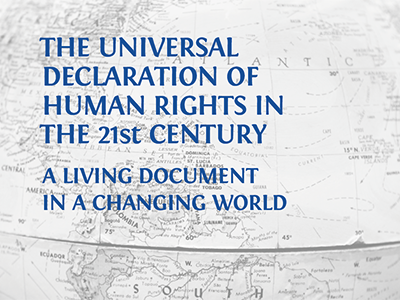
The Global Citizenship Commission (GCC) under the leadership of the former UK Prime Minister Gordon Brown presented its report The Universal Declaration of Human Rights in the 21st Century (free PDF download) to the United Nations on 18 April 2016.
The Global Citizenship Commission was created “to illuminate the ideal of global citizenship. What does it mean for each of us to be members of the global society?” The principal aim of the 1948 Universal Declaration of Human Rights (UDHR) was to create a framework for a world society that was in need of universal codes based on mutual consent in order to function. This universality was clearly reaffirmed in the 1993 Vienna Declaration of the World Conference on Human Rights in which nearly all UN Member States took part.
In 1948, the members of the UN Commission on Human Rights saw the human rights process as a three-step effort. First was the proclamation of the general principles which was the UDHR. The second step was to be the codification of these principles into laws both at the world and at national levels. The third step was to be some form of implementation through reports and observation, possible complaints procedures and ultimately some form of enforcement or sanctions. In 1948, it was not clear how the second and third steps should be carried out.
Largely through the efforts of NGO representatives, there has been progress made both on issues and on bringing attention to vulnerable people. The Global Citizenship Commission highlights these advances. Much of the report is devoted to the analysis of the way the UN has met past challenges and is a good overview for those who have not participated directly. The report calls in a general way for improvements. “The international community needs a toolkit of governmental and multilateral responses to rights violations that is more legitimate and sophisticated than what we have today and which relies on mechanisms other than the use of force.”
The report highlights two new challenges:
- Discrimination due to sexual orientation;
- Migration-refugee flows due to both short-term armed conflict and longer-term consequences of climate change.
On the first issue of discrimination due to sexual orientation, representatives of NGOs have already been active. There has been real progress from the mid-1980s when the issue had been first raised and then “swept under the rug” due to strong opposition from a number of States. Now, UN Secretariat members have taken the lead. There is still much to be done, especially in changing attitudes at the individual and local levels, but I think that the direction toward inclusiveness has been set.
Issues of migration and refugees go beyond what NGOs can do alone, although NGOs have been active on both refugee and climate change questions. On 19 September, at the start of the UN General Assembly, there will be a one-day Summit on migration issues at the UN in New York. NGOs should be able to make migration-policy suggestions in advance and to raise the issue of “statelessness” which is increasingly a result of migration.
The Global Citizenship Commission with its secretariat at New York University Global Institute for Advanced Study has set out a clear overview of the past and has highlighted some of the new challenges − a useful alert for those of us working on global issues and a call for an increased number of contributors to this work.
by Donna Park | May 20, 2016 | Global Cooperation, World Federation
Dear Citizens for Global Solutions friends, members and supporters,
The boards of Citizens for Global Solutions are excited to announce a new direction for the organization — one that reflects our current resource capacities and some difficult but realistic decisions by our volunteer leadership.
Opportunities lie ahead of us, and we feel these changes will allow us to take advantage of them.
Earlier this month, the boards agreed to transition to a volunteer-run association. Our current staff is moving on to new opportunities. Over the next year our boards and trustees will oversee renovation of our national offices into housing for young interns.
We are maintaining our issue-driven website and social media, our advocacy and educational efforts, and our commitment to donors and activists.
We will leverage our new partnership with the Commission on Global Security, Justice and Governance in support of several urgently needed global reforms, and several chapters will participate again in the Global Week of Action this October.
Nationally and locally, our activists will continue educating and advocating for solutions to climate change, mass atrocities, and nuclear proliferation. As always, these efforts come together to ensure our goal of a democratically governed world, which remains an inspiring vision for many.
The new approach will engage our leadership around the country and revitalize our local chapters. During this time, CGS will build upon the strategy adopted last year that seeks to ensure long term success. As appropriate, CGS will also work with professional consultants to assist us as we continue much of our grassroots mobilization to “build political will in the United States for international cooperation and democratic global institutions that establish peace, justice and sustainability under the rule of law.”
We look forward to your continued support for our engagement on the most important global challenges for our country and our world. If you have any questions, please reach out to us personally on social media or via email.
In peace,
by Rene Wadlow | May 10, 2016 | Global Cooperation, Peace & Disarmament
The protection of medical facilities and medical personnel is at the heart of the laws of war, more often called humanitarian law. On May 3, 2016, the United Nations Security Council unanimously adopted Resolution 2286 calling for greater protection for health care institutions and personnel in light of recent attacks against hospitals and clinics in Syria, Iraq, Yemen, South Sudan, Democratic Republic of the Congo and Afghanistan. These attacks on medical facilities are too frequent to be considered “collateral damage.” They indicate a dangerous trend of non-compliance with world law by both State and non-State agents.
The protection of medical personnel and the treatment of all the wounded–both allies and enemies–goes back to the start of humanitarian law in the experiences of Henri Dunant at the 1859 battle of Solferino in Italy. A businessman, not a doctor, Dunant found himself a witness of the battle and organized local women to start treating the wounded. negotiated so that doctors among the Austrian prisoners of war could be released to help the wounded. Nevertheless, many soldiers died from lack of care after acute suffering.
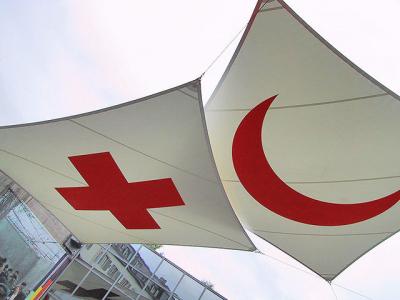
The image of the dying stayed in Dunant’s mind. On his return to Geneva, he began to organize what has become the International Committee of the Red Cross, followed by many national Red Cross and Red Crescent societies, now structured in a federation. Both the International Committee and the federation have their headquarters in Geneva and cooperate closely with the UN, the World Health Organization, the Office of the High Commissioner for Refugees, and NGOs.
The first Red Cross–Geneva Conventions–to protect the wounded and prisoners date from 1864. The Geneva Conventions have been expanded after wars, especially after the Second World War and the Vietnam War. When the Red Cross Conventions were signed in 1864, Dunant believed that war would be a permanent aspect of human relations; therefore, there should be “laws of war” to limit the destructive consequences, especially to non-combatants.
]In 1867, Henri Dunant was pushed out of the International Committee of the Red Cross that he had founded. He had lost all his money and was declared bankrupt. Bankruptcy was not considered a good thing among the Genevieve lawyers who were the core of the Red Cross–in fact bankruptcy was a sort of “mortal sin.” Dunant went to live in a small village and used his energy and organizational skills to try to end war and to promote equal rights for women. Both ideas seemed rather strange to the Swiss of his time, and he died a largely forgotten figure.
We still have the two-track approach: one of respect for the laws of war and a second track for the abolition of war, or at least, a negotiated end to armed conflicts. For the moment, there is not much motion on either track. We must support Resolution 2286 as a reaffirmation of the importance of world law, even if Security Council resolutions are rarely written in a dramatic style that can be quoted in newspapers. We must also promote good faith negotiations to end the armed conflicts in Syria, Iraq, South Sudan, and Yemen. These negotiations are difficult; good faith is in short supply. However, as the representatives of non-governmental organizations we have certain avenues for action and resolution 2286 gives us a mandate.
by Jennifer Keck | Apr 20, 2016 | Global Cooperation
Visa-free travel throughout the world is one of the biggest perks of carrying a U.S. passport. Today, you can visit 154 countries without the paperwork, but that could change this summer. The European Union may slam the door on traveling freely, a decision with consequences beyond tourism.
On April 12, the European Commission met to consider altering visa requirements for U.S. citizens, 15 years after establishing the program that allows Americans to travel to EU countries for up to 90 days without a visa. The move is an attempt to pressure the U.S. government into adding Bulgaria, Croatia, Poland, and Romania—all EU member states—to the list of countries entitled to visa-free travel in America. But the U.S. has held out on extending the same program to all EU members, citing security concerns. (Canada faces a similar threat over Romania and Bulgaria.)
While European national parliaments are unlikely to ratify an end to the program given the value of U.S. tourism, the issue could impact negotiations over the Transatlantic Trade and Investment Partnership (TTIP), an agreement three years in the making.
“There’s no doubt that if the EU were to slap a visa requirement on the U.S., it would be very, very bad news for the European tourism industry,” said Jacob Funk Kirkegaard, a senior fellow at the Peterson Institute for International Economics, a Washington D.C.-based think tank. “It would also quite frankly send the wrong political signal in the middle of TTIP negotiations.”
On the other hand, the U.S. State Department hasn’t expressed concern over the repeal of the visa waivers.
“We have maintained an open dialogue with EU officials—as well as officials from those member states that require visas for travel to the United States—on this matter,” said Julia Mason, a State Department representative. “It is premature to speculate on an imposition of visas on U.S. citizens.”
The visa waiver program, which permits business and leisure travel, has been beneficial on both sides of the Atlantic. Millions of Americans travel to EU countries every year, with U.S. tourism set to grow by 5.3 percent in the 2014-2019 period, according to the European Travel Commission. At the same time, U.S-based multinational corporations such as Coca-Cola and DuPont, which book billions of dollars in European revenue, also find it easier to conduct business thanks to the waiver. At least 10 percent of U.S. travel to Europe in 2014 was business related, according to the U.S. Department of Commerce International Trade Administration.
The European Commission has delayed the decision until July 12, but any move to drop the program will likely be tempered by vetoes from the European Parliament and/or individual European governments.
“Their tourism revenues, the business mobility, it’s not a joking matter for France, Spain, or the U.K.”, said Hosuk Lee-Makiyama, director of the European Center for International Political Economy. “Solidarity with the U.S. is perhaps stronger than solidarity with the EU.”
But unlike Kirkegaard, Lee-Makiyama doesn’t think the visa-waiver discussion will affect the TTIP agreement. “Negotiations tend to be rather compartmentalized affairs,” he said.
Although debates over controlling borders and combating terrorism have strained relations, the EU and U.S. still enjoy close diplomatic and economic relationships. Experts say the majority of EU countries won’t sacrifice those relationships in favor of the five members denied visa-free entry.
“It will come down to the solidarity between the EU member states,” said Lee-Makiyama. “They have been very firm in the wording, but not necessarily taking retaliatory measures when it comes down to it.”
But just in case, you may want to keep any eye out for any changes in visa requirements if you’re planning a trip to Europe this summer.
by Emily Ervin | Apr 14, 2016 | Global Cooperation, Peace & Disarmament
The United Nations’ Sustainable Development Goals (SDGs) pursue broad benchmarks in food security such as ensuring local food production systems, installing resilient agricultural practices, and maintaining ecosystems. By way of international donors, the UN advocates for these practices to be guaranteed in all countries.
Ideally, the involvement of the international community should expand the capacity of the developing country so that they can sustain themselves once the aid flow stops. Endorsing methods of local autonomy, such as sustainable agriculture, can decrease the likelihood of fragile states like Rwanda becoming dependent on food aid.
Rwanda, a small landlocked country within Sub-Saharan Africa, remains a fragile country since the end of the 1994 genocide. Last week, the Comprehensive Food Security and Vulnerability Analysis (CFSVA) 2015 was released, stating that 80% of Rwandan households are now able to meet their essential food needs. The report highlights progress in the development policies implemented over the past several years. However, this means 20% of households are still food insecure, mostly in rural areas. Furthermore, 44% of children under the age of two are malnourished. CFSVA recommends “enhanced efforts and initiatives to reach the most vulnerable people living in rural areas.”
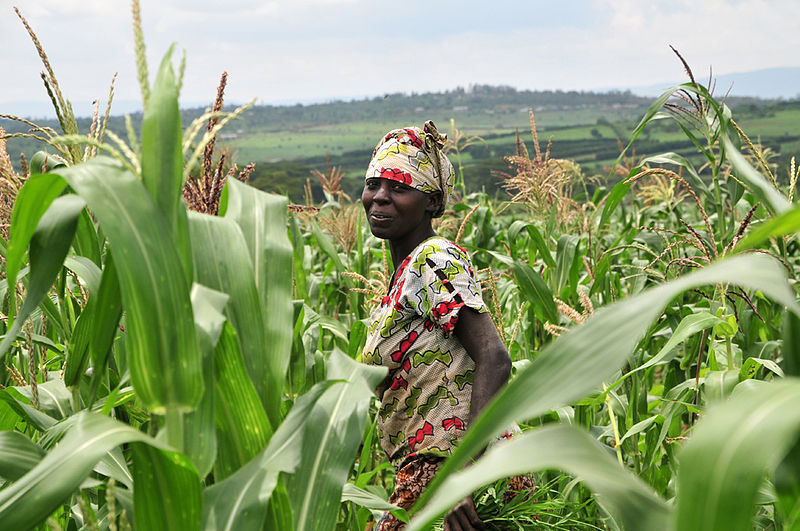
The economic growth in Rwanda over the past two decades has much to do with the development of sustainable agriculture programs, which help provide macroeconomic stability to the people of Rwanda. Since 2006, the share of their national budget allocated to agriculture has increased from 3% to 10.7%, showing the country’s commitment to sustainable agriculture. Organizations such as USAID are also interested in expanding Rwandan productivity of high value crops such as maize, beans, and dairy. The International Finance Corporation (IFC) invested a $25 million loan for maize production in Rwanda. Through IFC funding, farmers will be supplied with the necessary seeds and fertilizer to maintain their fields.
Feed the Future is another organization helping to promote investment in rural areas of Rwanda. Many of these areas are suffering from degraded lands unable to yield enough crops to sustain the community. Feed the Future funds projects that promote the development of small-scale irrigation networks, which can bring sustainable solid and water management to the region. By investing in Rwandan agricultural capacity, the organization helps rural regions increase their productivity and create jobs within the community.
Over time, the Rwandan government will be faced with the challenges of phasing out any dependency on international donors. Even when international aid is used for projects that promote local autonomy, there is still the risk of unpredictability. Between aid and loans from the international community, 33% of Rwanda’s annual expenditure is funded externally. Removing international aid will hit the Rwandan economy hard, as was seen in 2012 when donor payments were frozen due to allegations that the federal government was supporting rebels in the neighboring Congo. During this time the economy slumped to 4.7% growth. There is always the risk of the international community removing its aid, and in that case the Rwandan people need to be able of sustain themselves through agricultural programs.
Without building capacity for sustainable agriculture, the economy of the fragile state is bound to plummet when the aid leaves. In order to achieve the UN’s Sustainable Development Goals, the international community should continue to assist food insecure states in producing agriculture. However, the practices must be through enhancing techniques that can be continued after the aid itself is removed.
by Jennifer Keck | Apr 6, 2016 | Global Cooperation
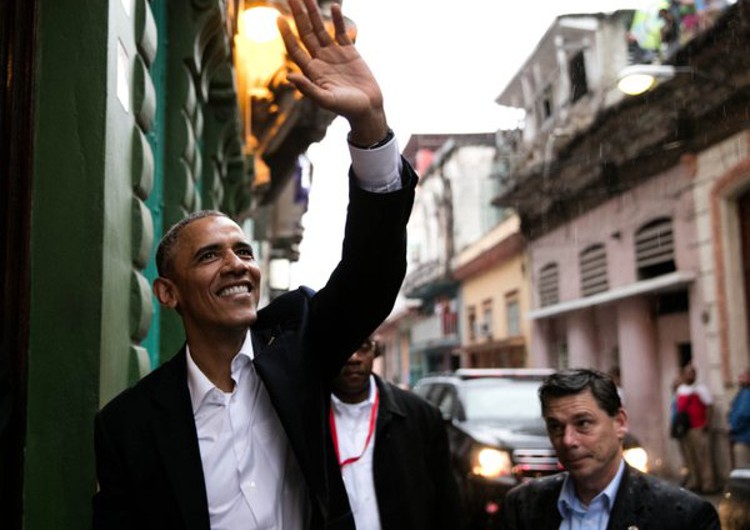
President Obama made headlines in March with his historic visit to Cuba, but his less sensational trip to Argentina may prove to be equally important in repairing U.S.-Latin America relations.
The move to normalize relations with Cuba will no doubt become a central piece of the Obama legacy. However, it’s only one aspect of the Administration’s engagement with the region over the past two years, which has involved a strategic pivot from previous policies. It began in late 2013 when Secretary of State John Kerry proposed a new beginning during his speech to the Organization of American States, in which he declared that the Monroe Doctrine was “over.” In the years since, inviting Latin America to the diplomatic table has already been a success. Throughout the region, left-wing policies are going by the wayside while global engagement and free markets are taking hold. And anti-American rhetoric is becoming less popular as leaders discover it’s no longer the battle cry it once was.
Ending the Cuban Embargo
Obama’s call to end the Cuban Embargo is certainly an important move toward a policy of partnership. For 50 years, the Castro regime blamed all of Cuba’s economic woes on the U.S. From food shortages to unemployment, Cuba could always point to unfair foreign policies instead of looking inward at its unsustainable Communist system. But it’s hard to denounce a U.S. president who says, “What we did for 50 years did not serve our interests or the interests of the Cuban people.” It’s harder still to denounce an administration that backs up this assertion by hosting diplomatic talks on trade, ocean conservation, and transnational crime. (Only Congress can lift the embargo.)
Next Stop: Buenos Aires
It’s no surprise that Buenos Aires was Obama’s next stop on his Latin America tour. Argentina’s newly elected President Mauricio Macri has already started implementing new, fiscally responsible policies as he moves to reset foreign relations.
The visit also held symbolic importance, with Obama apologizing for America’s involvement in Argentina’s Dirty War, the former military dictatorship’s campaign against suspected left-wing opponents. Acknowledging how much damage past U.S. policies have caused in the region will go a long way to improve relations.
U.S.-Latin American Relations 2.0
Strengthening ties is prudent for both Latin American and the United States. Over one billion dollars crosses the U.S.-Mexico border every day, making Latin America the fastest growing trading partner for the United States. But there’s more to relations than trade. With over 55 million Latinos living in America, the line between Anglo and Latino cultures is quickly blurring. And the 585 million citizens of the region largely value a strong civil society, freedom of speech, and universal equality, proving that the U.S. has much in common with its southern neighbors.
Today, relations are obvioulsy stronger in certain countries such as Colombia and Mexico. President Obama has already come out in support of Colombian President Juan Manuel Santos’ commitment to ending the violent conflict with the FARC and is backing Mexican President Enrique Peña Nieto’s ambitious structural reforms. Meanwhile, Obama has also been targeting the cause of mass immigration from Central America by offering substantial financial aid to help these countries combat violence, corruption, and a dire economic situation.
Unfortunately, the President still faces an uphill battle both at home and abroad. Left-leaning nations such as Venezuela and its closest ally Cuba remain distrustful of the United States, while the Republican party’s anti-immigration and pro-embargo stances have hindered Obama’s efforts. Despite the Administration’s progress, the U.S. has a long way to go to heal the rifts in the Western hemisphere.