by Jennifer Keck | Sep 4, 2016 | Climate Justice, Global Cooperation, News
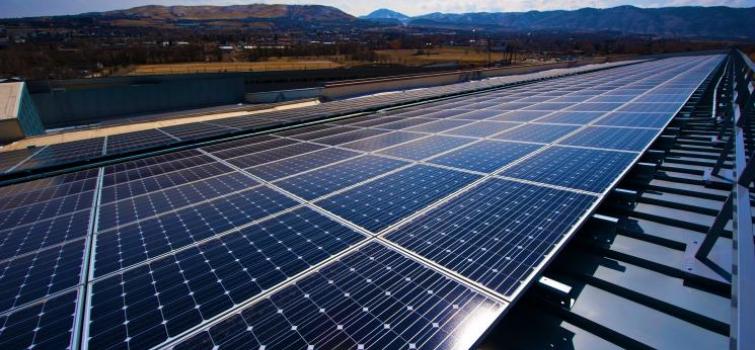
Chile has officially debunked the argument that coal is cheaper than solar.
Solarpack Corp. Technologica, a Spanish developer, won contracts to sell solar power for $29.10 per megawatt-hour at an energy auction in August, the lowest price ever. Not only does this beat out the deal in Dubai from last May, it went for almost half the price of coal at the same event. Chilean solar power is now at one of the lowest rates for any kind of electricity anywhere, according to Solarpack General Director Inigo Malo de Molina.
“Solar energy technology has evolved and proved it is competitive,” Molina told Bloomberg in a telephone interview from Santiago. “Prices for electricity generation have changed drastically in the last years. Solar energy in Chile is now the cheapest in the market.”
From Energy Crisis to Energy Abundance
It’s an amazing turn-around, given the county’s recent energy woes. Just five years ago, Chile’s energy prices were among the highest in Latin America. A few monopolistic utility companies dominated the sector, and Argentina had stopped selling natural gas to its neighbor. Facing the risk of blackouts, the private sector planned to open more coal-burning power plants and build hydroelectric dams that would have flooded Patagonia.
But mass protests soon followed. In 2010, the movement became so powerful that then-president Sebastián Piñera shut down the coal project Barrancones, even though its developer, GDF Suez, was following the law. While it was a win for the environment, the decision seriously harmed Chile’s business reputation.
Today, renewable power is on the rise, with energy investment surpassing mining investment in a nation that’s the largest copper producer in the world. Chile even started exporting electricity and natural gas to Argentina earlier this year.
So what brought on such a rapid change? In a word: competition. There were 84 bids during this month’s power auction, with the winners signing 20-year power purchase agreements. And in a surprising turn, three of Chile’s four largest generators failed to win a supply contract.
The biggest win went to Granja Solar, Solarpack’s project, a near impossible feat a few years earlier. Until recently, solar power couldn’t compete without subsidies, but the falling price of solar panels has made this form of energy more appealing. The average price has declined to a record low of 44.7 cents a watt for standard polysilicon panels.
Why Chile?
The new plant will break ground in Northern Chile’s Atacama Desert, an ideal location given its position high in the Andes near the equator. It’s one of the sunniest and driest places in the world, making it a rich option when it comes to solar power.
The Chilean government is also on board. It plans to complete transmission lines that will deliver Granja Solar’s power to the entire country, which is why Solarpack bid so low, Molina told Bloomberg.
Solar power wasn’t the only success, either. Renewable-energy companies won more than half the contracts this time around. The lowest price for wind power was $31 per megawatt-hour, natural gas sold for $47, hydroelectricity for $60, and geothermal for $66, according to Bloomberg.
The triumph of renewable energy at Chile’s recent auction is a strong indicator that the energy sector is in transition. Companies looking to compete will need to adapt quickly if they want to remain competitive, which is a major win for both consumers and the environment.
by Jennifer Welden | Aug 17, 2016 | Climate Justice, Global Cooperation
The biggest impacts often come from the seemingly smallest technological advancements: food-ordering apps, instagram, Pokemon Go. They not only make something rapidly accessible, but they do so in a way that highlights its huge role in our lives (or makes it a huge role in our lives). The same can be seen all over the world, but with arguably higher stakes. You open up the paper pull up your news app and see stories of other apps that are helping prevent deforestation through geo-tag reporting, improving democracy by disseminating knowledge and creating transparency in elections, mapping violence, and bringing mobile bank to rural villages.
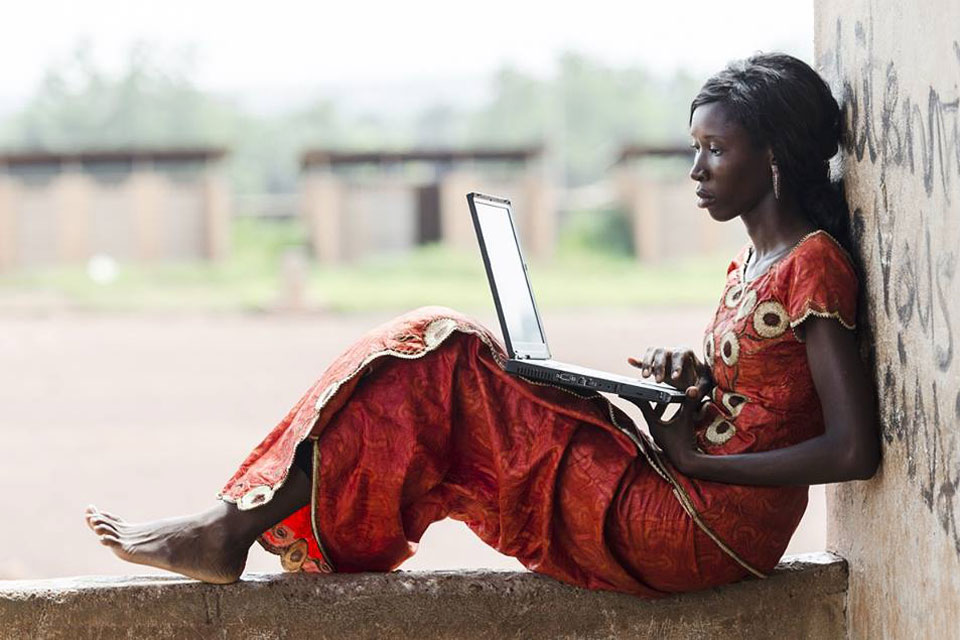
Clearly, technology can not only solve problems, but also it can empower people. One study found that by “bringing internet access to the 4.1 billion people in the world who do not have it would increase global economic output by $6.7 trillion…, raising 500 million people out of poverty.” Yet, even if the world can overcome the barrier of affordable internet access, how do we guarantee that the gains are felt equally, by everyone? Unsurprisingly, a “report said the benefits of rapid digital expansion had been skewed towards the better-off and the more highly skilled, who were better able to take advantage of the new technologies.”
If you follow this line of thinking, it leads you to further areas of inequity. In order for people to be “better-off and more highly skilled,” they must be better educated. Looking at Africa specifically, some argue “if we don’t change education we’re not going to change Africa. It’s just that simple.” However, “only 24% of people in sub-Saharan Africa have access to electricity.” How do you learn about something you can’t even plug into?
Such are the anachronisms of 21st-century Africa, where digital innovations are trumpeted daily, but where large swaths of society have not even experienced an agricultural revolution, let alone a technological one.
Ultimately, while technological development is an important piece of the puzzle, it cannot make up for plain, old, dial-up development: investment, infrastructure, ingenuity. Technology will not alleviate all our problems, but it will help to pinpoint them, and offer us a path toward a solution.
by Jennifer Keck | Jul 24, 2016 | Climate Justice, Global Cooperation, News
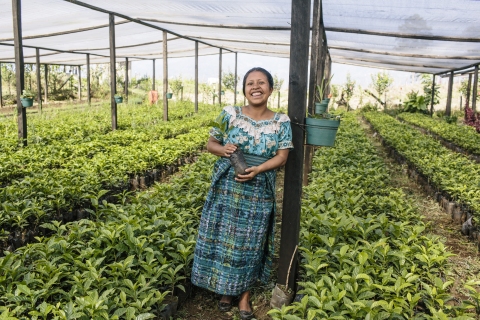
Plagued by rising temperatures, droughts, and elevated carbon dioxide levels, Central America’s agricultural sector hangs in the balance. But the Guatemalan town of San Miguel Chicaj in Baja Verapaz may have the answer to this increasingly worrisome problem. With support from the German Society for International Cooperation (GIZ), San Miguel Chicaj will soon be home to an agro-ecological center designed to serve as a model of adaption to climate change.
For the past ten years, the state of Baja Verapaz has been part of the ‘dry corridor’, making it the perfect testing ground for the agro-ecological center’s techniques. The center, located in a small forest surrounded by cornfields and nurseries, plans to teach people to adapt crop production to the changing environment.
“It will strengthen our crops…serve as a space for youth to be trained in agricultural-related activities,” the chief counselor of San Miguel Chicaj told El Periodico.
The project, which is in the second phase of the “Adapt” initiative of the GIZ, has been called “innovative” and “a new way to address climate change” by the organization’s head of cooperation Thomas Cieslik.
Under construction on municipal land, it will cost around $100,000 USD to complete. GIZ, meanwhile, is providing €10.5 million over six years (2013-2018) to invest in consulting and training. Once open, the center will fund operations by charging schools, universities, and companies for training students and employees.
It won’t be ready for about a year-and-a-half, but GIZ is already conducting workshops to teach residents of Baja Verapaz how to reduce their impact on the environment.
Like any project, San Miguel Chicaj’s agro-ecological center needs time to prove successful. However, if it does, it could become the model for agricultural innovation and food security around the world.
by Tad Daley | Jul 5, 2016 | Global Cooperation, World Federation
This essay is a revised and updated version of the cover story for the Fall/Winter 2015 issue of DISARMAMENT TIMES, the journal of the United Nations NGO Committee on Disarmament, Peace, and Security.
+++++++++++++
“Does the United Nations Still Matter?” It often seems so irrelevant to the problems of the modern age that those words appeared last year on the front page of The New Republic magazine. More than seven decades after the UN’s invention in 1945, our multiple planetary crises seem dramatically different from those confronting the generation that emerged from the rubble of the Second World War. Isn’t it time to devise architectures of global governance intended not to avoid the mistakes of the 1930s, but focused instead on the intertwined predicaments of our own 21st Century?
A New Global Governance Commission
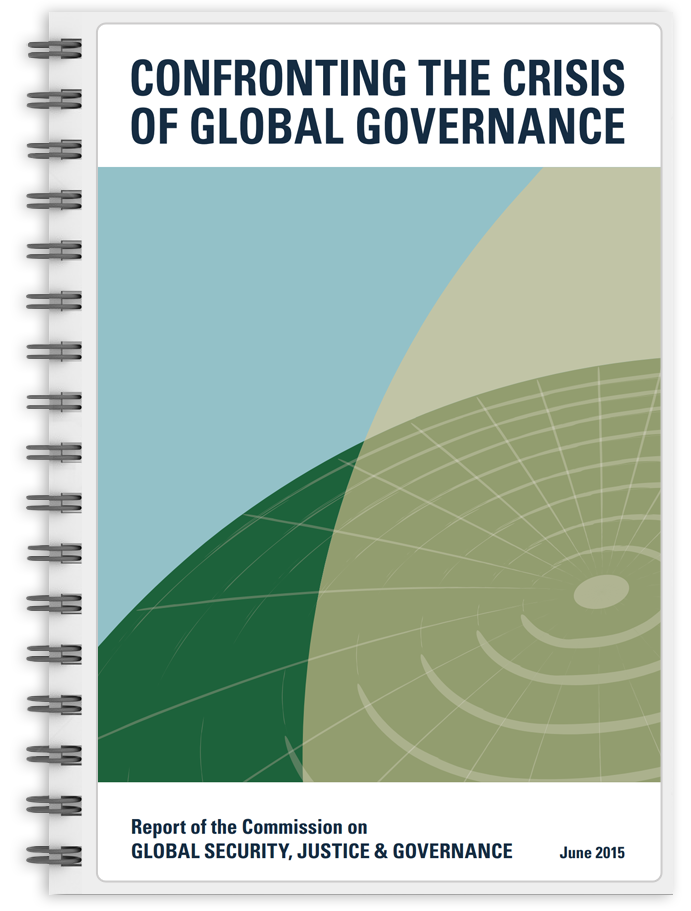
If so, we have a new guide to start the journey. It’s the report from the “Commission on Global Security, Justice, and Governance,” co-chaired by former U.S. Secretary of State Madeleine Albright and former UN Under-Secretary-General Ibrahim Gambari. The name they chose reflects the inescapable links the Commission sees among those three variables. Their report elaborately makes the case that we can’t have security anywhere without justice, or justice anywhere without security. And it asserts that nothing could do more to provide both security and justice to much of humanity than smart 21st Century innovations in global governance.
The Commission employs this paradigm to tackle three broad issue areas – the impact of climate change on the poor and vulnerable, the intersection between “cross-border economic shocks” and various cyber nightmares, and intrastate violence “in fragile states.” Climate? The report proposes an “International Carbon Monitoring Entity” and a “Climate Engineering Advisory Board,” as well as atmospheric modification and climate adaptation efforts – a welcome move beyond the usual focus on emissions reduction. “A hyperconnected global economy?” Vastly increasing Internet access and cybersecurity in the Global South will both help prevent cybercrime and promote a renewed focus on the UN’s Sustainable Development Goals. Eruptions of intrastate bloodshed? The report calls for “peacebuilding audits” focused on atrocity prevention, investments in early-warning capabilities and rapid-response UN mediation teams, national military units designated and trained in advance for UN peacekeeping deployments, and “particular attention to inclusion of women in peace processes.”
The Commission does not just offer “policy proposals” about tackling these transnational issues, but asserts instead that reimagining key elements of international institutions can provide new tools to surmount them. The Commission subtly threads the needle of contemporary political reality, advancing new ideas which one might say stand somewhere in between today’s status quo and a more ideal array of global governance structures adequate to the magnitude of contemporary transnational challenges. So voices beyond the Commission can begin to think about the logical conclusions of some of its carefully parsed recommendations – and to define the eventual historical goals.
Expanding Our Global Governance Imagination
- Regarding the UN Security Council, the Commission calls for adding new members beyond the present 15, creating a new kind of “dissenting vote … (that would) not block passage of a resolution,” and “restraint in the use of the veto.” Under Article 27 of the 1945 UN Charter, the representatives of Britain, France, America, Russia, and China — the winners of a war that took place during the first half of the last century — can “veto” Security Council action. This means that on any issue before the Council, one single country can prevent every other country in the world from any kind of collective action at all. Even when the heavy hand of the veto is not actually cast, it still dominates Council decision-making. The only initiatives that ever get advanced are ones which might actually fly with all five permanent members. It’s the most extreme case of what the American political scientist Walter Dean Burnham calls “the politics of excluded alternatives.” If the UN is ever to become both democratic and effective, the veto doesn’t need to be “restrained.” The veto needs to be eliminated.
- The Commission recommends the creation of a “UN Parliamentary Network … to raise greater awareness and participation in UN governance.” Today’s UN represents only national executive branches. An analogy might be if every single member of the US Congress was appointed by state governors. This innovative new concept proposes that individuals already elected to national legislatures could be selected to sit in this new international body. That very idea has been promoted for years by the international “Campaign for a UN Parliamentary Assembly” based in Berlin. But the hope of this international campaign is that eventually the representatives in such a body would be not selected from national parliaments, but directly elected to a new transnational chamber. That’s not such a far-fetched notion. An American woman living in Los Angeles elects particular individuals to represent her in the LA City Council, the California state legislature, and the U.S. Congress. Why shouldn’t she be able to elect particular individuals to represent her at the global level as well? Whether a Parliamentary Network now or a newly invented Citizens Assembly later, we might just see the emergence of transnational political parties, which could dramatically increase the direct participation of ordinary citizens in global affairs.
- Besides providing a forum for national government executive branches alone, the structure of the UN General Assembly put forth in the United Nations Charter contains two other fundamental flaws – which unfortunately the Commission’s “UN Parliamentary Network” would do nothing to ameliorate. First, the principle of one nation one vote, for states large and small, India and Vanuatu alike, could hardly be more undemocratic or absurd. Second, once votes are cast in the UN General Assembly, its decisions serve only as polite requests to the world. It has no power to make anything like universal laws. The obvious solution to those twin defects is to establish some kind of weighted voting system in the General Assembly (perhaps accounting for both population and monetary contributions to global public initiatives), and then to give the results of its balloting the force of international law (like Security Council decisions already possess). “One nation one vote” (and no power) is surely not the one and only concept we can ever envisage to legislate for and govern our one world.
- “Tents, Water Run Short for Iraqis Fleeing Fallujah.” “Nigerians at Refugee Camp Face Starvation.” “Dire Funding Shortfalls Will Hit Aid to Yemen, UN Says.” These recent Washington Post headlines from one single day demonstrate that the single greatest hindrance to the UN carrying out its multiple and often overwhelming missions is the absence of any kind of funding source beyond voluntary ad hoc contributions from member states. Many proposals have been put forth to remedy this structural deficiency. Probably the most well-known is the “Tobin Tax,” devised by the late Nobel economics laureate James Tobin, which, by placing a microscopic fee on international currency speculation, could provide vast and reliable new resources for the entire UN system.
- Finally, the Commission does not to put forth the most promising idea for preventing genocide and crimes against humanity – a permanent, directly-recruited, all-volunteer UN Rapid Deployment Force (UNRDF). Many don’t realize that “UN Peacekeepers,” in their distinctive blue helmets, are in every case national soldiers, dispatched and ultimately controlled by national governments on a case by case basis. A proposal for such a “UN Legion” was first put forward in 1948 by the first UN Secretary-General, Trygve Lie. A half century later, his successor Kofi Annan observed with some exasperation that the UN is the only fire department that cannot obtain fire engines until after the flames have broken out. A UNRDF would be poised to act not to serve the national interests of any individual state, but the common human interest we all share in relegating genocide to the dustbin of history. It could free the American president in particular from the excruciating dilemma of dispatching “the most powerful military in the world” to stop crimes that have little to do with us, or doing nothing while the nightmares continue to unfold. It might well deter the perpetrators of crimes against humanity from making their fateful choices in the first place. And it would give individual citizens of the world the opportunity not just “to serve their country,” but to put their lives on the line to serve humanity. To bring both security and justice to countless violent conflicts — where national governments are unwilling to deploy their own national forces because the fight in question does not engage their own national interests — the world needs a UN army.
It is the complete absence of these kinds of smart institutional innovations, 70 years on, which lead so many to consider the UN so ineffectual and irrelevant. The problem with the UN is neither “Council deadlock” nor “bureaucratic timidity.” The problem with the UN is the design of the UN.
In 2020: A World Summit on Global Governance
Fortunately, however, the Commission atones for any of its hesitancies with one overarching recommendation. It calls for convening in 2020 — the 75th anniversary of the birth of the United Nations – a formal global summit, of both governments and non-governmental actors, called a “World Summit on Global Security, Justice, and Governance.”
The Commission report emphasizes that most of what it proposes could be accomplished in 2020 without revising the 1945 UN Charter. But it does acknowledge that to advance the broad overall agenda, “consideration could be given … to Articles 108 or 109.” That first is the provision in the Charter for making individual Charter amendments, while the second provides for summoning “A General Conference of the Members of the United Nations for the purpose of reviewing the present Charter.” Indeed, Article 109(3) indicates that the framers intended for such a conference to be held no later than “the 10th annual session” — 1955! Today the UN is into its 71st annual session. But no such formal Charter review process has ever been launched.
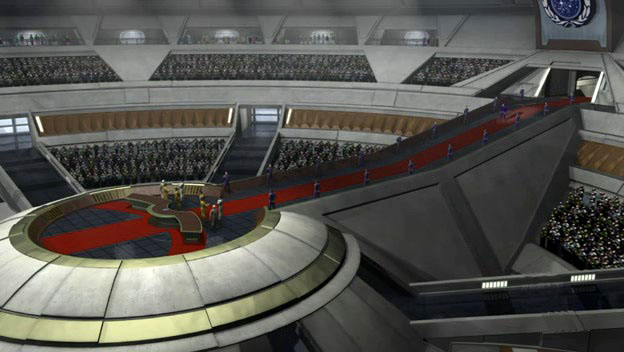
A world summit on global governance during the UN’s 75th anniversary year could provide a once-in-our-lifetime opportunity to reinvent humanity’s architectures of world order. It would allow many to suggest that a redesigned United Nations might tackle not just the bloody upheavals inside “fragile states” that the Commission identifies, but the ancient and omnipresent danger of military confrontations between nations — and actually find a way to save succeeding generations from the scourge of war. Civil society activists on a vast variety of other issues – climate, human rights, the education of girls, migration, poverty and inequality and ever-increasing economic globalization – all could pursue global institutional reforms to advance their issues through the vehicle of such a 2020 world summit. NGOs could engage their constituencies on a large menu of imaginative global governance proposals focused upon their own agendas. (The Commission to its credit urges nongovernmental participation and civil society agitation on nearly every page.) Indeed, the American NGO Citizens for Global Solutions (founded in 1947 as the “United World Federalists for World Government with Limited Powers Adequate to Prevent War”) is already laying plans to mobilize a broad coalition — of multiple actors who might possess a great many different issue priorities and world order visions — behind the singular call for governments to commit now to convening in the year 2020 a world summit on global governance.
Humanity’s “Ultimate Aims”
On November 12, 1946, the Prime Minister of the United Kingdom, Clement Attlee, announced to the House of Commons that nothing less than a world government could serve as “the ultimate aim of Great Britain’s foreign policy.” (Attlee succeeded one Winston Churchill in that post – who repeatedly suggested much the same thing.) What strikes one about this utterly forgotten vision is not just how few world leaders would say anything like it today, but how rarely they speak about any sort of “ultimate aims” in the realm of world order at all.
As we approach the year 2020, our agenda should not be limited solely to what we might practically try to achieve in the year 2020. We also ought to begin to talk about the kinds of structures of global governance we might hope to enact by, oh, the UN’s 100th anniversary year, in 2045. And, perhaps too, about the world political structure and the nature of the human condition that we might hope for at the very end of the present century, in 2099. That last might seem inconceivably remote and distant — far too much so to utter any kind of meaningful predictions or prescriptions. And yet a child 6 years old today will be 89 years old in 2099. Surely, we ought not hesitate to express our hopes regarding how future history might unfold during the space of a single human lifetime.
That leads to some Very Big Questions.
What kind of United Nations would we create if we were designing it from scratch today? If the League of Nations was the first and the United Nations the second, can we begin to envision a “Third Generation World Organization” – Version 3.0? Might the modest “UN Parliamentary Network” proposed by the Commission evolve someday into a true world legislature – what Alfred Lord Tennyson called in 1835 “The Parliament of Man?” Can we dream that some distant day the human race might eliminate both permanent national military establishments and endless international arms races, through the establishment of what the University of Chicago’s Committee to Frame a World Constitution in 1948 called a “Federal Republic of the World?”
That idea, of something like a world state, has been repeatedly advanced over the course of many centuries, by geniuses like Albert Einstein, H.G. Wells, Victor Hugo, Immanuel Kant, Jean Jacques Rousseau, William Penn … dating as far back as Dante! But is a world state in fact a desirable destination, or might its costs and risks exceed its benefits? If desirable, could it ever be achievable? If not desirable or not achievable, what are the likely costs, benefits, and risks of the contemporary state sovereignty system enduring indefinitely, on and on into the dim mists of perpetuity? Can we envision any hypothetical models of world order beyond tribes with clubs, Thomas Hobbes’s “bellum omnium contra omnes,” the war of all against all? If we are going to put a message in a bottle and dispatch it to the Earthlings of the 22nd Century – containing our hopes and dreams for them — what do we want it to say?
Almost certainly, the kinds of next steps in the social evolution of the human species suggested in these questions will not be accomplished in the year 2020. Politics, after all, as every freshman learns, is “the art of the possible.” But we profoundly constrain our ability to imagine a brighter human future if we insist that every single proposal be weighed down by the ball and chain of “PPP” – present political possibility. Nothing will ever become a realistic goal unless someone first declares it a desirable goal – and proclaims it, however distantly, as humanity’s eventual historical aspiration.
So civil society needs to begin working right now to persuade national governments to convene the world summit on global governance proposed by the Albright/Gambari Commission in 2020. Then it needs to endeavor to move those governments to push the edges of the envelope as far outward as possible during the UN’s 75th anniversary year. But perhaps more than anything else, campaigns for human progress ought to set out to shatter the limitations – the ones that so many so often so completely take for granted – on humanity’s collective political imagination, the future potential of our single global civilization, and the infinite historical possibility of One World.
++++++++++++++++
Tad Daley, JD, PhD, is a former policy advisor and speechwriter for three Democratic members of the United States Congress. One of these, U.S. Senator Alan Cranston (D-Cal, 1969-1993), served before he ran for public office as president of the United World Federalists (known as Citizens for Global Solutions today). Tad is author of the book from Rutgers University Press called APOCALYPSE NEVER: FORGING THE PATH TO A NUCLEAR-WEAPON FREE WORLD. He now directs the Project on Abolishing War at the Center for War/Peace Studies in New York. Please follow him on Twitter @TheTadDaley.
by Donna Park | Jun 11, 2016 | Global Cooperation, World Federation
I have become the chair of Citizens for Global Solutions Action Network at a difficult time. It was very difficult to lay off our dedicated staff at the beginning of May. But it became clear to all the members of both Boards (Citizens for Global Solutions Education Fund and Citizens for Global Solutions Action Network) that we didn’t have a choice. Financially we couldn’t afford their salaries. Some of our employees had been with us a very long time. The decision and the process were painful. It has been like losing dear friends.
So now we enter a new phase in the life of Citizens for Global Solutions. We are now a volunteer-led, volunteer-run organization. We hope to hire staff and interns again in the future, but for the time being we are looking for a few good volunteers.
So why should you, our members, our colleagues, our friends, our donors, our volunteers stick with us? I believe there are many signs of the times that point to hope for our organization and our world. This blog will share hopeful signs within our organization:
- We have been working hard on our vision, mission, organizational values, goals and objectives. These are all seen on our website at http://globalsolutions.org/about.
- We are not all of one mind and that is a good thing. We believe diversity makes us stronger and helps us to see issues from multiple points of view. We are unique in today’s world in that we bring together democrats, republicans, libertarians and green party supporters. We also bring together conservatives and liberals. Another way to explain our diversity of opinions is with the following affinity groups although they are not mutually exclusive and some people self- select themselves to be connected with all three:
- world federation advocates who want to win the hearts and minds of US citizens that we need a democratic world federation to bring about world peace through world law with justice (check out http://globalsolutions.org/about/world-federalist-institute to learn more);
- world federation advocates who are more interested in talking about and working on incremental steps like transforming the UN system (check out http://globalsolutions.org/about/world-federalist-institute/world-system-transformations to learn more)
- internationalists who are committed to causes such as the environment, or principles such as international cooperation rather than governmental or imperial dominance, and have no particular allegiance to proposals for world federation. (for one example, check out http://org2.salsalabs.com/o/5550/p/dia/action3/common/public/?action_KEY=22879).
- We have remarkably dedicated members of our two Boards of Directors. We have no problem getting quotas of our members at all board meetings…and we have been meeting a lot! We are actively working on strengthening our relationships to improve our effectiveness.
- We have a very strong slate of four candidates running for the Board of Directors of our Citizens for Global Solutions Action Network. All members should have received a ballot in the mail recently along with our fund raising campaign. Please make sure you return your ballot and vote! The candidates are:
- Tobi Ojo resides in Philadelphia, PA and works as a Financial Advisor at Vanguard. Tobi has a degree in International Studies and Anthropology and has been very involved in the Model United Nations Development Organization.
- David Oughton has been the treasurer, secretary, or board member for the St. Louis Chapter of Citizens for Global Solutions/World Federalist Association for the last 30 years. He is currently teaching in the Department of Theological Studies at Saint Louis University
- Nicole Wilsey is a board member of the CGS Chicago Chapter and senior manager at the Model United Nations Development Organization. She has a degree in Political Science and a minor in Communication Studies. Nicole also works at Cloudview Real Estate and LPL Financial.
- Akvile Zakarauskaite lives in Memphis Tennessee and just received her degree in International Studies and Political Science. She conducted field research in Rwanda, Bosnia and Herzegovina on the development of minority political parties, and interned at an NGO working on building a sustainable peace in the Balkans.
- We have the most passionate, dedicated volunteers working at both the local and national levels.
Thank you for your continued support and interest. Please write and let me know if you have any questions or concerns. My next blog will focus on what gives me hope in our world.
In peace,
Donna Park
Chair, Citizens for Global Solutions Action Network
by Jennifer Welden | May 28, 2016 | Global Cooperation, Human Rights
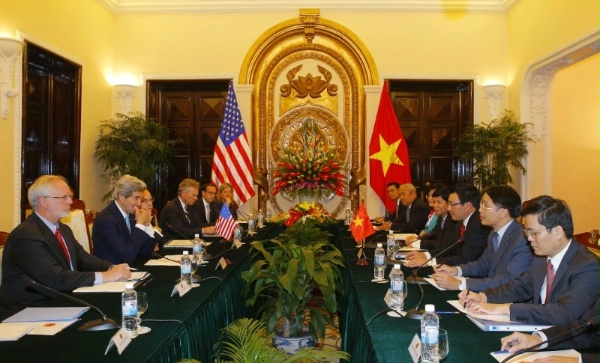
Recently, President Obama announced the end of the arms embargo against Vietnam, “ensur[ing] that Vietnam has access to the equipment it needs to defend itself and…underscoring the commitment of the United States to a fully normalized relationship with Vietnam.” While the Obama Administration has maintained that this is not being done as a response to China’s growing military, and hold over the disputed South China Sea, others see it as strategic decision to balance a rising China.
But some, like John Sifton of Human Rights Watch, have criticized the move as being “undeserved at this time.” With Obama too noting that “there are still areas of significant concern in terms of freedom of speech, freedom of assembly, [and] accountability with respect to government,” many argue that Vietnam’s current treatment of human rights does not merit closer ties with the U.S. For example, an activist was grabbed and held until after Obama had left the country.
Moreover, Amnesty International’s John Coughlan suggested Obama’s visit was a potential opportunity to stand in “solidarity” with the people of Vietnam:
People in the country see America as representing certain values like freedom of speech and freedom of assembly. These are rights in Vietnam that are very tightly restricted. So, if Obama was to call on the government to relax restrictions, people will not be thinking, “how dare he.” It would be seen as an act of solidarity. I think when Obama comes, most Vietnamese people will feel extremely proud. The problem is that human rights do not seem to be central to the visit.
Yet one could also argue that security – both that of the U.S. as well as its allies – is key to U.S. being able to continue to influence and protect human rights around the world. Particularly in the South China Sea, where “failure to respond to Chinese coercion or use of force could damage U.S. credibility,” it is arguably important for the U.S. to remain strong, either through its own actions or the actions of its allies. Expanding Vietnam’s options to defend itself not only helps deter further conflict with China, but also allows the U.S. to better exert its influence and prove its commitment to its allies. It may even have a positive impact on human rights, if sales are in fact held to the strict requirements Obama mentioned in his announcement.
It is hard to know how to weigh human rights versus security – what is the right balance between the two? For those on either side of the issue it is black and white: actions that will benefit one to the detriment of the other must be avoided. It begs the question: is there a policy in which both can win?

 The Commission employs this paradigm to tackle three broad issue areas – the impact of climate change on the poor and vulnerable, the intersection between “cross-border economic shocks” and various cyber nightmares, and intrastate violence “in fragile states.” Climate? The report proposes an “International Carbon Monitoring Entity” and a “Climate Engineering Advisory Board,” as well as atmospheric modification and climate adaptation efforts – a welcome move beyond the usual focus on emissions reduction. “A hyperconnected global economy?” Vastly increasing Internet access and cybersecurity in the Global South will both help prevent cybercrime and promote a renewed focus on the UN’s Sustainable Development Goals. Eruptions of intrastate bloodshed? The report calls for “peacebuilding audits” focused on atrocity prevention, investments in early-warning capabilities and rapid-response UN mediation teams, national military units designated and trained in advance for UN peacekeeping deployments, and “particular attention to inclusion of women in peace processes.”