by Carolyn Blake | Mar 30, 2012 | Global Cooperation, News, Peace & Disarmament

This Wednesday, the Senate Foreign Relations Committee held a hearing on U.S. policy on Iran. Witnesses included the Honorable Thomas Pickering, former U.S. Ambassador to the United Nations and former Under Secretary of State for Political Affairs, General James Cartwright, former Vice Chairman for the Joint Chiefs of Staff, and Mr. Karim Sadjadpour, Senior Associate for the Middle East Program at the Carnegie Endowment for International Peace. The hearing assessed the current nuclear crisis in Iran and what the future of the situation looks like. Chairman Kerry acknowledged that intelligence shows that Iran has not yet started to make a nuclear weapon, but it is clear that the purpose of Iran developing better nuclear technology is so that they will be ready when that decision is made. To deter this decision, the international community has been placing sanctions on Iran. The European Union has banned oil contracts with Iran and the Swiss have announced that they will not grant access to Iranian banks. Chairman Kerry reiterated the President’s resolve to “keep all options on the table”, and continue to push Iran forward. Senator Lugar gave short remarks, noting that even as Iran grows more isolated, nothing has changed. The regime continues the oppression and persecution of certain groups within the country.
Thomas Pickering identified the three main issues that are important when dealing with the Iranian nuclear crisis: what we know about Iran’s nukes, our diplomatic program, and what options we have. In considering what we know about Iran’s nukes, it is important to remember that their nuclear program is not new. It first began as part of the International Atomic Energy Agency’s Atoms for Peace Program, back in the 50’s. Under the Shah of Iran, the program further developed with the intent to be used for more than just civilian purposes. Currently Iran is enriching at a level of 20% for the Tehran Research Reactor. According to Pickering, this reactor is used to make medical isotopes. Pickering said that Iran is gathering enough information about nuclear technology, so that they will be ready to build a bomb if they decide to. As for our diplomatic efforts, the P5+1 will be holding talks in Istanbul on April 14th. The problem with previous talks was their brevity, and it will be important that time is allotted to negotiate propositions during these talks.
In looking at our options, Pickering identified several different paths available to the United States. The first option could be considered useless, which is sitting back and letting Iran proliferate. Not only would this be a waste of the efforts we do have available to us, it might also lead to further proliferation in the region. The second option is military force. Pickering postulated that the advantages of such a military attack are not greater than the risks that we or others would have to take. It would also drive Iran to make a decision on producing a nuclear weapon, something we do not want to force. A limited strike could even make Iran more resolved to move forward with weapons production. The final option is diplomacy, with which we are currently engaged. According to Pickering, it is all a matter of timing. We need to move to the negotiating table before we have exhausted our sanctions. The use of sanctions is not effective without the possibility of negotiations. In going into negotiations, Iran has submitted proposals and the U.S. has proposals of its own.
General Cartwright looked at the motivations Iran might have for producing a nuclear weapon. According to him, most states seek nuclear power as a shield to protect their own sovereignty. Mr. Sadjadpour bolstered this assertion when discussing the mentality of regime. When under pressure, the regime sees compromise as weak. They feel that the U.S. wants regime change, not behavior change. It is important that this difference be made clear.
by Citizens for Global Solutions | Mar 23, 2012 | Global Cooperation, United Nations
Guest Post by Nicole Helmers, University of Indianapolis, freshman majoring in Psychology and Occupational Therapy.
While all my wild friends were getting spray-on tans and neon bikinis for Panama City Beach for Spring Break 2012, myself and a couple of my classmates from the University of Indianapolis met up with other students from other Indiana Universities and headed to Washington, D.C. in dress pants and heels. After an eleven-hour bus ride, we arrived in this beautiful city, with the cherry blossoms in full bloom, eager to attend the GlobalSolutions.org’ 2012 Annual Conference early the next morning.
After maneuvering through D.C.’s stressful traffic, we arrived and discovered that the conference was filled with people of every age, race, and religion, not just college students. It was refreshing and empowering to be part of such a great group!
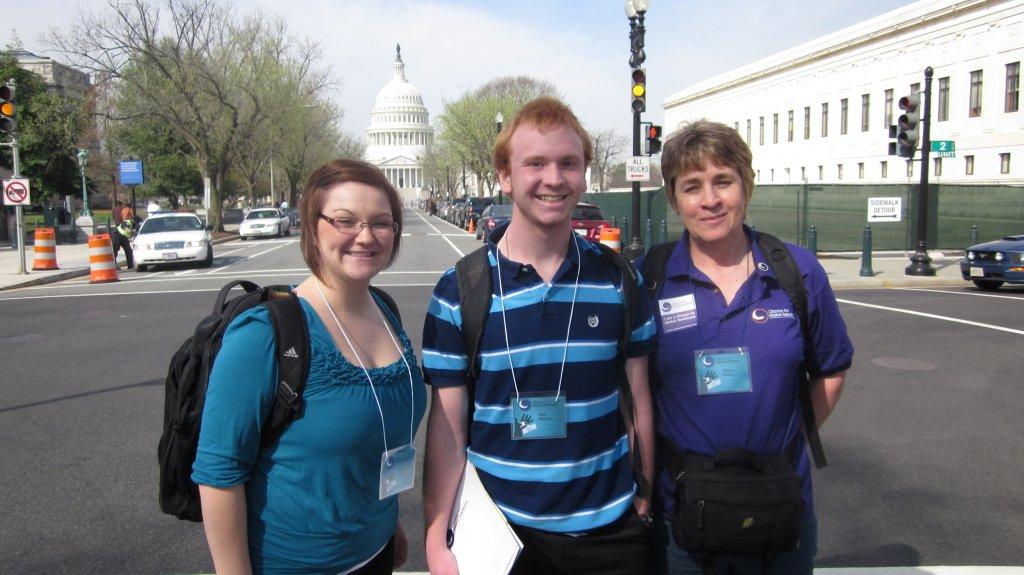
After a long day of traveling and spending a few hours out on the town the day before, we were now on Capitol Hill ready to kick off the conference and start our day of lobbying. As a Cincinnati resident and Ohio voter, I split off from my Indiana friends and headed to the Russell Office Senate building to meet with Senator Rob Portman’s office.
Though Senator Portman was not available, we met with Brent Bombach, the senator’s military legislative assistant. Though a bit nervous, the three of us from Ohio walked into the senator’s office and soon started our conversation with Mr. Bombach.
We had spent part of that morning training for these visits and had three main points that we wanted to discuss with the senator’s office.
- We wanted the senator to support full funding for the International affair’s budget, especially as it relates to the United Nations and peacekeeping missions. The International affairs budget is only 1% of the total federal budget and for every $1 we invest in the United Nations, we receive about $1.66 back. Not only is the International Affairs budget a good investment; it is critical for national security and our nation’s interests.
- We also had deep concerns about the situation in Iran. While no one wants to see an Iran with nuclear weapons, we were asking the senator not to rush to war. No option should be taken off the table, we stated, but diplomacy and work through International institutions like the IAEA should be completely exhausted before military options are considered.
- With the breaking news that the International Criminal Court (ICC) had just convicted Congolese warlord Thomas Lubanga, the Court’s first conviction in its ten-year history, we asked the senator’s office to seek a closer relationship with the ICC. The conviction of Lubanga was a clear message to the world against the use of child soldiers. We felt that it was in the U.S.’s best interest and in the interest of global cooperation and peace to support the work of the ICC.
Overall, we were received extremely well in Senator Portman’s office, and Mr. Bombach answered our questions in a clear and polite manner. The moment we stepped out of the conference room, I let out a sigh, letting go of all the nervousness and uncertainty that was bottled up inside me. I realized just how much of an impact one individual can have upon a senator and important decisions.
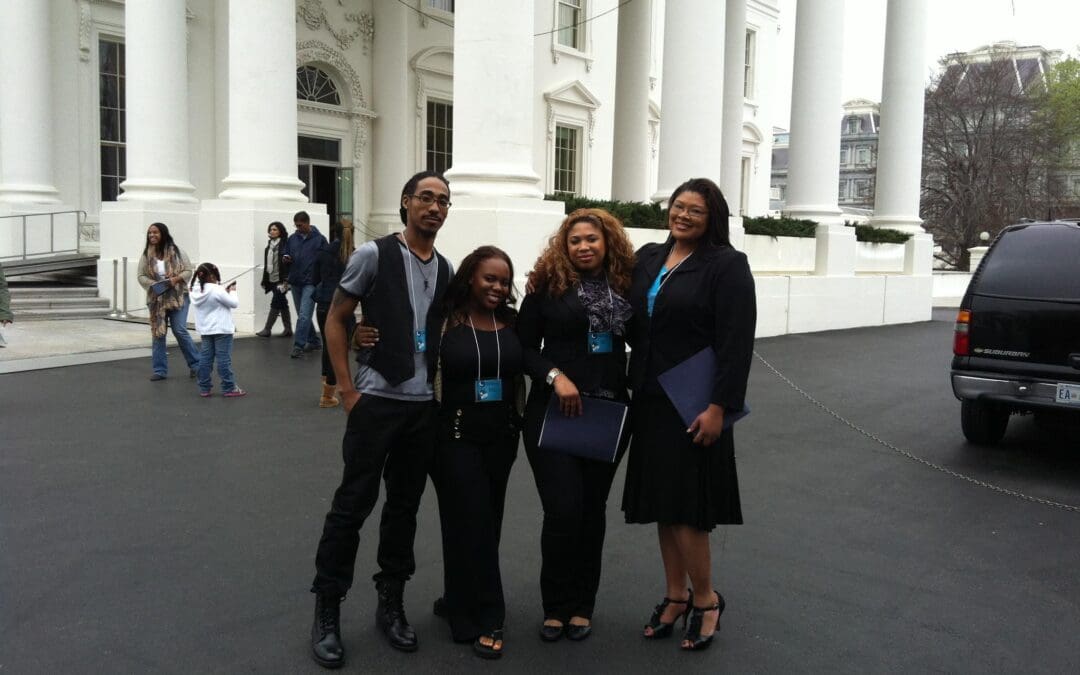
The next day, our group of 16 from Indiana quickly navigated the Metro system and the busy D.C. streets in order to reach the security station of the White House. I couldn’t believe that we, as college students, were going to be able to tour the East Wing of the actual White House! Seeing the inside of a building that I have been familiar with since I was a child was absolutely breath taking, life altering, and humbling. Not only was GlobalSolutions.org specially invited to join, but we also had the chance to speak with some important members of the government and introduce our issues.
The last day of the conference was specially geared toward the nuts and bolts of GlobalSolutions.org. Not only were we excited to hear about changes at CGS, but we also had the chance to speak our minds about the way the organization was structured. My friends and I all stood behind the important point that college students and young professionals were the future of this organization and were needed to keep it running and expanding. I have taken it as my own responsibility to form a small chapter of CGS at the University of Indianapolis, and I cannot wait to put the plan in place of getting more students involved in action.
This conference has opened my eyes to the realization that I can personally do something to persuade government leaders and put my college courses in Government to work. The future of CGS is bright, and I cannot wait to attend the conference next year!
by CGS Blog Archive | Mar 23, 2012 | Global Cooperation
Remembering the GlobalSolutions.org 2011 Annual Conference and how exciting it was, I just knew I had to gather some like minded people, from Nashville, TN, to experience this year’s 2012 conference.
About 10 of us traveled 10 hours from the great state of Tennessee to attend the conference in Washington, D.C. and even though the road trip was adventurous, the conference had it beat hands down. From exciting lobby training and visits; to the “official” White House briefings with the Obama Cabinet; to ethic dinner discussions. This by far was a non-stop adventure and discovery all in itself.
“I had a blast in DC! I really enjoyed the breakout sessions. They were so personal and informative. Sometimes when you are around people in high ranking positions you become somewhat intimidated naturally, but the way the sessions where set up I felt comfortable enough to ask questions and become engaged in discussions. I’m so proud to be affiliated with CGS and I look forward to many more years like these,” said Morgan Brumfield co-owner of iSpeak PR in Nashville.
“It is amazing that the organization has the opportunity to participate in a White House briefing. It speaks a lot to the organization’s ability to organize and push government policy. The fact that everyone that spoke focused so much on the US budget was also a great thing. Plus, the lobby training and lobbying awesome way to push policy,” said Claude Gatebuke Rwanda Genocide survivor and Human Rights advocate.
On top of the conference being a complete success, D.C. wasn’t a city that disappointed. I loved the rich history and could spend hours, better yet days, touring the breath taking museums, historic monuments, parks, and so much more. This year’s conference topped 2011 and puts the extra pressure on 2013 to top it!
“2013 trip suggestion, New York, to visit the United Nations! That would be awesome,” suggested Morgan Brumfield. Sounds like an idea – I guess we’ll all have to just stay tuned.
by Arielle Weaver | Mar 19, 2012 | Global Cooperation, News, World Federation
Last week GlobalSolutions.org held its Annual Conference, which included a day of lobbying senators and representatives and a visit to the White House. Lobby day was filled with discussions of global problems, how to lobby your representative in government, and the role and the importance of social media in grassroots movements.
The most important message I got out of the Annual Conference is that no matter who you are, you have a voice. You can use that voice to talk to your government and advocate for global issues that you want to put on the national agenda. It is too often argued that because of the financial crisis in the United States, foreign relations should be put on the back burner of national policy. But after seeing the excitement at this conference and the many people who feel as strongly on global issues as CGS does, it is clear that the United States needs to stay present in the global scene.
If the United States loses its influence abroad and ceases to work with international organizations, then we will lose the respect of other nations. Whether you call up your senator, tweet an article about the violence in Syria, or attend a protest, just remember: you have a voice and you should always use it. Stay tuned for more information and reactions to CGS’s Annual Conference. More blog posts and photos to come!
by Julia Bunting | Mar 2, 2012 | Global Cooperation, News, Peace & Disarmament
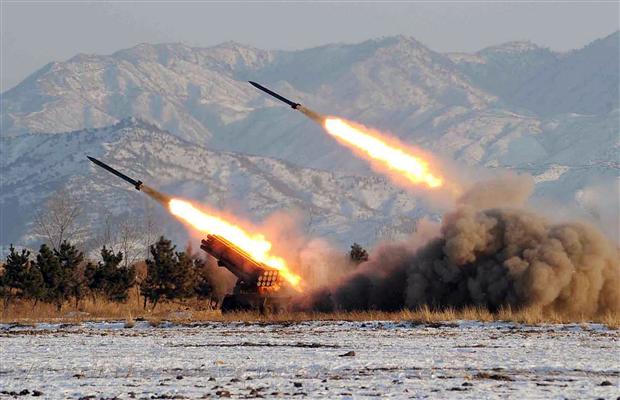
The United States and North Korea announced a breakthrough agreement earlier this week, with North Korea agreeing to suspend nuclear weapons testing and halt the enrichment of uranium in return for more than 200,000 metric tons of food aid. This food aid is crucial to the famine-stricken nation that has been subject to heavy sanctions, mostly due to its unbending commitment to a nuclear program.
The announcement is the first true sign of how North Korea’s young, new leader Kim Jong-un, who took office last December following the unexpected death of his father Kim Jong-il, will approach international negotiations. While the negotiations began before his father’s death, the announcement of an agreement highlights Kim’s willingness to engage in negotiations to secure aid that helps solidify support at home.
While the announcement is a positive sign of North Korea’s willingness to engage, it is far from a true end to North Korea’s nuclear program. North Korea has struck similar deals before without following through. North Korea’s state-run media announced the deal with the notable stipulation that they would hold to their end of the deal only “while productive dialogue continues,” implying that their cooperation could end at any point. However, the agreement is certainly a step in the right direction.
The agreement with North Korea can also be a lesson to the ongoing tension with Iran over its nuclear development. While North Korea and Iran are very different nations with very different motives for developing a nuclear weapon, the agreement with North Korea shows that the United States can make progress without resorting to military strikes if they are willing to make substantial offers of economic aid, something Iran will likely soon need due to the heavy sanctions the international community has recently enacted against Tehran. The deal with North Korea certainly represents positive progress towards a future free from nuclear weapons.
by Carolyn Blake | Mar 1, 2012 | Global Cooperation, News, Peace & Disarmament
On Tuesday I attended the Senate Foreign Relations Committee hearing on “National Security & Foreign Policy Priorities in the FY 2013 International Affairs Budget,” which featured Secretary of State Hilary Clinton as the key witness. While the foreign assistance portion of the U.S. budget is around 1%, this area of funding has been slightly reduced. In her testimony, Clinton identified the State Department’s top five priorities for the coming year within the State Department’s proposed budget.
The first priority is to sustain the current missions in Iraq, Afghanistan and Pakistan. Clinton reminded the committee that “as troops come home, civilians remain to carry out the critical missions of diplomacy and development. Our request reflects the temporary, extraordinary costs of operating on the frontlines.” There is now an important diplomatic role for the U.S. to play in Afghanistan.
The second priority the Secretary mentioned is Asia, where the U.S. needs to strengthen its relationships and maintain its Pacific presence. This effort is called “forward deployed diplomacy,” in which the U.S. is seeking out better relations within the region.
The third priority is the Arab world. A major part of this is the proposed “Middle East and North Africa Incentive Fund to encourage major political and economic reforms.” This fund will also help with efforts in Syria and will allow for more flexibility with our work in the region.
The fourth priority is economic statecraft, which is the use of diplomacy to bolster the economy. Clinton noted that this project is important because “We are pushing back against corruption, red tape, favoritism, distorted currencies and intellectual property theft.”
The fifth and final priority was encompassing worldwide development issues. Falling into this category are “poverty, disease, hunger, and climate change.” Through the Global Health and Feed the Future Initiatives, the State Department is looking to make lasting progress in developing areas overseas. The way these projects are done is changing, with the State Department and USAID working on development with local groups and empowering citizens to take control of their futures. Clinton ended her opening statement by saying that “people look to us to protect our allies, stand by our principles and serve as an honest broker in making peace; to fight hunger, poverty and disease, and to stand up to bullies and tyrant. American leadership is not just respected. It is required.”
The committee members questioned the Secretary about the budget and other foreign policy issues. Senator Dick Lugar was concerned about the safety of our diplomatic missions in Israel, Afghanistan, Pakistan, Iraq and Egypt. Secretary Clinton assured him that our diplomats are well aware of the risks they take. In Iraq, the Department of State is figuring out how best to utilize local security forces.
Senator Bob Corker asked Clinton about what actions she would like to see the House and Senate take in regard to Iran. She affirmed that sanctions are the most effective strategy that we currently have to handle the issue. An important step is securing support for these sanctions from other countries. Secretary Clinton said that peaceful negotiations are the top priority, with the two part approach of “pressure and engagement” being the best action to take. She noted that the intelligence community has concluded that Iran has not yet made a decision to produce a nuclear weapon, but it will be important to continue to evaluate the situation.
Secretary Clinton also commented on why reform in Libya was a challenge and whether or not there will be a similar transition in Syria. Muammar Gaddafi destroyed all the institutions in Libya and the U.S. is now working closely with Libya to reorganize their militia members into a military force and into the civil service. The State Department is trying to find a way to assist the Syrian people, but the situation is much more complicated.
The Committee also discussed funding of the United Nations Education, Scientific, and Culture Organization, which was frozen when the agency allowed Palestinian membership. Two U.S. laws required this withholding of contributions, but one proposed solution offered is providing a waiver that will allow the U.S. to continue funding UNESCO. Secretary Clinton supported this waiver, saying that the U.S. benefits from membership to UNESCO. Israel is also still a member of UNESCO, despite Palestine’s membership. In general, Secretary Clinton reaffirmed her support for staunch U.N. reform. She noted that the United Nations performs vital missions, including peacekeeping operations, but there needs to be more “accountability and transparency” in their system.
Senator Mike Lee questioned the Secretary about the situation in Egypt, including its negotiations with Israel and the effect of our foreign aid influencing the Egyptian government. Secretary Clinton assured him that there has been no evidence that Israel is not upholding its treaties and that aid had historically been used to keep Egypt on the right path.
Secretary Clinton, the Department of State, and USAID have done a great job reorganizing the foreign assistance budget. The new Middle East and North Africa Incentive fund will assist the Department of State in handling the crises that might emerge in the region. Clinton’s testimony made it more apparent that even with modest funding for foreign affairs, the United States is able to positively impact the far corners of the world. It is crucial that this vital aid be continually supported and funded by Congress.