by Samuel Kane | Jun 25, 2012 | Global Cooperation, News, Peace & Disarmament
UPDATE (6/27/12): Earlier today, President Morsi announced that he would appoint a woman as one of his vice presidents, and a Coptic Christian as his other. On the whole, this move should help to assuage the concerns of those who feared that Morsi’s affiliation with the Muslim Brotherhood would lead him to adopt radical Islamist policies. In addition, this announcement followed news that an administrative court in Cairo has overturned the military’s declared right to make warantless arrests. Overall, a good day for democracy in Egypt, though, of course, much work remains to be done.
This past Sunday, Egypt took another tenuous step along the road to democracy, as the Supreme Presidential Election Council declared the Muslim Brotherhood’s candidate, Mohamed Morsi, the winner of Egypt’s first presidential elections since the fall of Hosni Mubarak. According to statistics released by the Election Council, Morsi garnered 51.7% of the popular vote, compared with a 48.3% share for his opponent, Ahmed Shafiq.
The official announcement came after a tension-filled week in which both candidates declared victory, and the Egyptian military granted itself sweeping powers over the country’s legislative and constitutional processes. Nonetheless, Morsi’s victory will come as a minor relief to those who feared that the elections would merely mark a continuation of Mubarak-style rule, as Shafiq had previously served as Mubarak’s final prime minister.
Despite this positive news, however, Egypt’s nascent democracy still faces a “long road ahead,” as one anonymous celebrator in Tahrir Square put it. In particular, Morsi’s affiliation with the Muslim Brotherhood will undoubtedly spark tensions with the Egyptian military, which had banned the organization during Egypt’s period of military rule. Even after Mubarak’s fall, the military has not been shy about demonstrating its distaste for the organization, even going so far as to dissolve the Brotherhood-dominated Egyptian Parliament before the presidential election’s final round of voting.
Furthermore, the constitutional declaration issued by the SCAF (Supreme Council of the Armed Forces, a body consisting of 21 senior Egyptian military officers) a little more than a week ago has been deemed a cause for concern by numerous pro-democracy advocates. As the BBC reported, the declaration grants the SCAF “legislative powers, control over the budget, and over who writes the permanent constitution,” while also “[stripping] the president of any authority over the army” and guaranteeing members of the SCAF “jobs for life.” Though the SCAF has pledged to hand over power to a civilian government by the end of June, that promise has done little to assuage fears about the military’s actual level of commitment to democracy. In light of the SCAF’s aforementioned assumption of political power, it remains unclear what powers Morsi will actually possess once in office, or which political entity will possess the final say in government matters.
However, ongoing tension between the Muslim Brotherhood and the SCAF is far from the only challenge that Morsi will face in the early days of his presidency. For example, the explicitly Islamist nature of the Brotherhood has worried a broad spectrum of parties, ranging from Egyptian Christians to the Israeli government, with a common concern being that Morsi’s ideology will lead him to adopt radical Islamist policies. Meanwhile, Morsi’s comments in a recent interview that he favors a restoration of “normal relations” with Iran are unlikely to ingratiate him with the Western powers, who have sought to diplomatically isolate Iran over its nuclear program.
It is clear, then, that while the election of Morsi is certainly a positive development for Egypt’s democratic institutions, it remains to be seen whether this event will succeed as a catalyst for an enduring democracy. If Morsi is to be able to govern effectively, he will have to be careful not to alienate the significant portion of the Egyptian population that is less than enthusiastic about the prospect of Brotherhood-controlled government. To that end, Morsi has started his administration off on a positive note, using his victory speech to declare himself a “a president for all Egyptians.”
Of course, even if Morsi is able to successfully define himself as such, there remains the problem of the Egyptian military. The world will soon discover exactly how much power, if any, the SCAF intends to hand over to the new civilian government; however, there is certainly cause to be skeptical about whether the military, which has held a substantial stake in the Egyptian government for decades, actually has any enduring commitment to democratic institutions that would presumably limit its power. Unfortunately, however, it appears that the military will have an outsized role in determining whether Egypt’s young democracy will succeed or fail, at least for the time being.
by Sean Langberg | Jun 25, 2012 | Global Cooperation, Peace & Disarmament
Modern tension on the Korean Peninsula dates back to 1945 when the Soviet Union declared war on the current occupiers, Japan. In years prior, the peninsula had been controlled by a series of dynasties, but was invaded and annexed by Japan in 1910. After the end of World War II in 1945, the territory was divided along the 38th parallel between the United States and Soviet Union. Hope for unification faded in June 1950 when North Korea breached the border leading to the outbreak of the Korean War. After three years of intense fighting between American, Chinese, Soviet, and Korean troops, the war officially concluded with the formalization of a interstate border called the demilitarized zone. However, low-level fighting and frequent rhetorical provocations keep the conflict on the radar of many relevant states.
In the past, North and South Korea marched together in the Olympics on three separate occasions: 2000 in Sydney, 2004 in Athens, and 2006 in Turin. Describing the event as “highly emotional,” athletes from North and South Korea travelled to the stadium together and marched in the opening ceremonies as one unified entity. Using the flag of the Korean Peninsula, a simple flag with a blue silhouette of the Korean Peninsula and a white background, the group showed one of the very few instances of Korean bilateralism in the last few decades.
Moreover, North and South Korea discussed collaborating on the 2018 Olympics taking place in Pyeongchang. South Korean politician Sohn Hak-kyu said the games should be “a turning point in the history of the divided Korean Peninsula, as well as in global peace.” However, the future of the relationship is unclear after Kim Jong-il died last December and Kim Jong-un’s leadership style is largely unknown. North Korea’s pursuit of nuclear weapons will remain a crucial issue for US East Asia policy and regional partners participating in six party negotiations such as Russia and China.
The 2012 Summer and 2018 Winter Olympic games have the ability to symbolize cooperation on the Korean peninsula. However, more substantive engagement is needed on the diplomatic and nuclear non-proliferation fronts if there is to be lasting peace between the two countries.
Check back next week for the third installment of our series highlighting the Olympic Games. We will discuss the famous black power salute at the 1968 games in Mexico City.
by Samuel Kane | Jun 25, 2012 | Global Cooperation, News, Peace & Disarmament
Last Thursday, the Senate Foreign Relations Committee held a hearing on the implementation of the New Strategic Arms Reduction Treaty (New START), seeking to gauge the treaty’s performance in the time since February 2011, when it first came into effect. Witnesses brought before the committee included the Administrator of the National Nuclear Security Administration, Thomas P. D’Agostino; the Acting Under Secretary for Arms Control and International Security at the State Department, Rose Gottemoeller; and the Assistant Secretary of Defense for Global Strategic Affairs, Madelyn R. Creedon.
Each of the witnesses offered positive assessments of New START’s effectiveness, highlighting the ways in which the agreement has helped to make nuclear relations between the US and Russia more stable and transparent. In her testimony, Gottemoeller remarked that New START has helped to improve the flow of nuclear weapons-related information between the two countries. In particular, she cited the treaty’s verification mechanisms, including exhibitions of strategic arms and guaranteed on-site inspections, as concrete examples of provisions that have helped to improve the aforementioned information flow.
Meanwhile, in his testimony, D’Agostino sought to dispel the notion that signing New START revealed the Obama administration as being insufficiently committed to preserving the efficacy of the US nuclear arsenal. Insisting that the President Obama recognizes the need to maintain a secure and modernized nuclear force, D’Agostino went on to highlight specific actions that the Administration has taken to ensure this reality. To that end, he cited the Obama Administration’s commitment to extending the life of 80% of the active US nuclear stockpile, as well as its request for an increase in funding for the weapons activities account, for the purposes of nuclear modernization.
Finally, Creedon used the bulk of her testimony to dispel several common misperceptions of New START’s provisions and objectives. First, she countered the notion that New START imposes one-sided restrictions on the United States, pointing out that Russia, like the United States, would be subject to limits on the number of warheads and delivery systems that it can possess. Second, she refuted the idea that New START contains a provision that would limit US missile defense systems, explaining that these weapons systems do not fall under the purview of the treaty.
Though this week’s Senate “vote-a-thon” prevented many of the committee’s members from attending Thursday’s hearing, the majority of those who did attend expressed positive views of the treaty’s performance thus far. However, several senators expressed concerns over the Obama administration’s perceived lack of commitment to maintaining the US nuclear force. In particular, Senator Bob Corker (R-TN) expressed disappointment in the administration’s follow-through on promises to modernize the arsenal, asserting that the administration has not delivered what it promised in this arena and was deliberately “slow-walking” nuclear upgrades.
These concerns aside, Thursday’s hearing painted the picture of a treaty generally succeeding in its objectives of forging a more secure and transparent nuclear relationship between the US and Russia. Obviously, in the context of such a relationship, where the stakes run as high as accidental nuclear war, it behooves both parties to maintain as open of a relationship as possible. With regards to this objective, New START is, and will hopefully continue to be, a step in the right direction.
The witnesses’ written testimonies can be viewed here.
by CGS Blog Archive | Jun 22, 2012 | Global Cooperation
As major players accompanied their respective heads of state to the beach-laden shores of Los Cabos, Mexico for this year’s G20 Summit Monday, those of us remaining were left to question and comment on the body’s legitimacy as well as on its unfolding proceedings.
New Rules for Global Finance in partnership with Heinrich Böll Stiftung, envisioned a way to seize this opportunity. In holding their event, “Promises of the G20 Process: Prospects for Enhanced Transparency and Accountability” , on June 18, 2012, the same day as the opening of the G20 Summit, it provided a platform for such debate. Event Chair and New Rules for Global Finance Executive Director, Jo Marie Griesgraber, sought to highlight this significance.
Among the panelists in attendance, a wide array of concerns was noted. Each participant sought to highlight their grievances with the economic super-committee, while some remarked on its advantages.
The complaints, familiar to those who play a role in the international community, call attention most broadly to a lack of democratization within the G20. While acknowledging that the G20 is not in itself a formal institution, it could be argued that its legitimacy would only be strengthened by such a foundational shift. The panelists pointed to the fallout that a lack of democracy creates: an increased business presence, a dominance of the EU member states, a lack of accountability to the interests of civil society groups, and an underrepresentation of other developing countries.
To give an example, Nancy Alexander, Director of the Economic Governance Program at the Heinrich Boell Foundation of North America, cited the United States as the one of the worst, out of the twenty major economies, in reaching out to civil society groups. She asserts that this type of action instead leaves space for tighter collaboration between the G20 and B20 members (a group of 23 business organizations and 120 companies that submit recommendations to the G20 on their behalf). While the B20 has contributed to some commendable work, this poses a red flag for Alexander. Viewing environmental protection as often a lower priority to the B20 block, she feels that “going green,” as well as the ideas of the civil society groups, should not be compromised in the process.
Another panelist, Bernardo Lischinsky, who serves as Senior Advisor at the IMF, posed a related issue. He spoke for the developing countries that are oft-overlooked, and thus lack a presence to assert their interests. With German Chancellor Angela Merkel continuing to stand firm to her proposed austerity measures to aid the Eurozone crisis, Lischinsky asks “How can we [developing countries] get growth out of austerity measures?” He feels that a wider pool of participants within these discussions would perhaps solicit a broader solution to the persisting crisis.
Thea Lee the Deputy Chief of Staff at the AFL-CIO, on the other hand, presented an interesting counterpoint. Although overall she agrees that the current number of twenty members does not encompass enough countries, Lee suggested that a body represented by all nations would be “too unwieldy.”
The director of policy and research at Oxfam America, Gawain Kripke, probably stood as the panel’s leading skeptic. Asserting that the G20 has no mandate and is unauthorized, he noted the host of concurrent problems this creates. With a lack of clearly defined institutional structuring and accountability, it allows for a few to make the decisions for the many. Kripke asserted that this influence can also be reciprocal; if countries decide not to take action on a particular issue it in effect creates a “ceiling” which serves as a disincentive for action by others.
The final panelist, Johannes F. Linn, is a Resident Senior Scholar at the Emerging Markets Forum. Linn called the group to action. Emphasizing the trivial nature of talk without action, he asked what suggestions the panelists had for actually increasing the G20’s effectiveness. I invite you to think about the same.
Despite its downfalls, the G20 proved earlier this week to be a productive force in creating solutions to pressing issues. Not surprisingly the Eurozone crisis dominated the talks in Mexico this year. In just two short days, the top twenty economies united to support Europe’s plan to integrate its banking sector in the hopes of improving the currently bleak economic climate.
While acknowledging the need for increased G20 reforms, the G20 can be identified as an improvement on the exclusivity of the UN Security Council instead giving “middle-income countries […] a greater voice and, thus, a greater stake, in the stability and effectiveness of the international system” as Pauline H. Baker and Princeton N. Lyman suggest in their article “South Africa: From Beacon of Hope to Rouge Democracy?” within the book Powers and Principles: International Leadership in a Shrinking World edited by Michael Schiffer and Global Solutions.org’s own board member, David Shorr.
A continuance in this direction for the G20, proves hopeful in the desire of the international community for the existence of a more accountable and representative global body.
by Samuel Kane | Jun 19, 2012 | Global Cooperation, News, Peace & Disarmament
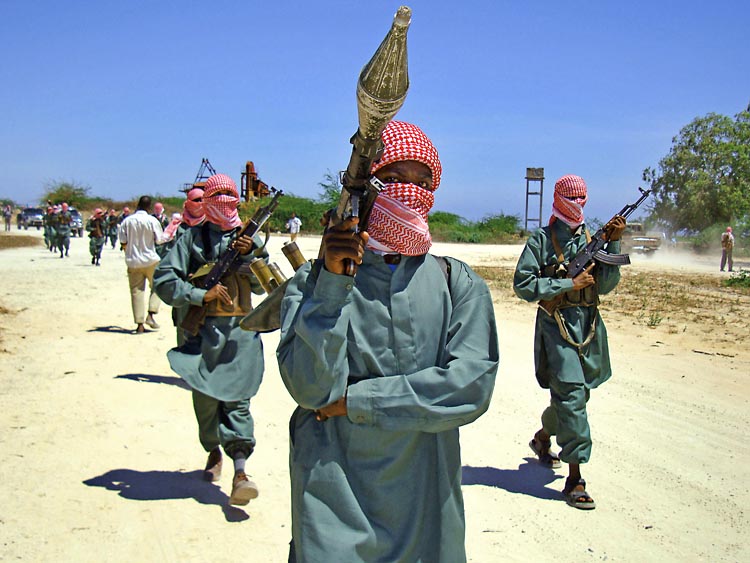
Rarely are the words “stable” and “consistent” used to describe Somalia, a country that has spent a majority of the past two decades mired in near-perpetual civil war. However, in the case of the Fund for Peace’s annual Failed States Index (FSI), the aforementioned adjectives could, unfortunately enough, be applied to the troubled East African state.
For the fifth straight year, Somalia earned the dubious distinction of topping the index, which “ranks instability risks of 177 nations based on 12 social, economic, and political indicators,” including “violations of human rights and rule of law,” “legitimacy of the state,” and “uneven economic development,” among others. This year, the Fund for Peace cited Somalia’s “widespread lawlessness, ineffective government, terrorism, insurgency, crime, and well-publicized pirate attacks against foreign vessels” as the primary reasons for the country’s continued presence at the top of the list.
Of course, though Somalia remains the African continent’s most egregious example of endemic instability, it was far from the only African country to be represented on the FSI. In fact, the index’s top five spots were occupied by African nations, with the Democratic Republic of the Congo, Sudan, Chad, and Zimbabwe joining Somalia near the top of the list.*
Elsewhere, the effects of the Arab Spring engendered sharp rises in instability for several Middle Eastern and North African countries. In particular, Libya and Syria, two countries which have bore witness to popular uprisings against repressive governments, both experienced a sharp climb in the FSI, jumping 61 and 25 spots, respectively.
Of course, as has been pointed out by others, the FSI is far from a perfect statistical measure. As The Indian Express noted in 2008, “[the FSI’s] indicators are difficult to pin down and quantify,” and there is an “inherent subjectivity” involved in making the cross-country comparisons that the index relies upon. Furthermore, it is important to keep in mind that a country’s rise in instability is not necessarily a wholly negative development. In the case of Libya, for example, that country’s jump in the FSI came largely as the result of a civil war that ultimately led to the overthrow of a dictator. In this situation, Libya’s rise in the FSI will hopefully be a temporary development, as the Libyan people lay the foundation for democratic institutions that should, in theory, create a more stable society.
Nonetheless, despite these flaws, the FSI remains a useful diagnostic tool for highlighting instability in broad strokes. Clearly, Somalia’s consistent presence at the top of the index is a troubling trend, and one that seems unlikely to be reversed in the near future, as the country continues to be plagued by an insurgency led by the Islamist militant group al-Shabaab. Though African Union peacekeepers have made some progress against al-Shabaab, pushing the group out of several strategic strongholds and cutting it off from economic lifelines, analysts assert that these gains are “unlikely to deliver the knock-out blow hoped for by Mogadishu and its allies.” Moreover, though the Islamist insurgency is a major reason for Somalia’s instability, it is far from the only contributing factor. Specifically, the central government’s limited reach and general ineffectiveness prevent it from consolidating the gains made by African Union forces. An analysis by Reuters summarizes the governance problems facing Mogadishu:
Two decades after Somalia’s civil conflict erupted, the central government still exerts little meaningful control beyond the capital. Security analysts say al Shabaab could take advantage of power vacuums if concrete political administration and reform does not keep pace with military advances.
“All the attention is on getting rid of al Shabaab. Then what? There are no institutions … to implement the rule of law,” said London-based Somali analyst Hamza Mohamed.
“They are not solving the issues that gave rise to al Shabaab. They’re just putting a bandage on a gaping wound.”
What becomes apparent, then, is that creating a stable Somalia will require a two-pronged approach, one that focuses both on degrading the insurgent presence in the country and creating a central government capable of providing effective institutions and services in those areas from which the insurgents are removed. Unless these two conditions are met, it seems unlikely that Somalia will be removed from its perch atop the FSI anytime soon.
For the full index, check out the Fund for Peace’s official website.
*While Africa dominates the ranks of the world’s most unstable countries, Scandinavia possesses a similar stranglehold on the bottom of FSI, with Norway, Denmark, Sweden, and Finland being judged as four of the world’s five most stable countries.
by Citizens for Global Solutions | Jun 18, 2012 | Global Cooperation
The opening ceremonies of the 2012 Summer Olympics in London are merely weeks away. In the weeks leading up to the thirtieth Olympiad, we want to highlight five stories that exemplify global cooperation and international justice. Some of the topics we will cover are North and South Korea marching together at the 2000 games, the human rights salute of 1968, and the relationship between international institutions and peacemaking.
The first modern Olympic Games were held in 1896 at the Panathenaic stadium in Athens, Greece. It instantly became a universally recognized sporting event involving many countries including Australia, Bulgaria, Chile, Italy, and the United States. However, national teams were not an integral component of the games until ten years later. Despite this, athletes felt a sense of pride in competing on behalf of their country, but prioritized cooperation.
The Olympic Charter, which governs the games, is written to reflect the spirit of cooperation espoused by world leaders every four years. Three “fundamental principles of Olympism” are especially relevant:
“The goal of Olympism is to place sport at the service of the harmonious development of man, with a view to promoting a peaceful society concerned with the preservation of human dignity”
and
“The Olympic Movement is the concerted, organised, universal and permanent action, carried out under the supreme authority of the IOC, of all individuals and entities who are inspired by the values of Olympism. It covers the five continents. It reaches its peak with the bringing together of the world’s athletes at the great sports festival, the Olympic Games. Its symbol is five interlaced rings.”
and
“Any form of discrimination with regard to a country or a person on grounds of race, religion,politics, gender or otherwise is incompatible with belonging to the Olympic Movement.”
It is critical to have these words in mind while viewing, analyzing, or participating the Olympics. The event provides an opportunity to reflect on the successes and failures of the international community during the past four years. Also, it gives us some great sporting moments!
Check back next week for a story about international cooperation on the Korean peninsula at the 2000 Sydney games.
Co-Authored by Research Associates Megan Fantoni and Sean Langberg.